William Jenkins – författare
489 kr
Skickas
499 kr
Läs direkt efter köp
499 kr
Läs direkt efter köp
158 kr
Skickas inom 5-8 vardagar
148 kr
Skickas inom 5-8 vardagar
117 kr
Skickas inom 5-8 vardagar
125 kr
Skickas inom 5-8 vardagar
132 kr
Skickas inom 5-8 vardagar
498 kr
Skickas inom 5-8 vardagar
471 kr
Läs direkt efter köp
454 kr
Läs direkt efter köp
220 kr
Skickas inom 3-6 vardagar
170 kr
Skickas inom 3-6 vardagar
227 kr
Skickas inom 3-6 vardagar
220 kr
Skickas inom 3-6 vardagar
227 kr
Skickas inom 3-6 vardagar
227 kr
Skickas inom 3-6 vardagar
167 kr
Skickas inom 5-8 vardagar
247 kr
Skickas inom 3-6 vardagar
131 kr
Läs direkt efter köp
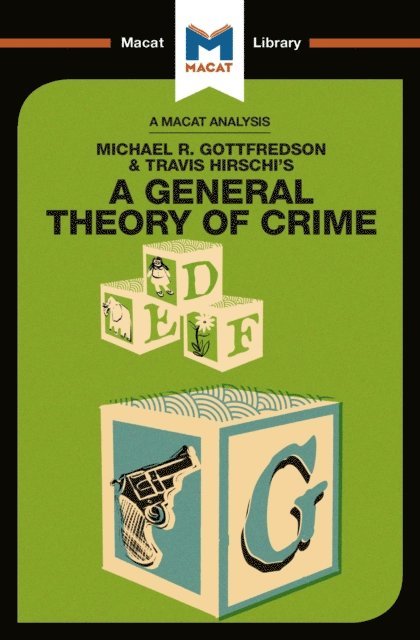
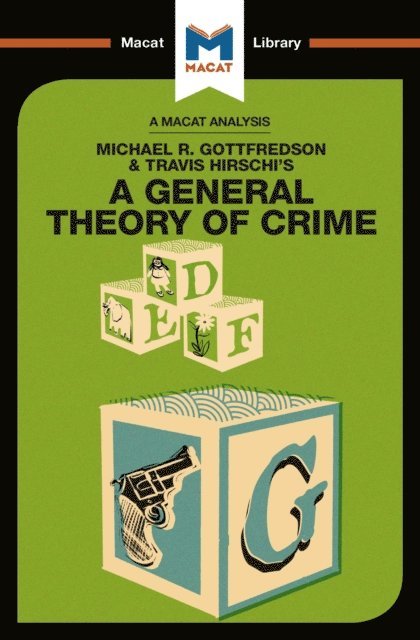
Michael R. Gottfredson and Travish Hirschi’s 1990 A General Theory of Crime is a classic text that helped reshape the discipline of criminology. It is also a testament to the powers of clear reasoning and interpretation.
In critical thinking terms, reasoning is all about presenting a solid and persuasive case – and as many people instinctively understand, the most persuasive reasoning is that which bases itself on a single, simple hook. In Gottfredson and Hirschi’s case, this hook was what has come to be known as the “self-control theory of crime” – the idea that the tendency to commit crime is directly related to an individual’s level of self-control.
While the dominant schools of thought of the time tended to focus on crime as the product of complex environmental factors, with little attempt to unify different theories, Gottfredson and Hirschi sought to interpret things so as to provide a single overarching concept that explained why crimes of all sorts were committed. Moreover, while other theories of crime concentrated on understanding and explaining specific types of law-breaking, the self-control model could, in Gottfredson and Hirschi’s view, be seen as the basis for understanding the root cause for all crime in all contexts. While such simplicity inevitably attracted as much criticism as agreement, subsequent studies have provided real-world corroboration for the General Theory’s persuasive reasoning.
136 kr
Läs direkt efter köp
Understanding evidence is critical in a court of law – and it is just as important for critical thinking.
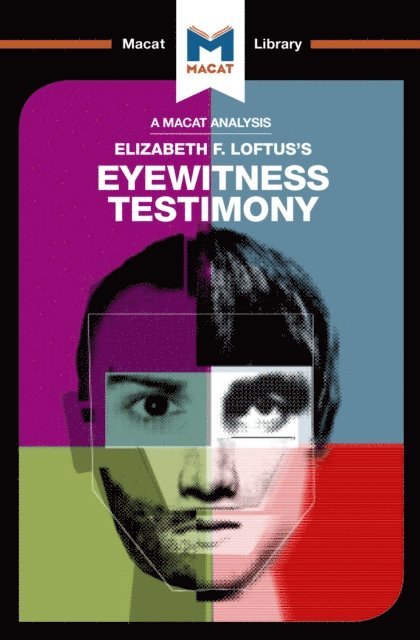
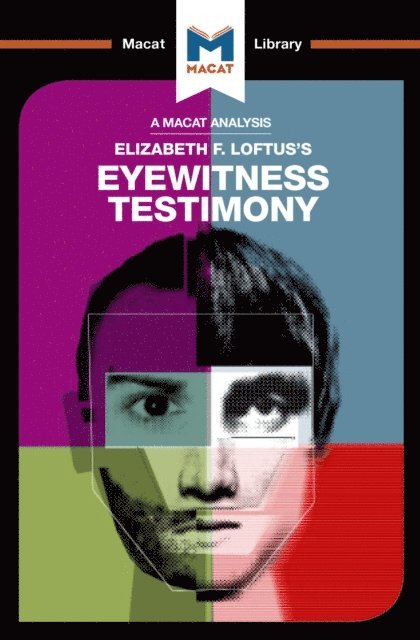
Elizabeth Loftus, a pioneering psychologist, made a landmark contribution to both these areas in Eyewitness Testimony, a trail-blazing work that undermines much of the decision-making made by judges and juries by pointing out how flawed eyewitness testimony actually is. Reporting the results of an eye-opening series of experiments and trials, Loftus explores the ways in which – unbeknownst to the witnesses themselves – memory can be distorted and become highly unreliable.
Much of Loftus’s work is based on expert use of the critical thinking skill of interpretation. Her work not only highlights multiple problems of definition with regard to courtroom testimony, but also focuses throughout on how best we can understand the meaning of the available evidence. Eyewitness Testimony is arguably the best place in the Macat library to begin any investigation of how to use and understand interpretation.
136 kr
Läs direkt efter köp
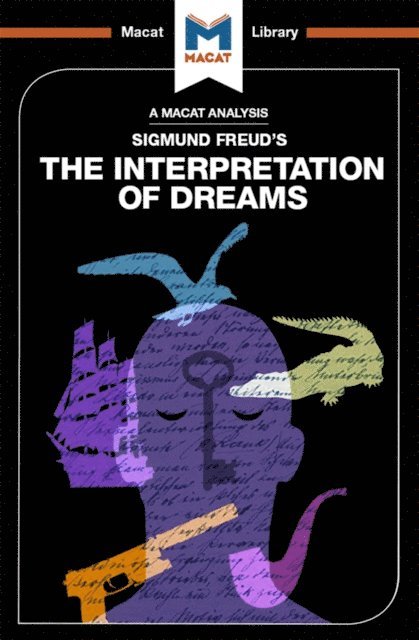
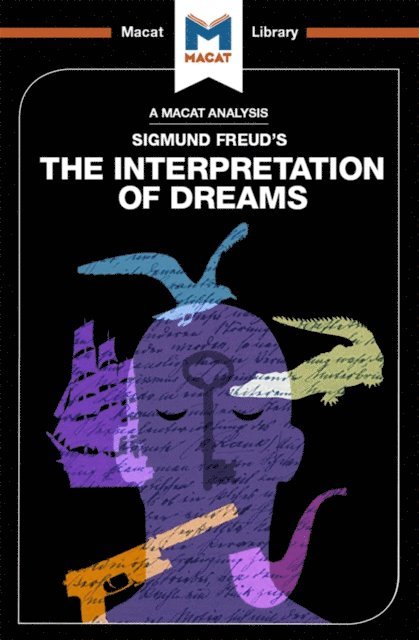
There is arguably no more famous book about the arts of interpretation and analysis than Sigmund Freud’s 1899 Interpretation of Dreams. Though the original edition of just 600 copies took eight years to sell out, it eventually became a classic text that helped cement Freud’s reputation as one of the most significant intellectual figures of the 19th and 20th centuries. In critical thinking, just as in Freud’s psychoanalytical theories, interpretation is all about understanding the meaning of evidence, and tracing the significance of things. Analysis can then be brought in to tease out the implicit reasons and assumptions that lie underneath the interpreted evidence.
Interpretation of Dreams is a masterclass in building telling analyses from ingenious interpretation of evidence. Freud worked from the assumption that all dreams were significant attempts by the unconscious to resolve conflicts. As a result, he argued, they contain in altered and disguised forms clues to our deepest unconscious urges and desires. Each must be taken on its own terms to tease out what they really mean. Though Freud’s theories have often been criticized, he remains the undisputed master of interpretation – with his critics suggesting that he was, if anything, too ingenious for his own good.
131 kr
Läs direkt efter köp
Michael R. Gottfredson and Travish Hirschi’s 1990 A General Theory of Crime is a classic text that helped reshape the discipline of criminology. It is also a testament to the powers of clear reasoning and interpretation.
In critical thinking terms, reasoning is all about presenting a solid and persuasive case – and as many people instinctively understand, the most persuasive reasoning is that which bases itself on a single, simple hook. In Gottfredson and Hirschi’s case, this hook was what has come to be known as the “self-control theory of crime” – the idea that the tendency to commit crime is directly related to an individual’s level of self-control.
While the dominant schools of thought of the time tended to focus on crime as the product of complex environmental factors, with little attempt to unify different theories, Gottfredson and Hirschi sought to interpret things so as to provide a single overarching concept that explained why crimes of all sorts were committed. Moreover, while other theories of crime concentrated on understanding and explaining specific types of law-breaking, the self-control model could, in Gottfredson and Hirschi’s view, be seen as the basis for understanding the root cause for all crime in all contexts. While such simplicity inevitably attracted as much criticism as agreement, subsequent studies have provided real-world corroboration for the General Theory’s persuasive reasoning.
136 kr
Läs direkt efter köp
Understanding evidence is critical in a court of law – and it is just as important for critical thinking.
Elizabeth Loftus, a pioneering psychologist, made a landmark contribution to both these areas in Eyewitness Testimony, a trail-blazing work that undermines much of the decision-making made by judges and juries by pointing out how flawed eyewitness testimony actually is. Reporting the results of an eye-opening series of experiments and trials, Loftus explores the ways in which – unbeknownst to the witnesses themselves – memory can be distorted and become highly unreliable.
Much of Loftus’s work is based on expert use of the critical thinking skill of interpretation. Her work not only highlights multiple problems of definition with regard to courtroom testimony, but also focuses throughout on how best we can understand the meaning of the available evidence. Eyewitness Testimony is arguably the best place in the Macat library to begin any investigation of how to use and understand interpretation.
136 kr
Läs direkt efter köp
There is arguably no more famous book about the arts of interpretation and analysis than Sigmund Freud’s 1899 Interpretation of Dreams. Though the original edition of just 600 copies took eight years to sell out, it eventually became a classic text that helped cement Freud’s reputation as one of the most significant intellectual figures of the 19th and 20th centuries. In critical thinking, just as in Freud’s psychoanalytical theories, interpretation is all about understanding the meaning of evidence, and tracing the significance of things. Analysis can then be brought in to tease out the implicit reasons and assumptions that lie underneath the interpreted evidence.
Interpretation of Dreams is a masterclass in building telling analyses from ingenious interpretation of evidence. Freud worked from the assumption that all dreams were significant attempts by the unconscious to resolve conflicts. As a result, he argued, they contain in altered and disguised forms clues to our deepest unconscious urges and desires. Each must be taken on its own terms to tease out what they really mean. Though Freud’s theories have often been criticized, he remains the undisputed master of interpretation – with his critics suggesting that he was, if anything, too ingenious for his own good.
210 kr
Skickas inom 5-8 vardagar
128 kr
Skickas inom 5-8 vardagar
146 kr
Skickas inom 5-8 vardagar
144 kr
Skickas inom 5-8 vardagar
135 kr
Skickas inom 5-8 vardagar