William Marx - Böcker
Visar alla böcker från författaren William Marx. Handla med fri frakt och snabb leverans.
4 produkter
4 produkter
454 kr
Skickas inom 10-15 vardagar
For the last 2,500 years literature has been attacked, booed, and condemned, often for the wrong reasons and occasionally for very good ones. The Hatred of Literature examines the evolving idea of literature as seen through the eyes of its adversaries: philosophers, theologians, scientists, pedagogues, and even leaders of modern liberal democracies. From Plato to C. P. Snow to Nicolas Sarkozy, literature’s haters have questioned the value of literature—its truthfulness, virtue, and usefulness—and have attempted to demonstrate its harmfulness.Literature does not start with Homer or Gilgamesh, William Marx says, but with Plato driving the poets out of the city, like God casting Adam and Eve out of Paradise. That is its genesis. From Plato the poets learned for the first time that they served not truth but merely the Muses. It is no mere coincidence that the love of wisdom (philosophia) coincided with the hatred of poetry. Literature was born of scandal, and scandal has defined it ever since.In the long rhetorical war against literature, Marx identifies four indictments—in the name of authority, truth, morality, and society. This typology allows him to move in an associative way through the centuries. In describing the misplaced ambitions, corruptible powers, and abysmal failures of literature, anti-literary discourses make explicit what a given society came to expect from literature. In this way, anti-literature paradoxically asserts the validity of what it wishes to deny. The only threat to literature’s continued existence, Marx writes, is not hatred but indifference.
235 kr
Skickas inom 7-10 vardagar
How we build our invisible libraries Erich Auerbach wrote his classic work Mimesis, a history of narrative from Homer to Proust, based largely on his memory of past reading. Having left his physical library behind when he fled to Istanbul to escape the Nazis, he was forced to rely on the invisible library of his mind. Each of us has such a library—if not as extensive as Auerbach’s—even if we are unaware of it. In this erudite and provocative book, William Marx explores our invisible libraries—how we build them and how we should expand them.Libraries, Marx tells us, are mental realities, and, conversely, our minds are libraries. We never read books apart from other texts. We take them from mental shelves filled with a variety of works that help us understand what we are reading. And yet the libraries in our mind are not always what they should be. The selection on our mental shelves—often referred to as canon, heritage, patrimony, or tradition—needs to be modified and expanded. Our intangible libraries should incorporate what Marx calls the dark matter of literature: the works that have been lost, that exist only in fragments, that have been repurposed by their authors, or were never written in the first place. Marx suggests methods for recovering this missing literature, but he also warns us that adding new titles to our libraries is not enough. We must also adopt a new attitude, one that honors the diversity and otherness of literary works. We must shed our preconceptions and build within ourselves a mental world library.
253 kr
Skickas inom 7-10 vardagar
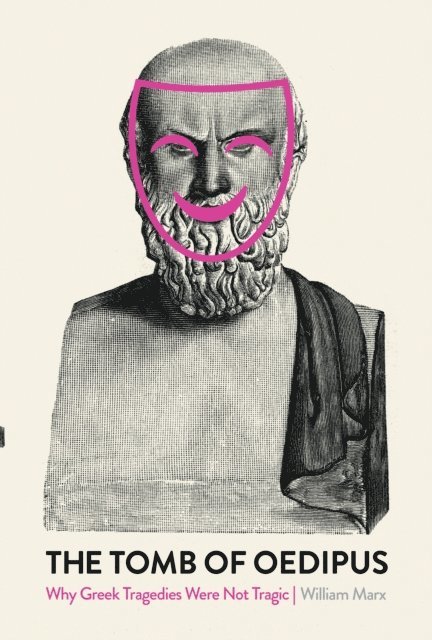
If Greek tragedies are meant to be so tragic, why do they so often end so well? Here starts the story of a long and incredible misunderstanding. Out of the hundreds of tragedies that were performed, only 32 were preserved in full. Who chose them and why? Why are the lost ones never taken into account? This extremely unusual scholarly book tells us an Umberto Eco-like story about the lost tragedies. By arguing that they would have given a radically different picture, William Marx makes us think in completely new ways about one of the major achievements of Western culture. In this very readable, stimulating, lively, and even sometimes funny book, he explores parallels with Japanese theatre, resolves the enigma of catharsis, sheds a new light on psychoanalysis. In so doing, he tells also the story of the misreadings of our modernity, which disconnected art from the body, the place, and gods. Two centuries ago philosophers transformed Greek tragedies into an ideal archetype, now they want to read them as self-help handbooks, but all are equally wrong: Greek tragedy is definitely not what you think, and we may never understand it, but this makes it matter all the more to us.
242 kr
Skickas
What is a scholar? How does a scholar eat, sleep, work, love, live, and die? From Socrates, Confucius, and Cicero to Petrarch, Emilie du Chatelet, Nietzsche and hundreds more, a scholar's life is told as never before in this remarkable literary history.William Marx holds the Chair of Comparative Literature at the College de France. This book is translated from Vie du lettre (Minuit, 2009), recipient of the Montyon Prize of the Academie francaise in 2010.