William McGovern – författare
811 kr
Läs direkt efter köp
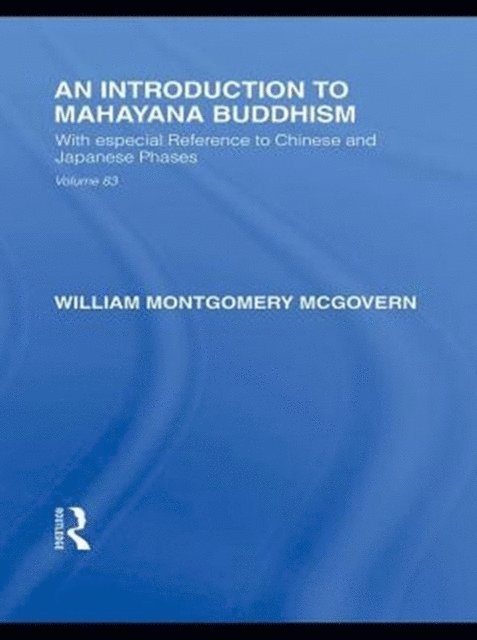
William Montgomery McGovern’s Introduction to Mahayana Buddhism was one of the first books on Mahayana Buddhism written for a Western audience. It predates influential English language overviews of Buddhism by D. T. Suzuki, A. Watts, and W. Rahula. The author was born in New York City in 1897 and spent his latter teenage years (1914-1917) training at the Nishi Hongwanji Mahayana Buddhist monastery in Kyoto, Japan. He founded the Mahayana Association at age eighteen and edited and published the journal "Mahayanist" while completing his studies at the monastery. Introduction to Mahayana Buddhism was written as part of a thesis which secured him his Buddhist degree and an honorary ordination as a Buddhist priest. Intended as a simplified and introductory text for a lay audience, the book reflects the unique perspective of a Westerner trained in Japan at a time when Mahayana Buddhism was little known in the West. Referencing Buddhist literature, it gives a short history of Buddhism and the divergence of schools of Buddhist philosophy, introduces the four noble truths, the philosophy of Karma, the nature of Buddhahood, reincarnation and the road to nirvana, Buddhist cosmology, and psychological and philosophical elements of Buddhist teachings. Although the divisions of non Mahayana Buddhist sects and philosophy described may be considered dated, Introduction to Mahayana Buddhism remains significant for its historical value in presenting Eastern religious and philosophical thought to Westerners at a pivotal time in history.
811 kr
Läs direkt efter köp
William Montgomery McGovern’s Introduction to Mahayana Buddhism was one of the first books on Mahayana Buddhism written for a Western audience. It predates influential English language overviews of Buddhism by D. T. Suzuki, A. Watts, and W. Rahula. The author was born in New York City in 1897 and spent his latter teenage years (1914-1917) training at the Nishi Hongwanji Mahayana Buddhist monastery in Kyoto, Japan. He founded the Mahayana Association at age eighteen and edited and published the journal "Mahayanist" while completing his studies at the monastery. Introduction to Mahayana Buddhism was written as part of a thesis which secured him his Buddhist degree and an honorary ordination as a Buddhist priest. Intended as a simplified and introductory text for a lay audience, the book reflects the unique perspective of a Westerner trained in Japan at a time when Mahayana Buddhism was little known in the West. Referencing Buddhist literature, it gives a short history of Buddhism and the divergence of schools of Buddhist philosophy, introduces the four noble truths, the philosophy of Karma, the nature of Buddhahood, reincarnation and the road to nirvana, Buddhist cosmology, and psychological and philosophical elements of Buddhist teachings. Although the divisions of non Mahayana Buddhist sects and philosophy described may be considered dated, Introduction to Mahayana Buddhism remains significant for its historical value in presenting Eastern religious and philosophical thought to Westerners at a pivotal time in history.
668 kr
Läs direkt efter köp
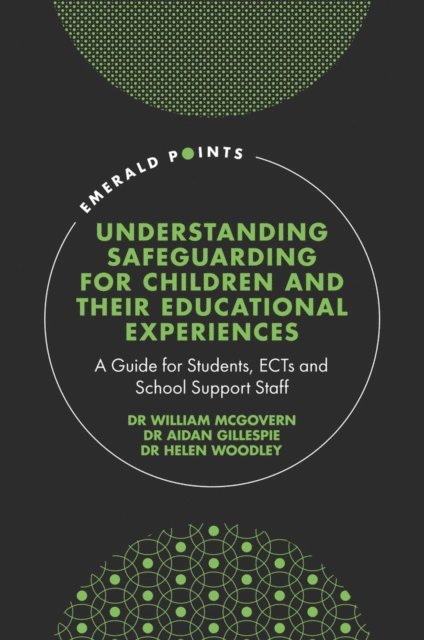
Many of the problem’s children face in relation to their personal lives, educational experiences and attainment are caused by factors that exist outside schools. Yet despite this, all educational establishments and all school staff now have a clear ‘duty’ and ‘responsibility’ to respond to safeguarding and vulnerability concerns. All school staff are expected to be particularly alert to specific risks and the needs of children in particular groups or sets of circumstances children face in their daily living experiences. In policy documents and academic texts on safeguarding and vulnerability it is relatively easy to identify and define individuals, groups and sub-groups who are deemed to be more at risk. A key gap in the existing literature is that no consideration is given to explain and understand why children and young people find themselves in these positions of risk or vulnerability in the first place.
This book fills this gap in the literature, building on current government publications, and collectively supports and compliments the endeavours of schools, universities, trainee teachers/ECTs and school support staff in relation to understanding and meeting the needs of pupils who may be at risk. This is achieved by bringing together subject area experts and academics (teaching and non-teaching) from a range of subject areas to explore three main areas: understanding the concepts of vulnerability, enhancing pupil engagement and teaching practices, and social problems, risk and resilience. This timely and accessible work will be vital reading for academic and professional teaching staff, trainee teachers and ECTs
668 kr
Läs direkt efter köp
Many of the problem’s children face in relation to their personal lives, educational experiences and attainment are caused by factors that exist outside schools. Yet despite this, all educational establishments and all school staff now have a clear ‘duty’ and ‘responsibility’ to respond to safeguarding and vulnerability concerns. All school staff are expected to be particularly alert to specific risks and the needs of children in particular groups or sets of circumstances children face in their daily living experiences. In policy documents and academic texts on safeguarding and vulnerability it is relatively easy to identify and define individuals, groups and sub-groups who are deemed to be more at risk. A key gap in the existing literature is that no consideration is given to explain and understand why children and young people find themselves in these positions of risk or vulnerability in the first place.
This book fills this gap in the literature, building on current government publications, and collectively supports and compliments the endeavours of schools, universities, trainee teachers/ECTs and school support staff in relation to understanding and meeting the needs of pupils who may be at risk. This is achieved by bringing together subject area experts and academics (teaching and non-teaching) from a range of subject areas to explore three main areas: understanding the concepts of vulnerability, enhancing pupil engagement and teaching practices, and social problems, risk and resilience. This timely and accessible work will be vital reading for academic and professional teaching staff, trainee teachers and ECTs
274 kr
Skickas
632 kr
Läs direkt efter köp
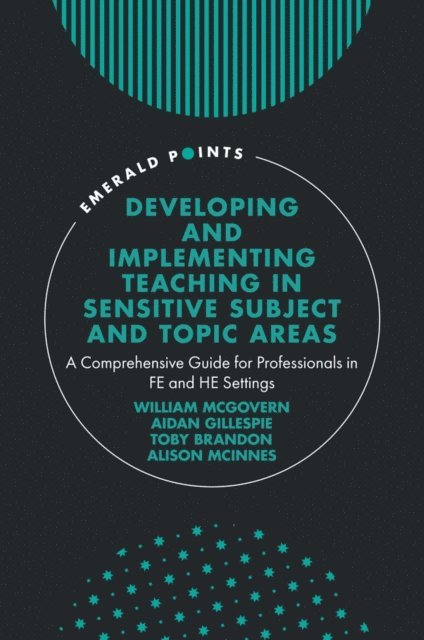
Engaging with sensitive topics is crucial for students to develop classroom and workplace resilience. These should be taught in a way that supports the acquisition of new knowledge, skills, and attributes, and that enables students to prepare for and thrive in their future professional life.
Providing educators with a comprehensive understanding of the issues involved in teaching sensitive subjects and topics, this collected work invites them to consider their position and practice in the classroom, as well as the implications that this might for the learner and their learning experience. Presenting illustrative examples from the fields of public health, social care, psychology, social work, education, and criminology, contributors draw on the work of active academics and empirical researchers with extensive experience developing and designing relevant teaching activities. Recognising the range of sensitive concerns that staff may need to handle, chapters provide theoretical and practical guidance across a range of subjects, including cultural sensitivity, colonialism, faith and religion, homelessness, care experience, poverty, mental health, trauma, violence, and substance use.
Rooted in actual practice, Developing and Implementing Teaching in Sensitive Subject and Topic Areas identifies the best methodology for creating learning environments that feel both safe and critically stimulating for all involved.
626 kr
Läs direkt efter köp
Engaging with sensitive topics is crucial for students to develop classroom and workplace resilience. These should be taught in a way that supports the acquisition of new knowledge, skills, and attributes, and that enables students to prepare for and thrive in their future professional life.
Providing educators with a comprehensive understanding of the issues involved in teaching sensitive subjects and topics, this collected work invites them to consider their position and practice in the classroom, as well as the implications that this might for the learner and their learning experience. Presenting illustrative examples from the fields of public health, social care, psychology, social work, education, and criminology, contributors draw on the work of active academics and empirical researchers with extensive experience developing and designing relevant teaching activities. Recognising the range of sensitive concerns that staff may need to handle, chapters provide theoretical and practical guidance across a range of subjects, including cultural sensitivity, colonialism, faith and religion, homelessness, care experience, poverty, mental health, trauma, violence, and substance use.
Rooted in actual practice, Developing and Implementing Teaching in Sensitive Subject and Topic Areas identifies the best methodology for creating learning environments that feel both safe and critically stimulating for all involved.
1 672 kr
Läs direkt efter köp
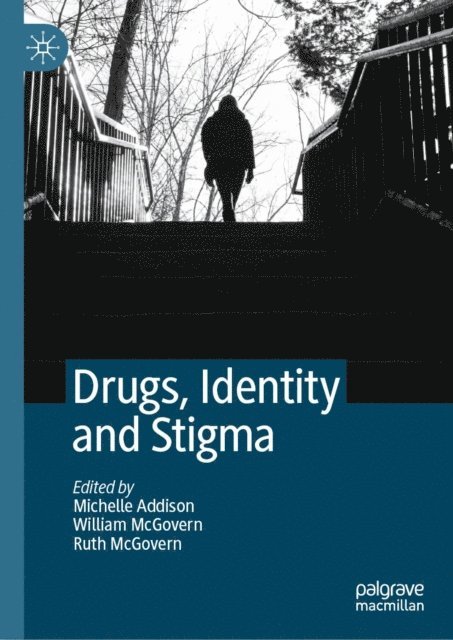
This book calls attention to the impact of stigma experienced by people who use illicit drugs. Stigma is powerful: it can do untold harm to a person and place with longstanding effects. Through an exploration of themes of inequality, power, and feeling ‘out of place’ in neoliberal times, this collection focuses on how stigma is negotiated, resisted and absorbed by people who use drugs. How does stigma get under the skin? Drawing on a range of theoretical frameworks and empirical data, this book draws attention to the damaging effects stigma can have on identity, recovery, mental health, desistance from crime, and social inclusion. By connecting drug use, stigma and identity, the authors in this collection share insights into the everyday experiences of people who use drugs and add to debate focused on an agenda for social justice in drug use policy and practice.