William R. Nester – författare
Visar alla böcker från författaren William R. Nester. Handla med fri frakt och snabb leverans.
19 produkter
19 produkter
Inbunden, Engelska, 1997
1 602 kr
Skickas inom 10-15 vardagar
What is the government's proper role in the economy? Do free or managed markets best promote economic development? Who can best pick industrial winners and losers, the government or private sector? This book attempts to answer those and related questions by exploring the evolution and results of federal policies towards half a dozen economic sectors. Those policies are largely determined by the representatives of the targeted industry, bureaucrats from agencies and departments that administer that industry, and politicians with firms from that industry in their districts. These 'iron triangles' capture a 'virtuous' political economic cycle in which they use their united power to grant themselves favourable policies which in turn enhances their power. As will be seen, the results of such a politicized industrial policy process varies considerably from one industry to the next.
Inbunden, Engelska, 1991
1 650 kr
Skickas inom 10-15 vardagar
Japan achieved it's present economic position by rejecting free trade theory and instead mastering neomercantilist policies which target strategic industries for development with a range of government sponsored cartels, subsidies, import barriers and export incentives. These policies stimulated an economic growth rate which averaged ten percent before 1973, and five percent since, rates four and two times greater than America's during the same periods. This book analyzes the policy making process, implementation, successes, occasional shortcomings, and challenges posed by Tokyo's neomercantilist policies toward its trade rivals.
Häftad, Engelska, 2015
327 kr
Skickas inom 10-15 vardagar
The French and Indian War was the world's first truly global conflict. When the French lost to the British in 1763, they lost their North American empire along with most of their colonies in the Caribbean, India, and West Africa. In The French and Indian War and the Conquest of New France, the only comprehensive account from the French perspective, William R. Nester explains how and why the French were defeated. He explores the fascinating personalities and epic events that shaped French diplomacy, strategy, and tactics and determined North America's destiny.What began in 1754 with a French victory - the defeat at Fort Necessity of a young Lieutenant Colonel George Washington - quickly became a disaster for France. The cost in soldiers, ships, munitions, provisions, and treasure was staggering. France was deeply in debt when the war began, and that debt grew with each year. Further, the country's inept system of government made defeat all but inevitable. Nester describes missed diplomatic and military opportunities as well as military defeats late in the conflict.Nester masterfully weaves his narrative of this complicated war with thorough accounts of the military, economic, technological, social, and cultural forces that affected its outcome. Readers learn not only how and why the French lost, but how the problems leading up to that loss in 1763 foreshadowed the French Revolution almost twenty-five years later.One of the problems at Versailles was the king's mistress, the powerful Madame de Pompadour, who encouraged Louis XV to become his own prime minister. The bewildering labyrinth of French bureaucracy combined with court intrigue and financial challenges only made it even more difficult for the French to succeed. Ultimately, Nester shows, France lost the war because Versailles failed to provide enough troops and supplies to fend off the English enemy.
Inbunden, Engelska, 2016
391 kr
Skickas inom 5-8 vardagar
When the leaders of the French Revolution executed Louis XVI and Marie Antoinette in 1793, they sent a chilling message to the hereditary ruling orders in Europe. Believing that monarchy anywhere presented a threat to democratic rule in France, the leaders of the revolution declared war on European aristocracies, including those of Great Britain. For more than twenty years thereafter, France and England waged a protracted war that ended in British victory. In Titan, William R. Nester offers a deeply informed and thoroughly fascinating narrative of how England accomplished this remarkable feat.Between 1789 and 1815, British leaders devised, funded, and led seven coalitions against the revolutionary and Napoleonic governments of France. In each enterprise, statesmen and generals searched for order amid a complex welter of bureaucratic, political, economic, psychological, technological, and international forces. Nester combines biographies of great men - the likes of William Pitt, Horatio Nelson, and Arthur Wellesley - with an explanation of the critical decisions they made in Britain's struggle for power and his own keen analysis of the forces that operated beyond their control. Their efforts would eventually crush France and Napoleon and establish a system of European power relations that prevented a world war for nearly a century.The interplay of individuals and events, the importance of conjunctures and contingency, the significance of Britain's island character and resources: all come into play in Nester's exploration of the art of British military diplomacy. The result is a comprehensive and insightful account of the endeavors of statesmen and generals to master the art of power in a complex battle for empire.
Häftad, Engelska, 2018
278 kr
Skickas inom 10-15 vardagar
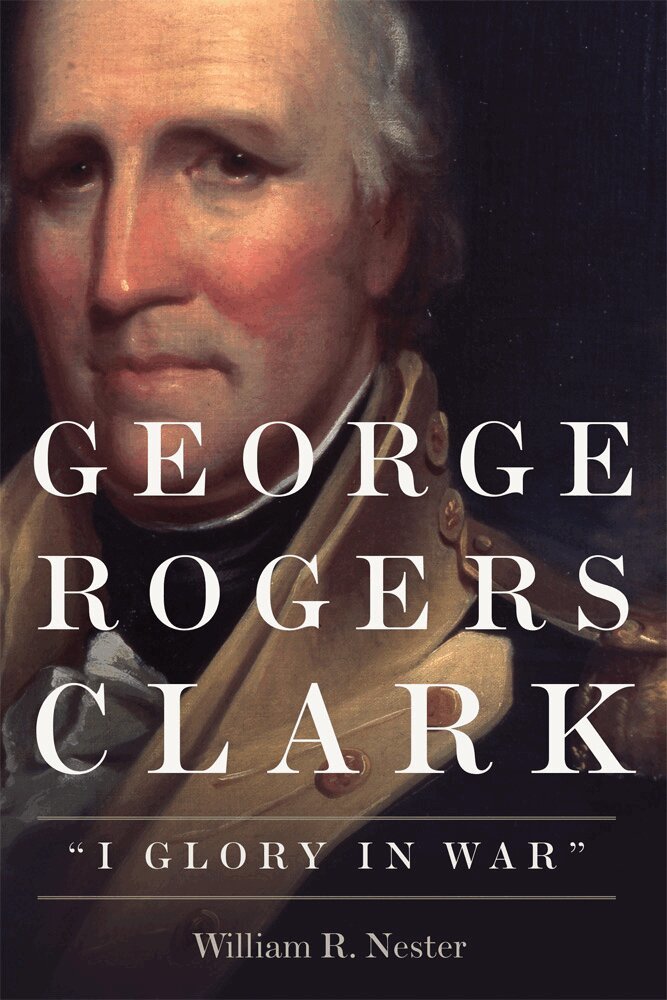
George Rogers Clark (1752-1818) led four victorious campaigns against the Indians and British in the Ohio Valley during the American Revolution, but his most astonishing coup was recapturing Fort Sackville in 1779, when he was only twenty-six. For eighteen days, in the dead of winter, Clark and his troops marched through bone-chilling nights to reach the fort. With a deft mix of guile and violence, Clark led his men to triumph, without losing a single soldier. Although historians have ranked him among the greatest rebel commanders, Clark's name is all but forgotten today. William R. Nester resurrects the story of Clark's triumphs and his downfall in this, the first full biography of the man in more than fifty years.Nester attributes Clark's successes to his drive and daring, good luck, charisma, and intellect. Born of a distinguished Virginia family, Clark wielded an acute understanding of human nature, both as a commander and as a diplomat. His interest in the natural world was an inspiration to lifelong friend Thomas Jefferson, who asked him in 1784 to lead a cross-country expedition to the Pacific and back. Clark turned Jefferson down. Two decades later, his youngest brother, William, would become the Clark celebrated as a member of the Corps of Discovery.By the beginning of the nineteenth century, though, George Rogers Clark may not have been fit to command any expedition. After the revolution, he raged against the government and pledged fealty to other nations, leading to his arrest under the Sedition Act.The inner demons that fueled Clark's anger also drove him to excessive drinking. He died at the age of sixty-five, bitter, crippled, and alcoholic. He was, Nester shows, a self-destructive hero: a volatile, multidimensional man whose glorying in war ultimately engaged him in conflicts far removed from the battlefield and against himself.
Inbunden, Engelska, 1993
1 430 kr
Skickas inom 5-8 vardagar
America's relationship with Japan recently passed its 140th anniversary. Over that period, hundreds of books and thousands of articles have explored different issues or periods of the relationship. Yet within that vast library, no book has analyzed the entire relationship from the beginning to the present. In Power Across the Pacific, William R. Nester fills this void, analyzing both the geopolitical phase of America's relationship with Japan (1853-1945) and its geoeconomic phase, from 1945 to the present day. William R. Nester systematically untangles the interrelated perceptions, convergent and divergent national interests, and shifting power relations that have shaped relations between the two countries. Along the way he identifies the key foreign policy figures for both countries, revealing the ways in which domestic and international interests on both sides affected their interactions. Power Across the Pacific can serve both as a definitive study of the history of U.S.-Japanese relations, as well as a reference for particular periods within that history.
Häftad, Engelska, 2011
281 kr
Skickas inom 5-8 vardagar
The Foundation of Japanese Power: Continuities, Changes, Challenges
Continuities, Changes, Challenges
Inbunden, Engelska, 1990
3 442 kr
Skickas inom 3-6 vardagar
Häftad, Engelska, 1992
539 kr
Skickas inom 10-15 vardagar
An analysis of how Tokyo entangles strategic countries and regions in an integrated overseas political economic web, generating enormous wealth and power for Japan.
Häftad, Engelska, 1993
539 kr
Skickas inom 10-15 vardagar
Analyzing relations amidst the European Community's growing unity and Japan's ever more dynamic economy, this book compares the processes, means, ends, successes and failures of European and Japanese industrial, trade and foreign policies. Nester has also written "Japan and the Third World".
Häftad, Engelska, 1991
1 650 kr
Skickas inom 10-15 vardagar
Japan achieved it's present economic position by rejecting free trade theory and instead mastering neomercantilist policies which target strategic industries for development with a range of government sponsored cartels, subsidies, import barriers and export incentives.
Häftad, Engelska, 1998
555 kr
Skickas inom 10-15 vardagar
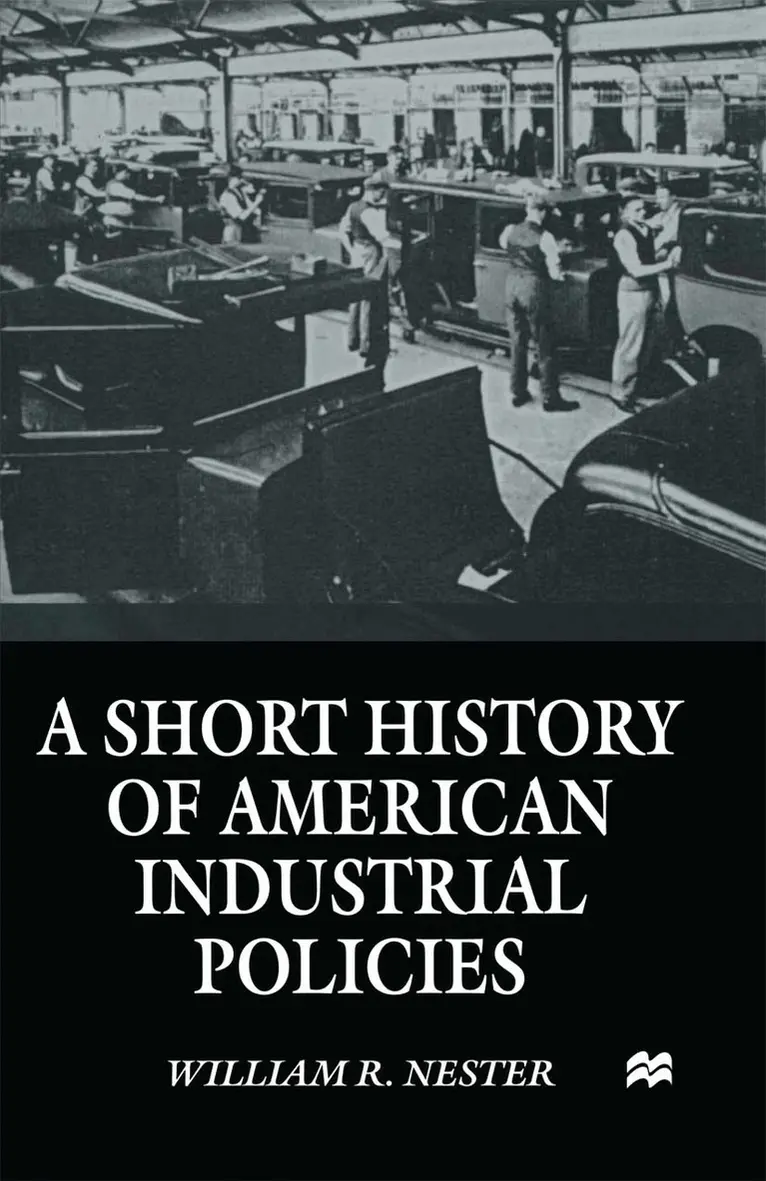
For nearly four centuries, Americans have debated the government's proper role in developing the economy. A Short History of American Industrial Policies analyzes the ideological, political, and industrial policy struggle from the colonial era to the 1990s.
Inbunden, Engelska, 2017
1 536 kr
Skickas inom 10-15 vardagar
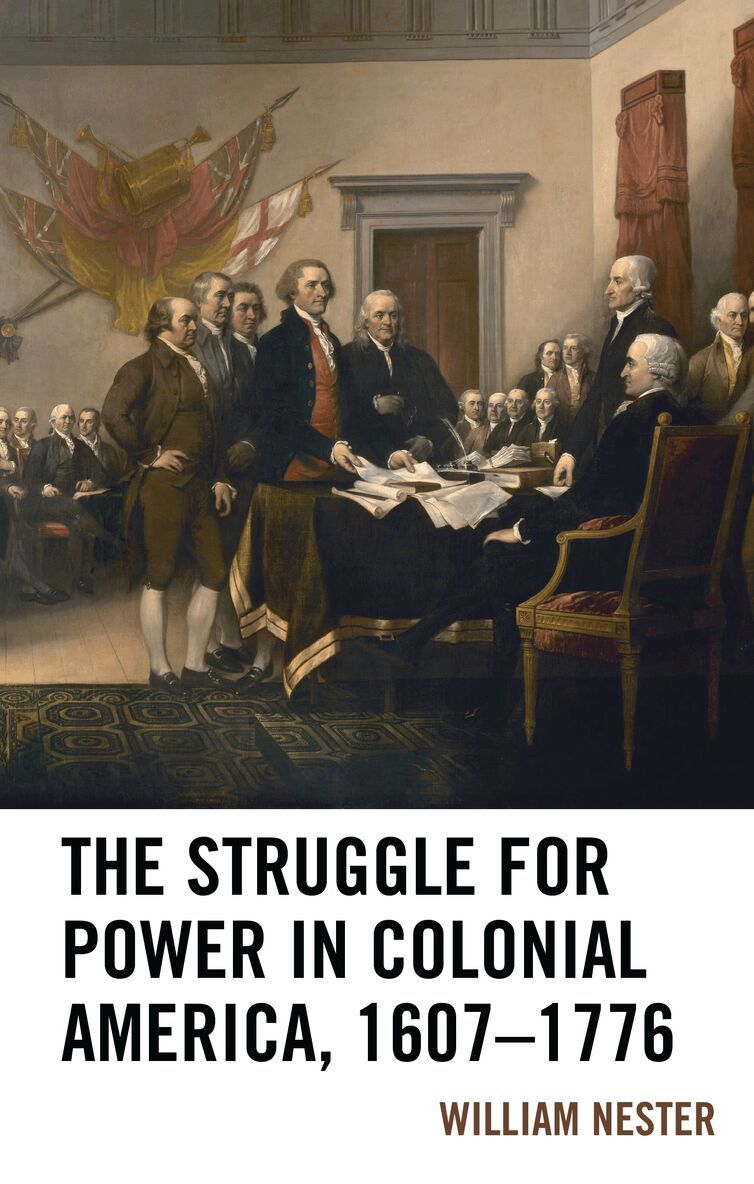
America’s colonial era began and ended dramatically, with the founding of the first enduring settlement at Jamestown on May 14, 1607 and the Declaration of Independence in Philadelphia on July 4, 1776. During those 169 years, conflicts were endemic and often overlapping among the colonists, between the colonists and the original inhabitants, between the colonists and other imperial European peoples, and between the colonists and the mother country. As conflicts were endemic, so too were struggles for power.This study reveals the reasons for, stages, and results of these conflicts. The dynamic driving this history are two inseparable transformations as English subjects morphed into American citizens, and the core American cultural values morphed from communitarianism and theocracy into individualism and humanism. These developments in turn were shaped by the changing ways that the colonists governed, made money, waged war, worshipped, thought, wrote, and loved. Extraordinary individuals led that metamorphosis, explorers like John Smith and Daniel Boone, visionaries like John Winthrop and Thomas Jefferson, entrepreneurs like William Phips and John Hancock, dissidents like Rogers Williams and Anne Hutchinson, warriors like Miles Standish and Benjamin Church, free spirits like Thomas Morton and William Byrd, and creative writers like Anne Bradstreet and Robert Rogers. Then there was that quintessential man of America’s Enlightenment, Benjamin Franklin. And finally, George Washington who, more than anyone, was responsible for winning American independence when and how it happened.
Häftad, Engelska, 2019
605 kr
Skickas inom 10-15 vardagar
America’s colonial era began and ended dramatically, with the founding of the first enduring settlement at Jamestown on May 14, 1607 and the Declaration of Independence in Philadelphia on July 4, 1776. During those 169 years, conflicts were endemic and often overlapping among the colonists, between the colonists and the original inhabitants, between the colonists and other imperial European peoples, and between the colonists and the mother country. As conflicts were endemic, so too were struggles for power.This study reveals the reasons for, stages, and results of these conflicts. The dynamic driving this history are two inseparable transformations as English subjects morphed into American citizens, and the core American cultural values morphed from communitarianism and theocracy into individualism and humanism. These developments in turn were shaped by the changing ways that the colonists governed, made money, waged war, worshipped, thought, wrote, and loved. Extraordinary individuals led that metamorphosis, explorers like John Smith and Daniel Boone, visionaries like John Winthrop and Thomas Jefferson, entrepreneurs like William Phips and John Hancock, dissidents like Rogers Williams and Anne Hutchinson, warriors like Miles Standish and Benjamin Church, free spirits like Thomas Morton and William Byrd, and creative writers like Anne Bradstreet and Robert Rogers. Then there was that quintessential man of America’s Enlightenment, Benjamin Franklin. And finally, George Washington who, more than anyone, was responsible for winning American independence when and how it happened.
Inbunden, Engelska, 2018
1 627 kr
Skickas inom 10-15 vardagar
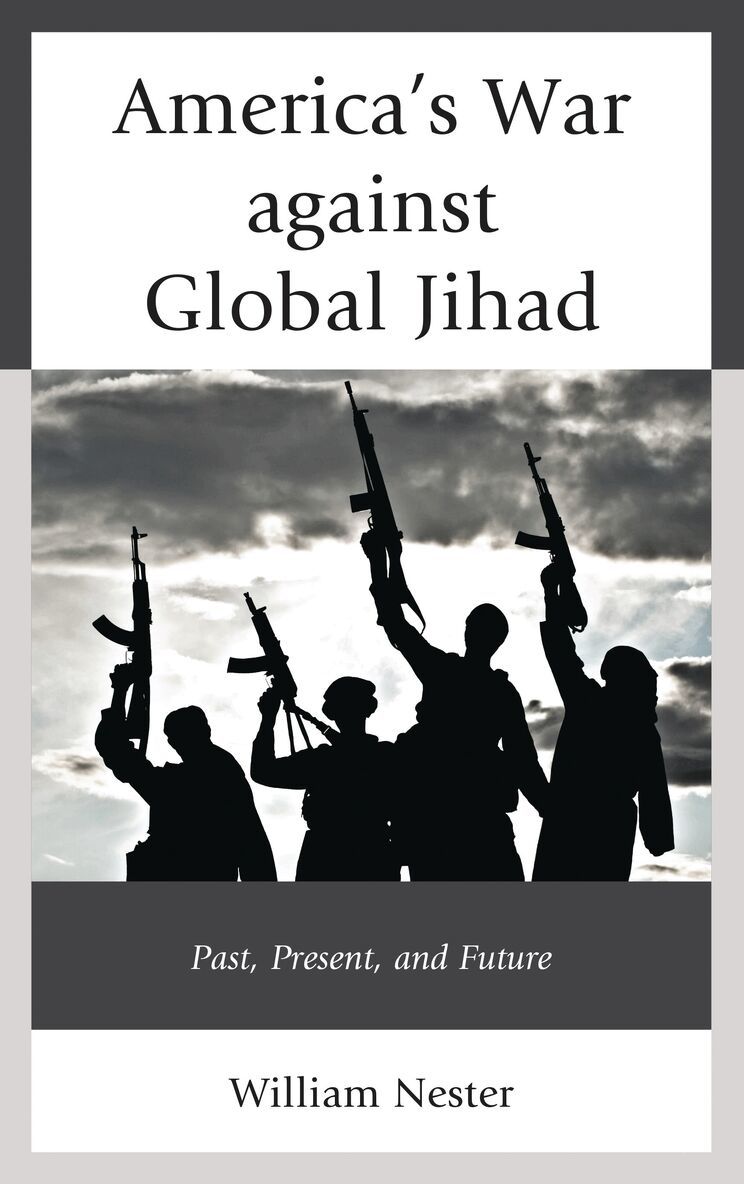
A specter haunts America, the specter of Global Jihad, Islamic Holy War. This specter was never more horrific than on September 11, 2001, when nineteen fanatics hijacked four jetliners and used them as guided missiles to destroy the twin World Trade Towers, damage the Pentagon, murder nearly 3,000 people, and cause as much as several hundred billion dollars’ worth of direct and indirect damage to New York City and the national economy. But Jihadists have periodically attacked Americans ever since November 1979, when mobs shouting death to America overran the American embassy in Tehran and held 52 officials hostage for 444 days. President George W. Bush responded to the September 11 atrocities by declaring a global war on terror. Now in its second decade, that war has cost the United States thousands of lives and trillions of dollars. Americans are haunted by horrific televised images from across a swath of the Muslim world of bomb-blasted cities, hundreds of slaughtered bodies, thousands of refugees huddled in squalid camps, and American journalists in orange jump suits kneeling in the desert before the black robed and masked men who will behead them. Americans increasingly question whether the global war on terror has been worth those costs for their own nation and the lands where it is fought. This book analyzes America’s crusade against Jihadism. The key related questions it addresses are these: Looking back, what were the successes and failures of Washington’s counter-Jihadist strategy before and after September 11? Looking ahead, should Americans stay the course or cut their losses in Iraq, Afghanistan, and elsewhere? Was the catastrophic September 11 attack a one-time event or could its equivalent or worse in death and destruction happen again? Renowned Harvard professor Samuel Huntington asserted that: “The underlying problem for the West is not Islamic fundamentalism, it is Islam, a different civilization, whose people are convinced of the superiority of their culture and are obsessed with the inferiority of their power.” Is that true? Just what of Muhammad’s words and deeds, if any, justifies the barbarism of al Qaeda, Islamic State, and other Jihadists? Finally, just how corporeal is that specter of global Jihad to the United States? A startling surprise awaits the reader in the final chapter as acclaimed expert William Nester weighs the specter of global Jihad against an array of other national security threats.
Inbunden, Engelska, 2019
1 536 kr
Skickas inom 10-15 vardagar
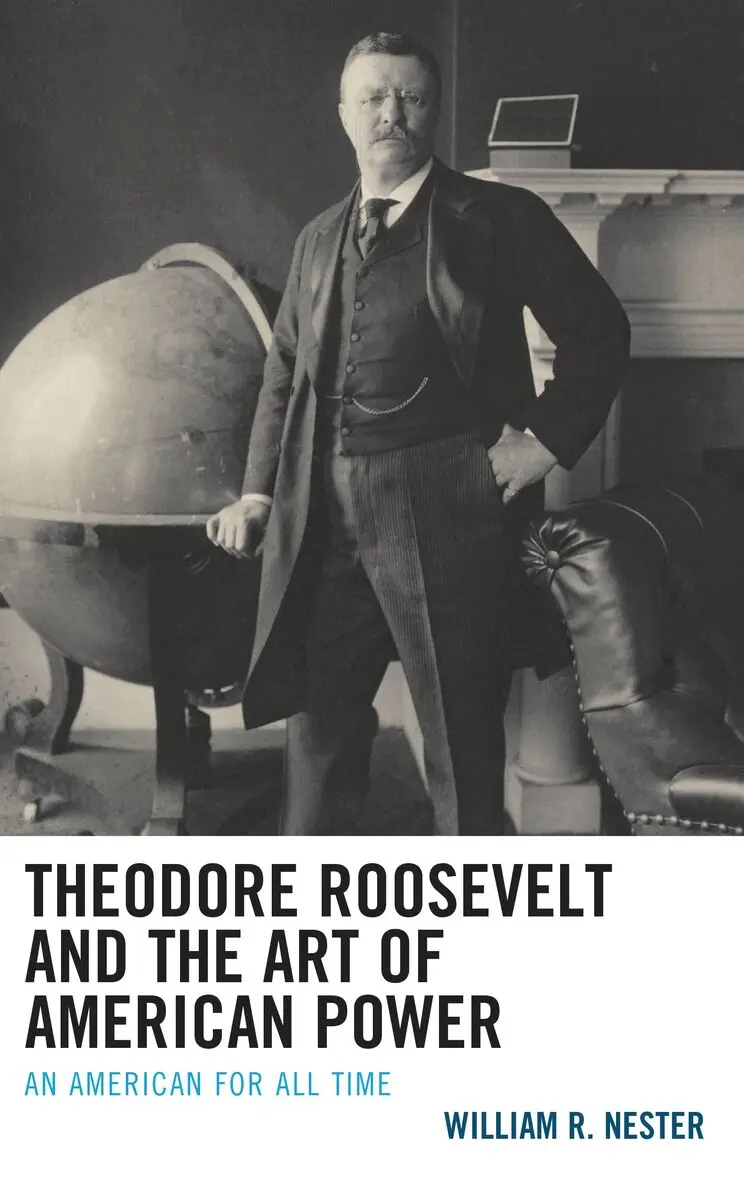
Theodore Roosevelt is an American icon, his face carved in granite alongside those of Washington, Jefferson, and Lincoln on Mt. Rushmore. He is the only American awarded both the Medal of Honor and Nobel Peace Prize. As president, he pushed through a stubborn Congress to breakup corporate monopolies strangling the economy, impose health standards on the food and drug industries, and conserve America’s natural heritage, including the Grand Canyon and Redwood forest. He was a brilliant diplomat who ended a war between Japan and Russia, and prevented a war between Germany and France. He engineered independence for the province of Panama from Columbia, then signed a treaty with the new country that entitled the United States to build, run, and defend a Panama canal. He crusaded for progressive reforms as a New York assemblyman, U.S. civil service commissioner, New York City police commissioner, and New York governor. He led scientific expeditions across East Africa’s savanna and Brazil’s rainforest. During the war with Spain, he raised a cavalry regiment and led his Rough Riders to a decisive victory at San Juan Heights. As a Dakota rancher during the frontier’s twilight, he squared off with outlaws and renegade Indians. He was a prolific writer, authoring 38 books and hundreds of essays. Roosevelt was among the most charismatic presidents. Yet, although most Americans adored him, most Wall Street moguls and political bosses hated him for his reforms. He was complex, simultaneously peacemaker and warmonger, progressive and conservative, Machiavellian and Kantian, avid hunter and nature lover. Roosevelt accomplished all that he did because he mastered the art of American power. His motto “speak softly and carry a big stick” exemplified how he asserted power to defend or enhance American interests. Time after time he bested such titans as J.P. Morgan or Kaiser Wilhelm at the game of power. Although he is the subject of dozens of books, this is the first to comprehensively explore just how Roosevelt understood, massed, and wielded power to pursue his vision for an America as the world’s most prosperous, just, and influential nation.
Häftad, Engelska, 2021
566 kr
Skickas inom 10-15 vardagar
Theodore Roosevelt is an American icon, his face carved in granite alongside those of Washington, Jefferson, and Lincoln on Mt. Rushmore. He is the only American awarded both the Medal of Honor and Nobel Peace Prize. As president, he pushed through a stubborn Congress to breakup corporate monopolies strangling the economy, impose health standards on the food and drug industries, and conserve America’s natural heritage, including the Grand Canyon and Redwood forest. He was a brilliant diplomat who ended a war between Japan and Russia, and prevented a war between Germany and France. He engineered independence for the province of Panama from Columbia, then signed a treaty with the new country that entitled the United States to build, run, and defend a Panama canal. He crusaded for progressive reforms as a New York assemblyman, U.S. civil service commissioner, New York City police commissioner, and New York governor. He led scientific expeditions across East Africa’s savanna and Brazil’s rainforest. During the war with Spain, he raised a cavalry regiment and led his Rough Riders to a decisive victory at San Juan Heights. As a Dakota rancher during the frontier’s twilight, he squared off with outlaws and renegade Indians. He was a prolific writer, authoring 38 books and hundreds of essays. Roosevelt was among the most charismatic presidents. Yet, although most Americans adored him, most Wall Street moguls and political bosses hated him for his reforms. He was complex, simultaneously peacemaker and warmonger, progressive and conservative, Machiavellian and Kantian, avid hunter and nature lover. Roosevelt accomplished all that he did because he mastered the art of American power. His motto “speak softly and carry a big stick” exemplified how he asserted power to defend or enhance American interests. Time after time he bested such titans as J.P. Morgan or Kaiser Wilhelm at the game of power. Although he is the subject of dozens of books, this is the first to comprehensively explore just how Roosevelt understood, massed, and wielded power to pursue his vision for an America as the world’s most prosperous, just, and influential nation.
Inbunden, Engelska, 2008
1 082 kr
Tillfälligt slut
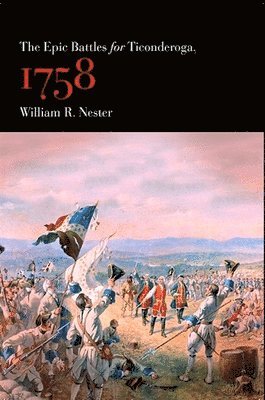
A history of the military campaigns near Fort Ticonderoga, New York, in 1758.On July 8, 1758, British General James Abercromby ordered a controversial frontal assault of the French defenses on the Ticonderoga peninsula in upstate New York. Outnumbering the French by four to one, the capture of their fort, named Carillon, seemed all but assured. Once the fort-called the "key to a continent"-was in British hands the road would be open to invade Canada, capture Montreal and Quebec, and end the French and Indian War. The attack, however, would go horribly wrong and result in nearly 2,000 British casualties, the single bloodiest day of the entire war. It would be another year before the British, under a different commander, would capture the fortifications and rename them Fort Ticonderoga. The Epic Battles for Ticonderoga, 1758 examines the skirmishes and raids in the months leading up to the battle, discusses Abercromby's campaign in the larger context of British grand strategy for the year 1758, the roles of key military and political figures on both sides, and the conflict's aftermath.
Häftad, Engelska, 2008
388 kr
Tillfälligt slut
A history of the military campaigns near Fort Ticonderoga, New York, in 1758.On July 8, 1758, British General James Abercromby ordered a controversial frontal assault of the French defenses on the Ticonderoga peninsula in upstate New York. Outnumbering the French by four to one, the capture of their fort, named Carillon, seemed all but assured. Once the fort-called the "key to a continent"-was in British hands the road would be open to invade Canada, capture Montreal and Quebec, and end the French and Indian War. The attack, however, would go horribly wrong and result in nearly 2,000 British casualties, the single bloodiest day of the entire war. It would be another year before the British, under a different commander, would capture the fortifications and rename them Fort Ticonderoga. The Epic Battles for Ticonderoga, 1758 examines the skirmishes and raids in the months leading up to the battle, discusses Abercromby's campaign in the larger context of British grand strategy for the year 1758, the roles of key military and political figures on both sides, and the conflict's aftermath.