William Trimble – författare
Visar alla böcker från författaren William Trimble. Handla med fri frakt och snabb leverans.
3 produkter
3 produkter
Häftad, Engelska, 1988
706 kr
Skickas inom 5-8 vardagar
This book chronicles the history of All American Aviation of western Pennsylvania, a commercial airline pioneer. The brainchild of self-styled inventor Dr. Lytle S. Adams and Richard C. du Pont, the company began as an airmail delivery carrier, taking advantage of the Experimental Air Mail Act passed by Congress in 1938. The Airway to Everywhere relates the exciting early days of airmail delivery—hair-raising tales of courageous pilots who scooped mail bags tethered to wires strung between poles on makeshift airfields. The story of this airline is placed within the context a typical twentieth-century American business pattern-where technological innovation is followed by development and commercial application, followed by government subsidies and corporate takeovers. In that vein, All American Aviation would become Allegheny Airlines, and later, U.S. Air.
Häftad, Engelska, 2004
212 kr
Skickas inom 5-8 vardagar
E-bok
Engelska, 2013527 kr
Läs direkt efter köp
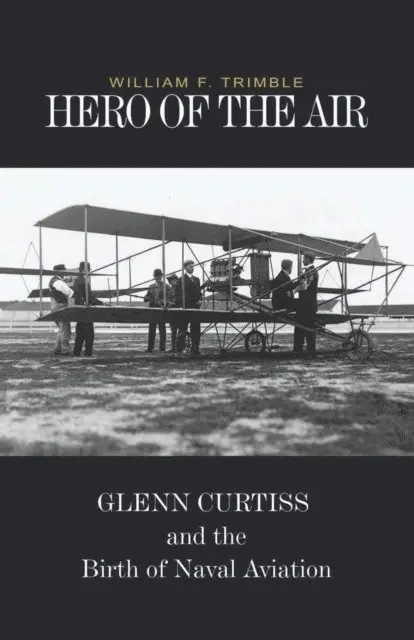
In this biography, William F. Trimble examines the pioneering work of Glenn Curtiss and his role in the originsof aviation in the U.S. Navy in the years up to and through World War I. A self-taught mechanic and inventor, Curtiss was a key figure in the development of the airplane during the early part of the century and his contributions to aviation are well known. This book s careful examination of his partnership with the Navy breaks new ground in revealing significant new details of his contributions. Curtiss s links to the Navy came as result of aviation advocates within the Navy, chief among them Captain Washington I. Chambers, who recognized that the Navy had special requirements for airplanes and their operations, and for aviators and their training. Curtiss helped meet the special requirements of the service for aircraft, particularly those with the potential for operating with naval vessels at sea or in conducting long-distance flights over water. He also was instrumental in training the first naval aviators. Curtiss and the Navy continued their collaboration through World War I, reaching a climax in 1919 with the first transatlantic flight of the famed Navy-Curtiss NC flying boat.This book addresses the broader implications of the Curtiss-Navy collaboration in the context of the longstandingtrend of government-private cooperation in the introduction and development of new technologies. It also explores the interactive dynamics of weapons procurement and technological change within a large and entrenched bureaucracy and helps lay to rest the persistent myth that the Navy resisted the introduction of aviation