William Van Caenegem – författare
350 kr
Läs direkt efter köp
935 kr
Skickas inom 7-10 vardagar
291 kr
Skickas inom 7-10 vardagar
350 kr
Läs direkt efter köp
2 022 kr
Skickas inom 5-8 vardagar
410 kr
Läs direkt efter köp
Divided into five sections, the expert contributors of this book provide different perspectives on legal education in an ever-growing industry:
Dealing with the different national philosophies of legal educationIgnoring the civil law and common law divide - a brave new worldEvolving initiatives in legal education for global practiceInternational practice - attorneys'' insightsLitigation and arbitration - international advocacy across bordersThis book will be useful to scholars and practitioners alike who are charged with teaching law students and preparing them for the demands of practice.
Contributors: J. Basedow, L. Boo, L. Boulle, S. Chesterman, M. Coper, Justice J. Douglas, M. Hiscock, D.X. Hop, C.-F. Lo, V.I. Lo, D. O''Donovan, A. Petridis, R. Russell, S. Steele, G. Triggs, W. van Caenegem, B. Wolski
2 022 kr
Skickas inom 5-8 vardagar
410 kr
Läs direkt efter köp
The original contributions illustrate how IP rights can be utilised, through open source licensing systems and private transfers, to disseminate knowledge. Reforms are recommended. The discussion takes in patents, copyright, trade secrets and relational obligations, considering the design of legislative directives, default principles, administrative practices, contractual terms and license specifications.
Providing contemporary empirical studies and covering public administration, collective and open approaches, and regulation of private transactions, this comprehensive book will prove a stimulating read for academics and students of law, business and management and development studies. Government policy makers and regulators as well as IP managers and advocates will also find much to provoke thought.
2 100 kr
Skickas inom 5-8 vardagar
395 kr
Läs direkt efter köp
The authors have all confronted these challenges of internationalisation through their extensive knowledge and experience in civil law, common law and mixed jurisdictions around the globe. Their analysis of the implications for researchers and teachers, as well as practitioners, law-makers and reformers is original and their different proposals for dealing with the challenges are both practical and at times, radical.
This book is a must-read for those exposed to the internationalisation of law, be they academics, cross border practitioners, judges, arbitrators, or those engaged in legal reform and policy.
Internationalisation of Legal Education
1 294 kr
Skickas inom 10-15 vardagar
1 594 kr
Läs direkt efter köp
This volume provides an overview of thestate of internationalisation of legal education (IOLE) in many civil law andcommon law countries. It provides a picture of the status of the debate aboutthe shape and degree of internationalisation in the curriculum in the differentcountries, and the debates surrounding the adoption of a more internationalapproach to legal education in the contemporary world.
It is a compilation of the NationalReports submitted for the August 2014 Congress of the IACL held at Vienna, andcontains an introductory general report. Together, the reports examine suchquestions as: Why is the topic of internationalization of legal education on theagenda now? Why is it a relevant subject for examination today? Does the topic generatethe same level of interest everywhere in the world? Is enthusiasm for IOLEmainly driven by the academic sector, by government, by multinationalcorporations? Is the interest closely linked with the globalization of thepractice of law? Or is globalisation of law itself something of a myth, or areality reserved for only a very small percentage of practising lawyers aroundthe world?
The general andnational reports make clear that there is indeed widespread interest in IOLE,and numerous disparate initiatives around the world. Nonetheless, some NationalReporters state that the topic is simply not on the agenda at all. All in all,the volume shows that the approachesto internationalisation are many and varied, but every jurisdiction recognisesthe importance of introducing aspiring lawyers to a more integrated globalenvironment.
Importance of Place: Geographical Indications as a Tool for Local and Regional Development
1 690 kr
Skickas inom 10-15 vardagar
1 538 kr
Läs direkt efter köp
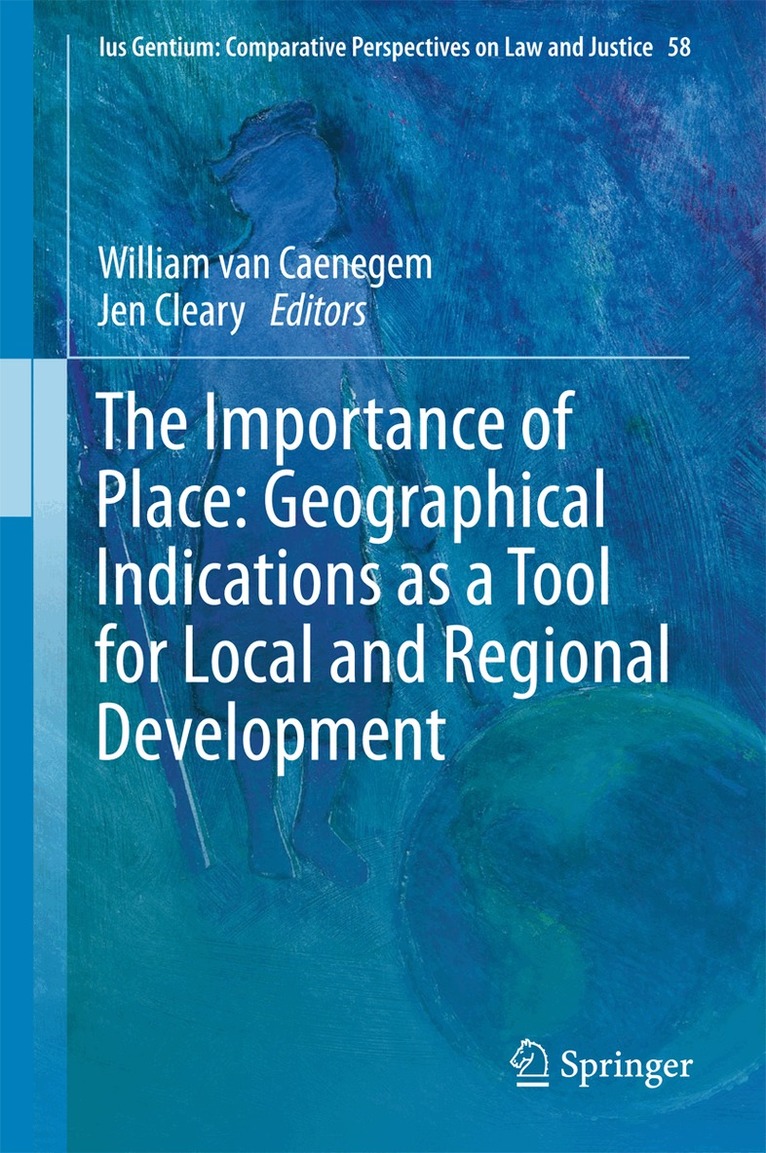
This book explores the potential benefits and disadvantages of geographical indication (GIs) registration schemes, analyzing the utility of GI registrations for the development and promotion of regional economies, both in national and international markets. The book draws on the van Caenegem, Cleary & Drahos Australian Provenance Report, along with the valuable empirical data collected in connection with it.
The book situates the rural development question in an international context, presenting several case studies from Italy, France and Morocco, New Zealand and Australia. The book contains various chapters focused on comparing regulatory structures in various relevant jurisdictions and drawing on other countries’ experiences. It contains significant contributions from industry actors with extensive experience in regional branding initiatives and GI-related policy issues.
Progressive in structure, the book starts from the ‘big picture’ level before moving down to the local and concrete scale. Geographical indications of Australian products are vital both in domestic and overseas markets by accurately representing the origin and quality of niche agricultural products. Thus, with a particular focus on Australia, the book promotes the assessment of geographical indications as potential regional assets that will help producers develop local quality indicators that will serve as public goods for successive generations of producers.
Internationalisation of Legal Education
1 294 kr
Skickas inom 10-15 vardagar
Importance of Place: Geographical Indications as a Tool for Local and Regional Development
1 195 kr
Skickas inom 10-15 vardagar
Trade Secrets and Intellectual Property
Breach of Confidence, Misappropriation and Unfair Competition
2 510 kr
Skickas inom 3-6 vardagar
Trade Secrets and Intellectual Property
Breach of Confidence, Misappropriation and Unfair Competition
2 228 kr
Läs direkt efter köp
Unlike patents and copyrights, there is very little in the way of international standards or harmonization in trade secrets law. Nonetheless there is a growing realization that variable rules concerning trade secrets impact investment decisions, structuring of multinational businesses, and hiring policies. There is increasing concern that ineffective trade secrets protection will deter certain kinds of foreign direct investment and place a brake on cross-border trade and commercial agreements. On the other hand, because trade secrets protection tends to militate against labour mobility, freedom to imitate, and open circulation of what needs to be known to compete, it sits at the eye of the competitive storm.
2 437 kr
Skickas inom 5-8 vardagar
2 074 kr
Läs direkt efter köp
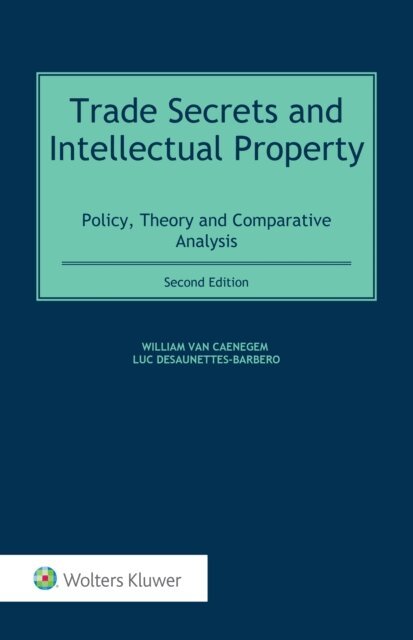
Trade secrets law is probably the least harmonized part of IP law. Nonetheless, there is a growing realization that variable rules concerning trade secrets impact investment decisions, multinational businesses, and hiring policies. Recently this realization has resulted in the introduction of a new Trade Secrets Directive in the EU, which has harmonized trade secrets law across the Union. Nonetheless, agreement about the policy underpinnings, theoretical basis and economic impacts of trade secrets law remains elusive around the globe. Legal approaches vary fundamentally, and application of the law is far from uniform. Although there has been a recent trend towards strengthening trade secrets protection, both in civil and criminal law, as it tends to militate against labour mobility, freedom to imitate, and open circulation of what needs to be known to compete, there are many who support a more nuanced approach that emphasizes the benefits of unrestricted information flows for competitive markets.
Opting for a comparative and critical approach, this book proposes a nuanced analysis of:
the competing theories that underlie trade secrets law, its theoretical justifications, and the varied doctrinal approaches found around the globe;
the law in the US, the UK, France and Germany and the new EU Trade Secrets Directive;
statute laws, international instruments, recent court decisions, and works of notable scholars in the field;
topics such as the competition for control over knowledge between employees and employers; the growth of industrial espionage, country rivalry and third-party liability; the extent and precise parameters of criminal liability; and the policy implications of excessive restrictions on the transfer of employee knowledge and know-how.
This book provides a clear understanding of this multifaceted area of law which is often a fallback or last resort when commercial dealings and relationships go wrong. The authors’ analysis of the underlying policy goals and theoretical dimension of the legal status of trade secrets, including choices in relation to the application of criminal law and concepts of property, will prove of enormous value to academics, policymakers, and corporate counsel.
2 074 kr
Läs direkt efter köp
Trade secrets law is probably the least harmonized part of IP law. Nonetheless, there is a growing realization that variable rules concerning trade secrets impact investment decisions, multinational businesses, and hiring policies. Recently this realization has resulted in the introduction of a new Trade Secrets Directive in the EU, which has harmonized trade secrets law across the Union. Nonetheless, agreement about the policy underpinnings, theoretical basis and economic impacts of trade secrets law remains elusive around the globe. Legal approaches vary fundamentally, and application of the law is far from uniform. Although there has been a recent trend towards strengthening trade secrets protection, both in civil and criminal law, as it tends to militate against labour mobility, freedom to imitate, and open circulation of what needs to be known to compete, there are many who support a more nuanced approach that emphasizes the benefits of unrestricted information flows for competitive markets.
Opting for a comparative and critical approach, this book proposes a nuanced analysis of:
the competing theories that underlie trade secrets law, its theoretical justifications, and the varied doctrinal approaches found around the globe;
the law in the US, the UK, France and Germany and the new EU Trade Secrets Directive;
statute laws, international instruments, recent court decisions, and works of notable scholars in the field;
topics such as the competition for control over knowledge between employees and employers; the growth of industrial espionage, country rivalry and third-party liability; the extent and precise parameters of criminal liability; and the policy implications of excessive restrictions on the transfer of employee knowledge and know-how.
This book provides a clear understanding of this multifaceted area of law which is often a fallback or last resort when commercial dealings and relationships go wrong. The authors’ analysis of the underlying policy goals and theoretical dimension of the legal status of trade secrets, including choices in relation to the application of criminal law and concepts of property, will prove of enormous value to academics, policymakers, and corporate counsel.