William Wolf – författare
Visar alla böcker från författaren William Wolf. Handla med fri frakt och snabb leverans.
13 produkter
13 produkter
Inbunden, Engelska, 2025
313 kr
Skickas
On 1 April 1945, US troops launched the largest amphibious assault of the Pacific War on the heavily-defended island of Okinawa. Supporting the invasion, the USS West Virginia participated in the bombardment of entrenched Japanese defenders. That evening, a Japanese aircraft launched a Yokosuka MXY-7 Ohka, a rocket-powered kamikaze plane. West Virginia was hit by an Ohka, becoming the first ship damaged by such a weapon. Twelve days later, the USS Mannert L. Able became the first ship sunk by an Ohka.The deployment of the Ohka was a desperate measure by Japan as the war turned against them. This manned flying bomb evolved from earlier kamikaze tactics. However, the Germans had also considered similar weapons. As early as 1944, figures close to Hitler, such as Otto Skorzeny and Hanna Reitsch, advocated for kamikaze missions. Hitler authorized the creation of the Leonidas Staffel to prepare for these attacks, leading to the development of the Messerschmitt Me 328 and Fieseler Fi 103R, also known as the Reichenberg.Though the Fi 103R began production in October 1944, the changing dynamics of the war rendered it obsolete by the time it was ready for use. The project was formally abandoned in March 1945. This book details the development of both the Ohka and Reichenberg.
Inbunden, Engelska, 2025
359 kr
Skickas
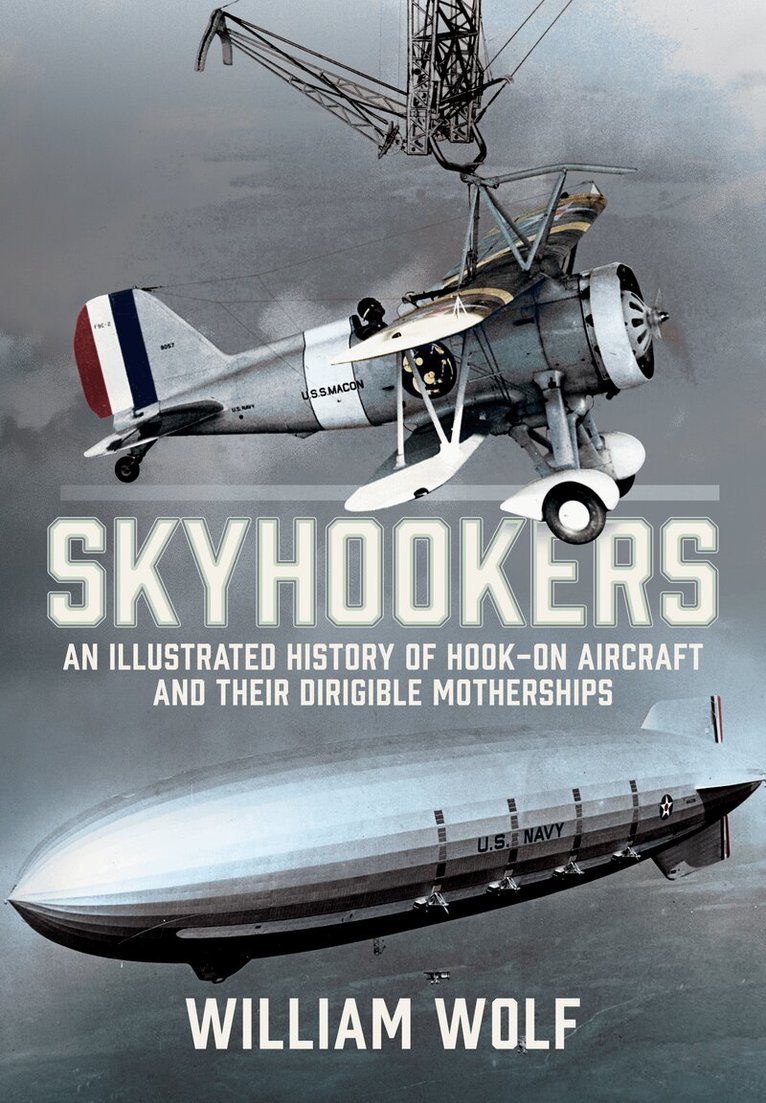
From the First World War's Zeppelins to the Second World War's large bombers, military aircraft were vulnerable to fast, manoeuvrable interceptors. To address this, fighter escorts were used, but their limited range often left bombers exposed. A solution was the use of Composite aircraft, where larger bombers carried smaller, short-range fighters, which could be launched and retrieved as needed.Zeppelins, particularly vulnerable to interceptors, were ideal for this concept. During the First World War, Germany briefly experimented with carrying parasite aircraft, while the British conducted post-war trials using airships like His Majesty’s Airship R-23 and R-33, carrying fighters such as the Sopwith Camel and de Havilland DH.53 Humming Bird. However, successful hook-on/retrievals were only achieved with the Humming Bird.The US Navy and Army further developed this concept. In 1918, the Navy launched a Curtiss JN ‘Jenny’ from a C-1 Blimp, and in 1924, the Army successfully flew a Sperry Messenger from a TC-Class airship. The US perfected the carry/launch/retrieval method for airship defence and scouting, notably with the USS Los Angeles, which carried aircraft on a ‘trapeze’ device. The Akron and Macon airships, with internal storage for aircraft, further advanced this technique, making them some of the most remarkable aircraft of their time.
Inbunden, Engelska, 2022
195 kr
Skickas
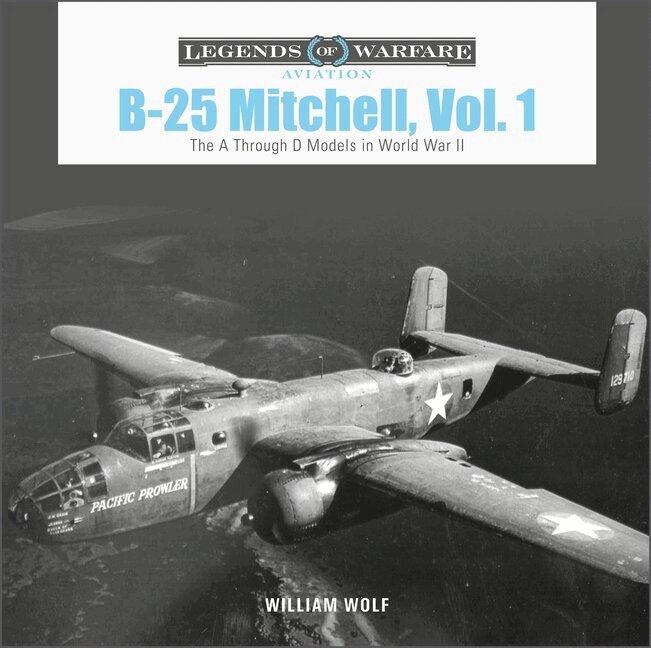
Volume 1 of our two-volume visual history of the North American B-25 Mitchell The North American B-25 Mitchell is WWII’s most heralded and versatile medium bomber. This Volume 1 (of 2) gives readers a concise illustrated look at the A through D models, and follows the bomber’s genesis from the formation of the North American Company and its early steps toward the development of the NA-40, the first B-25. The continued evolution of the Mitchell from the A, B, C, and finally to the iconic D models is described in vintage photos. The production at the parent Inglewood, California, plant and then the Kansas City plant is illustrated, as are the important modification centers. The last half of the book covers the D model in many color photos of the interior and exterior, from nose to tail and from wingtip to wingtip. The Wright R-2600 radial engine and Hamilton-Standard propeller are detailed, as are their associated systems. The Mitchell’s markings and insignia changes are featured throughout.
Inbunden, Engelska, 2022
203 kr
Skickas
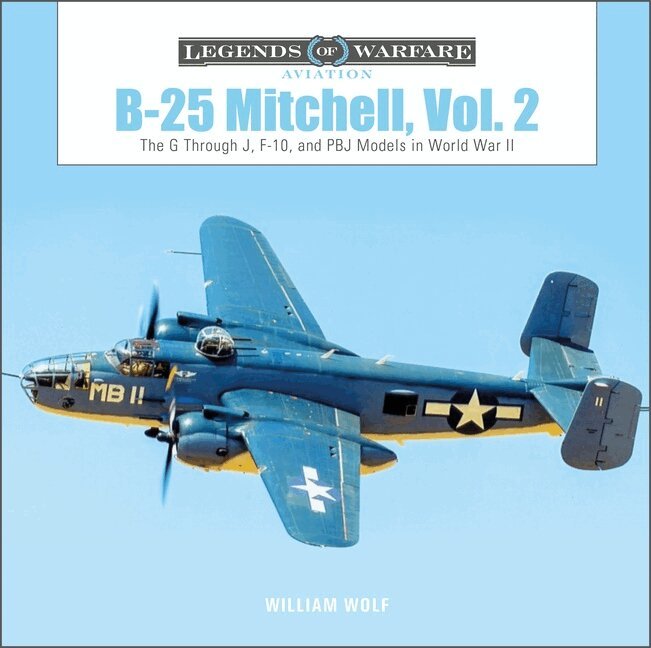
A photographic history of the B-25 medium bomber: late-war G through J, F-10, and PBJ models (Volume 2 of 2) This second of two volumes on the North American B-25 Mitchell covers the late-WWII G through J, F-10, and PBJ variants of the famed US medium bomber. Among the many topics discussed are the Mitchell versions used by the US Navy and Marine Corps, as well as photo-recon and experimental types. B-25s in foreign wartime service are also shown, including those used in Poland, France, England, and Soviet Russia. A detailed chapter covers all types of armament used in the Mitchell, from guns and cannon of various calibers to ammunition used, including machine gun rounds, rockets, and bombs. A special section of the book features discussions on unique B-25 missions, events, and aircrew during WWII and in the postwar era, such as the April 1942 Doolittle Raid and the B-25 collision with the Empire State Building in July 1945. B-25 appearances in classic feature films such as Thirty Seconds over Tokyo and Catch-22 are also detailed.
Inbunden, Tyska, 2023
359 kr
Skickas inom 5-8 vardagar
Häftad, Tyska, 2023
207 kr
Skickas inom 5-8 vardagar
Inbunden, Engelska, 2026
313 kr
Kommande
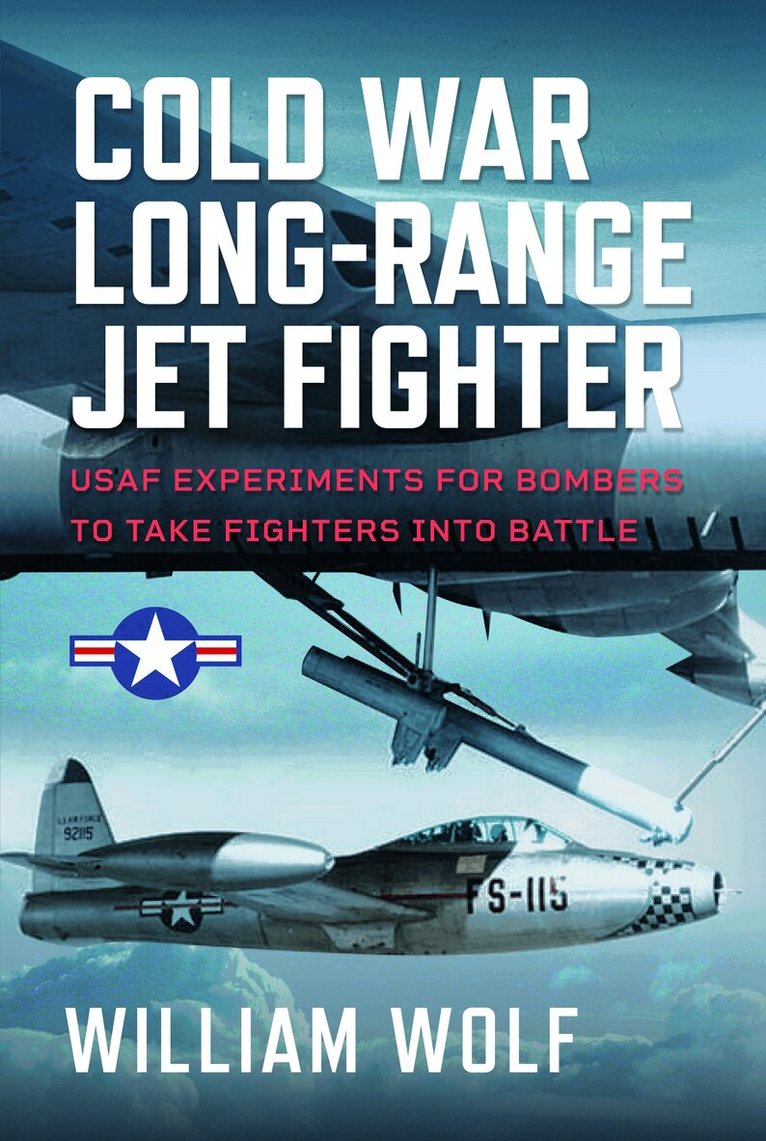
After the Second World War, the introduction of the six-engine Consolidated-Vultee B-36 Peacemaker bomber, capable of intercontinental ranges of 5,000 miles or more, reignited the long-standing problem of fighter escort. Early-generation US jet fighters consumed enormous amounts of fuel and lacked the endurance to accompany the B-36 over extended distances. Designing a jet fighter with enough fuel capacity for such missions would result in an aircraft far too large and unwieldy to engage smaller, more agile enemy interceptors effectively.In response, during the early Cold War, the United States Air Force explored two experimental methods to extend fighter range. The first was wingtip-to-wingtip towing, in which a fighter would attach itself to the bomber’s wing for fuel support. The second involved carrying a fighter inside the bomber’s bomb bay on a trapeze mechanism, allowing it to be launched and later recovered in flight.Because the B-36 faced developmental delays, the widely available Boeing B-29 Superfortress initially served as the test platform. Boeing ETB-29A bombers were paired with Republic EF-84D Thunderjet fighters, which practiced attaching and detaching from the B-29 wingtips. Following these early trials, the concept of the bomb-bay-mounted ‘parasite’ fighter resurfaced with the diminutive, jet-powered XP-85 Goblin. Designed exclusively as a parasite aircraft, the Goblin could launch from the B-36 to intercept enemy aircraft and later dock again in midair. Despite promising test flights, docking challenges and the Goblin’s underwhelming performance relative to enemy jets led to cancellation.In 1952–53, the FICON (FIghter CONveyor) program tested carrying an RF-84F/K Thunderflash inside the B-36’s trapeze-equipped bomb bay. While escort missions were initially envisioned, the program shifted toward tactical reconnaissance and strike missions. The B-36 would deliver the faster, more agile fighter near a target for reconnaissance or nuclear strike, then recover it afterward. The success of the U-2 spy plane and midair refueling ultimately rendered parasite aircraft experiments obsolete.Packed with over 150 photographs, this book is the first to examine this extraordinary and unusual chapter in Cold War aviation history, highlighting some of the most inventive and unconventional experiments ever attempted.
Inbunden, Engelska, 2024
313 kr
Skickas
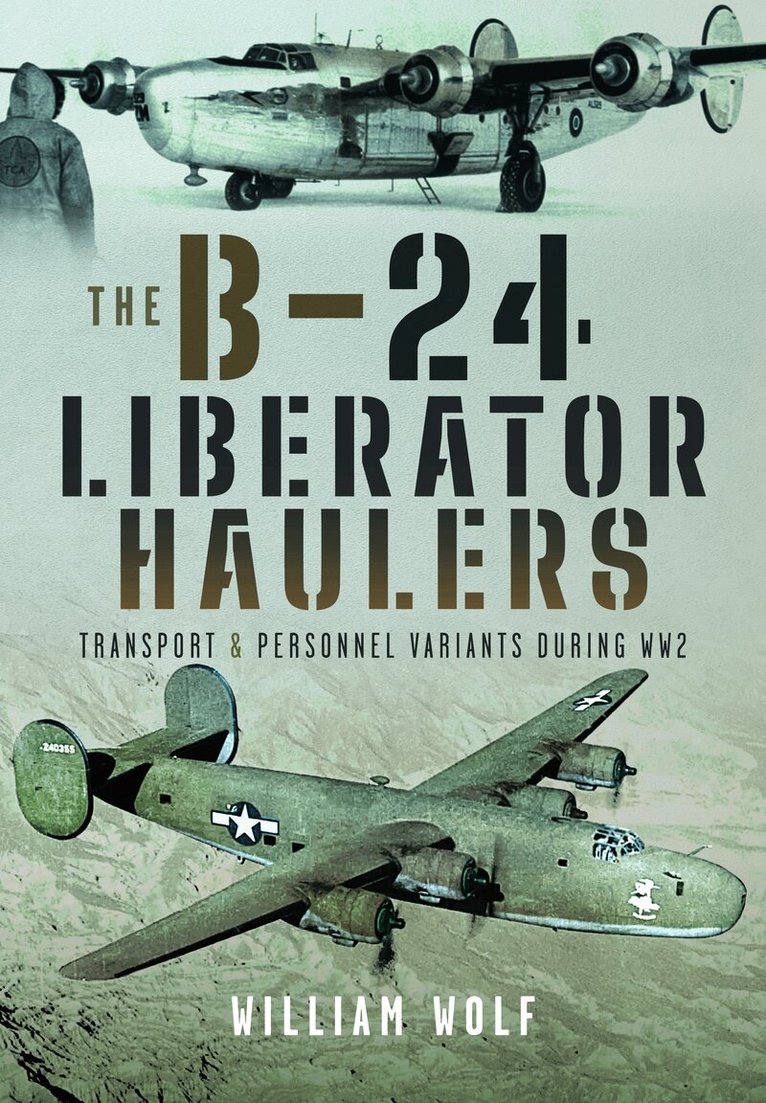
With iconic images depicting it in the skies over Occupied Europe or the Far East, the B-24 Liberator is remembered for its part in the Allies’ bombing campaigns during the Second World War. But there was another part to this famous four-engine aircraft – one that is less well known.While the Douglas C-47 Dakota is deservedly celebrated as the most important twin-engine transport aircraft of the war, the early use of the four-engine Consolidated B-24 Liberator bomber as a passenger carrier is virtually unknown but was as important. Since the B-24 had more interior room than the B-17, it could be more easily be converted into a personnel carrier.These early Liberators operated America’s and Britain’s early diplomatic missions and then were to be extensively flown by the Atlantic Ferry Organization and the Transport Commands on missions that opened the world to air transport as never before. Several B-24s were converted for VIP personal and diplomatic use, which included Harriman’s Moscow and round-the-world diplomatic mission, and those used by Churchill and Eisenhower to ‘get around’.To meet the need for a cargo and personnel transport which had longer transoceanic range and improved high-altitude performance than the C-47, in early 1942 the C-87, a hastily designed B-24 derivative, was placed into production. By installing a built-up floor section that replaced the bomb bay doors, the C-87 could carry six tons of cargo loaded through a cargo door cut into the side of its fuselage or through a special hinged door in its nose.Most C-87s were operated by the US Ferrying Command and Air Transport Command; by the late summer of 1943, they were extensively operating regular routes from the United States to the world’s most remote areas. To meet this increased requirement for air transport, the ATC was forced to turn to four civil commercial airlines for help operating the system. Of the 287 purpose-built C-87s, 24 were transferred to the RAF under Lend-Lease for RAF Ferry and Transport Command. The C-87 would remain as a prime mover until the dedicated C-54 Skymaster four-engine transport came into service.The 218 C-109s were fuel tanker conversions of completed B-24 bombers which had all armament removed and extra fuel tanks added to carry fuel from India for B-29s based in China.Due to the lack of C-47s after D-Day, conventional B-24s were again converted for transporting vital supplies and bulk fuel to troops in France. Once Allied troops broke out of the Normandy beachhead, converted Liberators flew _Trucking_ supply drop operations delivering emergency fuel and supplies to Patton’s fuel-starved armies racing across France. Later these B-24s supplied the ill-fated Operation _Market Garden_ at Arnhem.
Inbunden, Engelska, 2023
255 kr
Skickas
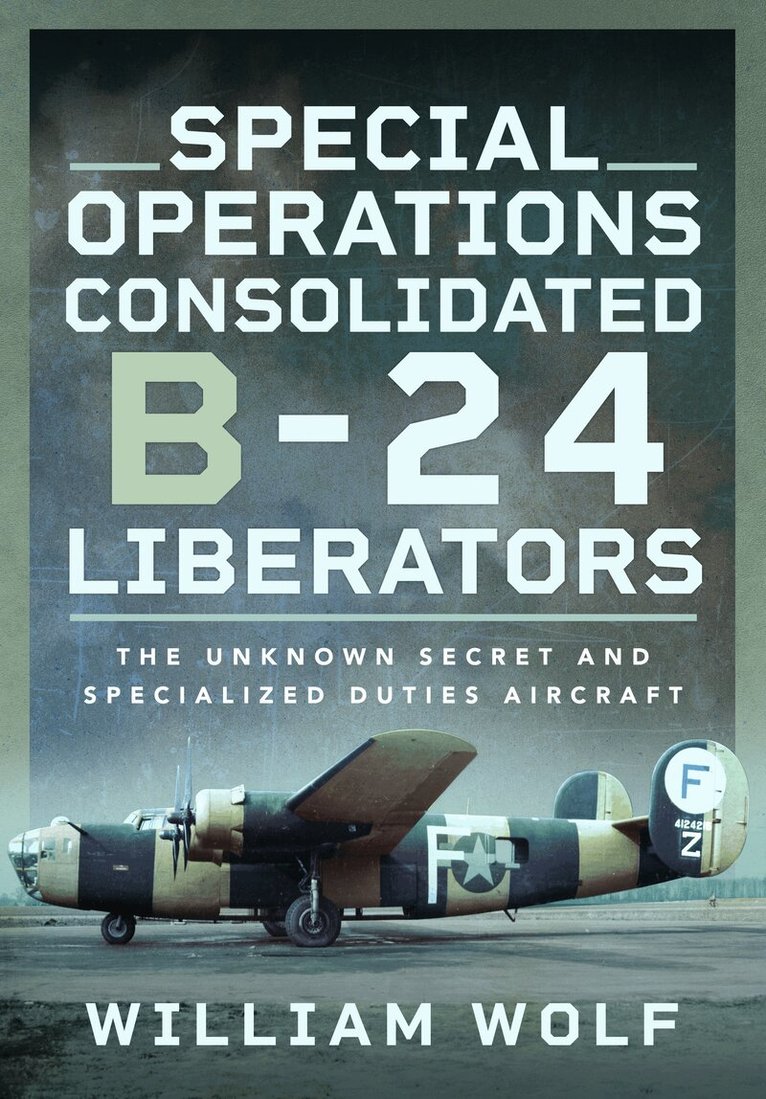
Despite being America’s most produced bomber, the Consolidated B-24 Liberator has forever flown in the shadow of its more famous and glamorous B-17 rival. The workmanlike B-24 performed multiple unheralded roles in all theatres beyond its also multiple offensive missions, making it the war’s most versatile heavy bomber. Besides its offensive bombing, anti-submarine, and mining missions, the Liberator performed many little known “inoffensive” duties.Undoubtedly the most colourful of all Liberators were the so-called assembly ships of the Groups of the 2nd Air Division. Their unique paint schemes of stripes, polka dots, and checkerboard, were designed to make them ultra-conspicuous for their task of acting as leaders on which a Group formation could assemble their combat formations more quickly for a combat missionThe Consolidated F-7 was a photographic reconnaissance version of the B-24 Liberator. The F-7 saw service in most theatres of the war. The long range of the Liberator also made it well suited to mapping missions during the war and post-war.Beginning in early 1944, to aid the Allied liberation of Europe, Carpetbagger B-24s were utilized to parachute spies, called “Joes” or “Janes”, or provide aerial supply of weapons and other matériel to resistance fighters in occupied Europe. Liberators also participated in the dropping of 2.75 billion propaganda leaflets using various techniques and delivery devices.Electronic Warfare played an important part in Allied global pre-invasion plans to discover the location of enemy radars, and, if possible, destroy them. This interception and analysis of an enemy electronic radiation was the origin of present day ELINT (ELectonicINTelligence). Modified RAF B-24D Airborne Electronic Reconnaissance Liberators, codenamed Ferret, were Radio Counter Measures and Electronic Intelligence aircraft that played a major role in European air opera¬tions.During 1942 the AAF became interested in aerial refueling as a means to bombing Japan. A shorter-range B-17E was selected as the receiver aircraft while the more spacious B-24D acted as the tanker. Although these tests were considered to be successful, the availability of longer-ranging B-29s and bases ever closer to Japan diminished the urgency of wartime aerial refueling.During the war, eighty-three B-24s crashed or made forced landings in Switzerland, sixty in Sweden, and several in Russia, Spain, Portugal, and Turkey. Many of these Liberators landed undamaged or were repaired to be flown by these nations. Of particular interest are the six Liberators that were captured and flown by the Luftwaffe.Packed with a unique collection of photographs. Special Operations Consolidated B-24 Liberators reveals the most unusual and little-known facets of the Second World War’s most versatile bomber.
Häftad, Engelska, 2020
161 kr
Skickas
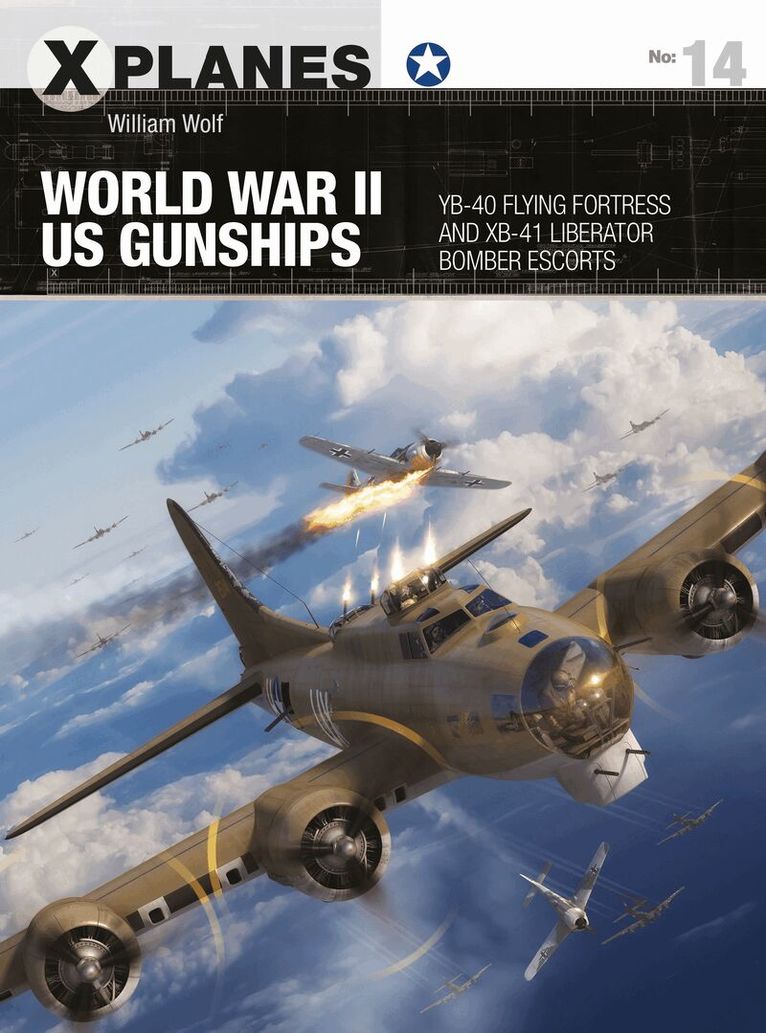
The XB-40 and XB-41 were secret, little-known experimental modifications of the B-17F and B-24D, respectively, into heavily-armed bomber gunships sometimes referred to as “bomber escorters”.They were developed during early World War II in response to the lack of a USAAF long-range fighter aircraft able to escort and protect regular B-17 formations making the round trip from Britain deep into Germany. Unfortunately, these “protecters” were found wanting in several ways - after the addition of guns and ammunition they became overweight and tail-heavy causing center of gravity problems. Each encountered numerous delays in the development and delivery of their various armament additions and improvements, particularly the Bendix chin turret.In the end, the YB-40 participated in only 14 lackluster operational service test missions during mid-1943 before being withdrawn from service. The XB-41 Liberator never saw operational testing before also being cancelled for its poor performance. The failure of the gunship concept left a huge hole in the capabilities of the Eighth Air Force. However, it spurred the adoption of the Merlin-powered P-51 Mustang, the outstanding escort fighter that was key to Allied victory in the air war over Europe.Using many formerly-classified documents from his large microfilm collection, William Wolf presents their previously-unpublished history. It describes in depth for the first time the politics and development and associated problems of both escorter types.
Inbunden, Engelska, 2025
575 kr
Skickas inom 3-6 vardagar
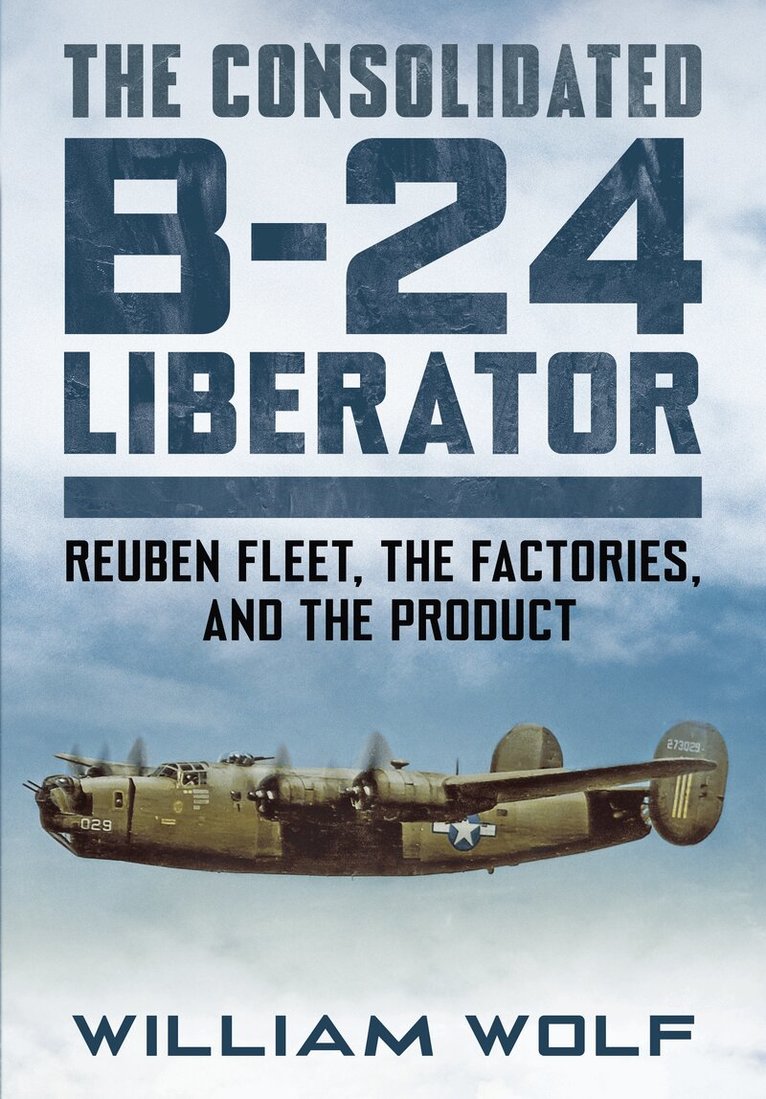
The Consolidated B-24 Liberator is the ultimate look at the B-17’s iconic stablemate from its origins on the drawing board to its emergence as America’s preeminent blue-collar bomber. It chronicles the life of aviation legend Reuben Fleet, founder of Consolidated Aircraft, alongside the design evolution of one of his greatest creations. Some 19,000 Liberators were built between 1940 and 1945, primarily at Ford and Consolidated in the United States, and the aircraft remains the most mass-produced bomber in history. Drawing on the document and photo collections at the National Museum of the USAF, the Pima Air & Space Museum, the archives of Consolidated Aircraft and the Ford Motor Company, and his own immense collection of published and unpublished material, author Bill Wolf has produced the last word on the design, development, and manufacture of the ever-popular B-24.
Häftad, Franska, 2025
176 kr
Skickas inom 5-8 vardagar
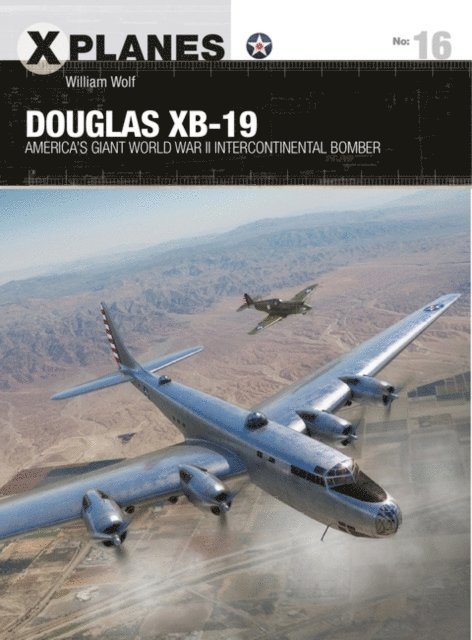
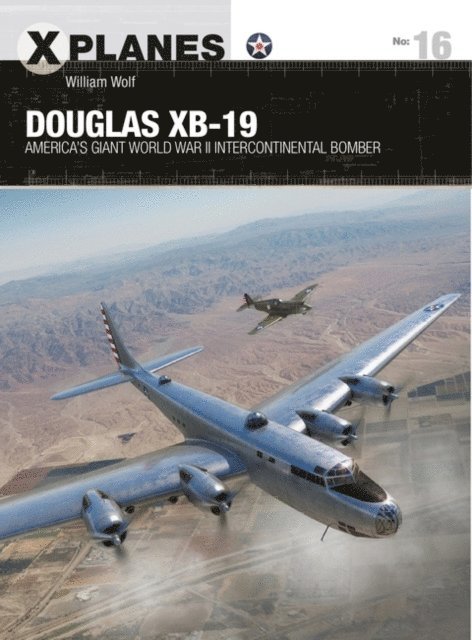
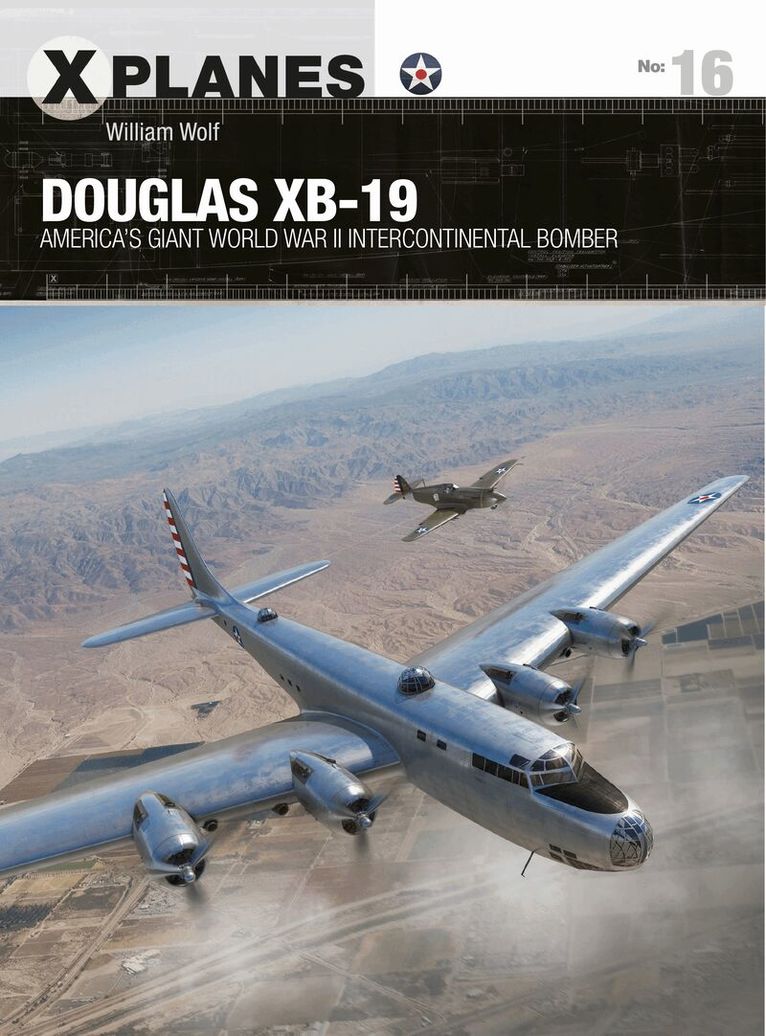
Del 16 - X-Planes
Douglas XB-19
America's giant World War II intercontinental bomber
Häftad, Engelska, 2021
161 kr
Tillfälligt slut
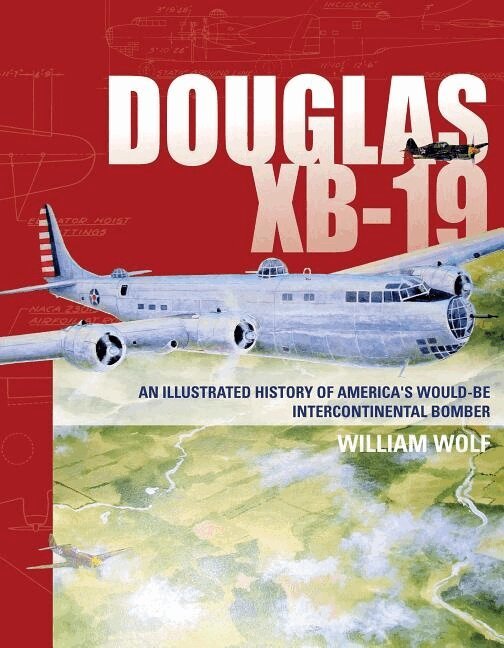
In 1935 the USAAC wanted to build a potential intercontinental bomber, a 'Guardian of the Hemisphere,' and granted Donald Douglas a contract to build the world’s largest bomber.The groundwork for the intercontinental bomber had been laid in the previous two decades by the courageous military and civilian pilots who risked their lives to set new distance and endurance records. After World War I the future Axis and Allied nations built larger aircraft and finally during World War II Germany and Japan became intent on developing intercontinental bomber to retaliate against America. While the XB-19 never flew as an intercontinental bomber or even as a combat bomber; its contributions as a 'Flying Laboratory' significantly influenced the development of the Consolidated B-36 Peacemaker, the world’s first true intercontinental bomber.Since the XB-19 project was top secret and there was only one example built there is little information remaining for researchers. Over the years Bill Wolf has collected the largest quantity of XB-19 material and a number of photographs, including a copy of the original Army Air Force acceptance of the aircraft, first-hand narratives of its first flight, and other USAAC and Douglas Company documents.This book provides a superbly illustrated history of the XB-19 intercontinental bomber and the text is supported by previously unpublished photographs.