Witt Raczka - Böcker
Visar alla böcker från författaren Witt Raczka. Handla med fri frakt och snabb leverans.
2 produkter
2 produkter
675 kr
Skickas inom 10-15 vardagar
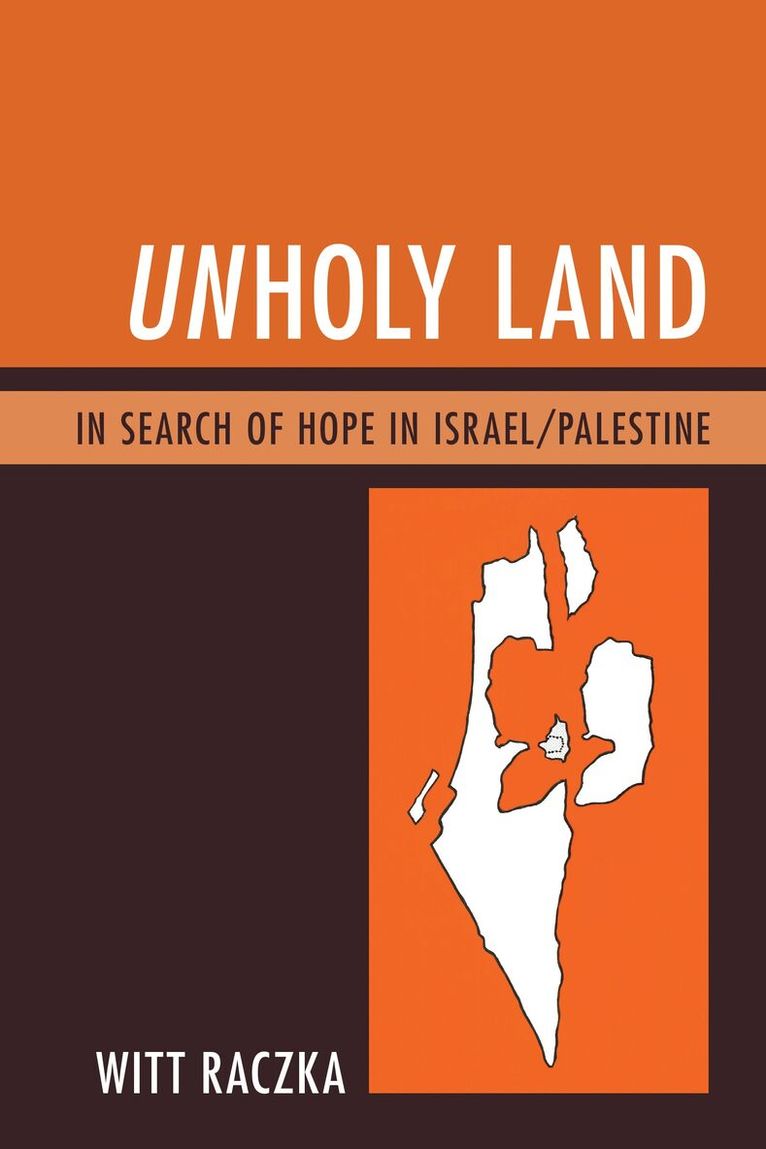
Traveling major highways and secondary roads, walking unpaved paths, the author recites contradictions of the land between the Mediterranean Sea and the Jordan River, the Holy Land. Here, religion uneasily confronts politics and democracy, sublime nature undergoes militarization, and hospitality and empathy mix with brutality, hatred and violence.Everything becomes security: not just borders and relations with the neighbors, but also water and archaeological evidence, demography and voting Arabs. Control of holy sites, perception of illegal immigrants, separate highway networks and built-up hilltops are all viewed through the prism of threat and security. Threats proliferate, be they real or imaginary, spontaneous or politically-driven. Whether in Jerusalem, the “city of the world”, or in small towns, tensions are palpable between Israel’s radical Jews and its Arab residents. Even within the Jewish community itself, increasingly nationalistic, animosities between ultra-Orthodox and more secular inhabitants are on the rise. Christians also feel under attack, as do moderate Palestinians from their Islamized brethren. In the occupied West Bank, Palestinian villagers confront radical settlers, often protected by Israeli soldiers, while in the isolated Gaza, Hamas imposes ever stricter rules upon its people. Not surprisingly, the Holy Land has become aplenty with both mental and physical barriers, with walls, checkpoints, no-go and firing zones.Will rage and fear, sorrow and despair eventually trump hope? Although glimmers of hope exist—new water technology, Tel Aviv’s culture of tolerance, more pressures from the international community—the author remains more pessimistic than ever, as reflected in the book’s title.
360 kr
Skickas inom 5-8 vardagar
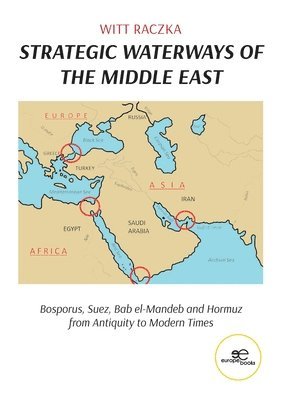
The book emphasizes geopolitical rivalries in the Middle East and their consequences on key sea waterways in the region that connects the world's major maritime and land spaces. In addition to the analysis of their geography, main navigation patterns and potential difficulties, each chapter has been set in their respective economic, political and international contexts, enriched with maps that illustrate in detail specific historical situations.Over the course of history, powers have attempted to exercise various degrees of control over these important waterways. In the context of geopolitical and geoeconomic rivalries, state actors that are situated on or close to these waterways have played an important role in shaping maritime security in the region. Each of the situations is discussed separately, but it is common for links to be drawn between them as well.It has been historically observed that the importance of different sea routes and land itineraries has been greatly influenced by the dynamics of centers of wealth, culture, and power, whether regional or global. Thus, relations between and among these waterways have been characterized by periodic rises and declines, often affected by external factories, for example, by discoveries of alternative routes. Over a very long period, this book illustrates how the four main maritime passages have played a fundamental role, both economically and geopolitically, in regional and global affairs, and the strategic importance they have had over centuries.Each of the main parts of this book is devoted to one of the four major Middle Eastern waterways, divided into chapters and sections covering specific cases in a given time periods. In order to make the chapters clear and readily accessible, they are organized according to coherent chronological eras, starting with antiquity and ending with the present day.