W.L. Craig – Författare
Visar alla böcker från författaren W.L. Craig. Handla med fri frakt och snabb leverans.
9 produkter
9 produkter
2 961 kr
Skickas inom 10-15 vardagar
The central question in the philosophy of time is whether time is tensed or tenseless, viz., whether the moments of time are objectively past, present or future, or whether they are ordered merely by the tenseless temporal relations earlier than, simultaneous with, and later than. In this text and the companion volume "The Tenseless Theory of Time: A Critical Examination", Craig appraises the arguments for and against the tensed and tenseless theories of time. The discussions range widely over issues in the philosophy of language, phenomenology, relativity theory, philosophy of space and time, metaphysics, and philosophy of religion. This work sets out to discover whether the ineliminability of tense from language and our experience of tense warrants a belief in its objective ontological status, or whether the defeaters raised by McTaggart's paradox and the Myth of Passage serve to undermine any warrant that the tensed theory of time may be supposed to enjoy.
1 695 kr
Skickas inom 10-15 vardagar
The central question in the philosophy of time is whether time is tensed or tenseless, viz., whether the moments of time are objectively past, present or future, or whether they are ordered merely by the tenseless temporal relations earlier than, simultaneous with, and later than. In this text and the companion volume "The Tensed Theory of Time: A Critical Examination", Craig appraises the arguments for and against the tensed and tenseless theories of time. The discussions range widely over issues in the philosophy of language, phenomenology, relativity theory, philosophy of space and time, metaphysics, and philosophy of religion. The Tenseless Theory of Time sets out to discover whether the ineliminability of tense from language and our experience of tense warrants a belief in its objective ontological status, or whether the defeaters raised by McTaggart's paradox and the Myth of Passage serve to undermine any warrant that the tensed theory of time may be supposed to enjoy.
1 906 kr
Skickas inom 10-15 vardagar
The larger project of which this volume forms part is an attempt to craft a coherent doctrine of divine eternity and God's relationship to time. Central to this project is the integration of the concerns of theology with the concept of time in relativity theory. Unfortunately, theologians and philosophers of religion do not in general understand Einstein's theories, whereas physicists and philosophers of science, under the influence of verificationism, have largely focused philosophical reflection on spatiotemporal concepts given by physics. There is thus a paucity of integrative literature dealing with God and relativity theory. The collapse of positivism and the rejuvenation of metaphysics have led to a renewed scrutiny of the metaphysical foundations of relativity theory and the concept(s) time found therein. This volume provides an accessible and philosophically informed examination of the concept of time in relativity, the ultimate aim being the achievement of a tenable theological synthesis.
3 011 kr
Skickas inom 10-15 vardagar
The central question in the philosophy of time is whether time is tensed or tenseless, viz., whether the moments of time are objectively past, present or future, or whether they are ordered merely by the tenseless temporal relations earlier than, simultaneous with, and later than. In this text and the companion volume "The Tensed Theory of Time: A Critical Examination", Craig appraises the arguments for and against the tensed and tenseless theories of time. The discussions range widely over issues in the philosophy of language, phenomenology, relativity theory, philosophy of space and time, metaphysics, and philosophy of religion. The Tenseless Theory of Time sets out to discover whether the ineliminability of tense from language and our experience of tense warrants a belief in its objective ontological status, or whether the defeaters raised by McTaggart's paradox and the Myth of Passage serve to undermine any warrant that the tensed theory of time may be supposed to enjoy.
2 328 kr
Skickas inom 10-15 vardagar
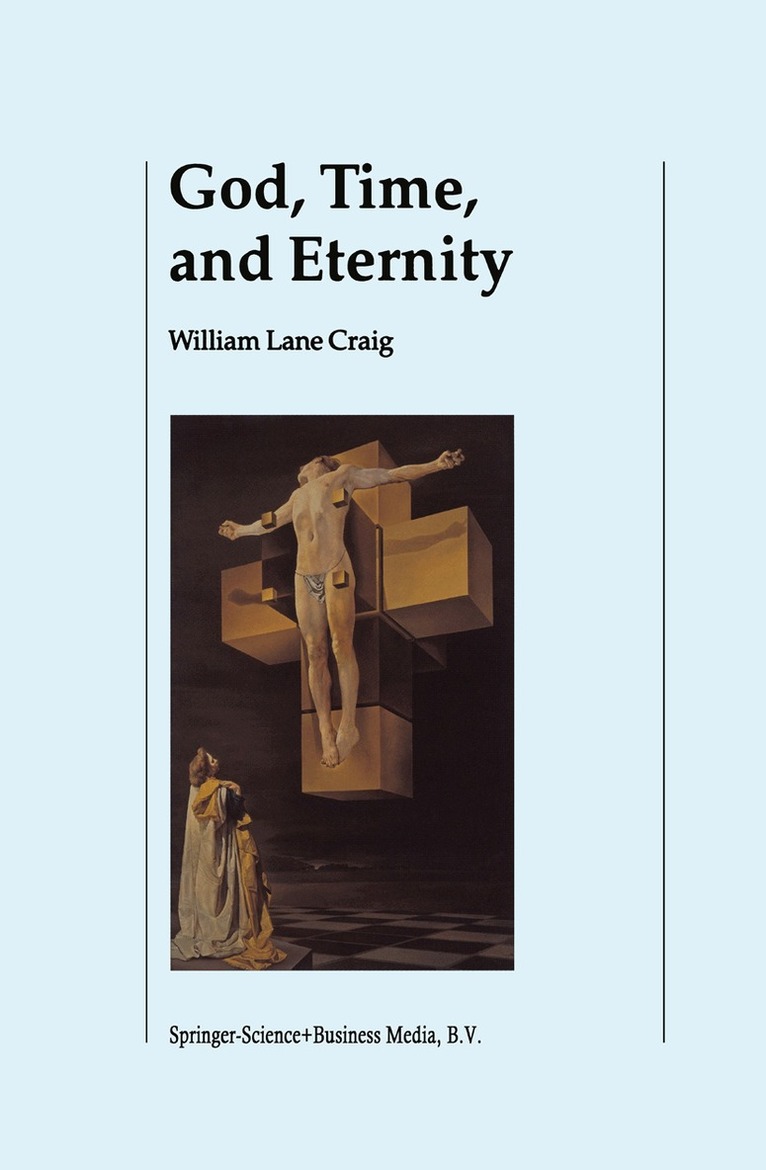
Those who think about time are thinking deeply. Those who think about God are thinking even more deeply still. To try to think about both at once is to press the very limits of human understanding. Undeterred, this is precisely the project which William Lane Craig sets for himself in this study: to try to grasp the nature of divine eternity, to understand what is meant by the affirmation that God is eternal, and to formulate a coherent doctrine of God's relationship with time. In this work, Craig brings together discussions in the philosophy of time and space, philosophy of language, phenomenology, philosophy of science, special and general relativity, classical cosmology, quantum mechanics, and so forth, with the concerns of philosophy of religion and theology, in order to craft a philosophically informed and scientifically tenable doctrine of divine eternity and God's relationship to time.
2 644 kr
Skickas inom 10-15 vardagar
The central question in the philosophy of time is whether time is tensed or tenseless, viz., whether the moments of time are objectively past, present or future, or whether they are ordered merely by the tenseless temporal relations earlier than, simultaneous with, and later than. In this book and the companion volume The Tenseless Theory of Time: A Critical Examination, Craig undertakes the first thorough appraisal of the arguments for and against the tensed and tenseless theories of time. The discussions range widely over issues in the philosophy of language, phenomenology, relativity theory, philosophy of space and time, metaphysics, and philosophy of religion. The Tensed Theory of Time sets out to discover whether the ineliminability of tense from language and our experience of tense warrants a belief in its objective ontological status, or whether the defeaters raised by McTaggart's paradox and the Myth of Passage serve to undermine any warrant that the tensed theory of time may be supposed to enjoy.
1 589 kr
Skickas inom 10-15 vardagar
The central question in the philosophy of time is whether time is tensed or tenseless, viz., whether the moments of time are objectively past, present or future, or whether they are ordered merely by the tenseless temporal relations earlier than, simultaneous with, and later than. In this book and the companion volume The Tensed Theory of Time: A Critical Examination, Craig undertakes the first thorough appraisal of the arguments for and against the tensed and tenseless theories of time. The discussions range widely over issues in the philosophy of language, phenomenology, relativity theory, philosophy of space and time, metaphysics, and philosophy of religion. The Tenseless Theory of Time sets out to discover whether the ineliminability of tense from language and our experience of tense warrants a belief in its objective ontological status, or whether the defeaters raised by McTaggart's paradox and the Myth of Passage serve to undermine any warrant that the tensed theory of time may be supposed to enjoy.
1 906 kr
Skickas inom 10-15 vardagar
he present volume is part of a larger project, which is the attempt to draft a T coherent doctrine of divine eternity and God's relationship to time. In my God, l Time, and Eternity, I argued that whether one construes divine eternity in terms of timelessness or of omnitemporality will depend'''crucially upon one's views about the objectivity of tensed facts and temporal becoming. If one adopts a tensed, or in McTaggart's terminology, an A-Theory of time, then a coherent doctrine of divine eternity requires that one construe God, at least since the moment of creation, to exist temporally, which implies that divine timelessness can be successfully maintained only if a tenseless or B-Theory of time is correct. Accordingly in my companion volumes The Tensed Theory of Time: a Critical Examination and The Tenseless Theory of Time: a Critical Examination I set for myself. the task of 2 adjudicating the A- vs. B-Theory of time. In the former volume; r examine arguments for and against the A-Theory of time, and in the latter l' tum to an examination of arguments for and against the B-Theory. This inquiry tookme into a study of relativity theory,. its presuppositions and implications. The paucity of integrative literature dealing with the concept of. God and· relativity theory is striking.
2 328 kr
Skickas inom 10-15 vardagar
hose who think about time are thinking deeply. Those who think about God T are thinking even more deeply still. Those who try to think about God and time are pressing the very limits of human understanding. Undaunted, this is precisely the project which we have set for ourselves in this study: to try to grasp the nature of divine eternity, to understand what is meant by the amnnation that God is etemal, to fonnulate a coherent doctrine ofGod's relationship with time. This study, the second installment of a long-range research pro gram devoted to a philosophical analysis of the principal attributes of God, flows naturally out of my previous exploration of divine omniscience. ! For the most contentious issue with respect to God's being omniscient concerns divine foreknowledge of future contingents, such as free acts of human agents. The very concept of foreknowledge presupposes that God is temporal, and a good many thinkers, from Boethius to certain contemporary philosophers, have thought to avoid the alleged incompatibility of divine foreknowledge and human freedom by afflnning the timelessness of God. Thus, in examining the complex of issues surrounding the foreknowledge question, we found ourselves already immersed in the question of divine eternity.