Wolfram Schmidgen – författare
Visar alla böcker från författaren Wolfram Schmidgen. Handla med fri frakt och snabb leverans.
5 produkter
5 produkter
Häftad, Engelska, 2006
635 kr
Skickas inom 7-10 vardagar
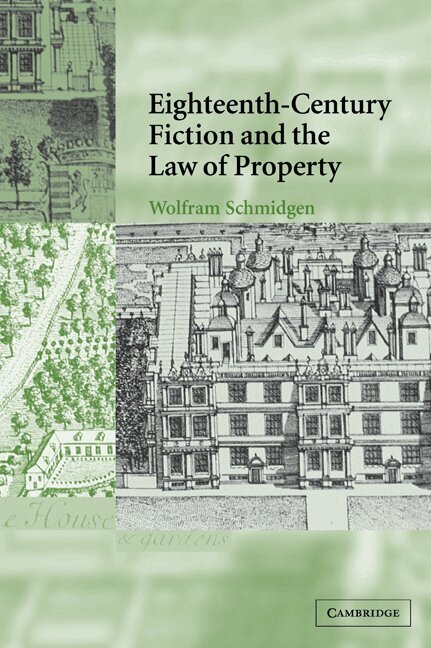
In Eighteenth-Century Fiction and the Law of Property, Wolfram Schmidgen draws on legal and economic writings to analyse the description of houses, landscapes, and commodities in eighteenth-century fiction. His study argues that such descriptions are important to the British imagination of community. By making visible what it means to own something, they illuminate how competing concepts of property define the boundaries of the individual, of social community, and of political systems. In this way, Schmidgen recovers description as a major feature of eighteenth-century prose, and he makes his case across a wide range of authors, including Daniel Defoe, Henry Fielding, William Blackstone, Adam Smith, and Ann Radcliffe. The book's most incisive theoretical contribution lies in its careful insistence on the unity of the human and the material: in Schmidgen's argument, persons and things are inescapably entangled. This approach produces fresh insights into the relationship between law, literature, and economics.
Inbunden, Engelska, 2002
1 351 kr
Skickas inom 7-10 vardagar
In Eighteenth-Century Fiction and the Law of Property, Wolfram Schmidgen draws on legal and economic writings to analyse the description of houses, landscapes, and commodities in eighteenth-century fiction. His study argues that such descriptions are important to the British imagination of community. By making visible what it means to own something, they illuminate how competing concepts of property define the boundaries of the individual, of social community, and of political systems. In this way, Schmidgen recovers description as a major feature of eighteenth-century prose, and he makes his case across a wide range of authors, including Daniel Defoe, Henry Fielding, William Blackstone, Adam Smith, and Ann Radcliffe. The book's most incisive theoretical contribution lies in its careful insistence on the unity of the human and the material: in Schmidgen's argument, persons and things are inescapably entangled. This approach produces fresh insights into the relationship between law, literature, and economics.
E-bok
PDF, Engelska, 20121 258 kr
Läs direkt efter köp
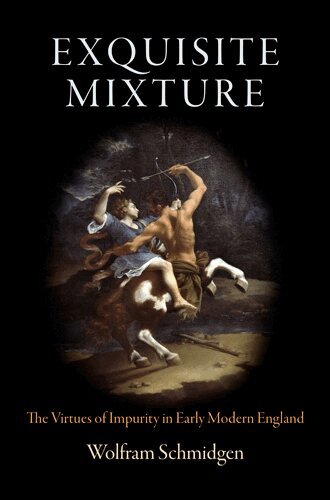
The culture of late seventeenth- and early eighteenth-century Britain is rarely credited with tolerance of diversity; this period saw a rising pride in national identity, the expansion of colonialism, and glorification of the Anglo-Saxon roots of the country. Yet at the same time, Wolfram Schmidgen observes, the concept of mixture became a critical element of Britons' belief in their own superiority. While the scientific, political, and religious establishment of the early 1600s could not imagine that anything truly formed, virtuous, or durable could be produced by mixing unlike kinds or merging absolute forms, intellectuals at the end of the century asserted that mixture could produce superior languages, new species, flawless ideas, and resilient civil societies.Exquisite Mixture examines the writing of Robert Boyle, John Locke, Daniel Defoe, and others who challenged the primacy of the one over the many, the whole over the parts, and form over matter. Schmidgen traces the emergence of the valuation of mixture to the political and scientific revolutions of the seventeenth century. The recurrent threat of absolutism in this period helped foster alliances within a broad range of writers and fields of inquiry, from geography, embryology, and chemistry to political science and philosophy. By retrieving early modern arguments for the civilizing effects of mixture, Schmidgen invites us to rethink the stories we tell about the development of modern society. Not merely the fruit of postmodernism, the theorization and valuation of hybridity have their roots in centuries past.
Inbunden, Engelska, 2021
749 kr
Skickas inom 5-8 vardagar
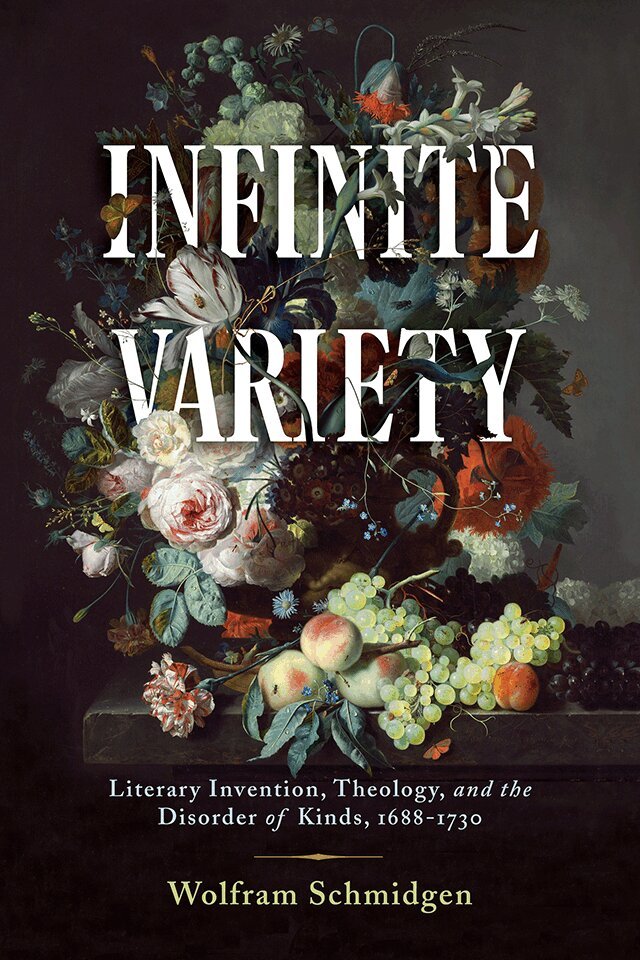
Unnerved by the upheavals of the seventeenth century, English writers including Thomas Hobbes, Richard Blackmore, John Locke, Jonathan Swift, and Daniel Defoe came to accept that disorder, rather than order, was the natural state of things. They were drawn to voluntarism, a theology that emphasized a willful creator and denied that nature embodied truth and beauty. Voluntarism, Wolfram Schmidgen contends, provided both theological framework and aesthetic license. In Infinite Variety, he reconstructs this voluntarist tradition of literary invention.Once one accepted that creation was willful and order arbitrary, Schmidgen argues, existing hierarchies of kind lost their normative value. Literary invention could be radicalized as a result. Acknowledging that the will drives creation, such writers as Blackmore and Locke inverted the rules of composition and let energy dominate structure, matter create form, and parts be valued over the whole. In literary, religious, and philosophical works, voluntarism authorized the move beyond the natural toward the deformed, the infinite, and the counterfactual.In reclaiming ontology as an explanatory context for literary invention, Infinite Variety offers a brilliantly learned analysis of an aesthetic framed not by the rise of secularism, but by its opposite. It is a book that articulates how religious belief shaped modern literary practices, including novelistic realism, and one that will be of interest to anyone who thinks seriously about the relationship between literature, religion, and philosophy.
E-bok
Engelska, 20211 053 kr
Läs direkt efter köp
Unnerved by the upheavals of the seventeenth century, English writers including Thomas Hobbes, Richard Blackmore, John Locke, Jonathan Swift, and Daniel Defoe came to accept that disorder, rather than order, was the natural state of things. They were drawn to voluntarism, a theology that emphasized a willful creator and denied that nature embodied truth and beauty. Voluntarism, Wolfram Schmidgen contends, provided both theological framework and aesthetic license. In Infinite Variety, he reconstructs this voluntarist tradition of literary invention.Once one accepted that creation was willful and order arbitrary, Schmidgen argues, existing hierarchies of kind lost their normative value. Literary invention could be radicalized as a result. Acknowledging that the will drives creation, such writers as Blackmore and Locke inverted the rules of composition and let energy dominate structure, matter create form, and parts be valued over the whole. In literary, religious, and philosophical works, voluntarism authorized the move beyond the natural toward the deformed, the infinite, and the counterfactual.In reclaiming ontology as an explanatory context for literary invention, Infinite Variety offers a brilliantly learned analysis of an aesthetic framed not by the rise of secularism, but by its opposite. It is a book that articulates how religious belief shaped modern literary practices, including novelistic realism, and one that will be of interest to anyone who thinks seriously about the relationship between literature, religion, and philosophy.