
Wolter H. Rose – författare
Visar alla böcker från författaren Wolter H. Rose. Handla med fri frakt och snabb leverans.
3 produkter
3 produkter
E-bok
PDF, Engelska, 20002 847 kr
Läs direkt efter köp
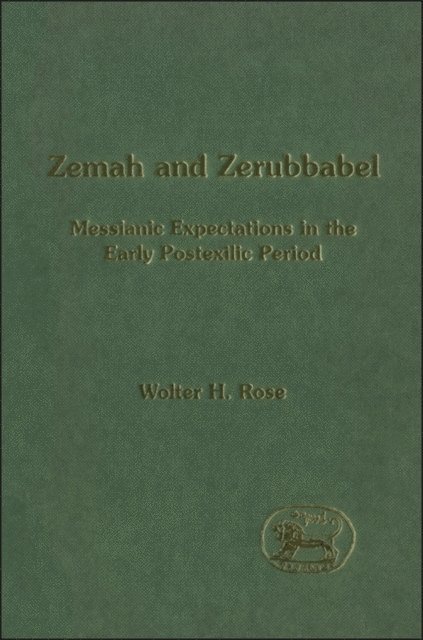
It has often been argued that Zerubbabel, the Jewish governor of Yehud at the time of the rebuilding of the temple (late 6th century BCE), was viewed by the prophets Haggai and Zechariah as the new king in the line of David. In this new study, Rose offers a contrary proposal for the interpretation of the oracles in Haggai 2 and Zechariah 3 and 6. He traces their background in the pre-exilic prophets, pays special attention to often neglected details of semantics and metaphor, and concludes that neither Haggai nor Zechariah designated Zerubbabel as the new king in Jerusalem. Instead, the oracles in Zechariah 3 and 6 should be seen as fully messianic.
Inbunden, Engelska, 2000
2 714 kr
Skickas inom 10-15 vardagar
It has often been argued that Zerubbabel, the Jewish governor of Yehud at the time of the rebuilding of the temple (late 6th century BCE), was viewed by the prophets Haggai and Zechariah as the new king in the line of David. In this new study, Rose offers a contrary proposal for the interpretation of the oracles in Haggai 2 and Zechariah 3 and 6. He traces their background in the pre-exilic prophets, pays special attention to often neglected details of semantics and metaphor, and concludes that neither Haggai nor Zechariah designated Zerubbabel as the new king in Jerusalem. Instead, the oracles in Zechariah 3 and 6 should be seen as fully messianic.
E-bok
PDF, Engelska, 20181 786 kr
Läs direkt efter köp
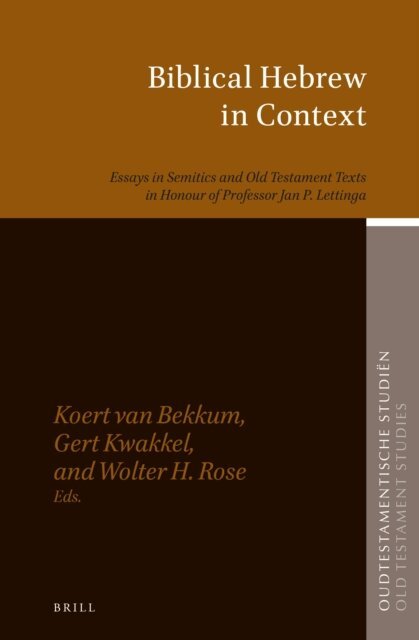
For half a century Jan P. Lettinga (1921), Professor emeritus of Semitic Languages at the Theological University Kampen (Broederweg), greatly influenced the teaching of Biblical Hebrew in the Faculties of Theology, Religious Studies and Semitic Languages in the Netherlands and Belgium by his widely used grammar. This volume honours his legacy and reputation as a Semitist. Lettinga always asked how a historical approach of the Semitic languages and literature would contribute to their understanding, and how this elucidates our reading of the Hebrew Scriptures. Biblical Hebrew in Context applies this approach to issues reflecting the full breadth of Lettinga's interests: Mesopotamian and Biblical Law, the history, grammar and teaching of Hebrew and Aramaic, and the translation and interpretation of Ugaritic and Old Testament texts.