Xavier Moreno Julia – författare
Visar alla böcker från författaren Xavier Moreno Julia. Handla med fri frakt och snabb leverans.
3 produkter
3 produkter
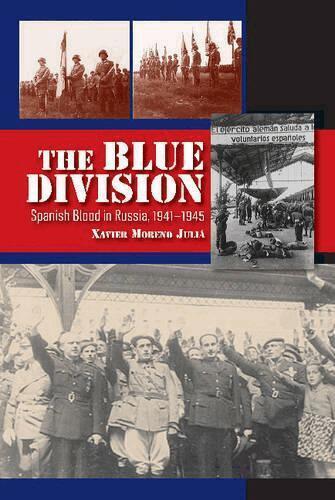
Inbunden, Engelska, 2015
1 793 kr
Skickas inom 5-8 vardagar
This book, translated from the original Spanish, is the primary academic and historical study of the Blue Division -- a Falangist initiative involving the dispatch of some forty-thousand Spanish combatants (over a half of whom paid with their lives, health, or liberty) to the Russian Front during the Second World War. Xavier Moreno Julia does not limit himself to relating their deeds under arms, but also analyses -- for the first time -- the political background in detail: the complex relations between the Spanish government and Hitler's Germany; the internal conflicts between the Falangists and the Army; the rise and fall of Franco's brother-in-law, Minister Ramon Serrano Suner, who inspired the Blue Division and became the second most powerful person in Spain; and the attitude of General Agustin Munoz Grandes, commander of the Blue Division, who was encouraged by Berlin to seriously consider the possibility of taking over the reins of Spanish power. In the end, there were 45,500 reasons that led to joining the Blue Division -- one for each young man who decided to enlist. To understand all of the complex reasons behind their military service under German command is impossible at this juncture. It is an irrecoverable past that lies in Spanish cemeteries and on the Russian steppes. This book, based on massive documentation in German, British and Spanish archives, is an essential source of information to understand Spain in the 1940s -- an epoch when the Caudillo's power and the regime's good fortune were less secure than is often believed. Published in association with the Canada Blanch Centre for Contemporary Spanish Studies, LSE.
Häftad, Engelska, 2016
677 kr
Skickas inom 5-8 vardagar
This book, translated from the original Spanish, is the primary academic and historical study of the Blue Division -- a Falangist initiative involving the dispatch of some forty-thousand Spanish combatants (over a half of whom paid with their lives, health, or liberty) to the Russian Front during the Second World War. Xavier Moreno Julia does not limit himself to relating their deeds under arms, but also analyses -- for the first time -- the political background in detail: the complex relations between the Spanish government and Hitler's Germany; the internal conflicts between the Falangists and the Army; the rise and fall of Franco's brother-in-law, Minister Ramon Serrano Suner, who inspired the Blue Division and became the second most powerful person in Spain; and the attitude of General Agustin Munoz Grandes, commander of the Blue Division, who was encouraged by Berlin to seriously consider the possibility of taking over the reins of Spanish power. In the end, there were 45,500 reasons that led to joining the Blue Division -- one for each young man who decided to enlist. To understand all of the complex reasons behind their military service under German command is impossible at this juncture. It is an irrecoverable past that lies in Spanish cemeteries and on the Russian steppes. This book, based on massive documentation in German, British and Spanish archives, is an essential source of information to understand Spain in the 1940s -- an epoch when the Caudillo's power and the regime's good fortune were less secure than is often believed. Published in association with the Canada Blanch Centre for Contemporary Spanish Studies, LSE.
E-bok
Spanska, 201680 kr
Läs direkt efter köp
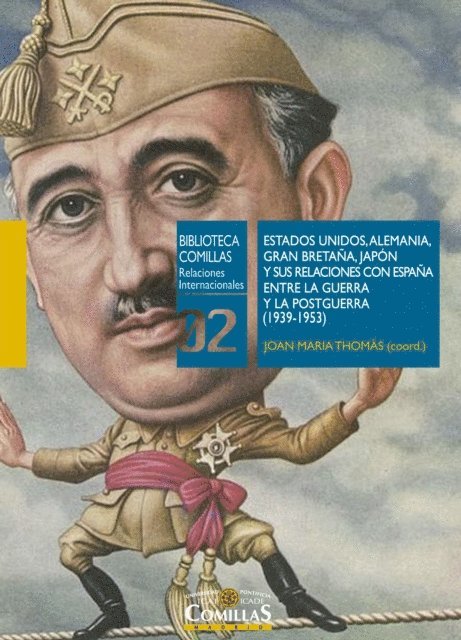
Este libro presenta un análisis de las relaciones que, durante la Segunda Guerra Mundial y la postguerra hasta 1953, mantuvieron con la España franquista los cuatro Estados que prota-gonizaron de manera principal aquella contienda. Rehuyendo los postulados de la historia diplomática tradicional, en este obra se analizan los procesos de toma de decisión; los condi-cionantes ideológicos y estratégicos de los mismos; los protagonistas principales y las actua-ciones fundamentales de los cuatro países hacia la España de Franco. Todo ello en el contexto del cambio de paradigma fundamental que de las relaciones internacionales se dio durante los períodos citados: la sustitución del antifascismo como paradigma dominante en las mismas por el retorno del anticomunismo. Investigado a partir de fondos públicos y privados de archivos estadounidenses, alemanes, británicos y japoneses, algunos de ellos inéditos, el libro representa una contribución destacada en el esfuerzo por estudiar al otro, en este caso exterior, en relación con la España franquista. Todo ello de la mano de cinco reputados especialistas en los cuatro países investigados, los profesores Bowen, Rodao, Sáenz-Francés, Moreno y Thomàs.