Xin Liang – författare
Visar alla böcker från författaren Xin Liang. Handla med fri frakt och snabb leverans.
7 produkter
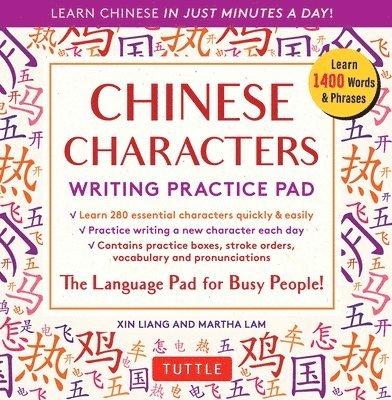
Chinese Characters Writing Practice Pad
Learn Chinese in Just Minutes a Day!
Av Xin Liang, Martha Lam
Häftad, 2022
220 kr
Lägg i varukorg
Five minutes a day is all it takes to begin learning Chinese!Chinese Characters Writing Practice Pad is the perfect guide for busy people who want to start learning Chinese or students looking for a fun way to review what they've learned. This interactive paper pad helps even those completely …
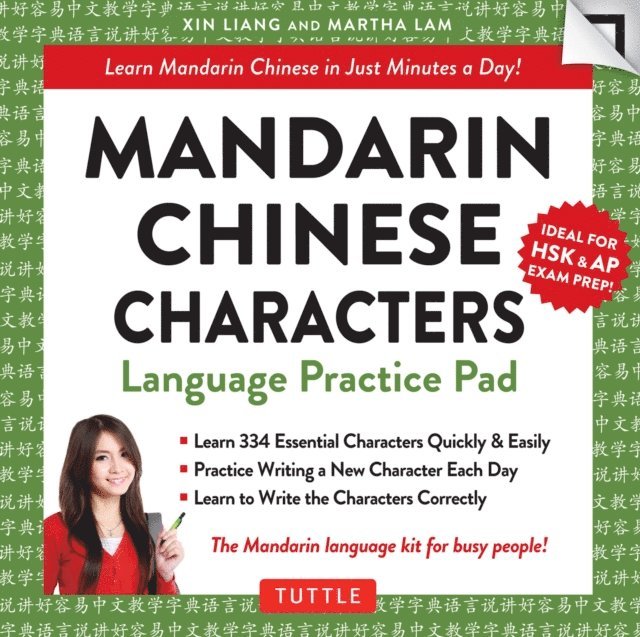
Mandarin Chinese Characters Language Practice Pad
Learn Mandarin Chinese in Just a Few Minutes Per Day! (Fully Romanized)
Av Martha Lam, Xin Liang
E-bok, 2018
137 kr
Lägg i varukorg
Five minutes a day is all it takes to begin learning Chinese! The perfect guide for busy people who want to learn Chinese, Mandarin Chinese Characters Language Practice Pad helps even those completely unfamiliar with the language learn and write the 332 most essential Chinese characters—in just …
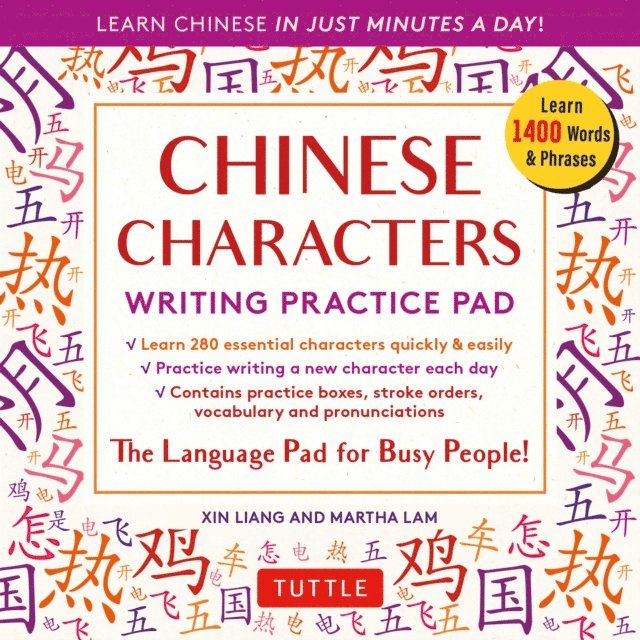
Chinese Characters Writing Practice Pad
Learn Chinese in Just Minutes a Day!
Av Martha Lam, Xin Liang
E-bok, 2022
200 kr
Lägg i varukorg
Five minutes a day is all it takes to begin learning Chinese! Chinese Characters Writing Practice Pad is the perfect guide for busy people who want to start learning Chinese or students looking for a fun way to review what they''ve learned. This interactive paper pad helps even those completely …
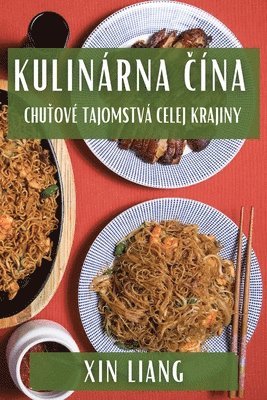
Txinako Saporeak
Tradiziozko Sukaldeetako Errezetak eta Giroa
Av Xin Liang
Häftad, 2023
410 kr
Lägg i varukorg
Mechanosensory Transduction in Drosophila Melanogaster
Av Xin Liang, Landi Sun m. fl.
Häftad, 2017
568 kr
Lägg i varukorg
This book offers an essential introduction for all graduate students and researchers who are working on or interested in mechanotransduction using fruit flies as their model organisms. Designed for accessibility, it follows a simple five-chapter structure, beginning with a general introduction to …
Mechanosensory Transduction in Drosophila Melanogaster
E-bok, 2017
734 kr
Lägg i varukorg
This book offers an essential introduction for all graduate students and researchers who are working on or interested in mechanotransduction using fruit flies as their model organisms. Designed for accessibility, it follows a simple five-chapter structure, beginning with a general introduction to …