Ying-shih Yü – författare
Visar alla böcker från författaren Ying-shih Yü. Handla med fri frakt och snabb leverans.
13 produkter
13 produkter
Inbunden, Engelska, 2016
627 kr
Skickas inom 5-8 vardagar
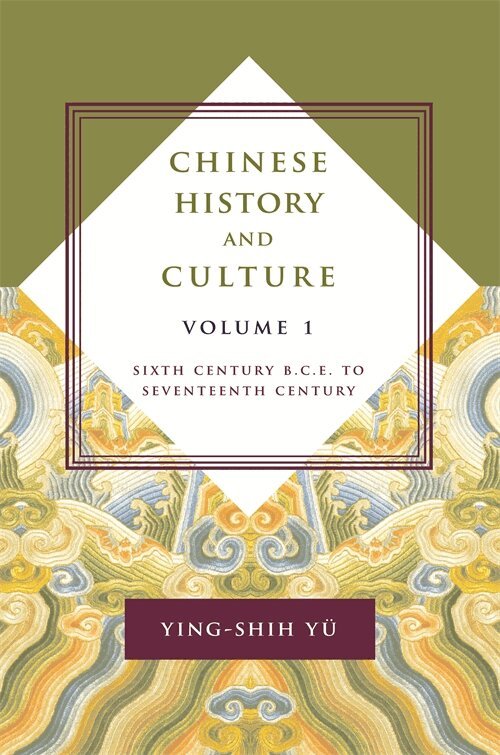
The recipient of the Kluge Prize for lifetime achievement in the humanities and the Tang Prize for "revolutionary research" in Sinology, Ying-shih Yu is a premier scholar of Chinese studies. Chinese History and Culture volumes 1 and 2 bring his extraordinary oeuvre to English-speaking readers. Spanning two thousand years of social, intellectual, and political change, the essays in these volumes investigate two central questions through all aspects of Chinese life: what core values sustained this ancient civilization through centuries of upheaval, and in what ways did these values survive in modern times? From Yu Ying-shih's perspective, the Dao, or the Way, constitutes the inner core of Chinese civilization. His work explores the unique dynamics between Chinese intellectuals' discourse on the Dao, or moral principles for a symbolized ideal world order, and their criticism of contemporary reality throughout Chinese history. Volume 1 of Chinese History and Culture explores how the Dao was reformulated, expanded, defended, and preserved by Chinese intellectuals up to the seventeenth century, guiding them through history's darkest turns.Essays incorporate the evolving conception of the soul and the afterlife in pre- and post-Buddhist China, the significance of eating practices and social etiquette, the move toward greater individualism, the rise of the Neo-Daoist movement, the spread of Confucian ethics, and the growth of merchant culture and capitalism. A true panorama of Chinese culture's continuities and transition, Yu Ying-shih's two-volume Chinese History and Culture gives readers of all backgrounds a unique education in the meaning of Chinese civilization.
Inbunden, Engelska, 2016
627 kr
Skickas inom 5-8 vardagar
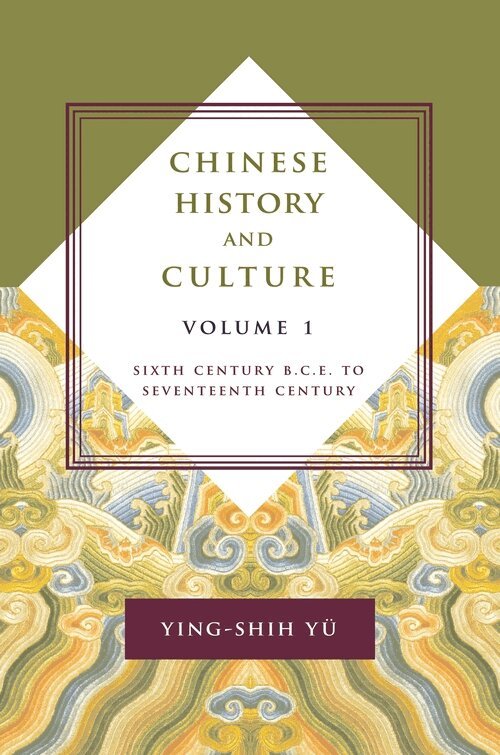
The recipient of the Kluge Prize for lifetime achievement in the humanities and the Tang Prize for "revolutionary research" in Sinology, Ying-shih Yu is a premier scholar of Chinese studies. Chinese History and Culture volumes 1 and 2 bring his extraordinary oeuvre to English-speaking readers. Spanning two thousand years of social, intellectual, and political change, the essays in these volumes investigate two central questions through all aspects of Chinese life: what core values sustained this ancient civilization through centuries of upheaval, and in what ways did these values survive in modern times? From Ying-shih Yu's perspective, the Dao, or the Way, constitutes the inner core of Chinese civilization. His work explores the unique dynamics between Chinese intellectuals' discourse on the Dao, or moral principles for a symbolized ideal world order, and their criticism of contemporary reality throughout Chinese history. Volume 2 of Chinese History and Culture completes Ying-shih Yu's systematic reconstruction and exploration of Chinese thought over two millennia and its impact on Chinese identity.Essays address the rise of Qing Confucianism, the development of the Dai Zhen and Zhu Xi traditions, and the response of the historian Zhang Xuecheng to the Dai Zhen approach. They take stock of the thematic importance of Cao Xueqin's eighteenth-century masterpiece Honglou meng (Dream of the Red Chamber) and the influence of Sun Yat-sen's Three Principles of the People, as well as the radicalization of China in the twentieth century and the fundamental upheavals of modernization and revolution. Ying-shih Yu also discusses the decline of elite culture in modern China, the relationships among democracy, human rights, and Confucianism, and changing conceptions of national history. He reflects on the Chinese approach to history in general and the larger political and cultural function of chronological biographies. By situating China's modern encounter with the West in a wider historical frame, this second volume of Chinese History and Culture clarifies its more curious turns and contemplates the importance of a renewed interest in the traditional Chinese values recognizing common humanity and human dignity.
Inbunden, Engelska, 2021
1 205 kr
Skickas inom 5-8 vardagar
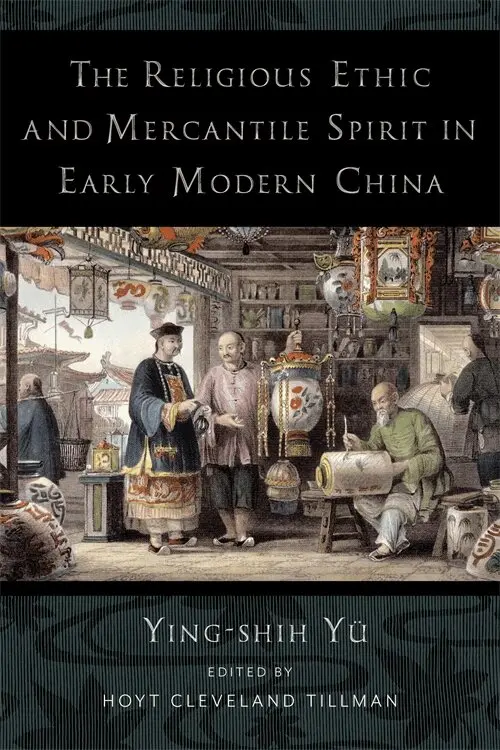
Why did modern capitalism not arise in late imperial China? One famous answer comes from Max Weber, whose The Protestant Ethic and the Spirit of Capitalism gave a canonical analysis of religious and cultural factors in early modern European economic development. In The Religions of China, Weber contended that China lacked the crucial religious impetus to capitalist growth that Protestantism gave Europe.The preeminent historian Ying-shih Yü offers a magisterial examination of religious and cultural influences in the development of China’s early modern economy, both complement and counterpoint to Weber’s inquiry. The Religious Ethic and Mercantile Spirit in Early Modern China investigates how evolving forms of Buddhism, Confucianism, and Daoism created and promulgated their own concepts of the work ethic from the late seventh century into the Qing dynasty. The book traces how religious leaders developed the spiritual significance of labor and how merchants adopted this religious work ethic, raising their status in Chinese society. However, Yü argues, China’s early modern mercantile spirit was restricted by the imperial bureaucratic priority on social order. He challenges Marxists who championed China’s “sprouts of capitalism” during the fifteenth through eighteenth centuries as well as other modern scholars who credit Confucianism with producing dramatic economic growth in East Asian countries. Yü rejects the premise that China needed an early capitalist stage of development; moreover, the East Asian capitalism that flourished in the later half of the twentieth century was essentially part of the spread of global capitalism.Now available in English translation, this landmark work has been greatly influential among scholars in East Asia since its publication in Chinese in 1987.
Häftad, Engelska, 2021
296 kr
Skickas inom 5-8 vardagar
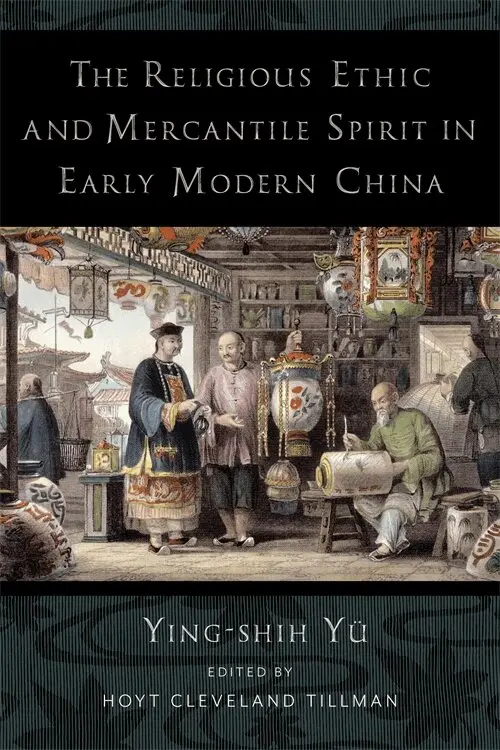
Why did modern capitalism not arise in late imperial China? One famous answer comes from Max Weber, whose The Protestant Ethic and the Spirit of Capitalism gave a canonical analysis of religious and cultural factors in early modern European economic development. In The Religions of China, Weber contended that China lacked the crucial religious impetus to capitalist growth that Protestantism gave Europe.The preeminent historian Ying-shih Yü offers a magisterial examination of religious and cultural influences in the development of China’s early modern economy, both complement and counterpoint to Weber’s inquiry. The Religious Ethic and Mercantile Spirit in Early Modern China investigates how evolving forms of Buddhism, Confucianism, and Daoism created and promulgated their own concepts of the work ethic from the late seventh century into the Qing dynasty. The book traces how religious leaders developed the spiritual significance of labor and how merchants adopted this religious work ethic, raising their status in Chinese society. However, Yü argues, China’s early modern mercantile spirit was restricted by the imperial bureaucratic priority on social order. He challenges Marxists who championed China’s “sprouts of capitalism” during the fifteenth through eighteenth centuries as well as other modern scholars who credit Confucianism with producing dramatic economic growth in East Asian countries. Yü rejects the premise that China needed an early capitalist stage of development; moreover, the East Asian capitalism that flourished in the later half of the twentieth century was essentially part of the spread of global capitalism.Now available in English translation, this landmark work has been greatly influential among scholars in East Asia since its publication in Chinese in 1987.
Häftad, Engelska, 2021
500 kr
Skickas inom 5-8 vardagar
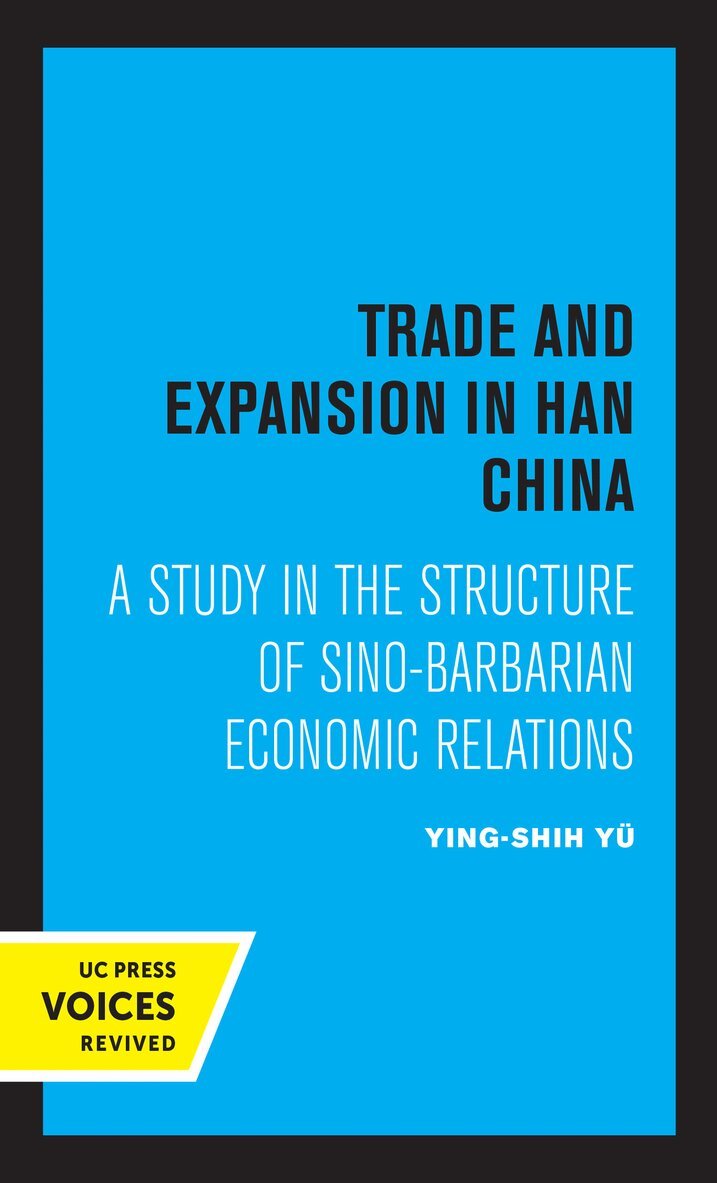
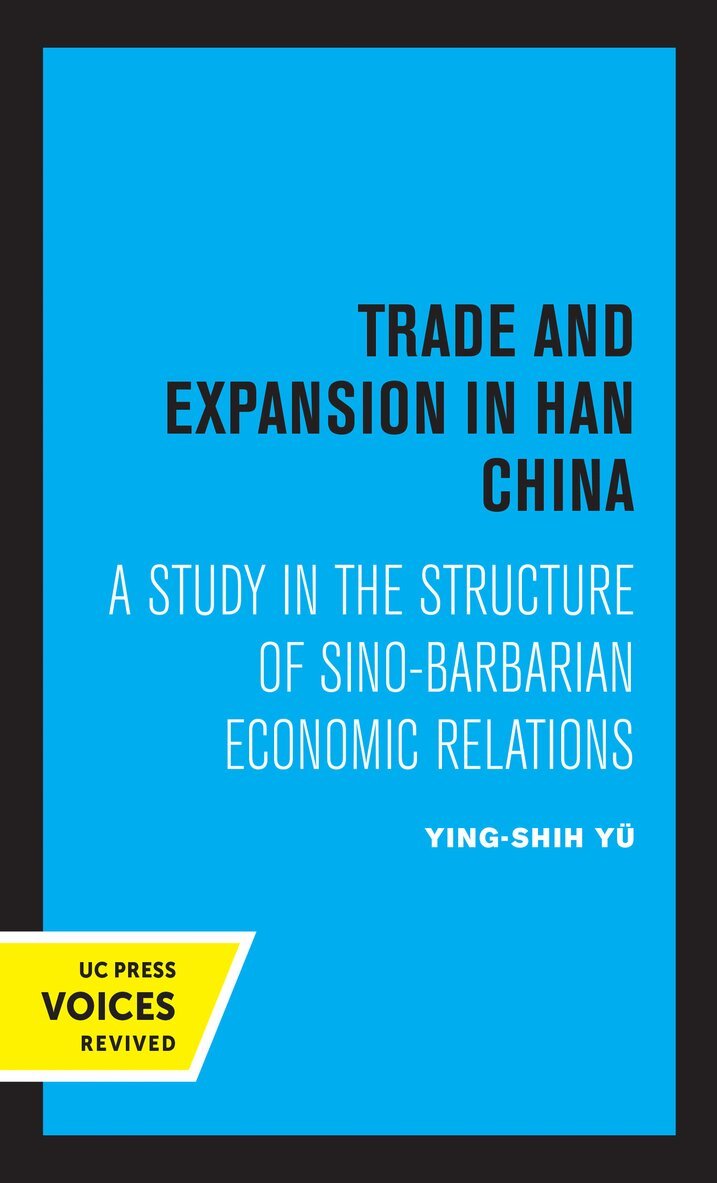
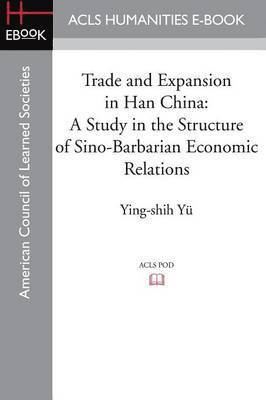
Trade and Expansion in Han China: A Study in the Structure of Sino-Barbarian Economic Relations reframes the Han empire’s celebrated “Silk Route” moment within a far larger, more intricate economy of exchange and power. Ying-shih Yu argues that trade—in forms ranging from market transactions to “gift” and “tributary” exchange—and expansion—military, political, economic, and cultural—were mutually constitutive processes that shaped the Han world. Western outreach to the “Western Regions” and Central Asia, he shows, was ultimately instrumental to a central task closer to home: managing and transforming frontier societies such as the Xiongnu, Wuhuan, Qiang, and Southwestern peoples. By tracing how imperial gifts, subsidies, settlement, and acculturation (Sinicization) intertwined with frontier security and domestic agrarian stability, Yu reveals the policy logic behind spectacular campaigns and quiet payments alike—and explains why emperors could both push outward and later regret overreach.Moving well beyond narrative, Yu reconstructs the *structure* of Sino-barbarian economic relations: the modalities of exchange, the institutional anchors in Han political economy, and the long prehistory in the Spring and Autumn and Warring States eras. Mining dynastic histories and pairing them with archaeological finds—from knife-coins in Korea to Chinese weapons and bronzes in Manchuria and Sichuan—he maps the circuits through which merchants, herders, and officials converted textiles, livestock, and prestige goods into influence and territory. The result is a compelling portrait of a formative “Confucian” imperial order in practice, where statecraft relied on markets as much as on armies, and where cultural incorporation could be as decisive as conquest. Essential reading for historians of China, empire, and economic history, this classic study offers a durable framework for understanding how great powers govern frontiers—and how exchange, security, and culture coevolve.This title is part of UC Press's Voices Revived program, which commemorates University of California Press’s mission to seek out and cultivate the brightest minds and give them voice, reach, and impact. Drawing on a backlist dating to 1893, Voices Revived makes high-quality, peer-reviewed scholarship accessible once again using print-on-demand technology. This title was originally published in 1967.
E-bok
Engelska, 2023335 kr
Läs direkt efter köp
This title is part of UC Press's Voices Revived program, which commemorates University of California Press’s mission to seek out and cultivate the brightest minds and give them voice, reach, and impact. Drawing on a backlist dating to 1893, Voices Revived makes high-quality, peer-reviewed scholarship accessible once again using print-on-demand technology. This title was originally published in 1967.
Inbunden, Engelska, 2021
1 116 kr
Skickas inom 5-8 vardagar
Trade and Expansion in Han China: A Study in the Structure of Sino-Barbarian Economic Relations reframes the Han empire’s celebrated “Silk Route” moment within a far larger, more intricate economy of exchange and power. Ying-shih Yu argues that trade—in forms ranging from market transactions to “gift” and “tributary” exchange—and expansion—military, political, economic, and cultural—were mutually constitutive processes that shaped the Han world. Western outreach to the “Western Regions” and Central Asia, he shows, was ultimately instrumental to a central task closer to home: managing and transforming frontier societies such as the Xiongnu, Wuhuan, Qiang, and Southwestern peoples. By tracing how imperial gifts, subsidies, settlement, and acculturation (Sinicization) intertwined with frontier security and domestic agrarian stability, Yu reveals the policy logic behind spectacular campaigns and quiet payments alike—and explains why emperors could both push outward and later regret overreach.Moving well beyond narrative, Yu reconstructs the *structure* of Sino-barbarian economic relations: the modalities of exchange, the institutional anchors in Han political economy, and the long prehistory in the Spring and Autumn and Warring States eras. Mining dynastic histories and pairing them with archaeological finds—from knife-coins in Korea to Chinese weapons and bronzes in Manchuria and Sichuan—he maps the circuits through which merchants, herders, and officials converted textiles, livestock, and prestige goods into influence and territory. The result is a compelling portrait of a formative “Confucian” imperial order in practice, where statecraft relied on markets as much as on armies, and where cultural incorporation could be as decisive as conquest. Essential reading for historians of China, empire, and economic history, this classic study offers a durable framework for understanding how great powers govern frontiers—and how exchange, security, and culture coevolve.This title is part of UC Press's Voices Revived program, which commemorates University of California Press’s mission to seek out and cultivate the brightest minds and give them voice, reach, and impact. Drawing on a backlist dating to 1893, Voices Revived makes high-quality, peer-reviewed scholarship accessible once again using print-on-demand technology. This title was originally published in 1967.
Häftad, Engelska, 2021
603 kr
Skickas inom 5-8 vardagar
Inbunden, Engelska, 2017
748 kr
Skickas inom 5-8 vardagar
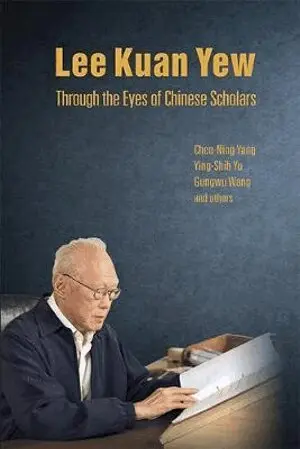
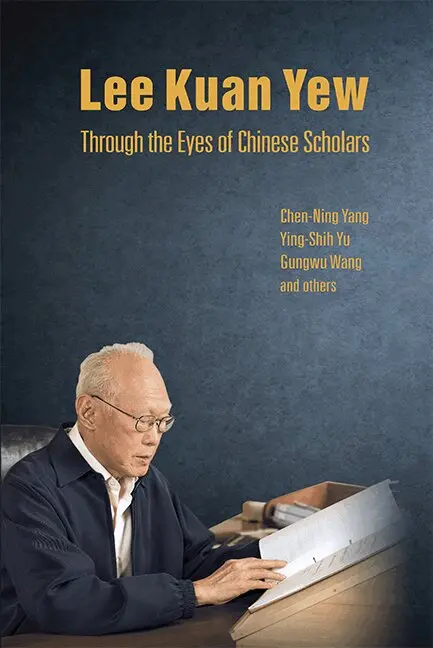
Lee Kuan Yew through the Eyes of Chinese Scholars is a compilation of essays by highly-respected Chinese scholars in which they evaluate the life, work and philosophy of Lee Kuan Yew, founding Prime Minister of Singapore. Presenting a range of views from a uniquely Chinese/Asian perspective, this book provides valuable insights for those who wish to gain a fuller and deeper understanding of Lee Kuan Yew — the man, as well as Singapore — his nation.Marking the momentous event of his death as well as the 50th anniversary of Singapore's independence in 2015, this compilation reflects both the high regard in which Lee Kuan Yew is held across the Chinese-speaking world as well as the reservations of a few. The contributors are all ethnic Chinese from different academic disciplines ranging from a Nobel laureate in physics, Chen-Ning Yang, to historians, economists and political scientists. They include Singaporeans such as Wang Gungwu and Chew Cheng Hai, as well as scholars from China, the US and Hong Kong such as Yongnian Zheng, Ying-Shih Yu, Lawrence Lau and Hang-Chi Lam among others.Originally published in Chinese, this English translation makes the material accessible to a wider English-reading audience.
Häftad, Engelska, 2017
377 kr
Skickas inom 5-8 vardagar
Lee Kuan Yew through the Eyes of Chinese Scholars is a compilation of essays by highly-respected Chinese scholars in which they evaluate the life, work and philosophy of Lee Kuan Yew, founding Prime Minister of Singapore. Presenting a range of views from a uniquely Chinese/Asian perspective, this book provides valuable insights for those who wish to gain a fuller and deeper understanding of Lee Kuan Yew — the man, as well as Singapore — his nation.Marking the momentous event of his death as well as the 50th anniversary of Singapore's independence in 2015, this compilation reflects both the high regard in which Lee Kuan Yew is held across the Chinese-speaking world as well as the reservations of a few. The contributors are all ethnic Chinese from different academic disciplines ranging from a Nobel laureate in physics, Chen-Ning Yang, to historians, economists and political scientists. They include Singaporeans such as Wang Gungwu and Chew Cheng Hai, as well as scholars from China, the US and Hong Kong such as Yongnian Zheng, Ying-Shih Yu, Lawrence Lau and Hang-Chi Lam among others.Originally published in Chinese, this English translation makes the material accessible to a wider English-reading audience.
Inbunden, Engelska, 2011
791 kr
Tillfälligt slut
Häftad, Engelska, 2012
576 kr
Tillfälligt slut
Häftad, Kinesiska, 1996
103 kr
Tillfälligt slut