Y.P. Abrol – författare
Visar alla böcker från författaren Y.P. Abrol. Handla med fri frakt och snabb leverans.
6 produkter
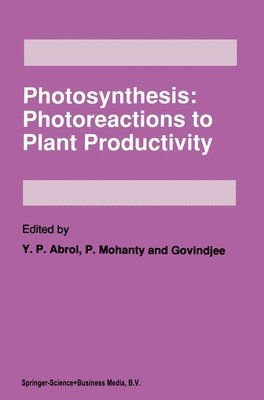
Photosynthesis
Photoreactions to Plant Productivity
Av Y. P. Arbol, Prasanna Mohanty m. fl.
Inbunden, 1993
879 kr
Lägg i varukorg
This volume illuminates the disciplinary character of photosynthesis, which spans (bio)physics to agronomy. The book will help provide students with the necessary conceptual outlook for integrating information from the bioenergetic and enzymatic angles, obtained at the molecular level, with the …
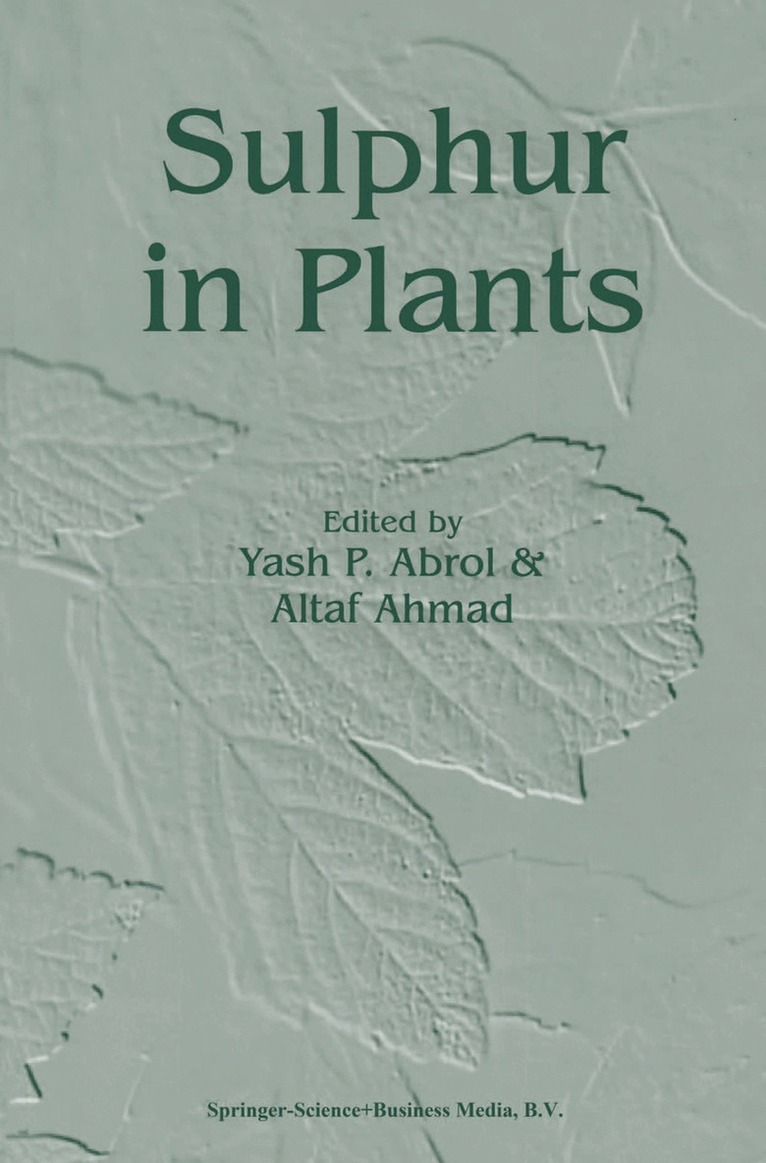
Sulphur in Plants
Av Y.P. Abrol, A. Ahmad
Inbunden, 2003
2189 kr
Lägg i varukorg
This work contains an account of the status of knowledge and a detailed analysis of all aspects of sulphur, that is: the global S cycle; the present and future scenario of fertilizer demand and supply; management strategies of soil sulphur; uptake, assimilation and redistribution of sulphur in …
Sulphur in Plants
Av Y.P. Abrol, A. Ahmad
Häftad, 2010
2183 kr
Lägg i varukorg
Sulphur (S) plays a pivotal role in various plant growth and development processes being a constituent of sulphur-containing amino acids, cysteine and methionine, and other metabolites viz., glutathione and phytochelatins, co-factor of enzymes which contribute to stress repair and amelioration of …
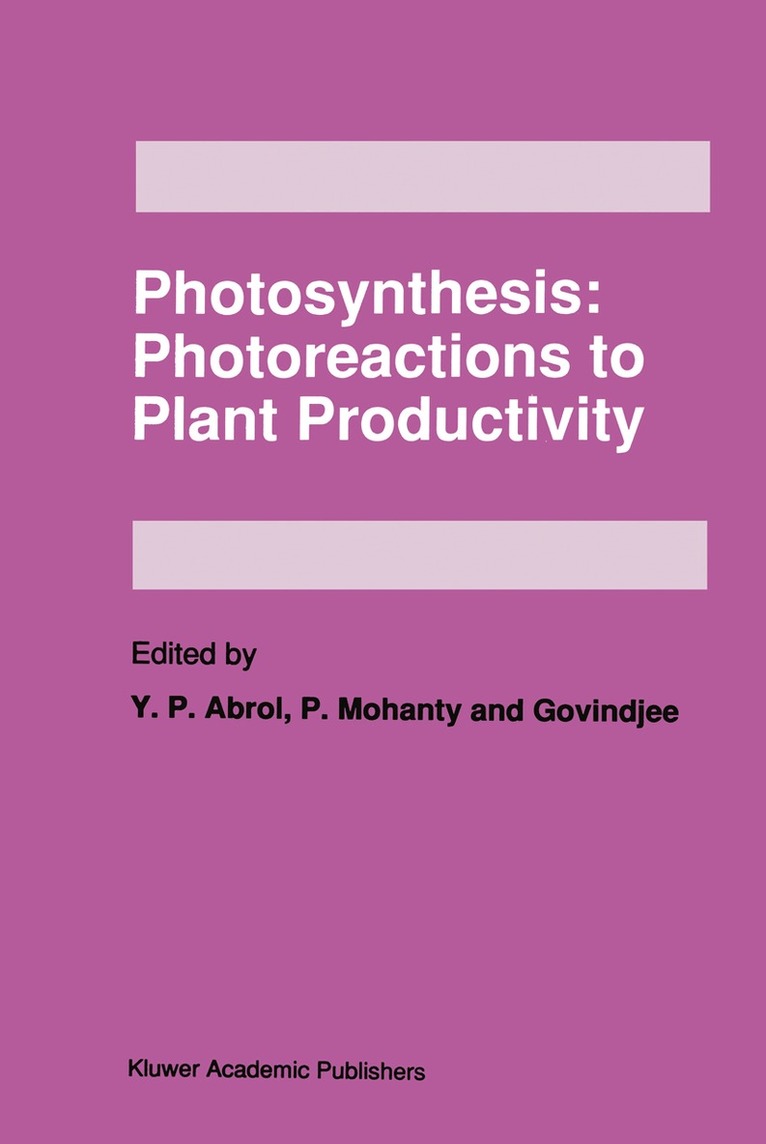
Photosynthesis: Photoreactions to Plant Productivity
Av Y.P. Abrol, P. Mohanty m. fl.
Häftad, 2012
551 kr
Lägg i varukorg
All biomass is derived from photosynthesis. This provides us with food fuel, as well as fibre. This process involves conversion of solar energy, via photochemical reactions, into chemical energy. In plants and cyanobacteria, carbon dioxide and water are converted into carbohydrates and oxygen. It …
Photosynthesis: Photoreactions to Plant Productivity
Av Govindjee, P. Mohanty m. fl.
E-bok, 2012
718 kr
Lägg i varukorg
All biomass is derived from photosynthesis. This provides us with food fuel, as well as fibre. This process involves conversion of solar energy, via photochemical reactions, into chemical energy. In plants and cyanobacteria, carbon dioxide and water are converted into carbohydrates and oxygen. It …
Sulphur in Plants
Av A. Ahmad, Y.P. Abrol
E-bok, 2013
2925 kr
Lägg i varukorg
Sulphur (S) plays a pivotal role in various plant growth and development processes being a constituent of sulphur-containing amino acids, cysteine and methionine, and other metabolites viz., glutathione and phytochelatins, co-factor of enzymes which contribute to stress repair and amelioration of …