
Yue Leng – författare
Visar alla böcker från författaren . Handla med fri frakt och snabb leverans.
2 produkter
2 produkter
2 762 kr
Skickas
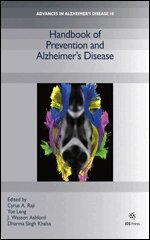
It is almost 120 years since Alzheimer’s disease (AD) was first reported, and the concept of modifiable risk factors associated with the disease has been present from the outset. Thus, the idea of preventing AD is not new, with reference to strategies noted as early as the 1990s. This subfield of AD research has matured in recent years, with the number of modifiable risk factors – the AD preventome – rising from the 7 initially identified to the current 12, with an estimated contribution to dementia cases worldwide of about 40%. This book, the Handbook of Prevention and Alzheimer’s Disease, introduces physicians, scientists, and other stakeholders to this subfield of AD research. It investigates the AD preventome, which will continue to expand as the understanding of new factors and related biomarkers is refined. Optimizing this preventome leads to an improvement in overall brain health, an outcome which reduces the risk of developing AD and improves quality of life. The book goes on to examine other domains of prevention, from vascular risk factors to social engagement and from sleep health to spirituality. If the journey to end AD can be likened to a long and arduous challenge, understanding every possible part of the overall toolkit of approaches for disease prevention and intervention is essential.Together with its companion volume on intervention, the book provides a comprehensive overview of strategies for tackling Alzheimer’s disease, and will be of interest to all those working in the field. Cover illustration:White matter tracts showing sex differences in connectivity in men versus women as a function of increasing body mass index. Reprinted with permission from Rahmani F, Wang Q, McKay NS, Keefe S, Hantler N, Hornbeck R, Wang Y, Hassenstab J, Schindler S, Xiong C, Morris JC, Benzinger TLS, Raji CA. Sex-Specific Patterns of Body Mass Index Relationship with White Matter Connectivity. J Alzheimers Dis. 2022;86(4):1831-1848. doi: 10.3233/JAD-215329. PMID: 35180116; PMCID: PMC9108572.
2 762 kr
Skickas
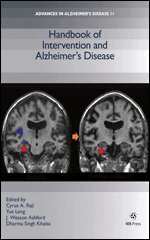
It is almost 120 years since Alzheimer’s disease (AD) was first reported, and the concept of managing some of the modifiable risk factors associated with the disease has been present from the outset. Intervening to manage risk factors as a way of tackling AD is not new, but optimizing brain health as a way of minimizing risk and maximizing the potential benefits of revolutionary new treatments for AD is becoming increasingly important. This book, the Handbook of Intervention and Alzheimer’s Disease, presents 47 papers exploring factors which may either inspire or inform future treatment and clinical trials. While novel interventions such as anti-amyloid immunotherapy present great opportunities, they may also increase the risk of brain bleeds and edema, which in turn may lead to adverse clinical outcomes. Such adverse outcomes are demonstrably more likely to occur in persons with poor brain health, so improved management of the risk factors which make up the AD preventome will also minimize the risks associated with such novel therapies. The papers in this volume can therefore be thought of as offering insight into those factors that can optimize brain health or providing key insights into interventions which may achieve such outcomes. Together with its companion volume on prevention, the book provides a comprehensive overview of strategies for tackling Alzheimer’s disease, and will be of interest to all those working in the field. Cover illustration: Improved hypoperfusion (resolving blue colors) on ASL MRI Z-score maps superimposed on structural MRI scans at baseline and one year in a PET amyloid-positive research participant with cognitive complaints undergoing one year of multi-domain personalized brain health interventions (vascular disease management, dietary optimization, sustained physical activity etc.). Permission to use this figure was granted both by the study P.I. Dr. David Merrill, MD, PhD, of the Pacific Neuroscience Institute and the research participant.