Zachary K Dawson – författare
Visar alla böcker från författaren Zachary K Dawson. Handla med fri frakt och snabb leverans.
6 produkter
Epistle of James
Linguistic Exegesis of an Early Christian Letter
Av James D Dvorak, Zachary K Dawson
Häftad, 2019
433 kr
Lägg i varukorg
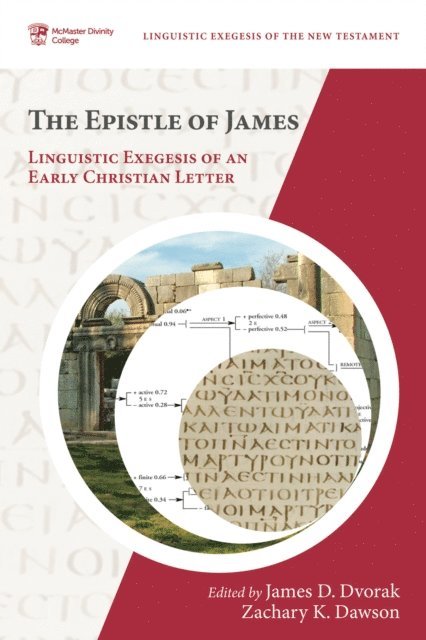
Epistle of James
Linguistic Exegesis of an Early Christian Letter
Av Zachary K. Dawson, James D. Dvorak
E-bok, 2019
559 kr
Lägg i varukorg
The Epistle of James is a collection of essays that applies to the book of James linguistic methods of analysis that are based on the same theoretical framework, namely Systemic-Functional Linguistics. This volume is unique in that it provides a theoretically consistent and unified approach to a …
Epistle of James
Linguistic Exegesis of an Early Christian Letter
Av James D Dvorak, Zachary K Dawson
Inbunden, 2019
643 kr
Lägg i varukorg
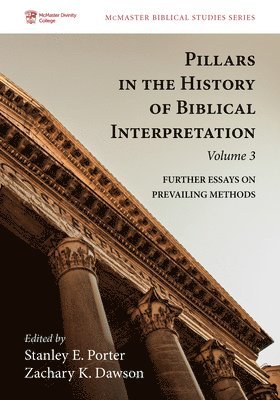
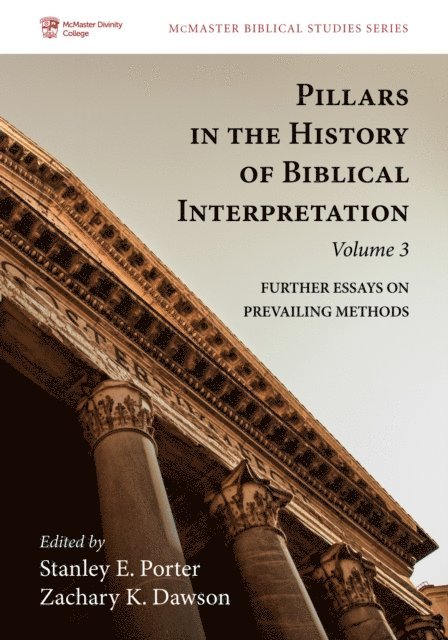
Pillars in the History of Biblical Interpretation, Volume 3
Further Essays on Prevailing Methods
Av Stanley E Porter, Zachary K Dawson
Häftad, 2021
5,0 utav 5 stjärnor. Totalt antal röster: (1)
595 kr
Lägg i varukorg
Pillars in the History of Biblical Interpretation, Volume 3
Further Essays on Prevailing Methods
Av Stanley E Porter, Zachary K Dawson
Inbunden, 2021
781 kr
Lägg i varukorg
Pillars in the History of Biblical Interpretation, Volume 3
Further Essays on Prevailing Methods
Av Zachary K. Dawson, Stanley E. Porter
E-bok, 2021
1074 kr
Lägg i varukorg
This third volume, like its predecessors, adds to the growing body of literature concerned with the history of biblical interpretation. With eighteen essays on nineteen biblical interpreters, volume 3 expands the scope of scholars, both traditional and modern, covered in this now multivolume …