Zhang Shuguang – författare
Visar alla böcker från författaren Zhang Shuguang. Handla med fri frakt och snabb leverans.
6 produkter
6 produkter
E-bok
PDF, Engelska, 20072 741 kr
Läs direkt efter köp
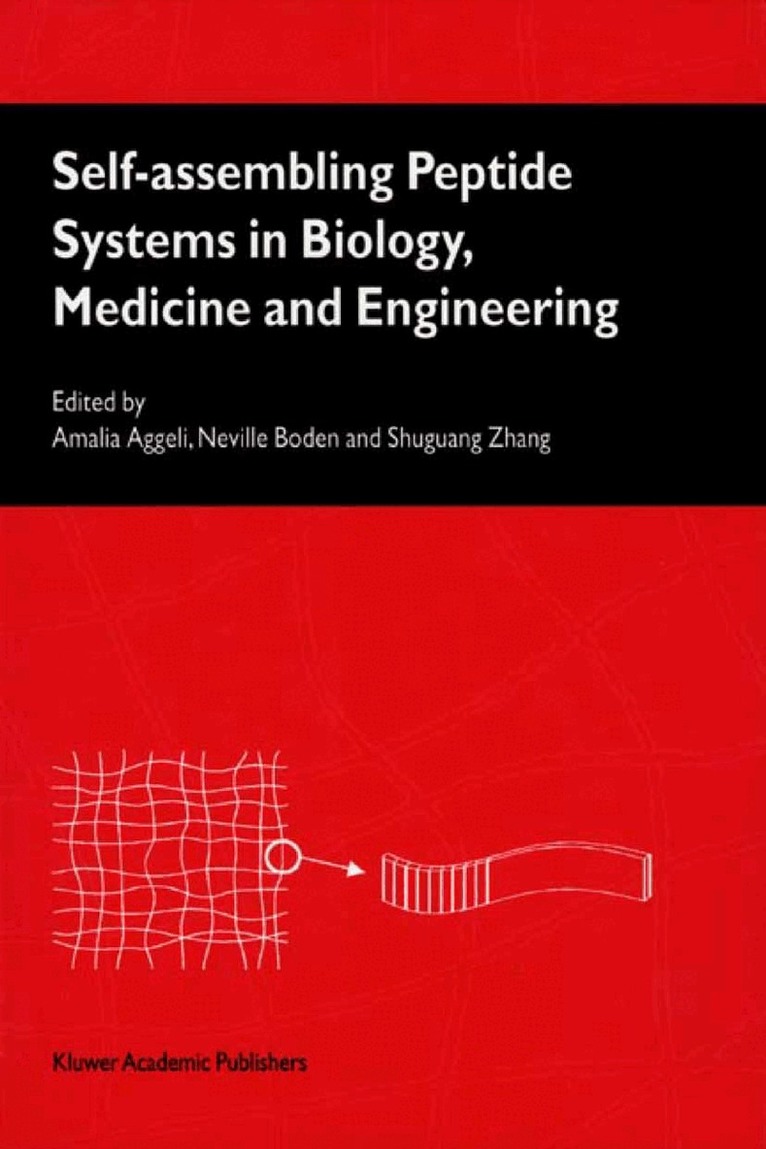
One ofthe major drivers in biological research is the establishment ofstructures and functions of the 50,000 or so proteins in our bodies. Each has a characteristic- dimensional structure, highly "ordered" yet "disordered"! This structure is essential for a protein''s function and, significantly, it must be sustained in the competitive and complex environment of the living cell. It is now being recognised that when a cell loses control, proteins can se- assemble into more complex supermolecular structures such as the amyloid fibres and plaques associated with the pathogenesis of prion (CJD) or age-related (Alzheimer''s) diseases. This is a pointer to the wider significance of the self-assembling properties of polypeptides. It has been long known that, in silk, polypeptides are assembled into- sheet structures which impart on the material its highly exploitable properties of flexibility combined with high tensile strength. But only now emerging is the recognition that peptides can Self-assemble into a wide variety of non-protein-like structures, including fibrils, fibres, tubules, sheets and monolayers. These are exciting observations and, more so, the potential for materials and medical exploitations is so wide ranging that over 80 scientists from Europe, USA, Japan and Israel. met 1-6 July 1999 in Crete, to discuss the wide-ranging implications of these novel developments. There was a spirit of excitement about the workshop indicative of an important new endeavor. The emerging perception is that of a new class of materials set to become commercially viable early in the 21st century.
Inbunden, Engelska, 2001
2 174 kr
Skickas inom 10-15 vardagar
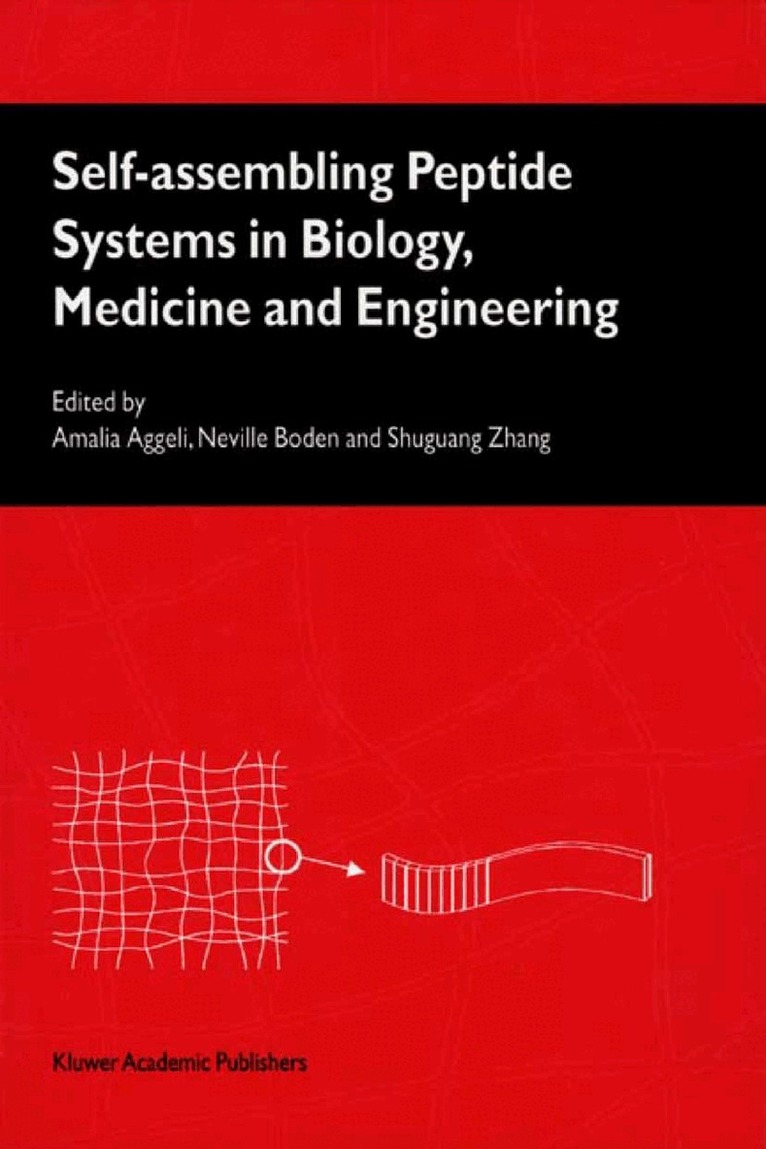
One ofthe major drivers in biological research is the establishment ofstructures and functions of the 50,000 or so proteins in our bodies. Each has a characteristic- dimensional structure, highly "ordered" yet "disordered"! This structure is essential for a protein's function and, significantly, it must be sustained in the competitive and complex environment of the living cell. It is now being recognised that when a cell loses control, proteins can se- assemble into more complex supermolecular structures such as the amyloid fibres and plaques associated with the pathogenesis of prion (CJD) or age-related (Alzheimer's) diseases. This is a pointer to the wider significance of the self-assembling properties of polypeptides. It has been long known that, in silk, polypeptides are assembled into- sheet structures which impart on the material its highly exploitable properties of flexibility combined with high tensile strength. But only now emerging is the recognition that peptides can Self-assemble into a wide variety of non-protein-like structures, including fibrils, fibres, tubules, sheets and monolayers. These are exciting observations and, more so, the potential for materials and medical exploitations is so wide ranging that over 80 scientists from Europe, USA, Japan and Israel. met 1-6 July 1999 in Crete, to discuss the wide-ranging implications of these novel developments. There was a spirit of excitement about the workshop indicative of an important new endeavor. The emerging perception is that of a new class of materials set to become commercially viable early in the 21st century.
Häftad, Engelska, 1998
316 kr
Skickas inom 3-6 vardagar
Häftad, Engelska, 2010
2 178 kr
Skickas inom 10-15 vardagar
One ofthe major drivers in biological research is the establishment ofstructures and functions of the 50,000 or so proteins in our bodies. Each has a characteristic- dimensional structure, highly "ordered" yet "disordered"! This structure is essential for a protein's function and, significantly, it must be sustained in the competitive and complex environment of the living cell. It is now being recognised that when a cell loses control, proteins can se- assemble into more complex supermolecular structures such as the amyloid fibres and plaques associated with the pathogenesis of prion (CJD) or age-related (Alzheimer's) diseases. This is a pointer to the wider significance of the self-assembling properties of polypeptides. It has been long known that, in silk, polypeptides are assembled into- sheet structures which impart on the material its highly exploitable properties of flexibility combined with high tensile strength. But only now emerging is the recognition that peptides can Self-assemble into a wide variety of non-protein-like structures, including fibrils, fibres, tubules, sheets and monolayers. These are exciting observations and, more so, the potential for materials and medical exploitations is so wide ranging that over 80 scientists from Europe, USA, Japan and Israel. met 1-6 July 1999 in Crete, to discuss the wide-ranging implications of these novel developments. There was a spirit of excitement about the workshop indicative of an important new endeavor. The emerging perception is that of a new class of materials set to become commercially viable early in the 21st century.
Del 11 - Series in Structural Biology
Excitement Of Discovery, The: Selected Papers Of Alexander Rich - A Tribute To Alexander Rich
Inbunden, Engelska, 2018
3 150 kr
Skickas inom 3-6 vardagar
"This book brings back memories of the great Alex Rich, a pioneer in molecular biology. He was friend, a mentor and a colleague who contributed greatly to the understanding of living processes and molecular structures."David Baltimore1975 Nobel Laureate in Physiology or MedicineThis book is intended for students and general readers who are interested in the structures of biological molecules and history of science. The center of gravity of Alexander Rich's work is on nucleic acids and their structures and their roles in biology, but the breadth of his work is nearly unparalleled. Alex Rich published important early discoveries on the structure and activity of RNA, information transfer (translation) from RNA to protein, the structure of ribosomes with insights into polyribosome functions, the first atomic-resolution structure of nucleic acid base pairings, and the discovery of a hitherto-unknown conformation of DNA. Many of Rich's articles also have a focus on the structure of proteins in general as well as specific proteins and some are concerned with the structure of viruses. Some of Rich's early experimental work is based on scattering of X-rays from fibers but X-ray diffraction from crystals became the dominating technique of the Cold War.This is a book full of rich history of early days of modern biology and many fundamental discoveries. Alex Rich's main focus throughout his long career was on nucleic acids. His first paper on nucleic acids, was published together with JD Watson. Two years later, Rich reported creating fibers of poly-Uracil and poly-Adenine and studied their structures by diffraction.Alex Rich's laboratory determined the high resolution crystal structures of the ApU and GpC fragments of double helical RNA from Rich's group is considered a landmark in the detailed understanding of nucleic acid structure.
Häftad, Engelska, 2018
287 kr
Tillfälligt slut