Zhuang Tian – författare
Visar alla böcker från författaren Zhuang Tian. Handla med fri frakt och snabb leverans.
3 produkter
3 produkter
Häftad, Engelska, 2026
2 063 kr
Kommande
Al-Driven Intelligent Optimization and Synergistic Integration of Multi-Energy Systems introduces advanced artificial intelligence methods in the operations, management, and performance of renewable energy systems, focusing on wind energy, solar energy, and hydrogen systems. The book addresses key problems such as low accuracy and efficiency in traditional wind power system modeling and control, challenges in wind energy resource prediction and intelligent scheduling, intelligent fault management of wind and hydrogen energy systems, complex scheduling and energy management challenges of multi-energy complementary systems when connected to the grid, and scheduling and reliability challenges in multi-energy system grid connection. Real-world applications and case studies are used throughout to help readers integrate academic research with practical engineering applications, to enhance energy system design and management. This latest volume in the Elsevier Wind Energy Engineering Series is of interest to all those who are interested in the integration of AI in the operation of complex energy systems, including researchers, students, faculty, engineers, practitioners, and policy makers.Introduces artificial intelligence (AI) methods in the operation, management, and optimization of renewable energy systemsDetails comprehensive and systematic knowledge on the latest developments and future trends in modern energy systemsFocuses on the integration of wind energy, solar energy, and hydrogen in power gridsProvides systematic theoretical and practical guidance for practitioners to improve the efficiency and the reliability of renewable energy systemsIncludes recent technology developments, real-world applications and case studies in the design and management of modern energy systems
E-bok
Engelska, 20252 166 kr
Läs direkt efter köp
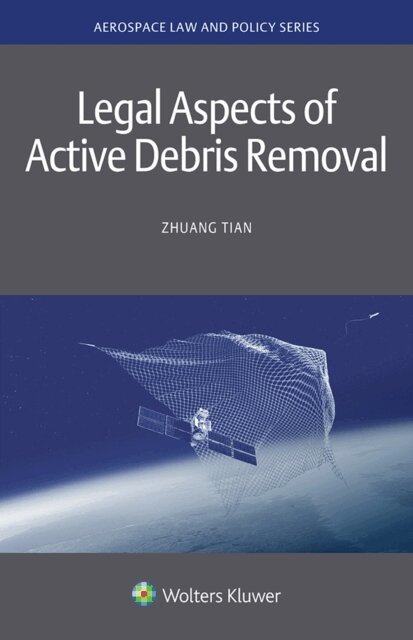
The quantity of space debris in Earth's orbit has already reached a concerning level, threatening the safety of space activities. What makes this problem more pressing is that debris pieces generated by a collision can trigger further collisions and thus fragment other objects, a phenomenon known as the Kessler Syndrome. The growing need for active removal of space debris raises the question of whether the current international legal framework for space activities adequately regulates space debris removal and, if not, what the gaps are and how they can be filled. This is what this groundbreaking book is about.The author provides in-depth analysis of such issues and topics as the following:the problem of space debris and issues surrounding the governance of active debris removal that demand answers from international space law;responsibility under international law to mitigate and remove space debris;international liability for damage caused by space objects and its implications for debris removal activities;eligibility under the current international legal framework to remove debris from other entities;legal restrictions on the use of active debris removal technologies, especially in view of their dual-use nature;apportionment of liability for damage caused among parties involved in a debris removal mission; andprovision of information on the removability of space debris. To address the gaps, this book examines initiatives undertaken at national and international levels related to the governance of active debris removal and proposes recommendations for the further development of international space law, encapsulated in four keywords: commitment, safety, consent, and transparency. Space debris is a multidisciplinary issue that requires collective efforts within the international space community. This book provides a systematic analysis of the present and future of space law in regulating active debris removal. For legal scholars, it offers an understanding of the evolving landscape of active debris removal, its regulatory challenges, and the international legal framework that needs to keep pace with its development. For policymakers, it can provide insights into shaping the future development of international space law to better accommodate the regulatory needs of debris removal.
E-bok
PDF, Engelska, 20252 166 kr
Läs direkt efter köp
The quantity of space debris in Earth's orbit has already reached a concerning level, threatening the safety of space activities. What makes this problem more pressing is that debris pieces generated by a collision can trigger further collisions and thus fragment other objects, a phenomenon known as the Kessler Syndrome. The growing need for active removal of space debris raises the question of whether the current international legal framework for space activities adequately regulates space debris removal and, if not, what the gaps are and how they can be filled. This is what this groundbreaking book is about.The author provides in-depth analysis of such issues and topics as the following:the problem of space debris and issues surrounding the governance of active debris removal that demand answers from international space law;responsibility under international law to mitigate and remove space debris;international liability for damage caused by space objects and its implications for debris removal activities;eligibility under the current international legal framework to remove debris from other entities;legal restrictions on the use of active debris removal technologies, especially in view of their dual-use nature;apportionment of liability for damage caused among parties involved in a debris removal mission; andprovision of information on the removability of space debris. To address the gaps, this book examines initiatives undertaken at national and international levels related to the governance of active debris removal and proposes recommendations for the further development of international space law, encapsulated in four keywords: commitment, safety, consent, and transparency. Space debris is a multidisciplinary issue that requires collective efforts within the international space community. This book provides a systematic analysis of the present and future of space law in regulating active debris removal. For legal scholars, it offers an understanding of the evolving landscape of active debris removal, its regulatory challenges, and the international legal framework that needs to keep pace with its development. For policymakers, it can provide insights into shaping the future development of international space law to better accommodate the regulatory needs of debris removal.