Zsolt Bojti – författare
Visar alla böcker från författaren Zsolt Bojti. Handla med fri frakt och snabb leverans.
7 produkter
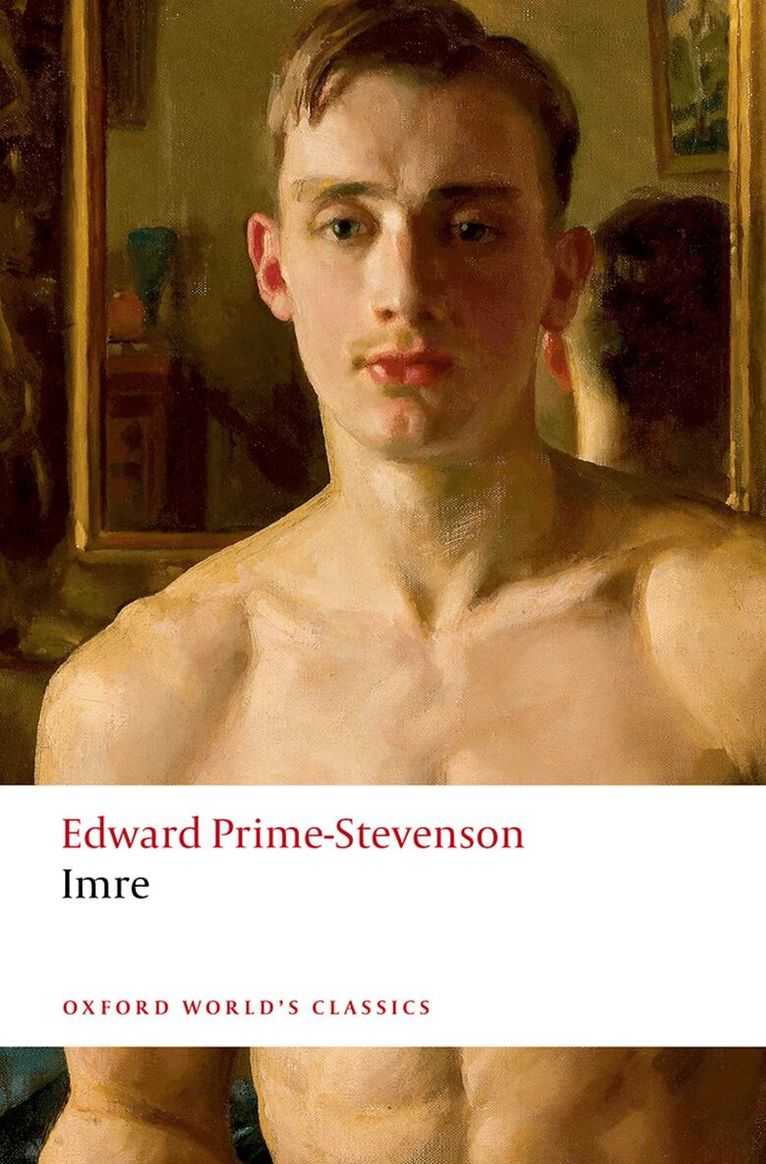
Imre
A Memorandum
Av Edward Prime-Stevenson, Zsolt Bojti m. fl.
Häftad, 2026
106 kr
Lägg i varukorg
'I love thee... once more helpless, and therewith hopeless!--but this time no longer silent, before the Friendship which is Love, the Love which is Friendship.'Considered one of the first examples of the 'homosexual' novel, Edward Prime-Stevenson's Imre: A Memorandum takes the reader to the almost …
Imre
A Memorandum
Av Edward Prime-Stevenson, S. Brooke Cameron m. fl.
E-bok, 2026
113 kr
Lägg i varukorg
''I love thee... once more helpless, and therewith hopeless!--but this time no longer silent, before the Friendship which is Love, the Love which is Friendship.'' Considered one of the first examples of the ''homosexual'' novel, Edward Prime-Stevenson''s Imre: A Memorandum takes the reader to the …
Imre
A Memorandum
Av Edward Prime-Stevenson, S. Brooke Cameron m. fl.
E-bok, 2026
113 kr
Lägg i varukorg
''I love thee... once more helpless, and therewith hopeless!--but this time no longer silent, before the Friendship which is Love, the Love which is Friendship.'' Considered one of the first examples of the ''homosexual'' novel, Edward Prime-Stevenson''s Imre: A Memorandum takes the reader to the …
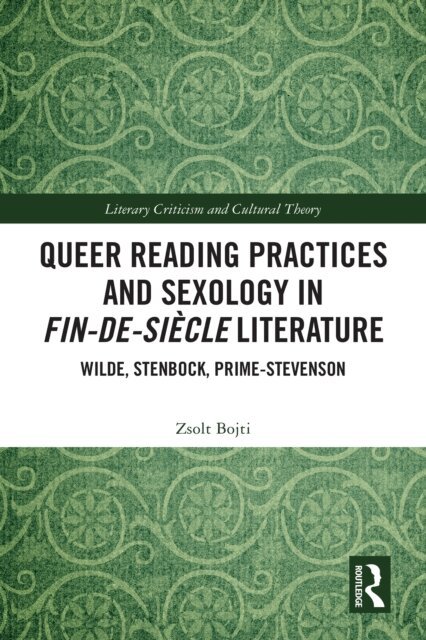
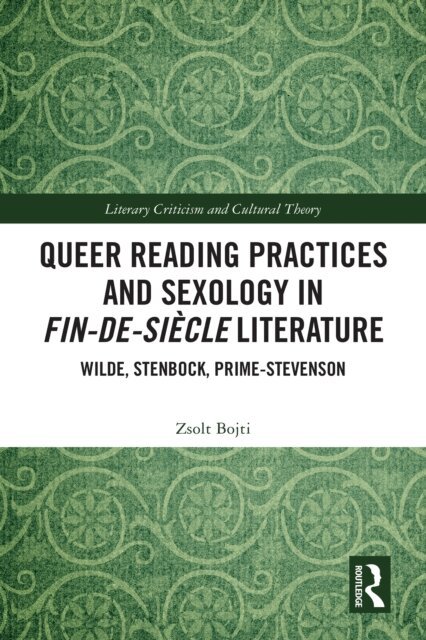
Queer Reading Practices and Sexology in Fin-de-Siècle Literature
Wilde, Stenbock, Prime-Stevenson
Av Zsolt Bojti
Inbunden, 2025
2887 kr
Lägg i varukorg
This book scrutinises the production and transnational distribution of sexological knowledge at the turn of the century. The works of three transnationally mobile authors are in the focus: The Picture of Dorian Gray (1890/1891) and Teleny (1893) by, and attributed to, Oscar Wilde; ‘The True Story …
Queer Reading Practices and Sexology in Fin-de-Siècle Literature
Wilde, Stenbock, Prime-Stevenson
Av Zsolt Bojti
Häftad, 2026
811 kr
Lägg i varukorg
This book scrutinises the production and transnational distribution of sexological knowledge at the turn of the century. The works of three transnationally mobile authors are in the focus: The Picture of Dorian Gray (1890/1891) and Teleny (1893) by, and attributed to, Oscar Wilde; ‘The True Story …
Queer Reading Practices and Sexology in Fin-de-Siecle Literature
Wilde, Stenbock, Prime-Stevenson
Av Zsolt Bojti
E-bok, 2025
956 kr
Lägg i varukorg
This book scrutinises the production and transnational distribution of sexological knowledge at the turn of the century. The works of three transnationally mobile authors are in the focus: The Picture of Dorian Gray (1890/1891) and Teleny (1893) by, and attributed to, Oscar Wilde; ‘The True Story …
Queer Reading Practices and Sexology in Fin-de-Siecle Literature
Wilde, Stenbock, Prime-Stevenson
Av Zsolt Bojti
E-bok, 2025
956 kr
Lägg i varukorg
This book scrutinises the production and transnational distribution of sexological knowledge at the turn of the century. The works of three transnationally mobile authors are in the focus: The Picture of Dorian Gray (1890/1891) and Teleny (1893) by, and attributed to, Oscar Wilde; ‘The True Story …