Advances in Digital Twin Computing and Sensor Networks - Böcker
Visar alla böcker i serien Advances in Digital Twin Computing and Sensor Networks. Handla med fri frakt och snabb leverans.
6 produkter
6 produkter
1 934 kr
Kommande
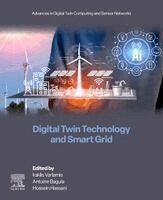
Digital Twin Technology and Smart Grid explores the intersection of these technologies, which are essential for the evolution of energy systems. The book explains how it utilizes intelligent wireless sensor networks, the Internet of Things, artificial intelligence, machine learning, cloud, edge, and fog-computing to monitor power consumption. It discusses how security risks and privacy challenges can be accommodated, and explains the ethical/legal implications of collecting data. As the global energy landscape moves toward greater sustainability and decentralization, digital twins present unprecedented opportunities to enhance grid efficiency, bolster resilience, and support the integration of renewable energy sources.The integration of Digital Twin (DT) technology with Smart Grids (SG) represents a groundbreaking development in energy management, making this a highly significant and timely topic. As urban areas expand and energy demands rise, the need for more efficient, sustainable, and resilient energy systems becomes critical. DT technology, with its ability to create real-time, virtual replicas of physical systems, offers unprecedented opportunities for enhancing the performance, reliability, and security of smart grids.Explains how digital twins gather real-world data to create a model of a given situation of real micro grid/power gridsDiscusses how the model can be utilized in making informed decisionsConsiders the associated technologies that support digital twins: IoT, AI, ML, and blockchainExplores how digital twins can be used in the real-world to monitor and improve services of the micro grid/power grid
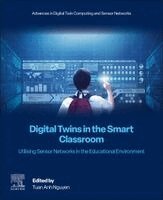
Digital Twins in the Smart Classroom
Utilising Sensor Networks in the Educational Environment
Häftad, Engelska, 2026
1 992 kr
Kommande
Digital Twins in the Smart Classroom: Utilising Sensor Networks in the Educational Environment explores virtual schools that have incorporated digital twin computing into the day-to-day running of the classroom. The book discusses the foundational concepts, practical applications, future directions, and the various aspects of virtual school, such as the student's daily activities, intelligent wireless sensor networks, privacy issues, and how the internet of things, artificial intelligence, machine learning, cloud computing, and fog/edge-computing can enable a smarter, more efficient, more optimized classroom.The smart classroom allows the incorporation of digital devices and learning software into the school environment, as well as sensor networks for tracking classroom processes, for data gathering, and to developed insights into the management of scholarly activity. Additionally, modern infrastructure within schools can involve the installation of advanced Information and communication technology (ICT): student-friendly data can be collected from wearable devices (personal digital assistants, iPads, iPods, smart watches, etc.) via wireless sensor networks; smart sensors can monitor the classroom environment, such as noise level, CO2 level, temperature, humidity, lecturers’ voice, and students/lecturers’ motion (by PIR - passive infrared sensors), and much more.Explains how digital twins gather real school data to create a model of a virtual schoolConsiders the associated technologies that support school digital twins, including Internet of Things, artificial intelligence, machine learning, and the blockchainExplores how digital twins can be used in real schools to monitor and improve the quality of education and manage the educational environment for students
1 739 kr
Kommande
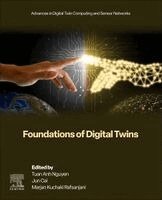
Digital twin computing is the bridge between the real and virtual worlds, and operates as a mirror that reflects the real world into the virtual world. Digital twin technologies take data from sensor networks in the real world, utilise artificial intelligence and machine learning to analyse the data, and then create a digital representation or simulation that updates as their real world counterpart updates. As such, the model can be used to understand the real world environment, and the digital twin can be used to make informed decisions that will be of benefit in the real world. Foundations of Digital Twins explains the fundamentals of digital twins, how digital twin technologies can gather real world data using the sensor networks that comprise the Internet of Things, and how that data can be sorted, analysed, and utilised to improve services and to increase sustainability. Structured in five sections, the book begins with an introductory overview of each technology, establishing a clear understanding of their individual roles and their potential when combined. The second section delves into data acquisition, featuring advanced sensors, drones, robots and actuators. Part Three considers data exchange and security, focusing on CPS, the internet of things, and blockchain. Part Four looks at how digital twins can impact on data computing, such as video streaming, cloud computing, fog computing and edge-computing. The final section explores the future opportunities and risks of adopting advanced technologies in this evolving field, including artificial intelligence, the ethical issues concerned when collecting and using data, and the security implications. By blending theory with practical insights, Foundations of Digital Twins serves as both an educational resource and a practical guide for researchers, students and professionals seeking to harness the power of these advanced technologies in complex, real world environments.Explains how digital twins gather real world data to create a virtual model of a real world environmentDiscusses how that virtual model can be utilized in the making of informed decisions about the real world environmentConsiders the associated technologies that support digital twins, including blockchain, sensor networks, artificial intelligence and machine learningExplores how digital twins can be used to monitor and improve real world services.
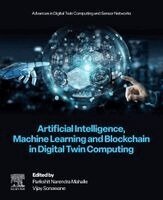
Artificial Intelligence, Machine Learning and Blockchain in Digital Twin Computing
Häftad, Engelska, 2026
1 934 kr
Kommande
Artificial Intelligence, Machine Learning and Blockchain in Digital Twin Computing explores the synergy between artificial intelligence, machine learning, blockchain technology, and digital twin computing. The book overviews each technology, establishing a clear understanding of their individual roles and potential when combined. The second section delves into the integration of these technologies, focusing on key themes such as enhancing system simulations, ensuring data integrity, and enabling secure, real-time decision-making. Practical applications and case studies are used to illustrate how this convergence can drive innovation in industries like manufacturing, healthcare, and smart cities. Final sections look ahead, discussing emerging trends, challenges, and future opportunities.Digital twin computing is the bridge between the real and virtual worlds. Digital twin computing also is the mirror that reflects the real world into the virtual world. Blockchain technology can refine the digital twins (DTs) by ensuring transparency, decentralized data storage, data immutability, and peer-to-peer communication in various applications. DT provides a powerful tool able to generate a huge amount of training data for machine learning algorithms (MLAs).Explores the seamless integration of artificial intelligence, machine learning, blockchain, and digital twin computing for enhanced system performanceFeatures real-world examples from industries such as manufacturing, healthcare, and smart citiesHighlights the latest research trends and emerging opportunities in this interdisciplinary fieldOffers solutions to challenges in implementing these technologiesDiscusses future trends and potential advancements in the field
1 934 kr
Skickas inom 7-10 vardagar
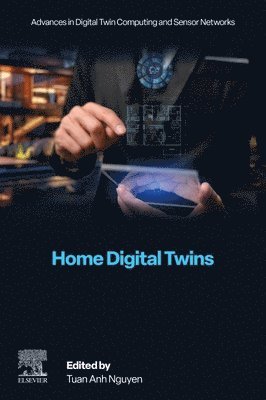
Home Digital Twins explores how digital twin technologies can serve as a bridge between the real home and the virtual home. It explains how IoT devices, wearable sensors, artificial intelligence (AI), and machine learning (ML) can aid in the diagnosis, prediction, and prevention of abnormal/critical/extreme problems in real home environments, while also showing how digital twin computing can support the management of home energy consumption to optimize everyday living. The book also considers the security and ethical implications of introducing digital twin technology in the home to ensure the technology benefit the lives of the home's inhabitants.The introduction of sensor networks into the home environment allows automation into the home, utilizing internet of things (IoT) devices to program, for example, door opening, room luminosity, room temperature, and humidity. Digital Twin technology extends the capabilities of the smart home, collecting and analyzing data from the Activities of Daily Living (ADLs) and applying Human Activity Recognition (HAR) algorithms to provide adaptive services, including minimizing power consumption, improving healthcare, and enhancing overall well-being. However, there are many challenges when applying these algorithms to the smart home due to the variability and sparsity of sensor data, which can lead to a mismatch between the real home and the digital home.Explains how digital twins gather real home data to create a virtual model of the homeConsiders the associated technologies that support home digital twins, including Internet of things, artificial intelligence, machine learning, and blockchainExplores how digital twins can be used in the home to monitor and improve our daily lives
1 934 kr
Kommande
Digital Twin and Industry 4.0: Concepts, Frameworks, and Applications champions the use of digital twin technologies in the support of the fourth industrial revolution. These technologies, such as the Internet of Things, Artificial Intelligence, cloud computing, big data analytics, robotics, and VR, can be combined to benefit a wide variety of industries, from healthcare and manufacturing to cyber security. The opening chapter compares Industry 4.0 to previous industrial ages. The subsequent seventeen chapters discuss each respective technology, considering its classification, advantages, disadvantages, roles, applications and the potential for future developments. Alongside AI and IoT, the book looks at additive manufacturing, 5G, blockchain, sensors, holography, 3D-printing, drones, machine vision, and cyber-physical systems (CPS). Overall, Digital Twin and Industry 4.0 provides a comprehensive synthesis of theories and technologies underpinning digital twins for Industry 4.0, and interdisciplinary coverage that connects digital twins with the other technologies, offering applied case studies and examples that bridge the gap between academic research and industrial implementation.Explains how digital twin technologies can enable the benefits of Industry 4.0Discusses the benefits and challenges of each technology, and how they can be applied in a real world environmentConsiders technologies such as artificial intelligence, Internet of Things, additive manufacturing, 5G, blockchain, sensors, holography, 3D-printing, drones, machine vision, and cyber-physical systemsUtilises case studies to connect the realms of academic research and industry