
Amazigh Studies – serie
Visar alla böcker i serien Amazigh Studies. Handla med fri frakt och snabb leverans.
3 produkter
3 produkter
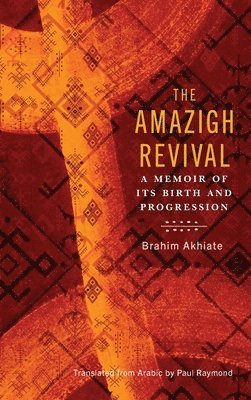
Inbunden, Engelska, 2025
1 384 kr
Skickas inom 5-8 vardagar
A memoir of how the Amazigh people successfully fought for their recognition in MoroccoFor decades after Moroccan independence in 1956, the struggle of the Amazigh people for their indigenous rights and cultural preservation took center stage. They fought against their erasure under an exclusivist Arab nationalist regime. Ultimately, they were successful, yet the history of the Amazigh Cultural Movement and its profound impact on North African society have remained largely inaccessible to English speakers, leaving a gap in our understanding of postcolonial resistance, indigenous rights, and cultural preservation efforts.The Amazigh Revival is the memoir of Brahim Akhiate, an Amazigh academic, writer, and organizer who was a leader of the Amazigh movement. Translated into English for the first time, it offers unprecedented insight into the Amazighs' fight for recognition and a place in Moroccan society through the first-hand account of a key figure who guided it, starting in the 1960s. Akhiate describes the personal sacrifices, ideological tensions, intellectual debates, and eventual triumphs that led to the constitutional recognition of the Amazigh language and a more inclusive identity.This memoir, the first work in the Amazigh Studies series, offers English speakers crucial access to previously unavailable perspectives on one of North Africa's most significant cultural movements. Scholars and students across multiple disciplines—including the Middle East and North Africa (Tamazgha), postcolonial history, global indigenous studies, Arabic literature, and Amazigh studies—will benefit from Akhiate's detailed recounting of this important political and cultural moment in Moroccan history whose impact has been felt across North Africa.
Häftad, Engelska, 2025
395 kr
Skickas inom 3-6 vardagar
A memoir of how the Amazigh people successfully fought for their recognition in MoroccoFor decades after Moroccan independence in 1956, the struggle of the Amazigh people for their indigenous rights and cultural preservation took center stage. They fought against their erasure under an exclusivist Arab nationalist regime. Ultimately, they were successful, yet the history of the Amazigh Cultural Movement and its profound impact on North African society have remained largely inaccessible to English speakers, leaving a gap in our understanding of postcolonial resistance, indigenous rights, and cultural preservation efforts.The Amazigh Revival is the memoir of Brahim Akhiate, an Amazigh academic, writer, and organizer who was a leader of the Amazigh movement. Translated into English for the first time, it offers unprecedented insight into the Amazighs' fight for recognition and a place in Moroccan society through the first-hand account of a key figure who guided it, starting in the 1960s. Akhiate describes the personal sacrifices, ideological tensions, intellectual debates, and eventual triumphs that led to the constitutional recognition of the Amazigh language and a more inclusive identity.This memoir, the first work in the Amazigh Studies series, offers English speakers crucial access to previously unavailable perspectives on one of North Africa's most significant cultural movements. Scholars and students across multiple disciplines—including the Middle East and North Africa (Tamazgha), postcolonial history, global indigenous studies, Arabic literature, and Amazigh studies—will benefit from Akhiate's detailed recounting of this important political and cultural moment in Moroccan history whose impact has been felt across North Africa.
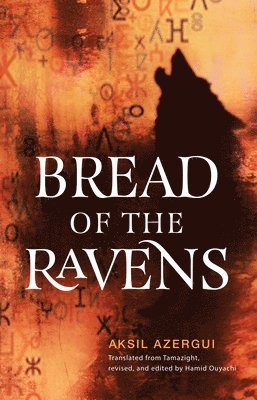
Häftad, Engelska, 2026
263 kr
Skickas
A novelist's withering indictment of centuries of silence and marginalization of North Africa's indigenous people, magnified by the twin horrors of political repression and religious violenceBread of the Ravens is the story of a nameless Amazigh journalist, who is imprisoned and tortured after publicly critiquing the violence and immiseration crushing his people are enduring. His bravery comes at the cost of his freedom and nearly his life.Told through a series of dizzying fever dreams, fragmented and discontinuous, scarred by torture and historical trauma, the Amazigh novelist Aksil Azergui delivers a harrowing narrative of the state violence, religious intolerance and terror, and repression of the Amazigh people. Hamid Ouyachi's deft and visceral translation is razor-sharp in its specificity; it carries the reader into the journalist's altered reality, as he scrambles across unforgiving landscapes—real or imaginary, obsessed with writing the story of the Imazighen. Bread of the Ravens takes its place in a worldwide tradition of literature as means of resistance and a reclamation of language and identity.