America's Baptists – serie
Visar alla böcker i serien America's Baptists. Handla med fri frakt och snabb leverans.
12 produkter
12 produkter
Inbunden, Engelska, 2016
512 kr
Skickas inom 10-15 vardagar
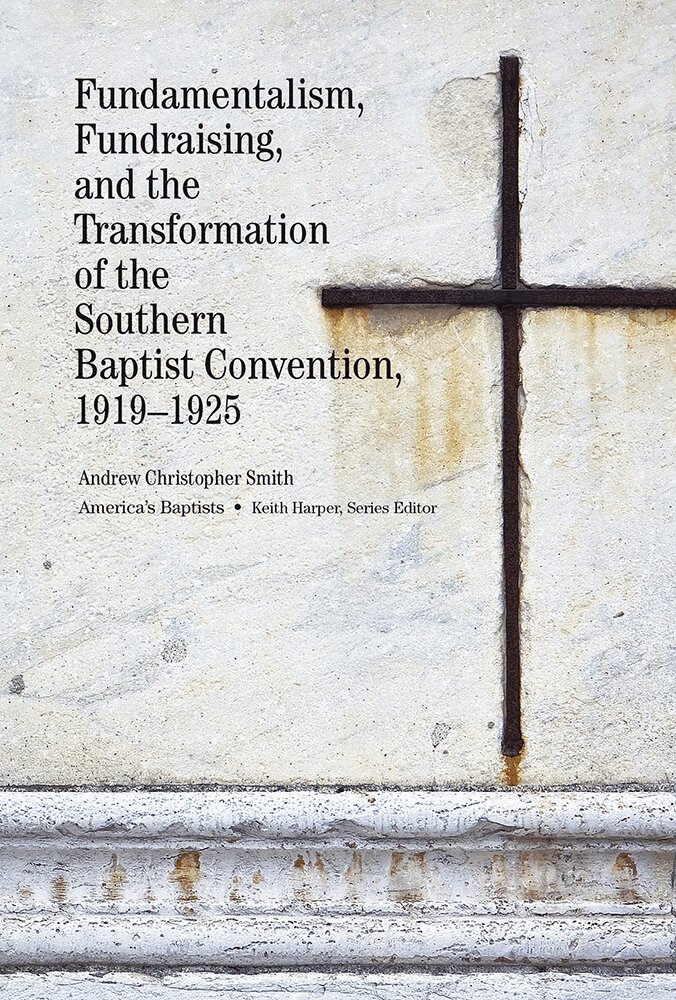
Scholars and journalists have paid significant attention to the contemporary Fundamentalist tendencies of southern Protestantism. However, many studies neglect to consider how the Fundamentalist controversies that roiled the Baptists and Presbyterians of the North during the 1920s affected the Southern Baptist Convention schism of 1970–2000. Fundamentalism, Fundraising, and the Transformation of the Southern Baptist Convention, 1919–1925 explores the scope and character of the interaction between Southern Baptists and early Fundamentalism during the late 1910s and early 1920s. By focusing more closely on the Southern Baptist Convention, Andrew Christopher Smith examines the interaction between the northernFundamentalist movement and southern religion during the era. Though scholars agree that Fundamentalism is not native to the South, no book thus far has considered the effects of the Fundamentalist movement and how it influenced southern Protestant denominational organizations, independent of southern rejection of Fundamentalist-sponsored interdenominational evangelistic and educational institutions. Smith proposes that Fundamentalist ideas, lingering in the atmosphere of the South after wafting there through hearsay, national religious periodicals, and the secular press,likely influenced Southern Baptist self-understanding during this critical period.Examining documentary evidence, Smith explains that following the First World War, Southern Baptists pushed toward bureaucratization. The “Seventy-Five Million Campaign,” a fundraising and organization-building drive that the convention approved in 1919, was the denominational movement through which the selective appropriation of Fundamentalist ideas occurred. Exploring the interplay of Southern Baptist claims and northern Fundamentalist precepts, Smith fills a void in scholarly examination of early-twentieth-century Baptist history.
Doing the Word
Southern Baptists' Carver School of Church Social Work and Its Predecessors, 1907-1997
Inbunden, Engelska, 2019
703 kr
Skickas inom 10-15 vardagar
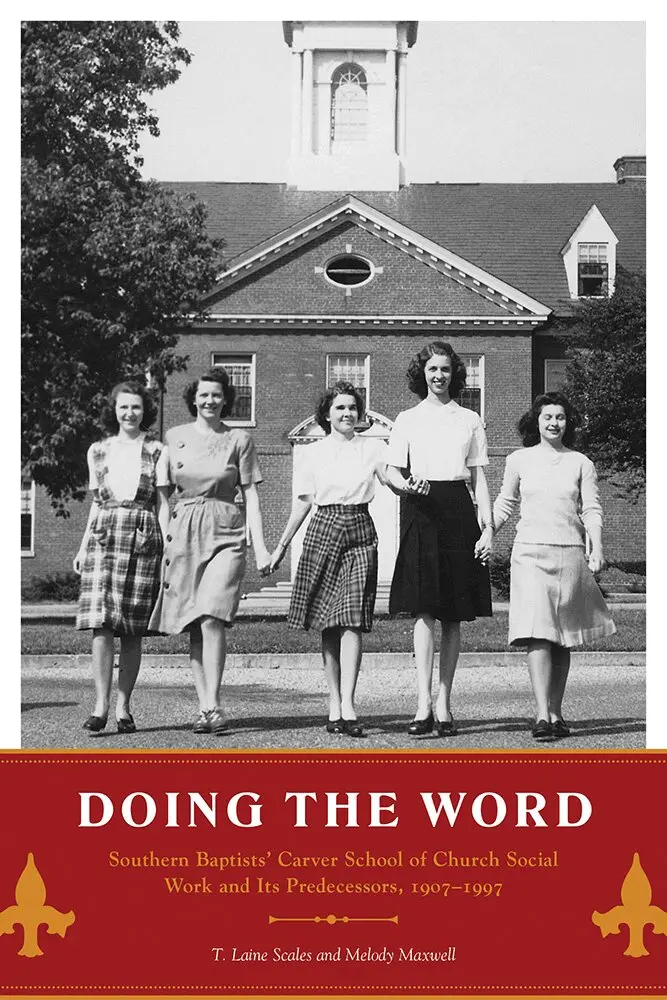
In the pantheon of publications related to women’s educational history, there is little research concerning women’s education in the context of the Baptist church. In Doing the Word: Southern Baptists’ Carver School of Church Social Work and Its Predecessors, 1907–1997, T. Laine Scales and Melody Maxwell provide a complete history of this unique institution. By exploring the dynamic evolution of women’s education through the lens of the women’s training program for missions and social work at the Southern Baptist Theological Seminary, the authors show how the institution both expanded women’s education and leadership and also came into tension with changes in the Southern Baptist Convention, ultimately resulting in its closing in 1997. A touchstone for women’s studies and church history alike, Doing the Word reopens a lost chapter in the evolution of women’s leadership during the twentieth century—a tumultuous period in which the Carver School, under significant pressure to reverse course, sought to expand the roles of women in leading the church.
Inbunden, Engelska, 2019
553 kr
Skickas inom 10-15 vardagar
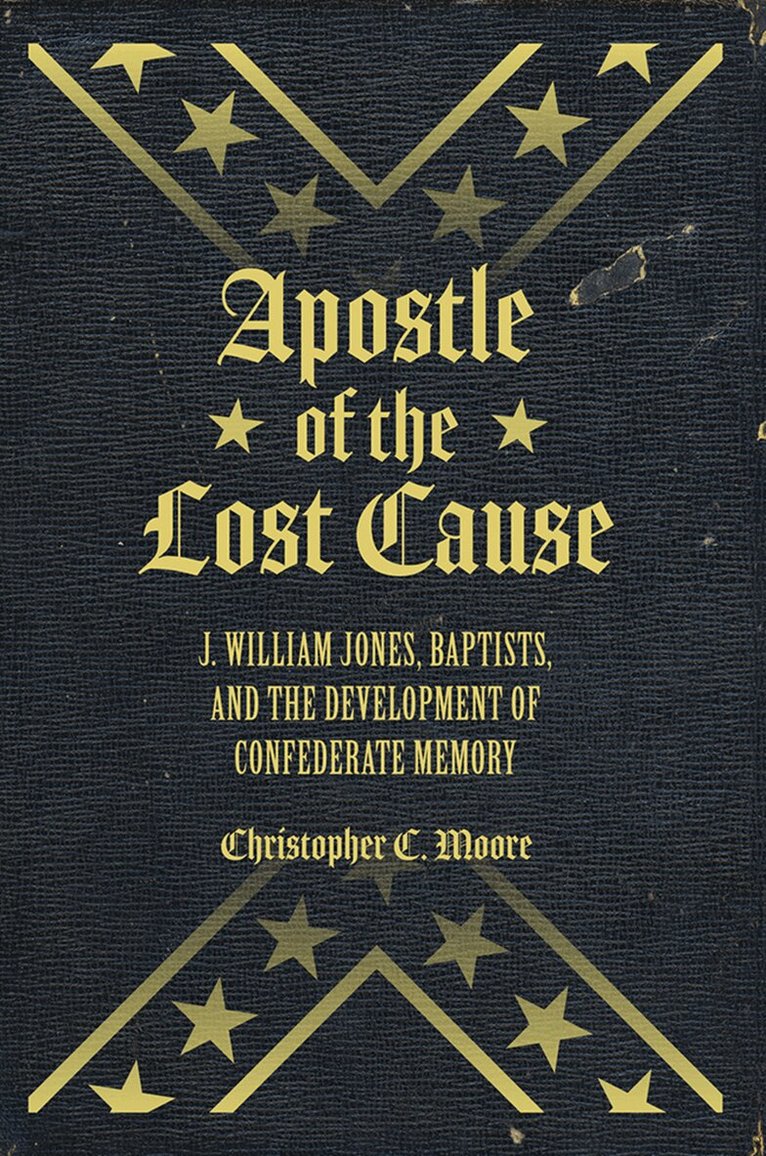
Perhaps no person exerted more influence on postwar white Southern memory than former Confederate chaplain and Baptist minister J. William Jones. Christopher C. Moore's Apostle of the Lost Cause is the first full-length work to examine the complex contributions to Lost Cause ideology of this well-known but surprisingly understudied figure. Commissioned by Robert E. Lee himself to preserve an accurate account of the Confederacy, Jones responded by welding hagiography and denominationalism to create, in effect, a sacred history of the Southern cause.In a series of popular books and in his work as secretary of the Southern Historical Society Papers, Jones's mission became the canonization of Confederate saints, most notably Lee, Stonewall Jackson, and Jefferson Davis, for a postwar generation and the contrivance of a full-blown myth of Southern virtue-in-defeat that deeply affected historiography for decades to come. While personally committed to Baptist identity, Jones supplied his readers with embodiments of Southern morality who transcended denominational boundaries and enabled white Southerners to locate their champions (and themselves) in a quasi-biblical narrative that ensured ultimate vindication for the Southern cause. In a time when Confederate monuments and the enduring effects of white supremacy are in the daily headlines, an examination of this key figure in the creation of the Lost Cause legacy could not be more relevant.
Häftad, Engelska, 2020
321 kr
Skickas inom 10-15 vardagar
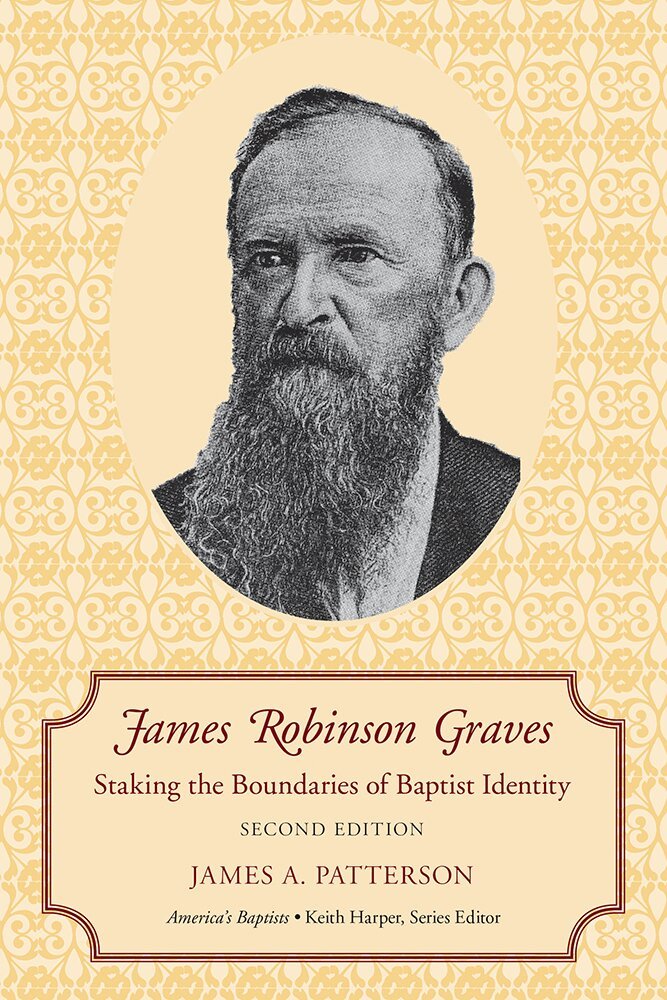
James A. Patterson's groundbreaking study of the life and mind of James Robinson Graves explores the history of Landmarkism in the nineteenth century. Under this doctrine, Graves proposed that 'true' Baptists should be able to trace their lineage directly to the early church, rather than through the strands of Protestantism. Controversial in its day, and often poorly understood now, Landmarkism, in Patterson's nuanced interpretation, is important for understanding an essential feature of Baptist life to the present day: how do Baptists stake out their identities in reference to other Baptists and to members of competing denominations? While Graves has been widely dismissed by recent historians, in Patterson's skillful revision, this figure draws much nearer to central concerns of Baptist thinking since the First Great Awakening.This addition to the America's Baptists series blends biographical insight with a thematic approach that focuses primarily on Graves's controversial beliefs about ecclesiology, Baptist history, and eschatology. Patterson divides this work into seven chapters that progress chronologically, and this updated edition includes an expanded discussion of Christian republicanism, elaborates on the question of Graves and race, and features a longer epilogue to account for recent scholarship on Graves and Landmarkism.James Robinson Graves is an accessible introduction to the significant albeit disputed role that the Landmark tradition played in the shaping of Southern Baptist life and thought. Seminary students and scholars of nineteenth-century Southern Baptist history will find a rich new interpretation of this misunderstood figure.
Inbunden, Engelska, 2020
662 kr
Skickas inom 10-15 vardagar
Inbunden, Engelska, 2021
645 kr
Skickas inom 10-15 vardagar
In Mainstreaming Fundamentalism: John R. Rice and Fundamentalism's Public Reemergence, Keith Bates embarks on a thematic and chronological exploration of twentieth-century Baptist fundamentalism in postwar America, sharing the story of a man whose career intersected with many other leading fundamentalists of the twentieth century, such as J. Frank Norris, Bob Jones Sr., Bob Jones Jr., and Jerry Falwell.Unique among histories of American fundamentalism, this book explores the theme of Southern fundamentalism's reemergence through a biographical lens. John R. Rice's mission to inspire a broad cultural activism within fundamentalism - particularly by opposing those who fostered an isolationist climate - would give direction and impetus to the movement for the rest of the twentieth century. To support this claim, Bates presents chapters on Rice's background and education, personal and ecclesiastical separatism, and fundamentalism and political action, tracing his rise to leadership during a critical phase of fundamentalism's development until his death in 1980.Bates draws heavily upon primary source texts that include writings from Rice's fundamentalist contemporaries, his own The Sword of the Lord articles, and his private papers - particularly correspondence with many nationally known preachers, local pastors, and laypeople over more than fifty years of Rice's ministry. The incorporation of these writings, combined with Bates's own conversations with Rice's family, facilitate a deeply detailed, engaging examination that fills a significant gap in fundamentalist history studies.Mainstreaming Fundamentalism: John R. Rice and Fundamentalism's Public Reemergence provides a nuanced and insightful study that will serve as a helpful resource to scholars and students of postwar American fundamentalism, Southern fundamentalism, and Rice's contemporaries.
Inbunden, Engelska, 2021
553 kr
Skickas inom 10-15 vardagar
As the story goes, an itinerant preacher once visited the Bluegrass region and proclaimed heaven to be “a mere Kentucky of a place.” The Commonwealth’s first Baptists certainly thought so as they began settling the region a decade before statehood. By 1785 a group of pioneering preachers formed the Elkhorn Association, widely regarded as the oldest Baptist association west of the Alleghenies. Often portrayed in the historiography as the vanguard of a new frontier democracy, the Elkhorn Association, on closer inspection, reveals itself to be far more complex. In A Mere Kentucky of a Place, Keith Harper argues that the association’s Baptist ministers were neither full-fledged frontier egalitarians nor radical religionists but simply a people in transition. These ministers formed their identities in the crucible of the early national period, challenged by competing impulses, including their religious convictions, Jeffersonian Republicanism, and a rigid honor code—with mixed results.With a keen eye for human interest, Harper brings familiar historical figures such as John Gano and Elijah Craig to life as he analyzes leadership in the Elkhorn Association during the early republic. Mining the wealth of documents left by the association, Harper details the self-aware struggle of these leaders to achieve economic wealth, status, and full social and cultural acceptance, demonstrating that the Elkhorn Association holds a unique place in the story of Baptists in the “New Eden” of Kentucky.Ideal for course adoption in religious studies and students of Kentucky history, this readable work is sure to become a standard source on the history of religion on the Kentucky frontier.
Häftad, Engelska, 2022
341 kr
Skickas inom 10-15 vardagar
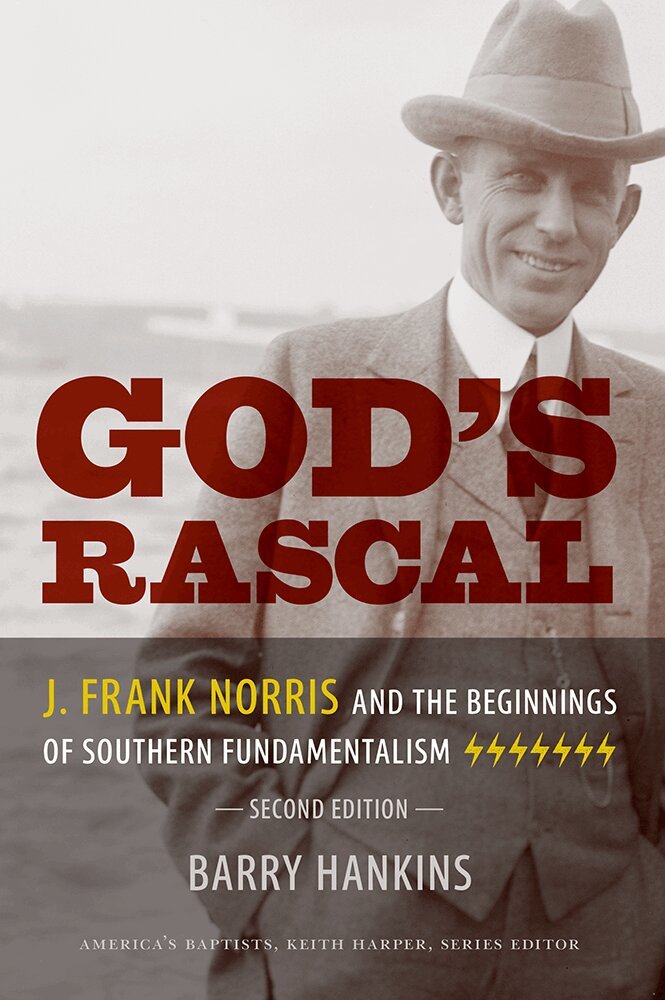
Loathed by mainstream Southern Baptists, J. Frank Norris (1877–1952) was in many ways the Southern Baptist Convention’s first fundamentalist. Twenty-five years after its first publication, this second edition of Barry Hankins’s field-defining work God’s Rascal: J. Frank Norris and the Beginnings of Southern Fundamentalism engages new scholar- ship on American fundamentalism to reassess one of the most controversial figures in the history of American Christianity. In this completely revised edition, Hankins pens an entirely new chapter on J. Frank Norris’s murder trial, examines newly uncovered details regarding his recurrent sexual improprieties, and reconsiders his views on race in order to place J. Frank Norris, a man both despicable and captivating, among the most significant Southern fundamentalists of the twentieth century.Norris merged a southern populist tradition with militant fundamentalism, carving out a distinctly take-no-prisoners political niche within the Baptist church that often offended his allies as much as his enemies. Indeed, Norris was about as bad as a fundamentalist could be. He resided in a world of swirling conspiracies of leftists who, he argued, intended to subvert both evangelical religion and American culture. There are times when Norris’s ego looms so large in his story that he seemed less interested in the threat these alleged conspiracies posed than in their power to keep him in the limelight. Finally, his tactics foreshadowed those employed in the fundamentalists’ tenacious takeover of the Southern Baptist Convention that would occur more than twenty years after Norris’s death.
Inbunden, Engelska, 2021
662 kr
Skickas inom 10-15 vardagar
In The Power of Mammon, Curtis D. Johnson describes how the market economy and market-related forces, such as the media, politics, individualism, and consumerism, radically changed the nature of Baptist congregational life in New York State during three centuries. Collectively, these forces emphasized the importance of material wealth over everything else, and these values penetrated the thinking of Baptist ministers and laypeople alike. Beginning in the 1820s, the pastorate turned into a profession, the laity’s influence diminished, closeknit religious fellowships evolved into voluntary associations, and evangelism became far less effective. Men, being the most engaged in the market, secularized the more quickly and became less involved in church affairs. By the 1870s, male disengagement opened the door to increased female participation in church governance. While scientific advances and religious pluralism also played a role, the market and its related distractions were the primary forces behind the secularization of Baptist life.The Power of Mammon is history from the ground up. Unlike many denominational histories, this book emphasizes congregational life and the importance of the laity. This focus allows the reader to hear the voices of ordinary Baptists who argued over a host of issues. Johnson deftly connects large social trends with exhaustive attention to archival material, including numerous well-chosen records preserved by forty-two New York churches. These records include details related to membership, discipline, finance, and institutional history. Utilizing statistical analysis to achieve even greater clarity, Johnson effectively bridges the gap between the particularity of church records and the broader history of New York’s Baptist churches.Johnson’s narrative of Baptist history in New York will serve as a model for other regional studies and adds to our understanding of secularization and its impact on American religion.
Inbunden, Engelska, 2023
546 kr
Skickas inom 5-8 vardagar
A significant contribution to the historiography of religion in the U.S. south, Forging a Christian Order challenges and complicates the standard view that eighteenth-century evangelicals exerted both religious and social challenges to the traditional mainstream order, not maturing into middle-class denominations until the nineteenth century. Instead, Kimberly R. Kellison argues, eighteenth-century White Baptists in South Carolina used the Bible to fashion a Christian model of slavery that recognized the humanity of enslaved people while accentuating contrived racial differences. Over timethis model evolved from a Christian practice of slavery to one that expounded on slavery as morally right.Elites who began the Baptist church in late-1600s Charleston closely valued hierarchy. It is not surprising, then, that from its formation the church advanced a Christian model of slavery. The American Revolution spurred the associational growth of the denomination, reinforcing the rigid order of the authoritative master and subservient enslaved person, given that the theme of liberty for all threatened slaveholders’ way of life. In lowcountry South Carolina in the 1790s, where a White minority population lived in constant anxiety over control of the bodies of enslaved men and women, news of revolt in St. Domingue (Haiti) led to heightened fears of Black violence. Fearful of being associated with antislavery evangelicals and, in turn, of being labeled as an enemy of the planter and urban elite, White ministers orchestrated a major transformation in the Baptist construction of paternalism.Forging a Christian Order provides a comprehensive examination of the Baptist movement in South Carolina from its founding to the eve of the Civil War and reveals that the growth of the Baptist church in South Carolina paralleled the growth and institutionalization of the American system of slavery—accommodating rather than challenging the prevailing social order of the economically stratified Lowcountry.
Inbunden, Engelska, 2025
662 kr
Skickas inom 10-15 vardagar
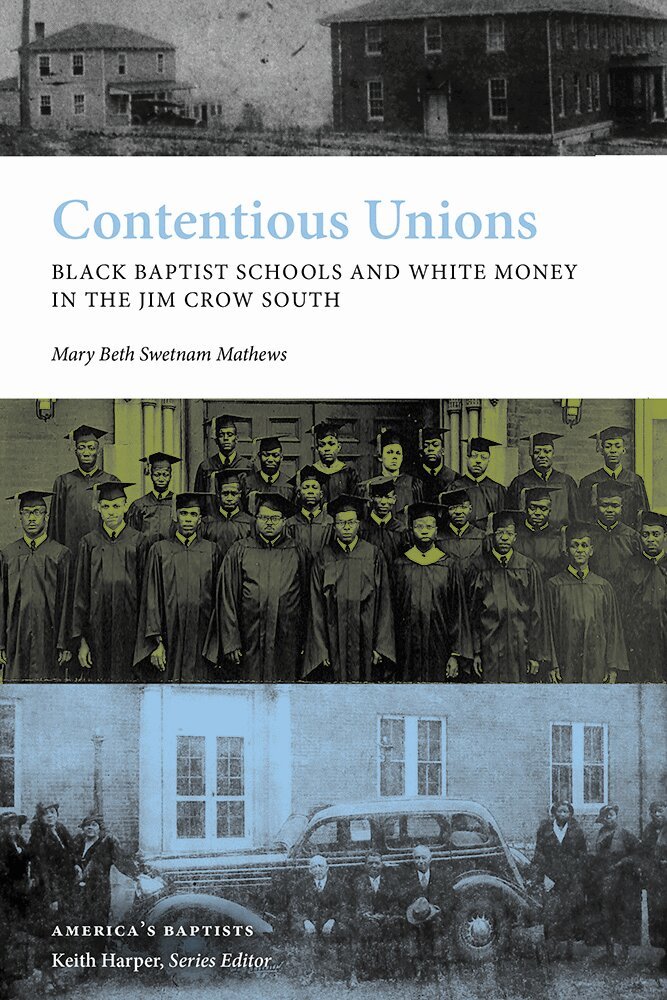
In Contentious Unions: Black Baptist Schools and White Baptist Money in the Jim Crow South, Mary Beth Swetnam Mathews interweaves the stories of the founding and development of Richmond Theological Seminary (Virginia), Central City College (Macon, Georgia), and American Baptist Theological Seminary (Nashville, Tennessee)—colleges that saw challenges, complexities, and hard-won accomplishments in the Post-Reconstruction era. Her study begins just after the Civil War, when one of these institutions provided educational opportunities for newly freed slaves, and follows the fortunes of the schools through the 1960s.Mathews reveals the financial, curricular, and identity struggles of schools that came into being and survived under difficult circumstances. The institutions relied on funding from White Baptists, but also had to fight against control and exploitation from those who helped them financially. Though each school evolved with a different identity and educational mission, Mathews concludes that “they could be simultaneously symbols of racial independence as well as victims of white supremacy.”As “oppositional spaces,” these schools gave their communities access to the ground floor of the civil rights movement, and the author highlights their connections to some of the more famous activists such as John R. Lewis, Jo Ann Gibson Robinson, and Gordon P. Hancock. Ultimately, Mathews’s book is a fascinating and complex account that uses the history of these three institutions to illuminate the origins of the long struggle for civil rights.
Inbunden, Engelska, 2026
440 kr
Skickas inom 10-15 vardagar
In this scholarly treatment of a lesser-known denomination, J. Matthew Pinson offers a comprehensive history of the Free Will Baptist movement—a distinct theological tradition within the larger Baptist family.Traversing four centuries of history in his analysis, Pinson divides his study into five parts, arranged in chronological and geographical order. He traces the beginnings of the Free Will Baptists in the Carolinas from the late 1600s; the denomination's early expansion across the Southeast; the rise and decline of the Northern Freewill Baptists; and the identity and development of the Free Will Baptist movement into the twentieth and twenty-first centuries.The scarcity of archival evidence for the history of Free Will Baptists in the American South makes the chronicling of their history challenging. To illustrate the development of ideas within the tradition over time, Pinson creatively engages a unique combination of primary source materials, including general conference and local church minutes, confessional documents, and worship materials such as hymnals. A scholarly history as accessible as it is comprehensive, The Free Will Baptists: A New History is a valuable resource for students of religious history as well as Baptist historians.