Law, Governance, and Development – serie
Visar alla böcker i serien Law, Governance, and Development. Handla med fri frakt och snabb leverans.
3 produkter
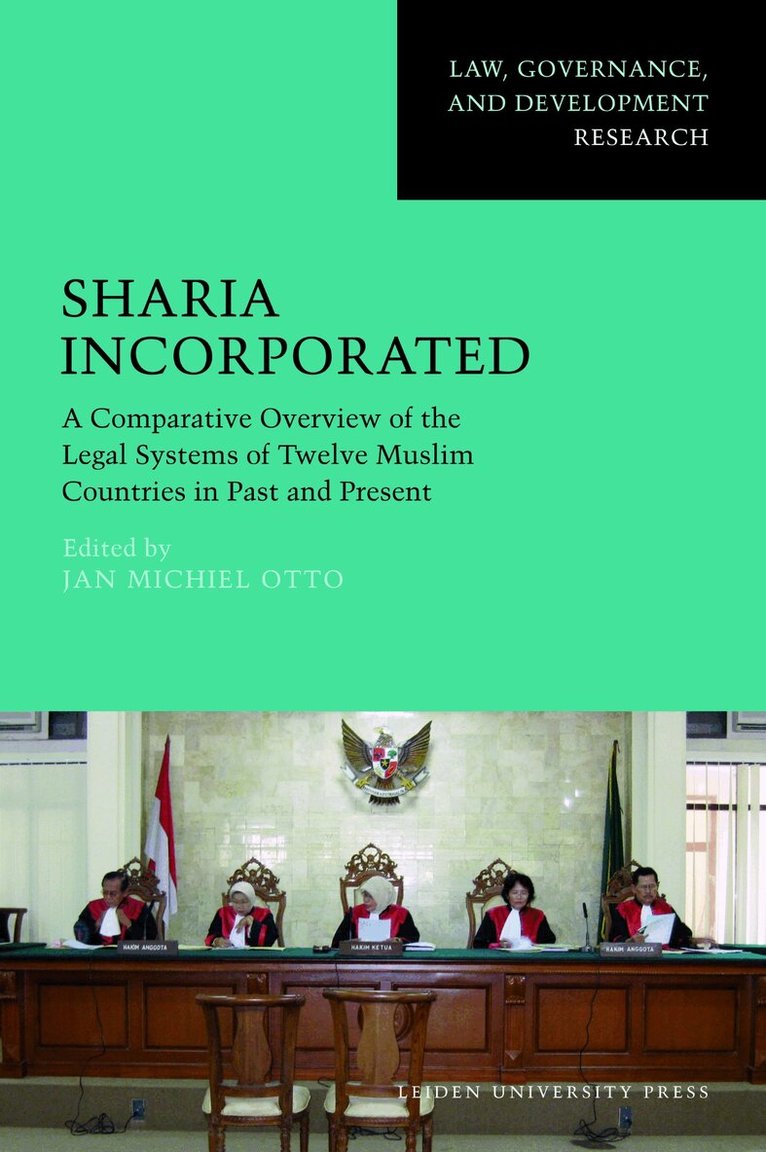
Sharia Incorporated
A Comparative Overview of the Legal Systems of Twelve Muslim Countries in Past and Present
Av Isabell Otto
Häftad, 2012
667 kr
Lägg i varukorg
The aim of Sharia Incorporated is to provide unbiased and contextual information about a topic that has of late been hijacked by politics in the Muslim world as well as in the West. Sharia Incorporated, written by laudable international scholars, is an ambitious study of the incorporation of …
Real Legal Certainty and its Relevance
Essays in honor of Jan Michiel Otto
Av Adriaan Bedner, Barbara Oomen
Häftad, 2018
420 kr
Lägg i varukorg
The concept of ‘real legal certainty’ provides a much needed corrective to the general attention for legal certainty in this day and age. It emphasises relations between citizens, adds socio-legal insight, provides a ‘view from below,’ and thus leads to more realistic insights on how to build state …
Applying Sharia in the West
Facts, Fears and the Future of Islamic Rules on Family Relations in the West
Av Maria Berger
Häftad, 2013
667 kr
Tillfälligt slut
This volume provides new insights in the concept of shari'a in the West, and sets out a framework of how shari'a in the West can be studied. The premise of this volume is that one needs to focus on the question 'What do Muslims do in terms of shari'a?' rather than 'What is shari'a?'. This …