Association of Writers and Writing Programs Award for Creative Nonfiction Ser. – serie
364 kr
Läs direkt efter köp
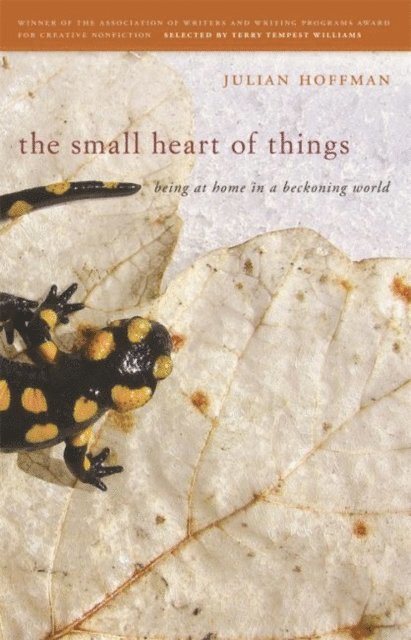
In The Small Heart of Things, Julian Hoffman intimately examines the myriad ways in which connections to the natural world can be deepened through an equality of perception, whether it’s a caterpillar carrying its house of leaves, transhumant shepherds ranging high mountain pastures, a quail taking cover on an empty steppe, or a Turkmen family emigrating from Afghanistan to Istanbul. The narrative spans the common—and often contested—ground that supports human and natural communities alike, seeking the unsung stories that sustain us.Guided by the belief of Rainer Maria Rilke that “everything beckons us to perceive it,” Hoffman explores the area around the Prespa Lakes, the first transboundary park in the Balkans, shared by Greece, Albania, and the former Yugoslav Republic of Macedonia. From there he travels widely to regions rarely written about, exploring the idea that home is wherever we happen to be if we accord that place our close and patient attention.The Small Heart of Things is a book about looking and listening. It incorporates travel and natural history writing that interweaves human stories with those of wild creatures. Distinguished by Hoffman’s belief that through awareness, curiosity, and openness we have the potential to forge abiding relationships with a range of places, it illuminates how these many connections can teach us to be at home in the world.
425 kr
Läs direkt efter köp
Study in Perfect is an exploration of perfection. In “Moving Horizontal” a Victorian house loses its charm over time, especially when compared to a modernist contemporary filled with light. Family life is dense with pleasure, as in the perfect vacation described in “Marking Time in Door County,” and in “Neriage, or What Is the Secret of a Long Marriage,” where an ancient Japanese ceramic technique has much in common with shaping a close relationship. There is such a thing as a perfect cup of tea, depending on who is preparing and drinking it (“Perfect Tea”). And schmaltzy show tunes flowing from a black-lacquered piano in a Chinese restaurant can be genuinely moving (“Sentimental à la Carte”).Naturally, Gorham must embrace imperfection. The poisonous mushrooms in “Darling Amanita” lead to a consideration of our darker impulses, like obsessive love, even murder. And there is pain: “The Shape of Fear” relates the story of a child stricken with a deadly staph infection, as it considers the function and form of fear. And alcoholism, the family disease no one wants to talk about, is poised against The Cat in the Hat, a story everyone has read and enjoyed.Study in Perfect winds its way around and through the many permutations of this most hermetic and exalted concept and proceeds with the full consciousness that perfection’s exact definition is subjective, reliant on who is speaking, and easily unmoored by time, geography, and the vagaries of taste.
378 kr
Läs direkt efter köp
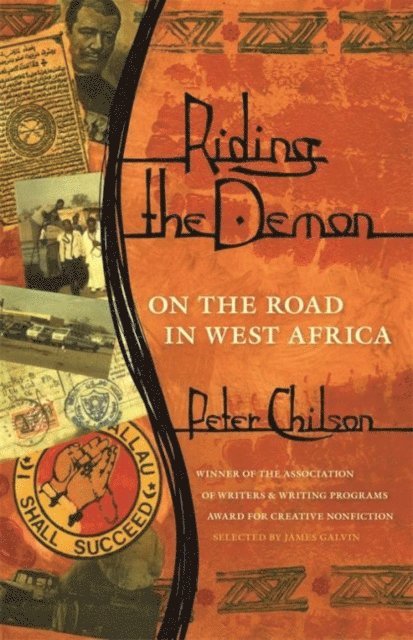
In Niger, where access to rail and air travel requires overcoming many obstacles, roads are the nation’s lifeline. For a year in the early 1990s, Peter Chilson traveled this desert country by automobile to experience West African road culture. He crisscrossed the same roads again and again with bush taxi driver Issoufou Garba in order to learn one driver''s story inside and out. He hitchhiked, riding in cotton trucks, and traveled with other bush taxi drivers, truckers, road engineers, an anthropologist, Niger''s only licensed woman commercial driver, and a customs officer.The road in Africa, says Chilson, is more than a direction or a path to take. Once you''ve booked passage and taken your seat, the road becomes the center of your life. Hurtling along at eighty miles an hour in a bush taxi equipped with bald tires, no windows, and sometimes no doors, travelers realize that they''ve surrendered everything.Chilson uses the road not to reinforce Africa''s worn image of decay and corruption but to reveal how people endure political and economic chaos, poverty, and disease. The road has reflected the struggle for survival in Niger since the first automobile arrived there, and it remains a useful metaphor for the fight for stability and prosperity across Africa.
393 kr
Läs direkt efter köp
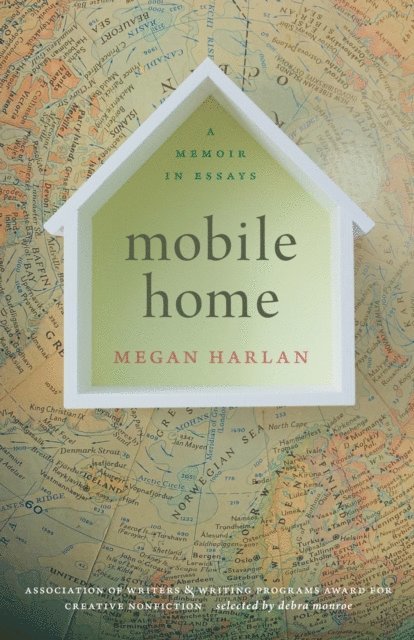
Uprooting ourselves and putting down roots elsewhere has become second nature. Americans are among the most mobile people on the planet, moving house an average of nine times in adulthood. Mobile Home explores one family’s extreme and often international version of this common experience. Inspired by Megan Harlan’s globe-wandering childhood—during which she lived in seventeen homes across four continents, ranging in location from the Alaskan tundra to a Colombian jungle, a posh flat in London to a doublewide trailer near the Arabian Gulf—Mobile Home maps the emotional structures and metaphysical geographies of home. In ten interconnected essays, Harlan examines cultural histories that include Bedouin nomadic traditions and modern life in wheeled mobile homes, the psychology of motels and suburban tract housing, and the lived meanings within the built landscapes of Manhattan, Stonehenge, and the Winchester Mystery House. More personally, she traces the family histories that drove her parents to seek so many new horizons—and how those places shaped her upbringing. Her mother viewed houses as a kind of large-scale plastic art ever in need of renovating, while her father was a natural adventurer and loved nothing more than to travel, choosing a life of flight that also helped to mask his addiction to alcohol. These familial experiences color Harlan’s current journey as a mother attempting to shape a flourishing, rooted world for her son. Her memoir in essays skillfully explores the flexible, continually inventive natures of place, family, and home.