Intersectional Studies of Jewish, Christian and Islamic Texts and Receptions – serie
Visar alla böcker i serien Intersectional Studies of Jewish, Christian and Islamic Texts and Receptions. Handla med fri frakt och snabb leverans.
3 produkter
3 produkter
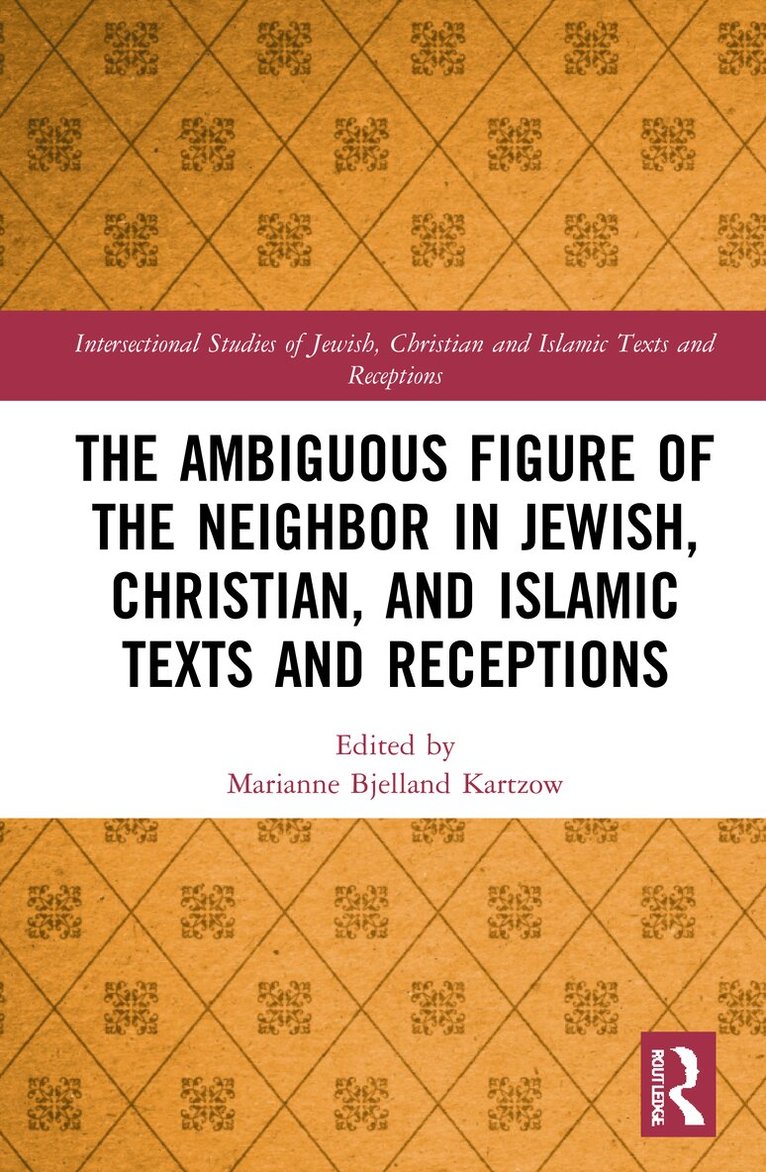
Ambiguous Figure of the Neighbor in Jewish, Christian, and Islamic Texts and Receptions
Inbunden, Engelska, 2021
2 119 kr
Skickas inom 10-15 vardagar
This book examines an undertheorized topic in the study of religion and sacred texts: the figure of the neighbor. By analyzing and comparing this figure in Jewish, Christian and Islamic texts and receptions, the chapters explore a conceptual shift from "Children of Abraham" to "Ambiguous Neighbors."Through a variety of case studies using diverse methods and material, chapters explore the neighbor in these neighboring texts and traditions. The figure of the neighbor seems like an innocent topic at the surface. It is an everyday phenomenon, that everyone have knowledge about and experiences with. Still, analytically, it has a rich and innovative potential. Recent interdisciplinary research employs this figure to address issues of cultural diversity, gender, migration, ethnic relationships, war and peace, environmental challenges and urbanization. The neighbor represents the borderline between insider and outsider, friend and enemy, us and them. This ambiguous status makes the neighbor particularly interesting as an entry point into issues of cultural complexity, self-definition and identity. This volume brings all the intersections of religion, ethnicity, gender, and socio-cultural diversity into the same neighborhood, paying attention to sacred texts, receptions and contemporary communities. The Ambiguous Figure of the Neighbor in Jewish, Christian, and Islamic Texts and Receptions offers a fascinating study of the intersections between Jewish, Christian and Islamic text, and will be of interest to anyone working on these traditions.
Ambiguous Figure of the Neighbor in Jewish, Christian, and Islamic Texts and Receptions
Häftad, Engelska, 2024
579 kr
Skickas inom 10-15 vardagar
This book examines an undertheorized topic in the study of religion and sacred texts: the figure of the neighbor. By analyzing and comparing this figure in Jewish, Christian and Islamic texts and receptions, the chapters explore a conceptual shift from "Children of Abraham" to "Ambiguous Neighbors."Through a variety of case studies using diverse methods and material, chapters explore the neighbor in these neighboring texts and traditions. The figure of the neighbor seems like an innocent topic at the surface. It is an everyday phenomenon, that everyone have knowledge about and experiences with. Still, analytically, it has a rich and innovative potential. Recent interdisciplinary research employs this figure to address issues of cultural diversity, gender, migration, ethnic relationships, war and peace, environmental challenges and urbanization. The neighbor represents the borderline between insider and outsider, friend and enemy, us and them. This ambiguous status makes the neighbor particularly interesting as an entry point into issues of cultural complexity, self-definition and identity. This volume brings all the intersections of religion, ethnicity, gender, and socio-cultural diversity into the same neighborhood, paying attention to sacred texts, receptions and contemporary communities. The Ambiguous Figure of the Neighbor in Jewish, Christian, and Islamic Texts and Receptions offers a fascinating study of the intersections between Jewish, Christian and Islamic text, and will be of interest to anyone working on these traditions.
2 245 kr
Kommande
This book provides a novel, cultural-historical perspective on travel in the ancient world by exploring a wide range of women’s (in)voluntary journeys and relocations, such as can be derived from passing references, short sections, and extended narratives found in the early Jewish corpora that remain to us.The selected sources include a large body of literary texts from the Hebrew Bible, Septuagint, Pseudepigrapha, Dead Sea Scrolls, Philo, Josephus, and the New Testament, together with some documentary sources indicating the existence of certain types of travel up until early second century CE. They reveal a variety of mobile girls and women such as brides, businesswomen, captives, diplomats, diviners, economic and forced migrants, knowledge-seekers, midwives, musicians, nurses, pilgrims, refugees, sages, (semi)nomads, slaves, tourists, and war leaders. The book delivers a more nuanced notion of the past by challenging and demonstrating the need to move beyond the binary idea of “female stayers” and “male movers.” In doing so, it foregrounds a previously overlooked aspect of travel history: female mobility, its many facets and inherent complexity as a sociocultural phenomenon, and its multiple transformational effects.Women, Travel and Transformation from the Bible to Bar-Kokhba is of interest to students and scholars working on travel history, early Jewish literature, and women in antiquity, as well as those in biblical studies, religious studies, ancient history, and classics.