Developments in Fullerene Science – serie
Visar alla böcker i serien Developments in Fullerene Science. Handla med fri frakt och snabb leverans.
14 produkter
14 produkter
Del 1 - Developments in Fullerene Science
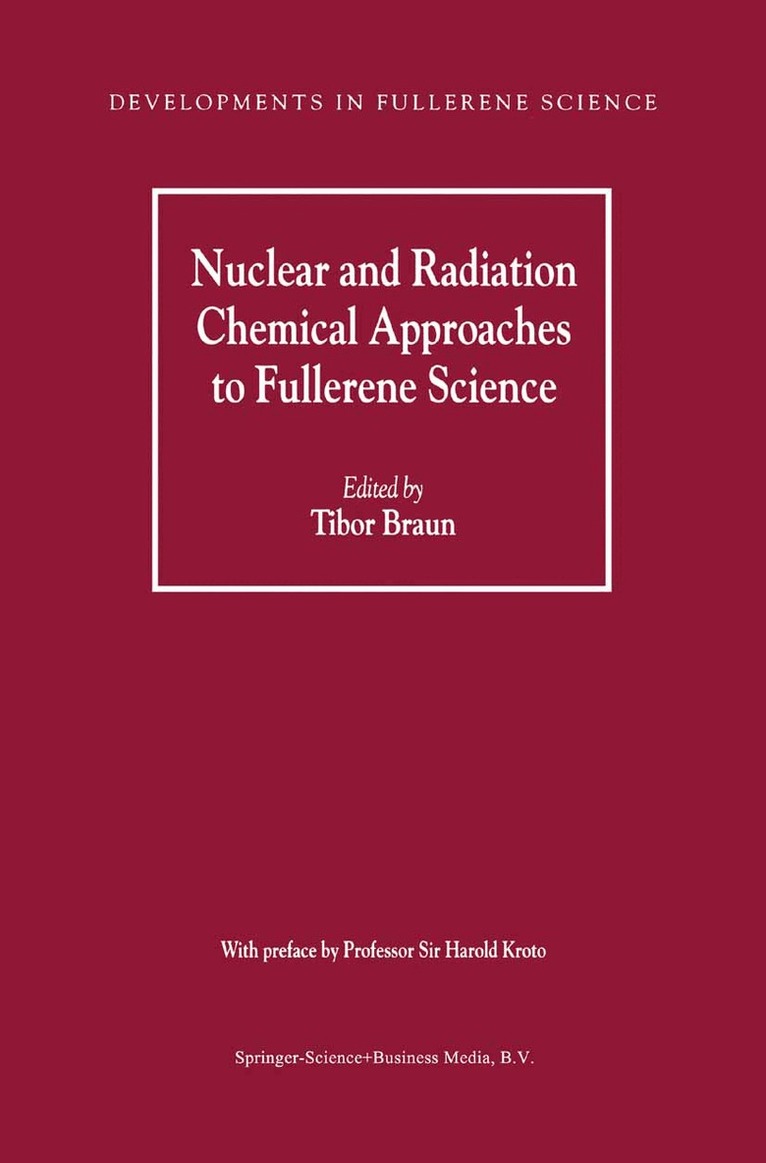
Nuclear and Radiation Chemical Approaches to Fullerene Science
Inbunden, Engelska, 2000
1 079 kr
Skickas inom 10-15 vardagar
The serendipitous discovery of the fullerenes by Kroto, Curl and Smalley in 1985, and the isolation and characterization of C60 by Kratschmer and Huffman in 1990 has caused an epidemic of research in this field. As a result, basic research on fullerenes has generated new knowledge as published in thousands of journal papers. The nuclear and radiation approaches, however, have been somewhat neglected in books dedicated to fullerene sciences, although these approaches have generated very interesting knowledge on the structure and composition of these new all-carbon molecules. This monograph intends to bridge this gap by dealing with the various aspects of nuclear sciences as applied to the generation of new knowledge in fullerene sciences. Ten chapters appear in this volume and were chosen to present a panoramic view and to provide theoretical perspectives, research methods, and experimental results on the topic. This book should serve both as an introduction to the subfield and as an aid to setting an agenda for scientists interested in this area of research. This is the first volume in a series devoted to the developments in fullerene science.
Del 2 - Developments in Fullerene Science
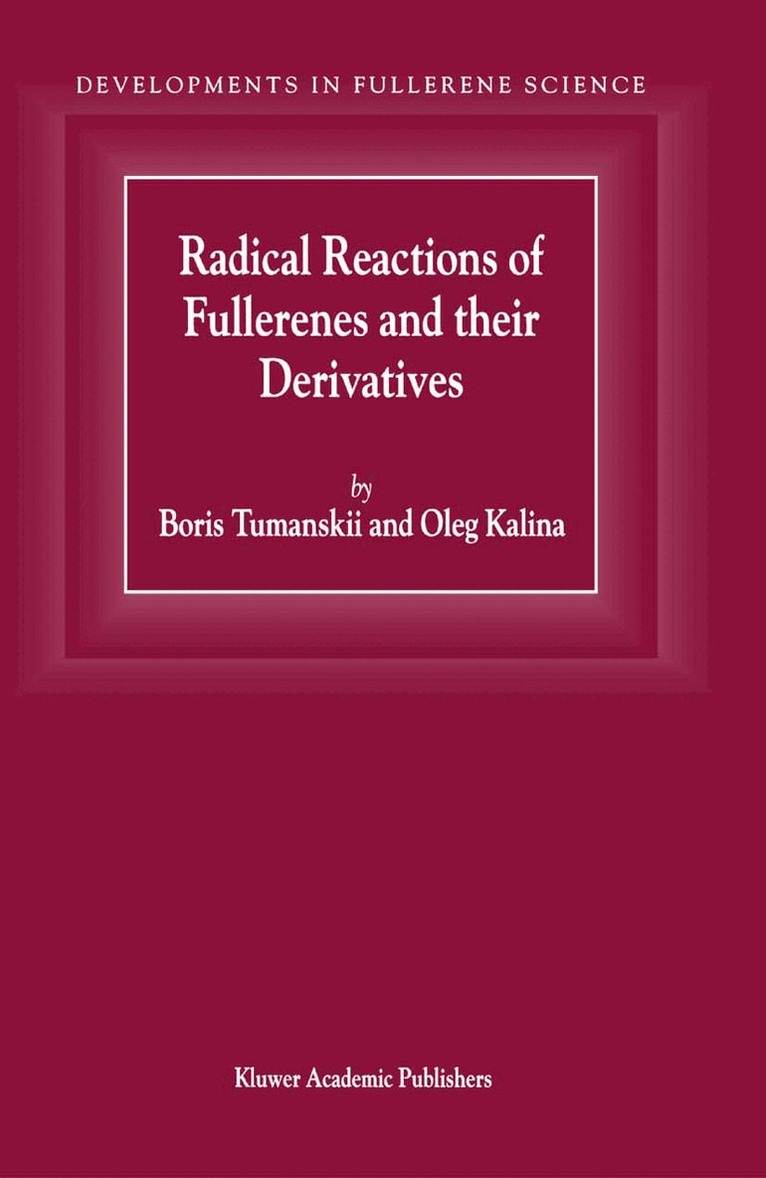
Radical Reactions of Fullerenes and their Derivatives
Inbunden, Engelska, 2001
1 079 kr
Skickas inom 10-15 vardagar
The discovery of fullerenes, species belonging to the electronodeficient polyalkenes with weakly conjugated double bonds, has opened novel opportunities for the radical chemistry. Pioneering study in this field was performed by P. J. Krusic, E. Wasserman, P. N. Keizer, J. R. Morton, and K. F. Preston (Science, 1991, 254, 1184). The fullerenyl radical adducts formed via addition of atoms or free radicals to fullerenes have no analogs in organic chemistry. In fact, radicals in which the unpaired electrons are delocalized over the surface of a sphere or ellipsoid have never been studied before. The unusual character of the fullerenyl radicals is also due to the fact that they occupy a sort of intermediate position between the planar and tetrahedral radicals. Thus, the elucidation of the characteristic features of fullerenyl radicals and their reactivity by EPR spectroscopy, and the comparison of the results with those of quantum-chemical studies are of fundamental importance. Isolation ofthe products from homolytic reactions of fullerenes in bulk amounts opens the door to large-scale preparation of new organic and organoelement derivatives of including biologically active ones. Radical reactions of fullerenes find wide application in the synthesis of fullere- containing polymers with valuable photophysical characteristics. Ferromagnetism of the complex of with tetra(dimethylamino)ethylene found lends impetus to a search of novel methods for preparation of biradicals one unpaired electron of those is located on the fullerene cage while the other retained by the addend.
Del 3 - Developments in Fullerene Science
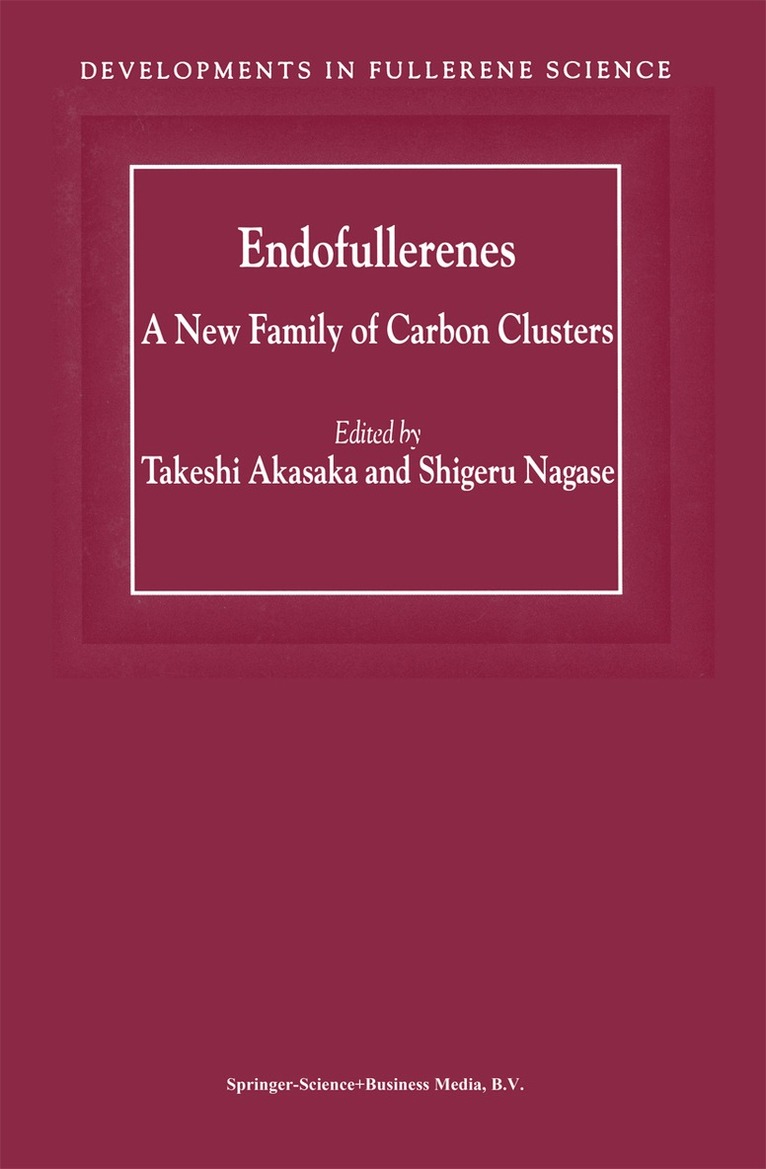
Endofullerenes
A New Family of Carbon Clusters
Inbunden, Engelska, 2002
1 616 kr
Skickas inom 10-15 vardagar
Endofullerenes have long attracted special interest as new spherical molecules with novel properties. This book, edited and written by an outstanding team of experts, aims to review the current research work on endofullerenes (endohedrally doped fullerenes). The book is based on a classification according to atom(s) encapsulated into fullerene. This allows an in-depth treatment of the characteristics of each class of endofullerene. The wide-range scientific community of chemistry, physics, material science and so forth will welcome this book as a valuable source of a new family of fullerenes, endofullerenes for developing their future science. Structural, electronic, and dynamical properties of endofullerenes such as He@C60, Li@C60, N@C60, La@C82, La2@C80, and Sc3N@C80 are described which have been experimentally and theoretically investigated using a wide variety of methods. Experts in these areas of research, students and researchers will find in this book through and rigorous discussion on these topics. In general, the emphasis is on the experimental scope and the theoretical aspects of various endofullerenes.By presenting and comparing data from different sources, experiments and theory, the book helps the reader to rapidly master the basic knowledge, to grasp important issues, and critically discuss them.
Inbunden, Engelska, 2002
1 616 kr
Skickas inom 10-15 vardagar
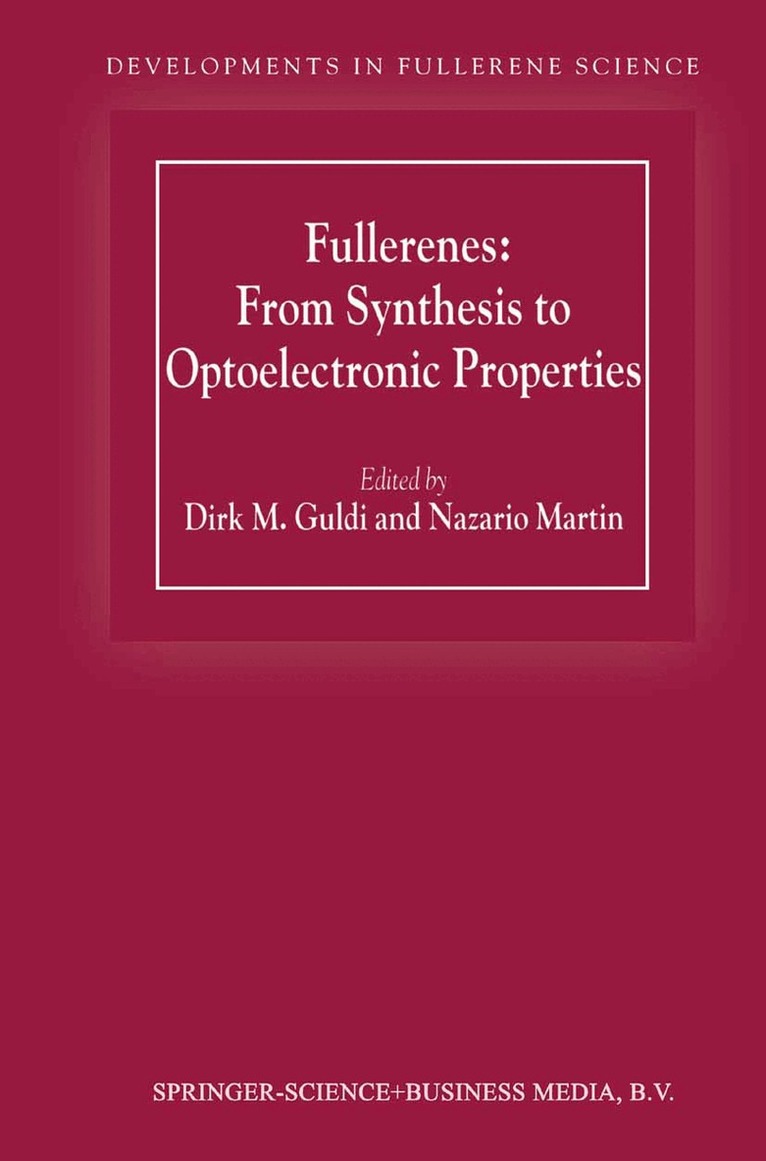
Fullerenes: From Synthesis to Optoelectronic Properties covers a host of topics in organic synthesis, photo- / radiation-chemistry, electron donor-acceptor interaction, supramolecular chemistry, and photovoltaics. The book reviews the state-of-the-art discoveries in these areas of "Fullerene Research" and presents selected examples to prove the potential of fullerenes as multifunctional moieties in well-ordered multicomponent composites. Fullerenes: From Synthesis to Optoelectronic Properties appeals to upper-level undergraduates, graduates, researchers, and professionals in the fields of condensed matter physicists; materials scientists; electrochemists; biochemists; solid-state, physical, organic, inorganic, and theoretical chemists; chemical, electrical, and optical engineers.
Inbunden, Engelska, 2003
1 079 kr
Skickas inom 10-15 vardagar
Fullerene Collision Reactions provides a comprehensive overview of the state-of-the-art of fullerene collision studies. The book begins with introductory chapters that provide the necessary background in experimental and theoretical techniques. This is followed by experimental results and theoretical calculations covering the wide range of available gas-phase fullerene collision experiments. Emphasis is placed on gas-phase molecular beam experiments where reaction, fragmentation and charge transfer cross sections have been determined covering collision energy ranges from thermal to MeV. Atomic, ionic, electronic, cluster and surface collisions involving fullerenes are covered in depth accompanied by a clear presentation of the most commonly applied experimental and theoretical techniques. This book will be an invaluable resource for senior undergraduate students, graduate students and researchers working in the field.
Inbunden, Engelska, 2006
1 616 kr
Skickas inom 10-15 vardagar
Observational, experimental and analytical data show that C60, larger fullerenes, and related structures of elemental carbon exist in interstellar space, meteorites, and on Earth and are associated with meteorite in impact events and in carbon-rich environments such as coals (shungite) and bitumen. The existence of natural fullerenes is at best contested and incompletely documented; realistically it is still controversial. Their presence in astronomical environments can be experimentally constrained but observationally they remain elusive. Fullerenes formation in planetary environments is poorly understood. They survived for giga-years when the environmental conditions were exactly right but even then only a fraction of their original abundance survived. Natural fullerenes and related carbon structures are found in interstellar space, in carbonaceous meteorites associated with giant meteorite impacts (including at the Cretaceous-Tertiary boundary) as well as in soot, coal and natural bitumen. This book provides an up-to-date summary of the state of knowledge on natural fullerenes occurrences and the laboratory techniques used to determine their presence at low concentration in rock samples. It demonstrates that natural fullerenes exist and should be searched for in places not yet considered such as carbon-containing deep-seated crustal rocks. Natural Fullerenes and Related Structures of Elemental Carbon is written for professional astronomers, meteoriticists, earth and planetary scientists, biologists and chemists interested in carbon and hydrocarbon vapor condensation. It is an invaluable resource for practicing research scientists and science teachers in Earth and Planetary Science, Astronomy and Carbon Science.
Del 7 - Developments in Fullerene Science
Periodic Nanostructures
Inbunden, Engelska, 2007
1 079 kr
Skickas inom 10-15 vardagar
In Periodic Nanostructures, the authors demonstrate that structural periodicity in various nanostructures has been proven experimentally. The text covers the coalescence reactions, studied by electronic microscopy, and shows that the nanoworld is continuous, giving rise to zero- (fullerenes), one- (tubules), two-(graphite) and three-(diamond, spongy carbon) dimensional carbon allotropes.The authors explore foam-like carbon structures, which relate to ‘schwarzites’, and which represent infinite periodic minimal surfaces of negative curvature. They show that these structures contain polygons (with dimensions larger than hexagons w.r.t. to graphite) that induce this negative curvature. The units of these structures appear as nanotube junctions (produced via an electron beam) that have wide potential molecular electronics applications. Self-assembled supramolecular structures (of various tessellation) and diamond architectures are also proposed. The authors propose that the periodicity of close repeat units of such structures is most evident not only in these formations but also present in all of the carbon allotropes. It is also shown that depending on the lattice tessellation, heteroatom type, and/or doping, metal nanostructures (nanotubes in particular) can display both metallic and semiconductor characteristics. Therefore, their properties can be manipulated by chemical functionalization. The authors therefore suggest that nanostructures have heralded a new generation of nanoscale biological, chemical, and physical devices.The text also provides literature and data on the field of nanostructure periodicity and the authors’ own results on nanostructure building and energy calculations as well as topological characterization by means of counting polynomials of periodic nanostructures. The aromaticity of various coverings of graphitic structures is also discussed.This book is aimed at scientists working in the field ofnanoscience and nanotechnology, Ph.D. and MSc. degree students, and others interested in the amazing nanoarchitectures that could inspire the cities of the future.
Häftad, Engelska, 2010
1 079 kr
Skickas inom 10-15 vardagar
Preface by Sir Harold W. Kroto, FRS Although the discovery of C60 is now almost 15 years old and the extraction occurred 60 nearly ten years ago it is amazing that the range of spin-off research still seems to expand without limits. The birth of the Fullerenes has spawned fascinating research programmes in almost every area of chemistry and physics and this monograph explores a particularly interesting and important area - the behaviour of these pure carbon cages in the presence of high-energy radiation. The C molecules must also be in the space 60 between the stars (albeit in quantities too small to detect at this time) as the conditions in the atmospheres of some carbon stars appear to be almost identical to the plasmas generated in the Kratschmer-Huffman system for making C60. The conditions in space 60 are very varied as it is pervaded by a plethora of high-energy particles (photons, cosmic rays, etc.) and the chapters in this book discuss, among other things, the response of C60 and various derivatives to probing by a range of high-energy particles. Various fullerenes and fullerene salts have been examined by positron annihilation techniques, revealing details of their electronic and structural properties as well as phase transition behaviour. Muons have been implanted to enable mSR techniques to probe with high sensitivity the endohedral electronic structures of fullerenes including those in superconducting systems.Mossbauer spectroscopy can give valuable information about the interactions in certain types of organometallic complexes and in particular it can reveal the degree of charge transfer in endohedral species. Nuclear irradiation/radiochemical analytical techniques have been applied resulting in information ranging widely from the stability of the fullerene cage containing endohedral metal atoms in various oxidation states to pharmaceutical studies of the distribution of fullerenes in the internal organs ofanimals. Time resolved pulsed radio lysis provides information at high sensitivity enabling micromolar concentrations to be probed e.g. C60 in water in which it is almost insoluble! Redox and rate constant measurements have given useful information on photolytically generated radical ion pairs involving a variety of fullerenes. Interesting accounts of observations involving the production of rare gas endohedral species by nuclear recoil have revealed information about the recoil mechanism. From the first moment of its discovery the unique cage structure of C60 initiated thoughts about the interesting possibility of encapsulation of atoms and molecules. One possibility that immediately suggested itself was the isolation of chemically toxic radionuclides by encapsulation in the (supposedly chemically innocuous) cage for pharmaceutical purposes. The possibility of creating cages carrying a radioactive atom inside the cage and moieties outside with molecularrecognition capabilities is a most exciting prospect and discussion is included of some important first steps aimed at achieving this fascinating breakthrough. Another problem dealt with in this monograph is the effect of elemental impurities which has, as our studies progress, become more and more a matter of concern and interest. Impurities can have important effects on the observed physical and chemical behaviour of fullerenes, especially when very sensitive probe techniques are applied. This valuable book reviews some detailed studies of fundamental properties of fullerenes, which are leading to a deeper understanding of their behaviour in the presence of high energy radiation. The information obtained already and that which will be garnered in future studies of the kind described here is an absolutely necessary prerequisite for success in applications.
Del 2 - Developments in Fullerene Science
Radical Reactions of Fullerenes and their Derivatives
Häftad, Engelska, 2010
1 079 kr
Skickas inom 10-15 vardagar
The discovery of fullerenes, species belonging to the electronodeficient polyalkenes with weakly conjugated double bonds, has opened novel opportunities for the radical chemistry. Pioneering study in this field was performed by P. J. Krusic, E. Wasserman, P. N. Keizer, J. R. Morton, and K. F. Preston (Science, 1991, 254, 1184). The fullerenyl radical adducts formed via addition of atoms or free radicals to fullerenes have no analogs in organic chemistry. In fact, radicals in which the unpaired electrons are delocalized over the surface of a sphere or ellipsoid have never been studied before. The unusual character of the fullerenyl radicals is also due to the fact that they occupy a sort of intermediate position between the planar and tetrahedral radicals. Thus, the elucidation of the characteristic features of fullerenyl radicals and their reactivity by EPR spectroscopy, and the comparison of the results with those of quantum-chemical studies are of fundamental importance. Isolation ofthe products from homolytic reactions of fullerenes in bulk amounts opens the door to large-scale preparation of new organic and organoelement derivatives of including biologically active ones. Radical reactions of fullerenes find wide application in the synthesis of fullere- containing polymers with valuable photophysical characteristics. Ferromagnetism of the complex of with tetra(dimethylamino)ethylene found lends impetus to a search of novel methods for preparation of biradicals one unpaired electron of those is located on the fullerene cage while the other retained by the addend.
Häftad, Engelska, 2010
1 616 kr
Skickas inom 10-15 vardagar
To the eyes of a chemist, carbon is certainly one of the most fascinating elements of the periodic table. Basically, the electronic structure and atomic size of carbon enables this element to form a variety of bonds with other elements and, most importantly, with other carbon atoms as weIl. These unique features lead to the amazingly complicated molecular structures we encounter e. g. in life sciences and organic chemistry. Of course, the technical importance of carbon is enormou- but I don't want to carry too many coals to Newcastle. Prom the viewpoint of an astrophysicist or chemist, the significance of carbon lies in the fact that it is the most abundant condensable element in space. Born in the interior of stars, and from there expelled into the interstellar medium, it initiates the formation of simple and complex molecules and of nanoscopic grains. These in turn form huge clouds in space - the birthplace of new stars and planetary systems. The decisive role of carbon in interstellar chemistry is widely accepted and the search for more and more families of interstellar carbon-bearing molecules is a topic of ongoing research. The interdisciplinary aspect of carbon also concerns its various solid forms, in which C and the other closed-cage fullerenes are certainly some of the most popular 60 newcomers.
Häftad, Engelska, 2010
1 616 kr
Skickas inom 10-15 vardagar
Fullerenes: From Synthesis to Optoelectronic Properties covers a host of topics in organic synthesis, photo- / radiation-chemistry, electron donor-acceptor interaction, supramolecular chemistry, and photovoltaics. The book reviews the state-of-the-art discoveries in these areas of "Fullerene Research" and presents selected examples to prove the potential of fullerenes as multifunctional moieties in well-ordered multicomponent composites. Fullerenes: From Synthesis to Optoelectronic Properties appeals to upper-level undergraduates, graduates, researchers, and professionals in the fields of condensed matter physicists; materials scientists; electrochemists; biochemists; solid-state, physical, organic, inorganic, and theoretical chemists; chemical, electrical, and optical engineers.
Häftad, Engelska, 2010
1 079 kr
Skickas inom 10-15 vardagar
Fullerene Collision Reactions provides a comprehensive overview of the state-of-the-art of fullerene collision studies. The book begins with introductory chapters that provide the necessary background in experimental and theoretical techniques. This is followed by experimental results and theoretical calculations covering the wide range of available gas-phase fullerene collision experiments. Emphasis is placed on gas-phase molecular beam experiments where reaction, fragmentation and charge transfer cross sections have been determined covering collision energy ranges from thermal to MeV. Atomic, ionic, electronic, cluster and surface collisions involving fullerenes are covered in depth accompanied by a clear presentation of the most commonly applied experimental and theoretical techniques. This book will be an invaluable resource for senior undergraduate students, graduate students and researchers working in the field.
Häftad, Engelska, 2010
1 616 kr
Skickas inom 10-15 vardagar
Observational, experimental and analytical data show that C60, larger fullerenes, and related structures of elemental carbon exist in interstellar space, meteorites, and on Earth and are associated with meteorite in impact events and in carbon-rich environments such as coals (shungite) and bitumen. The existence of natural fullerenes is at best contested and incompletely documented; realistically it is still controversial. Their presence in astronomical environments can be experimentally constrained but observationally they remain elusive. Fullerenes formation in planetary environments is poorly understood. They survived for giga-years when the environmental conditions were exactly right but even then only a fraction of their original abundance survived. Natural fullerenes and related carbon structures are found in interstellar space, in carbonaceous meteorites associated with giant meteorite impacts (including at the Cretaceous-Tertiary boundary) as well as in soot, coal and natural bitumen. This book provides an up-to-date summary of the state of knowledge on natural fullerenes occurrences and the laboratory techniques used to determine their presence at low concentration in rock samples. It demonstrates that natural fullerenes exist and should be searched for in places not yet considered such as carbon-containing deep-seated crustal rocks. Natural Fullerenes and Related Structures of Elemental Carbon is written for professional astronomers, meteoriticists, earth and planetary scientists, biologists and chemists interested in carbon and hydrocarbon vapor condensation. It is an invaluable resource for practicing research scientists and science teachers in Earth and Planetary Science, Astronomy and Carbon Science.
Del 7 - Developments in Fullerene Science
Periodic Nanostructures
Häftad, Engelska, 2010
1 079 kr
Skickas inom 10-15 vardagar
In Periodic Nanostructures, the authors demonstrate that structural periodicity in various nanostructures has been proven experimentally. The text covers the coalescence reactions, studied by electronic microscopy, and shows that the nanoworld is continuous, giving rise to zero- (fullerenes), one- (tubules), two-(graphite) and three-(diamond, spongy carbon) dimensional carbon allotropes.The authors explore foam-like carbon structures, which relate to ‘schwarzites’, and which represent infinite periodic minimal surfaces of negative curvature. They show that these structures contain polygons (with dimensions larger than hexagons w.r.t. to graphite) that induce this negative curvature. The units of these structures appear as nanotube junctions (produced via an electron beam) that have wide potential molecular electronics applications. Self-assembled supramolecular structures (of various tessellation) and diamond architectures are also proposed. The authors propose that the periodicity of close repeat units of such structures is most evident not only in these formations but also present in all of the carbon allotropes. It is also shown that depending on the lattice tessellation, heteroatom type, and/or doping, metal nanostructures (nanotubes in particular) can display both metallic and semiconductor characteristics. Therefore, their properties can be manipulated by chemical functionalization. The authors therefore suggest that nanostructures have heralded a new generation of nanoscale biological, chemical, and physical devices.The text also provides literature and data on the field of nanostructure periodicity and the authors’ own results on nanostructure building and energy calculations as well as topological characterization by means of counting polynomials of periodic nanostructures. The aromaticity of various coverings of graphitic structures is also discussed.This book is aimed at scientists working in the field ofnanoscience and nanotechnology, Ph.D. and MSc. degree students, and others interested in the amazing nanoarchitectures that could inspire the cities of the future.