Divisions of the Waffen-SS – serie
Visar alla böcker i serien Divisions of the Waffen-SS. Handla med fri frakt och snabb leverans.
9 produkter
9 produkter
Inbunden, Engelska, 2016
447 kr
Skickas inom 7-10 vardagar
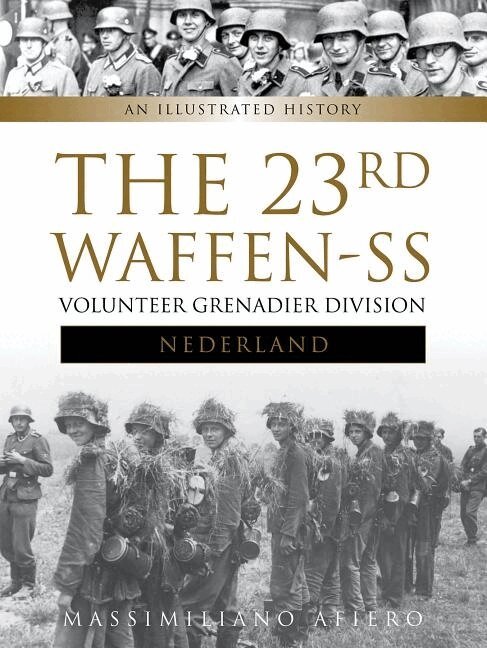
This book is a detailed history of the 23rd Waffen-SS Panzergrenadier Division “Nederland,” the Dutch volunteer SS combat formation. Employed exclusively on the eastern front, except for a brief period in Croatia, the “Nederland” formations participated in many of the most difficult defensive battles on the northeastern front: Leningrad, the Narva bridgehead, the Tannenberg line, Dorpat in Kurland, Pomerania, and the Oder front, until the desperate battle of the Halbe Pocket where the remnants of the division managed to avoid total annihilation, escaping the Soviets and surrendering to American forces. In all of these battles the “Nederland” volunteers showed their valor as true Waffen-SS combatants, always in the front lines and always under constant enemy pressure. This complete treatment fills a large gap in Waffen-SS history. Informative appendices not only relate to the unit’s operational history, but also provide details on some of its members, as well as uniforms and insignia.
Inbunden, Engelska, 2017
349 kr
Skickas
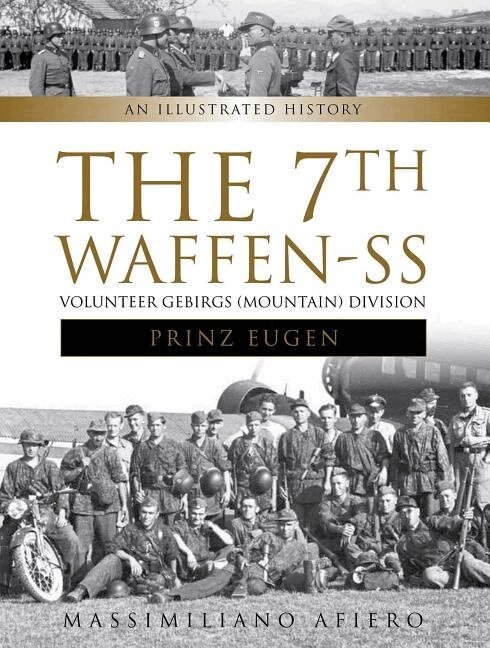
The 7th Waffen SS Mountain Division was raised for war in the rugged terrain of Yugoslavia. The unit included a huge number of Volksdeutsche, ethnic Germans recruited from outside the Reich. After numerous anti-guerrilla operations in Bosnia, Croatia, Montenegro, and Serbia, towards the end of the war it was employed against units of the Bulgarian Army and Red Army forces in the difficult mission of covering the withdrawal of German forces retreating from Greece and Albania. It was one of the few Waffen-SS formations to be used in offensive actions during the final phases of the war. Prinz Eugen fought a brutal, ugly war in the Balkans; it was an effective combat force, but also capable of extreme cruelty towards prisoners and civilians. This work is the most extensive illustrated history of the unit to date.
Inbunden, Engelska, 2017
385 kr
Skickas
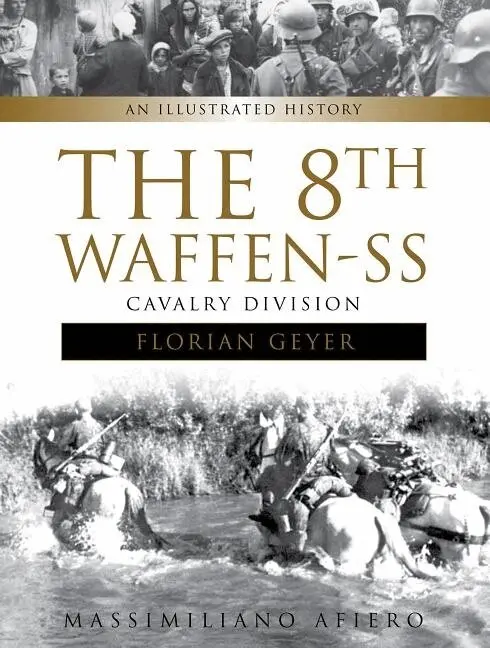
Formed in 1942, the 8th SS Cavalry Division “Florian Geyer” was one of the most controversial units in the Waffen-SS. Created with the intention of making it an elite unit within the Waffen-SS, it instead saw its main employment from the beginning of the war in Russia as a rear area security force against partisans. The SS cavalrymen carried out these duties with terrible effectiveness, demonstrating the full capabilities of horse-mounted units in securing terrain that was militarily difficult. Late in the war, “Florian Geyer” was employed on the front lines against regular units of the Red Army. The unit was wiped out during final battle of Budapest in February 1945. Detailed operational history, rare combat images, maps, and personality profiles make this book the definitive history of “Florian Geyer.”
Inbunden, Engelska, 2018
392 kr
Skickas
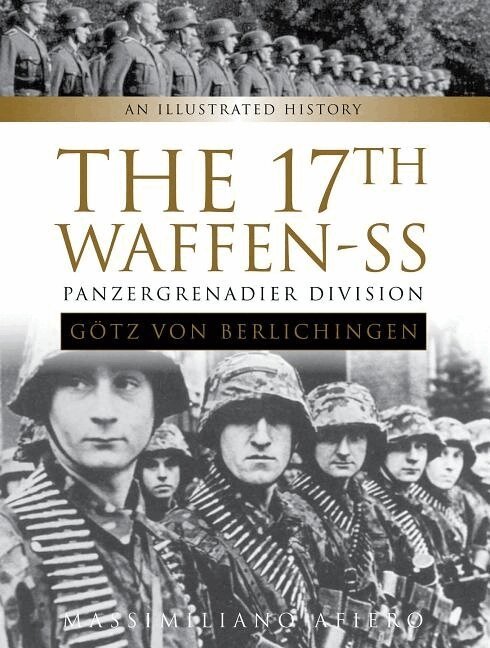
The 17th Waffen-SS Panzergrenadier Division “Götz von Berlichingen” was one of the few SS formations to be employed exclusively on the western front during World War II. From the time of its formation in France in 1943, “Götz von Berlichingen” saw bitter and bloody fighting in Normandy, the Seine front, Metz, the Saar, the Palatinate, and later the defense of the west wall until the final battles in Germany. Despite the overwhelming superiority of Allied forces, the units that comprised the division always managed to offer dogged resistance, counterattacking ferociously, and defending every foot of ground with great courage and determination. The units of “Götz von Berlichingen” received praise, not only from the German high command, but also earned the respect of its Allied adversaries. Detailed operational history, rare combat images, maps, and personality profiles make this book the definitive history of “Götz von Berlichingen.”
Inbunden, Engelska, 2018
476 kr
Skickas
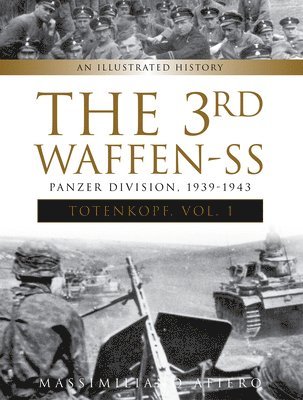
One of the most infamous of all Waffen-SS formations, the 3rd SS-Panzer Division “Totenkopf” has always been identified as the very essence of the notorious “Black Order.” Associated with war crimes in official historiography, formed initially with personnel coming from guard units from concentration camps, the unit was nevertheless able to prove itself on the battlefield, distinguishing itself in all of the main campaigns in which it fought, from France to the Russian front. This first of two volumes tells the story of the “Totenkopf” from 1939 to 1943: from the campaign in Poland in 1939; its employment on the Western Front in 1940; to the early campaigns on the Russian Front. Volume one culminates in the bitter fighting on the Demjansk front and to the Kharkov counteroffensive in 1943, finally ending with Operation Zitadelle. As with all of the volumes in this series, the detailed history of the division is accompanied by many first-hand accounts, documents, extracts from official reports, and from the division’s war diary, and by over 860 photographs and maps.
Inbunden, Engelska, 2018
476 kr
Skickas
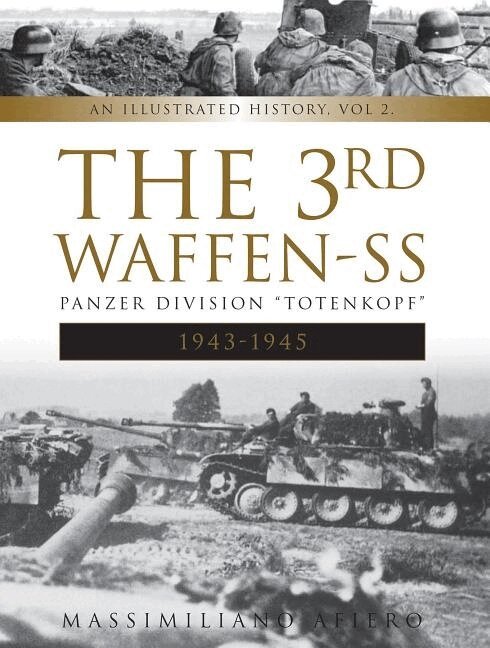
One of the most infamous of all Waffen-SS formations, the 3rd SS-Panzer-Division “Totenkopf” has always been identified as the very essence of the notorious “Black Order.” Associated with war crimes in official historiography, formed initially with personnel coming from guard units from concentration camps, the unit was nevertheless able to prove itself on the battlefield, distinguishing itself in all of the main campaigns in which it fought, from France to the Russian front. This second of two volumes analyzes the summer 1943 campaign that followed Kursk, until the end of the war: from its operations on the Mius front, to the fighting in the Kharkov area, on the Dnieper River, its transfer to the Polish front, and its subordination to IV.SS-Panzer-Korps, the fighting on the Hungarian front to liberate Budapest, and then its participation in the Frühlingserwachen (“Spring Awakening”) offensive, until the final fighting in Austria and the surrender. The volume includes a series of appendices covering order of battle, lists of award recipients, and details of uniforms and insignia pertaining to the division.
Inbunden, Engelska, 2021
476 kr
Skickas
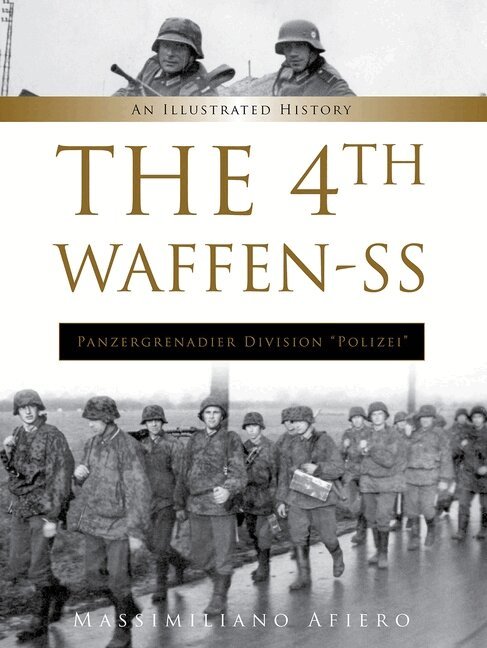
The Polizei Division first took shape in 1939, drawing manpower from the civilian police. In February 1942, the unit was transferred to the Waffen-SS and redesignated SS-Polizei-Division(4.SS). The former policemen appeared on the Western Front in 1940, before being shipped to the Leningrad sector in 1941. Polizei remained on the Eastern Front for the duration of the war, including deployments in Greece, the Banat (Romania), Hungary, and Pomerania, before finally surrendering just northwest of Berlin. The subject is examined through many personal recollections, hundreds of photos and maps from private collections, and period documents, including extracts from official bulletins and the division’s war diary. A brief history of the Polizei II division is included as an appendix.
Inbunden, Engelska, 2022
334 kr
Skickas
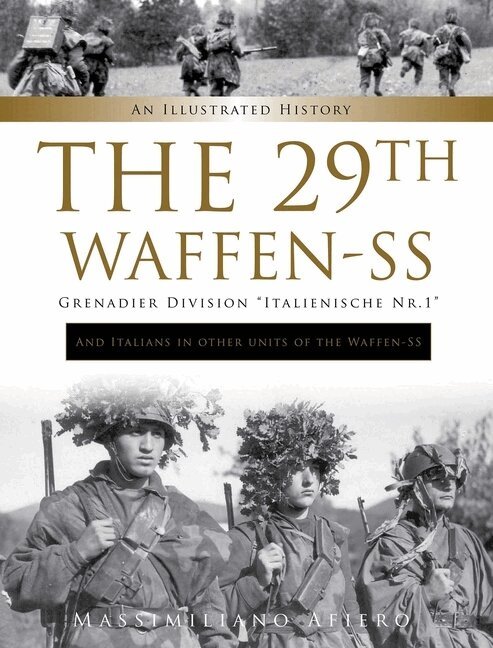
The Italian government signed an armistice with the Allies on September 8, 1943, but that did not mean the war was over in Italy. Italians continued to fight on both sides for the duration of the war. This study is focused on Italian volunteers in formations of the Waffen-SS. These include the SS Legion "Italiana" and 29th Waffen Grenadier Division "Italienische Nr.1." Beyond the explicitly Italian units, handfuls of men found their way into other divisions, such as the 4th SS Panzergrenadier Division "Polizei," 16th SS Panzergrenadier Division "Reichsführer-SS," the Karstwehr Battallion (later 24th SS Gebirgsjäger Division "Karstjäger"), and even the famous 1st SS Panzer Division "Leibstandarte." This work includes histories of the Italian Legion and the 29th Division, extensive interviews with Italian SS veterans from various units, and many excellent photographs from private collections in Europe.
Inbunden, Engelska, 2024
389 kr
Skickas
The 11th SS Freiwilligen (Volunteer)Panzergrenadier Division “Nordland” was formed in 1943. Despite what thename indicated, this was not an all-volunteer or fully Nordic unit. Theranks were filled with men from across Europe, many of them conscripts.A cadre of Norwegians in the Regiment 23 “Norge” and Danes in theRegiment 24 “Danmark” formed the backbone of the new division. Nordland was deployed in antipartisan operations in Croatia in the fallof 1943. In 1944 the division saw hard fighting and heavy casualtiesagainst the Red Army at Leningrad, Narva, Tannenberg, and Kurland. In1945, Nordland, a division comprising mostly non-Germans, was among thefinal formations to continue the fight in Berlin. This new illustrated history of the division includes more than 500photos from the most-extensive private collections in Europe, along withextensive maps and tables. Appendixes provide a clear explanation ofthe division's order of battle, a full lists of award recipients, and aglossary of ranks and insignia.