Economic and Social Survey of Asia and the Pacific – serie
Visar alla böcker i serien Economic and Social Survey of Asia and the Pacific. Handla med fri frakt och snabb leverans.
12 produkter
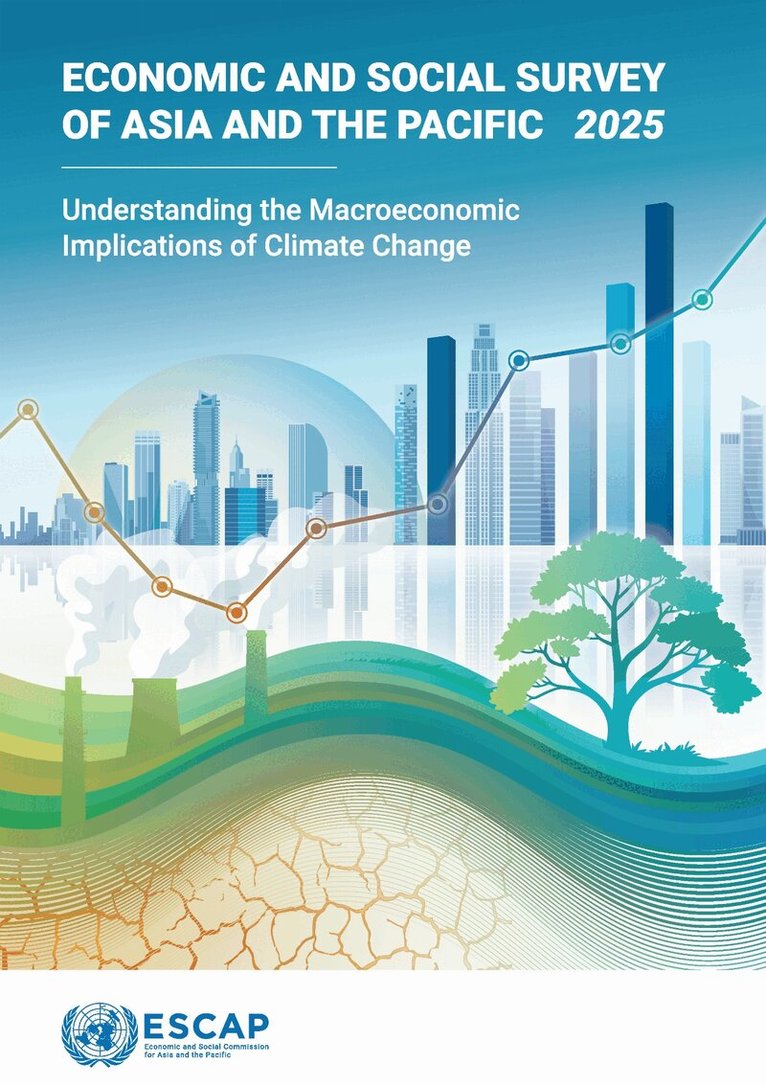
Economic and Social Survey of Asia and the Pacific 2025
Understanding the Macroeconomic Implications of Climate Change
Av United Nations Economic and Social Commission for Asia and the Pacific
Häftad, 2025
1238 kr
Lägg i varukorg
The Economic and Social Survey of Asia and the Pacific 2025 will expand Survey 2024's analysis on the fiscal implications of climate change to cover broader macroeconomic implications. it will propose a thinking framework that helps guide macroeconomic policy conduct amid climate change in a more …
Economic and Social Survey of Asia and the Pacific 2016
Nurturing Productivity for Inclusive Growth and Sustainable Development
Av United Nations Economic and Social Commission for Asia and the Pacific, United Nations Publications
Häftad, 2016
1318 kr
Lägg i varukorg
The Survey 2016 assesses the region's outlook as it navigates through global uncertainties, providing policy options and strategies to support countries in striving towards achieving the Sustainable Development Goals. The report analyses a wide range of areas including economic growth, inflation, …
Economic and Social Survey of Asia and the Pacific 2020
Towards Sustainable Economies
Av United Nations Economic and Social Commission for Asia and the Pacific, United Nations Publications
Häftad, 2020
1070 kr
Lägg i varukorg
Economic policymaking in Asia-Pacific developing countries has, understandably, long been focused on maximising economic growth, given the imperatives of poverty reduction and job creation. There is no gainsaying that there is a strong case for focusing on economic growth but when this comes at …
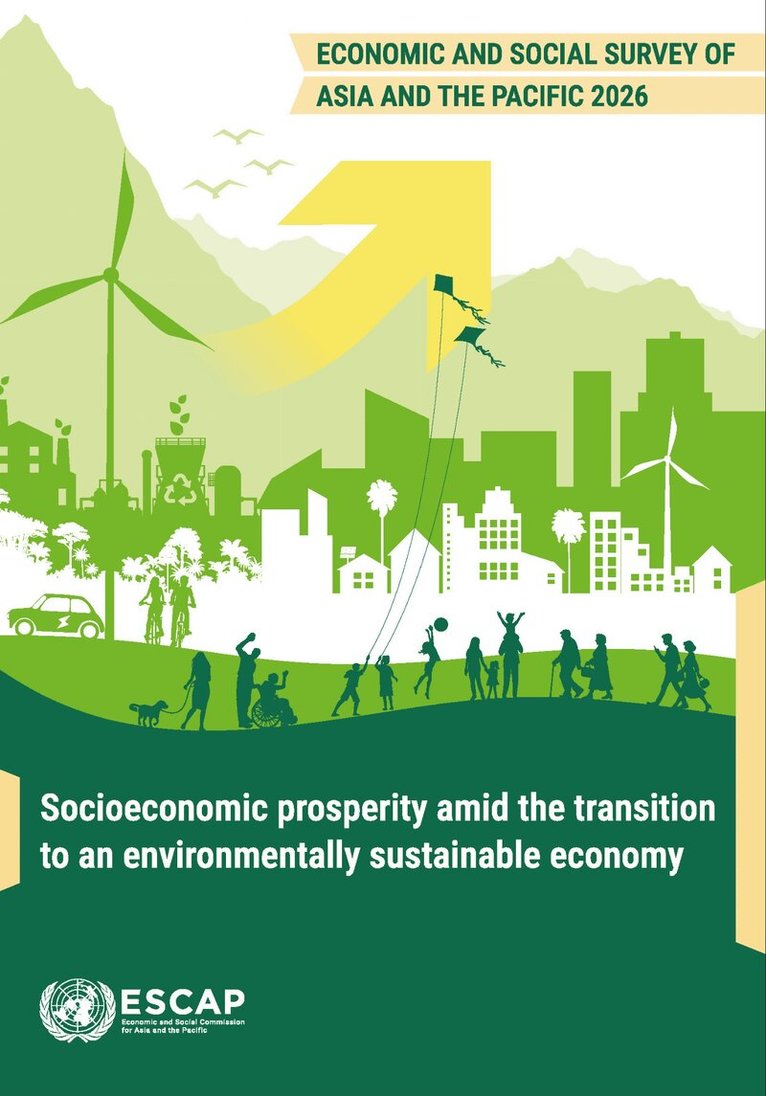
Economic and Social Survey of Asia and the Pacific 2026
Socioeconomic Prosperity Amid the Transition to an Environmentally Sustainable Economy
Av United Nations Economic and Social Commission for Asia and the Pacific
Häftad, 2026
1238 kr
Lägg i varukorg
The Economic and Social Survey of Asia and the Pacific 2026 assesses how the region can sustain inclusive growth in an increasingly complex and uncertain global environment. It highlights moderating growth, persistent global uncertainty, volatile capital flows, rising trade tensions and widening …
Economic and Social Survey of Asia and the Pacific
Addressing Triple Threats to Development, 2009
Häftad, 2009
929 kr
Tillfälligt slut
The Economic and Social Survey of Asia and the Pacific 2009 analyses how three global crises of the 2008 great recession in developed countries, food and fuel price volatility and climate change, threaten the development in the Asia-Pacific region. The publication also talks about subregional …
Economic and Social Survey of Asia and the Pacific 2012
Pursuing Shared Prosperity in an Era of Turbulence and High Commodity Prices
Häftad, 2012
958 kr
Tillfälligt slut
This publication provides a review of the region's outlook as it recovers from the global economic crisis, and assesses the region's policy response to remaining and emerging vulnerabilities. Areas of economic and social policy analyzed include growth, inflation, trade and investment, financial …
Economic and Social Survey of Asia and the Pacific 2013
Forward-Looking Macroeconomic Policies for Inclusive and Sustainable Development
Av Economic and Social Commission for Asia and the Pa United Nations
Häftad, 2013
987 kr
Tillfälligt slut
This document provides a review of the region’s performance in 2012 and its outlook in 2013 as it recovers from the global economic crisis and assesses the region’s policy response to remaining and emerging vulnerabilities. Areas of economic and social policy analysed include growth, inflation, …
Economic and Social Survey of Asia and the Pacific 2014
regional connectivity for shared prosperity
Av Economic and Social Commission for Asia and the Pacific United Nations
Häftad, 2014
987 kr
Tillfälligt slut
The Survey 2014 examines the region's challenges to support its economic growth and to promote inclusive and sustainable development. Part I of the report focuses on the region's outlook as it contends with the ongoing global recovery and assesses the region's policy response to remaining and …
Economic and Social Survey of Asia and the Pacific 2015
Making Growth More Inclusive for Sustainable Development
Av United Nations Economic and Social Commission for Asia and the Pacific
Häftad, 2015
958 kr
Tillfälligt slut
The Survey 2015 assesses the region's outlook as it navigates through global uncertainties, providing policy options and strategies to sustain inclusive and sustainable growth. The report analyses a wide range of areas including economic growth, inflation, trade and investment, financial markets, …
Economic and Social Survey of Asia and the Pacific 2017
Governance and Fiscal Management
Av United Nations Economic and Social Commission for Asia and the Pacific, United Nations Publications
Häftad, 2017
1070 kr
Tillfälligt slut
The Economic and Social Survey of Asia and the Pacific 2017 presents the latest macroeconomic trends, identifies emerging risks and challenges, and takes stock of fiscal, monetary and structural policy developments in the region, providing recommendations for policymakers and other relevant …
Economic and Social Survey of Asia and the Pacific 2018
Mobilizing Finance for Sustained, Inclusive and Sustainable Economic Growth
Av United Nations Economic and Social Commission for Asia and the Pacific, United Nations Publications
Häftad, 2018
1070 kr
Tillfälligt slut
Sustainable Development Goal 8 calls for promoting sustained, inclusive and sustainable economic growth. These three aspects of economic growth correspond to the three pillars of sustainable development: economic resilience, social inclusiveness and environmental sustainability. The region has made …
Economic and Social Survey of Asia and the Pacific 2019
Ambitions Beyond Growth
Av United Nations Economic and Social Commission for Asia and the Pacific, United Nations Publications
Häftad, 2019
1070 kr
Tillfälligt slut
The region has seen tremendous economic and social progress over the last 50 years, However, this conceals increasing risks to achieving the 2030 Agenda. Despite progress on many fronts, the region is not on track to meet many of the Sustainable Development Goals (SDGs). The gains from economic …