Encounters: in 50 Objects - Böcker
Visar alla böcker i serien Encounters: in 50 Objects. Handla med fri frakt och snabb leverans.
6 produkter
6 produkter
2 181 kr
Kommande
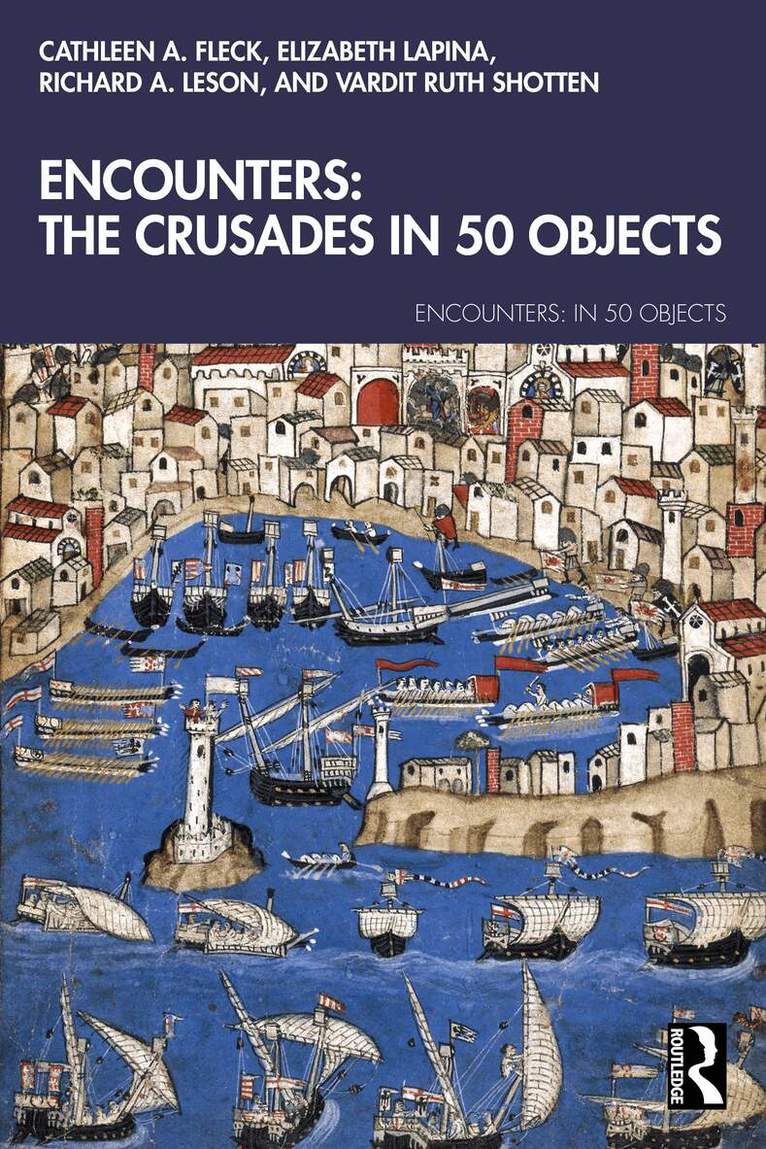
From the late eleventh to the early fourteenth century, western Europeans established the crusader states of the Levant and had unprecedented commercial, cultural, and military exchanges with the Middle East. Through a focused analysis of fifty objects, this book examines what material culture can tell us about interpersonal, interfaith, cross-cultural, and trans-regional encounters during this period of the medieval crusades.This richly illustrated volume explores Latin Christian, Eastern Christian, Muslim, and Jewish objects, reflecting the variety of artifacts surviving from this period and region, including sculpture, glassware, metalware, manuscripts, textiles, painting, coins, and seals. Addressing the themes of Belief, Conflict, Exchange, Power, and Memory, the essays examine the encounters of each object with its environments throughout its history to show the richness and multiplicities of material culture and perspectives in the Middle Ages, which lead to the complexities of the region today.The book stands as a valuable resource for students and scholars of the medieval crusades, the medieval Middle East and Europe, as well as all those interested in archaeology, art history, global history, and religious studies more broadly.
617 kr
Kommande
From the late eleventh to the early fourteenth century, western Europeans established the crusader states of the Levant and had unprecedented commercial, cultural, and military exchanges with the Middle East. Through a focused analysis of fifty objects, this book examines what material culture can tell us about interpersonal, interfaith, cross-cultural, and trans-regional encounters during this period of the medieval crusades.This richly illustrated volume explores Latin Christian, Eastern Christian, Muslim, and Jewish objects, reflecting the variety of artifacts surviving from this period and region, including sculpture, glassware, metalware, manuscripts, textiles, painting, coins, and seals. Addressing the themes of Belief, Conflict, Exchange, Power, and Memory, the essays examine the encounters of each object with its environments throughout its history to show the richness and multiplicities of material culture and perspectives in the Middle Ages, which lead to the complexities of the region today.The book stands as a valuable resource for students and scholars of the medieval crusades, the medieval Middle East and Europe, as well as all those interested in archaeology, art history, global history, and religious studies more broadly.
574 kr
Skickas inom 10-15 vardagar
This book consists of fifty case studies and offers an innovative approach to the study of Medieval Islamic history, concentrating on the analysis of physical objects from the seventh to the eighteenth centuries and across most of the regions that make up the pre-Modern Islamic world.These include a wide range of objects from portable items like coins, vessels and books to major constructions, including mosques, tombs, castles, dams, and canal systems. The central argument is that the interdisciplinary study of physical objects provides invaluable perspectives that can deepen or challenge the evidence in the written record. Object-based study can also shed light on the lives of social groups who are seldom discussed in Islamic texts written before the modern period. To demonstrate these points, each case study focusses on a single object or small group of related objects. The case studies combine close analysis of the material and visual characteristics with a discussion of the wider context in which such objects were commissioned, made, used, adapted and exchanged.The book is intended as an introduction to the historical study of Islamic objects, employing perspectives from the fields of art history, archaeology, numismatics, ethnography, and epigraphy. Written with a minimum of technical language and supported by a critical introduction, an extensive glossary, a timeline and guide for further reading, the book is aimed at students and general readers who are interested in the political, economic, social, cultural, religious and intellectual histories of the Islamic world.
2 100 kr
Skickas inom 10-15 vardagar
This book consists of fifty case studies and offers an innovative approach to the study of Medieval Islamic history, concentrating on the analysis of physical objects from the seventh to the eighteenth centuries and across most of the regions that make up the pre-Modern Islamic world.These include a wide range of objects from portable items like coins, vessels and books to major constructions, including mosques, tombs, castles, dams, and canal systems. The central argument is that the interdisciplinary study of physical objects provides invaluable perspectives that can deepen or challenge the evidence in the written record. Object-based study can also shed light on the lives of social groups who are seldom discussed in Islamic texts written before the modern period. To demonstrate these points, each case study focusses on a single object or small group of related objects. The case studies combine close analysis of the material and visual characteristics with a discussion of the wider context in which such objects were commissioned, made, used, adapted and exchanged.The book is intended as an introduction to the historical study of Islamic objects, employing perspectives from the fields of art history, archaeology, numismatics, ethnography, and epigraphy. Written with a minimum of technical language and supported by a critical introduction, an extensive glossary, a timeline and guide for further reading, the book is aimed at students and general readers who are interested in the political, economic, social, cultural, religious and intellectual histories of the Islamic world.
2 325 kr
Kommande
Exploring medieval economy through its artifacts, this book presents 50 object biographies that illuminate daily life, economic ethics, production, trade, and finance, offering a tangible perspective on the systems of the long medieval period.Combining the expertise of three historians and an archaeologist, this book bridges abstract theory with the material realities of the past. This volume examines fifty diverse artifacts, including tally sticks, tools, glassware, and coins, to provide a human-centered understanding of the commercial revolution, agricultural innovations, and the emergence of a consumer society between 500 and 1600. The content is organized into five parts, focusing on economic thought, production, distribution, finance, and everyday life. Empowering students to integrate material culture as a crucial primary source, the book reveals the evolving mentalities and innovative practices that shaped medieval economic behaviour and laid the foundations of our modern world.Encounters: Medieval Economy in 50 Objects is written for a broad audience, including undergraduate and postgraduate students in history, archaeology, and art history who are seeking a tangible, source-based approach to medieval economy. It is an essential resource for instructors looking for a modular, object-oriented teaching tool that connects material culture with economic theory, providing a refreshing alternative to traditional text-heavy histories. Museum professionals, heritage specialists, and history enthusiasts will also find its accessible narrative and focus on "object biographies" invaluable for contextualizing collections and understanding how everyday items drove the transition to a modern consumer society.
635 kr
Kommande
Exploring medieval economy through its artifacts, this book presents 50 object biographies that illuminate daily life, economic ethics, production, trade, and finance, offering a tangible perspective on the systems of the long medieval period.Combining the expertise of three historians and an archaeologist, this book bridges abstract theory with the material realities of the past. This volume examines fifty diverse artifacts, including tally sticks, tools, glassware, and coins, to provide a human-centered understanding of the commercial revolution, agricultural innovations, and the emergence of a consumer society between 500 and 1600. The content is organized into five parts, focusing on economic thought, production, distribution, finance, and everyday life. Empowering students to integrate material culture as a crucial primary source, the book reveals the evolving mentalities and innovative practices that shaped medieval economic behaviour and laid the foundations of our modern world.Encounters: Medieval Economy in 50 Objects is written for a broad audience, including undergraduate and postgraduate students in history, archaeology, and art history who are seeking a tangible, source-based approach to medieval economy. It is an essential resource for instructors looking for a modular, object-oriented teaching tool that connects material culture with economic theory, providing a refreshing alternative to traditional text-heavy histories. Museum professionals, heritage specialists, and history enthusiasts will also find its accessible narrative and focus on "object biographies" invaluable for contextualizing collections and understanding how everyday items drove the transition to a modern consumer society.