Schriften zum deutschen, europäischen und internationalen Insolvenzrecht – serie
Visar alla böcker i serien Schriften zum deutschen, europäischen und internationalen Insolvenzrecht. Handla med fri frakt och snabb leverans.
13 produkter
13 produkter
Inbunden, Tyska, 2010
1 229 kr
Skickas inom 5-8 vardagar
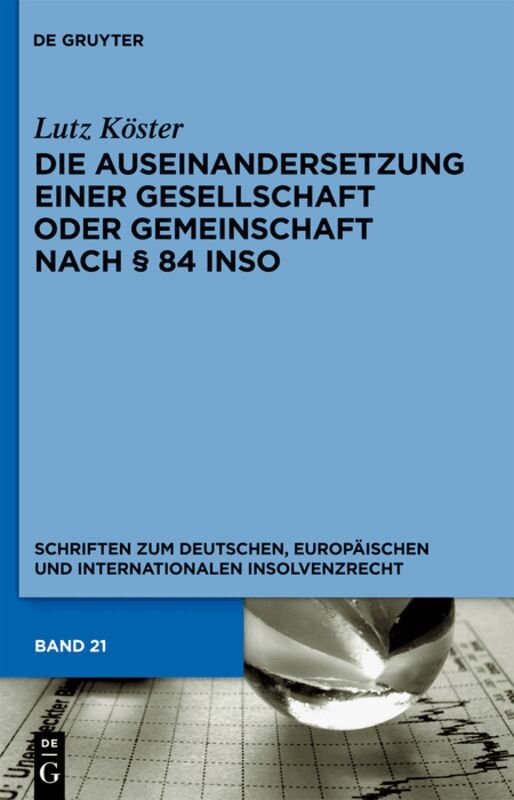
das Werk beinhaltet eine umfassende Darstellung der Auseinandersetzung nach § 84 InsO bei Beteiligung des Insolvenzschuldners an einer Gemeinschaft oder Gesellschaft mit speziellem Augenmerk auf die sich im Auseinandersetzungsverfahren ergebenden insolvenzspezifischen Besonderheiten. Dabei wird nicht zuletzt die Stellung des Insolvenzverwalters in den jeweiligen "Phasen" der Auseinandersetzung hinterfragt. Es werden dabei verschiedene Problemfelder herausgearbeitet und das Verfahren auf seine rechtliche Effizienz hin überprüft. Die Hauptaufmerksamkeit gilt dabei der Frage, wie die Probleme einer praxistauglichen Lösung zugeführt werden können.In einem ersten Teil wird zunächst der Anwendungsbereich des § 84 InsO skizziert. Dazu werden allgemeingültige Kriterien für die Eröffnung des Anwendungsbereiches herausgearbeitet und die unstreitigen Anwendungsfälle benannt. Danach werden die einzelnen Phasen des Auseinandersetzungsverfahrens ausführlich dargestellt und die unterschiedlichen Teilungsregelungen nach BGB und HGB berücksichtigt. Anhand der erarbeiteten Vorgehensweise wird in einem dritten Schritt auf die rechtlichen und praktischen Gestaltungsmöglichkeiten des Verwalters aufgrund seines Eintritts in die Rechte des insolventen Gesellschafters gemäß § 80 InsO sowie seine rechtliche Stellung in der Auseinandersetzung eingegangen. Ein letzter Abschnitt befasst sich intensiv mit dem Absonderungsrecht der Mitberechtigten aus § 84 Abs. 1 S. 2 InsO.
Inbunden, Tyska, 2013
1 165 kr
Skickas inom 5-8 vardagar
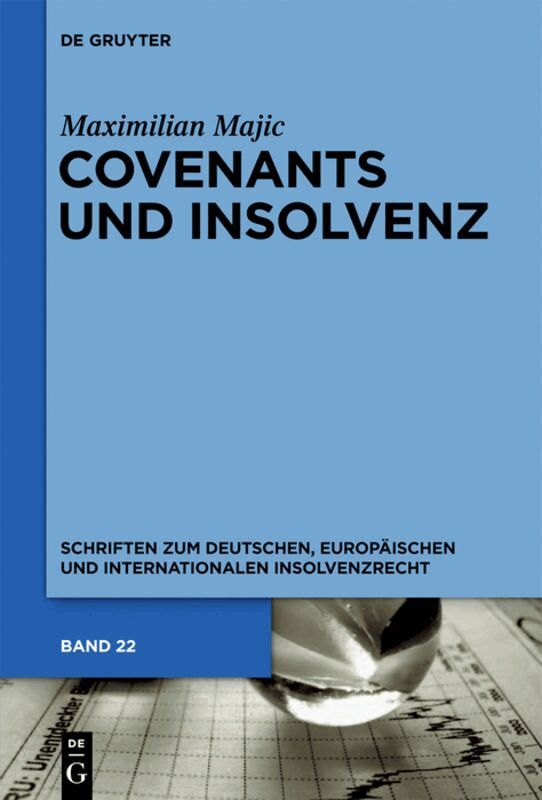
Covenants sind Nebenabreden in Kreditverträgen, durch die sich Kreditgeber ihr Kreditausfallrisiko absichern lassen. Im Gegensatz zu herkömmlichen Kreditsicherheiten entfalten Covenants präventive Wirkung, indem Kreditgeber hierdurch einen umfassenden Einblick in das wirtschaftliche Geschehen beim Kreditnehmer sowie die Möglichkeit der Einflussnahme erhalten. Mittels Covenants können sich Kreditgeber daher nicht nur einen erheblichen Informationsvorsprung verschaffen, sondern auch eine Steuerungsfunktion beim Kreditgeber übernehmen. Das vorliegende Werk untersucht für den Fall der Insolvenz des Kreditnehmers, welche Auswirkungen Covenants auf die Stellung des Kreditgebers und dessen Kreditforderung hat. Darüber hinaus wird der Frage nachgegangen, ob dem Kreditgeber hierdurch bestimmte Pflichten erwachsen und Haftungs- bzw. Anfechtungsrisiken drohen.
Inbunden, Tyska, 2013
1 122 kr
Skickas inom 5-8 vardagar
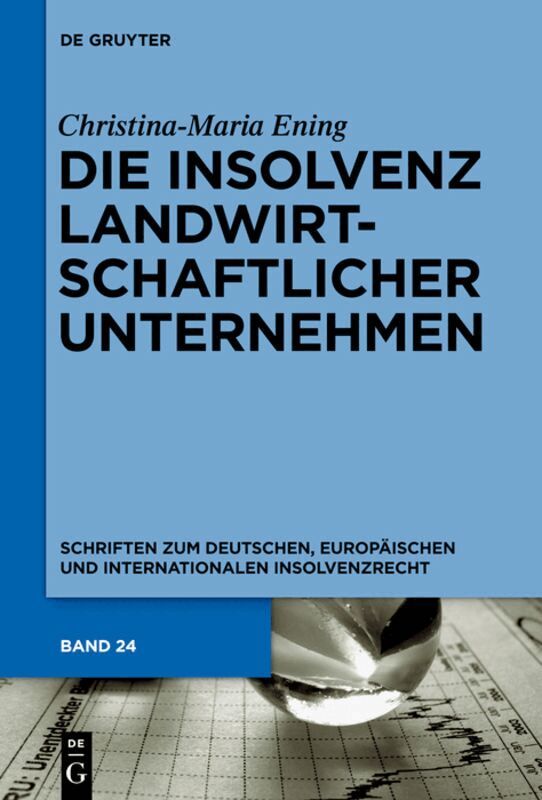
Es ist das Ziel der vorliegenden Arbeit, einen kompakten Überblick über die landwirtschaftsspezifischen Frage- und Problemstellungen im Rahmen eines Insolvenzverfahrens zu verschaffen. Die Arbeit soll dem Insolvenzverwalter, dem Landwirt sowie Beratern in der Landwirtschaft die für eine Landwirtschaftsinsolvenz erforderlichen Kenntnisse verschaffen und die Sensibilität in diesem Bereich fördern. Die Untersuchungen sollen zudem zeigen, welche Möglichkeiten der Insolvenzverwalter und die Gläubiger haben, das Verfahren zu gestalten und welche Risiken, Haftungsprobleme und Vorschriften in diesem Zusammenhang zu beachten sind.
Del 26 - Schriften zum deutschen, europäischen und internationalen Insolvenzrecht
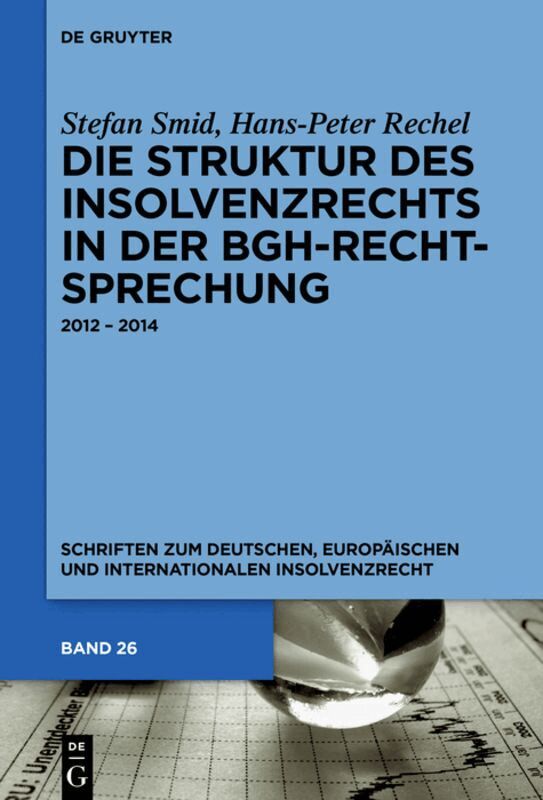
Die Struktur des Insolvenzrechts in der BGH-Rechtsprechung
2012 – 2014
Inbunden, Tyska, 2016
1 545 kr
Skickas inom 5-8 vardagar
Dargestellt wird die für das Insolvenzrecht bedeutsame Rechtsprechung des IX. Zivilsenats des BGH und deren Auswirkungen auf die Dogmatik des Insolvenzrechts. Der Band behandelt die Rechtsprechung des BGH der Jahre 2012-2014 und setzt damit die zur Rechtsprechung der Vorjahre bereits erschienenen Bände fort.
Inbunden, Tyska, 2018
1 549 kr
Skickas inom 5-8 vardagar
Die Arbeit stellt das derzeitige sowie künftige Deutsche und Europäische Konzerninsolvenzrecht umfassend dar. Sie klärt die Voraussetzungen, unter denen sich eine koordinierte Verfahrensführung nach aktuellem sowie künftigem Recht realisieren lässt. Ausgewählte Rechtsprechung deutscher sowie europäischer Insolvenzgerichte wird praxisgerecht ausgewertet.
Inbunden, Tyska, 2006
1 418 kr
Skickas inom 5-8 vardagar
The insolvency law is one of the core components of the comprehensive body of legislation that ensures the confidence of the legal community in a legal system. It regulates the conditions of widespread debtor liability and at the same time defines the framework within which creditors can expect their rights to be preserved through a reorganization and recapitalization of the indebted company.The actual effect of the insolvency law does not end at a country's borders. Insolvency proceedings are structured according to the right to have universally applicable validity. Joint legislation on cross-border insolvency proceedings is now in effect in the form of intrastate legislation in almost all member states of the European Union. This shared European legislation is impacting intrastate reform processes and influencing the insolvency legislation. Furthermore, the intrastate legislation is being influenced by the UNCITRAL-Model law. Academic debate is increasingly concerned with the convergence movement that has been triggered as a result. Practical applications require legal dogmatic clarification of the increasingly complex regulations of insolvency legislation, and information on structures and problems of foreign European and extra-European insolvency laws, as well as and in particular with regard to its interaction with German laws.The DZWIR publication series is a forum of these discussions. It is being published as a series of monographic examinations of fundamental questions on German, European and international insolvency legislation. As such, this series contributes to the legal dogmatic clarification of disputes as well as to the promotion of European integration of national insolvency legislation.
1 418 kr
Skickas inom 5-8 vardagar
As a central provision of the substantive insolvency law, § 103 of the InsO [Insolvency Statute] is of great practical importance. When an insolvency proceeding is opened, the insolvency administrator is often required to decide on the type of settlement for a number of mutual "provisional" contracts, meaning contracts not completely fulfilled by any party. This applies in particular for company insolvencies. In the past, the insolvency administrator's right of election was already a common subject matter of scholarly works. However, only the legal position within the insolvency proceeding stood at the center of these investigations. Therefore, the goal of the present work is the investigation of the legal position existing between the parties to the contract after the insolvency proceeding is cancelled either after complete final distribution or after an insolvency plan comes into effect.The starting point is the fundamentally tense relationship between the contractual law of obligations and substantive insolvency law, and the associated question regarding the effects of the opening of the proceeding on the claims for fulfillment that are still open. The author presents the problems that arise with the application of the latest BGH [German Federal Supreme Court] judicature, according to which the opening of the proceeding affects only the "enforceability" of the claims for fulfillment, and offers solution recommendations. Particularly relevant in practice are the difficulties that result from the renunciation of the "forfeiture theory" when the insolvency reorganization plans go into effect.
Inbunden, Tyska, 2006
1 418 kr
Skickas inom 5-8 vardagar
The work deals with the relationship of temporary bankruptcy administration to the bankruptcy dispute in the opened proceeding. This theme generally receives great attention in case law and literature. However, the particular questions to which the work is dedicated have not been previously addressed at the center of academic discourse, although they are of great practical relevance both for the temporary bankruptcy administrator and the creditors. In fact, a circular argument exists between the security of the assets and the equal treatment of creditors in the temporary bankruptcy proceeding. This clearly emerges if not only the debtor, but also the temporary bankruptcy administrator is involved in the disputed legal action, and if the opposing party refers to his confidence in the legally validity of the legal action. Both decisions of the BGH [German Federal Supreme Court] from March 13, 2003, which are the focus of the work, deal with this combination.
Inbunden, Tyska, 2006
1 418 kr
Skickas inom 5-8 vardagar
The insolvency law is one of the core components of the comprehensive body of legislation that ensures the confidence of the legal community in a legal system. It regulates the conditions of widespread debtor liability and at the same time defines the framework within which creditors can expect their rights to be preserved through a reorganization and recapitalization of the indebted company.The actual effect of the insolvency law does not end at a country's borders. Insolvency proceedings are structured according to the right to have universally applicable validity. Joint legislation on cross-border insolvency proceedings is now in effect in the form of intrastate legislation in almost all member states of the European Union. This shared European legislation is impacting intrastate reform processes and influencing the insolvency legislation. Furthermore, the intrastate legislation is being influenced by the UNCITRAL-Model law. Academic debate is increasingly concerned with the convergence movement that has been triggered as a result. Practical applications require legal dogmatic clarification of the increasingly complex regulations of insolvency legislation, and information on structures and problems of foreign European and extra-European insolvency laws, as well as and in particular with regard to its interaction with German laws.The DZWIR publication series is a forum of these discussions. It is being published as a series of monographic examinations of fundamental questions on German, European and international insolvency legislation. As such, this series contributes to the legal dogmatic clarification of disputes as well as to the promotion of European integration of national insolvency legislation.
Inbunden, Tyska, 2006
1 418 kr
Skickas inom 5-8 vardagar
The insolvency law is one of the core components of the comprehensive body of legislation that ensures the confidence of the legal community in a legal system. It regulates the conditions of widespread debtor liability and at the same time defines the framework within which creditors can expect their rights to be preserved through a reorganization and recapitalization of the indebted company.The actual effect of the insolvency law does not end at a country's borders. Insolvency proceedings are structured according to the right to have universally applicable validity. Joint legislation on cross-border insolvency proceedings is now in effect in the form of intrastate legislation in almost all member states of the European Union. This shared European legislation is impacting intrastate reform processes and influencing the insolvency legislation. Furthermore, the intrastate legislation is being influenced by the UNCITRAL-Model law. Academic debate is increasingly concerned with the convergence movement that has been triggered as a result. Practical applications require legal dogmatic clarification of the increasingly complex regulations of insolvency legislation, and information on structures and problems of foreign European and extra-European insolvency laws, as well as and in particular with regard to its interaction with German laws.The DZWIR publication series is a forum of these discussions. It is being published as a series of monographic examinations of fundamental questions on German, European and international insolvency legislation. As such, this series contributes to the legal dogmatic clarification of disputes as well as to the promotion of European integration of national insolvency legislation.
Del 6 - Schriften zum deutschen, europäischen und internationalen Insolvenzrecht
Die Rechtsprechung des BGH zur neuen Insolvenzordnung 1999-2006
Systematische Darstellung
Inbunden, Tyska, 2006
1 242 kr
Skickas inom 3-6 vardagar
The insolvency law is one of the core components of the comprehensive body of legislation that ensures the confidence of the legal community in a legal system. It regulates the conditions of widespread debtor liability and at the same time defines the framework within which creditors can expect their rights to be preserved through a reorganization and recapitalization of the indebted company.The actual effect of the insolvency law does not end at a country's borders. Insolvency proceedings are structured according to the right to have universally applicable validity. Joint legislation on cross-border insolvency proceedings is now in effect in the form of intrastate legislation in almost all member states of the European Union. This shared European legislation is impacting intrastate reform processes and influencing the insolvency legislation. Furthermore, the intrastate legislation is being influenced by the UNCITRAL-Model law. Academic debate is increasingly concerned with the convergence movement that has been triggered as a result. Practical applications require legal dogmatic clarification of the increasingly complex regulations of insolvency legislation, and information on structures and problems of foreign European and extra-European insolvency laws, as well as and in particular with regard to its interaction with German laws.The DZWIR publication series is a forum of these discussions. It is being published as a series of monographic examinations of fundamental questions on German, European and international insolvency legislation. As such, this series contributes to the legal dogmatic clarification of disputes as well as to the promotion of European integration of national insolvency legislation.
Del 12 - Schriften zum deutschen, europäischen und internationalen Insolvenzrecht
Gewerbliche Prozessfinanzierung und Staatliche Prozesskostenhilfe
Am Beispiel der Prozessführung durch Insolvenzverwalter
Inbunden, Tyska, 2008
1 292 kr
Skickas inom 5-8 vardagar
The insolvency law is one of the core components of the comprehensive body of legislation that ensures the confidence of the legal community in a legal system. It regulates the conditions of widespread debtor liability and at the same time defines the framework within which creditors can expect their rights to be preserved through a reorganization and recapitalization of the indebted company.The actual effect of the insolvency law does not end at a country's borders. Insolvency proceedings are structured according to the right to have universally applicable validity. Joint legislation on cross-border insolvency proceedings is now in effect in the form of intrastate legislation in almost all member states of the European Union. This shared European legislation is impacting intrastate reform processes and influencing the insolvency legislation. Furthermore, the intrastate legislation is being influenced by the UNCITRAL-Model law. Academic debate is increasingly concerned with the convergence movement that has been triggered as a result. Practical applications require legal dogmatic clarification of the increasingly complex regulations of insolvency legislation, and information on structures and problems of foreign European and extra-European insolvency laws, as well as and in particular with regard to its interaction with German laws.The DZWIR publication series is a forum of these discussions. It is being published as a series of monographic examinations of fundamental questions on German, European and international insolvency legislation. As such, this series contributes to the legal dogmatic clarification of disputes as well as to the promotion of European integration of national insolvency legislation.
Inbunden, Tyska, 2008
1 292 kr
Skickas inom 5-8 vardagar
The insolvency law is one of the core components of the comprehensive body of legislation that ensures the confidence of the legal community in a legal system. It regulates the conditions of widespread debtor liability and at the same time defines the framework within which creditors can expect their rights to be preserved through a reorganization and recapitalization of the indebted company.The actual effect of the insolvency law does not end at a country's borders. Insolvency proceedings are structured according to the right to have universally applicable validity. Joint legislation on cross-border insolvency proceedings is now in effect in the form of intrastate legislation in almost all member states of the European Union. This shared European legislation is impacting intrastate reform processes and influencing the insolvency legislation. Furthermore, the intrastate legislation is being influenced by the UNCITRAL-Model law. Academic debate is increasingly concerned with the convergence movement that has been triggered as a result. Practical applications require legal dogmatic clarification of the increasingly complex regulations of insolvency legislation, and information on structures and problems of foreign European and extra-European insolvency laws, as well as and in particular with regard to its interaction with German laws.The DZWIR publication series is a forum of these discussions. It is being published as a series of monographic examinations of fundamental questions on German, European and international insolvency legislation. As such, this series contributes to the legal dogmatic clarification of disputes as well as to the promotion of European integration of national insolvency legislation.