Future of Private Law – serie
Visar alla böcker i serien Future of Private Law. Handla med fri frakt och snabb leverans.
18 produkter
Foundations of European Transnational Private Law
Av Marija Bartl, Anna Beckers m. fl.
Inbunden, 2024
1367 kr
Lägg i varukorg
Since Anu Bradford’s groundbreaking book on the Brussels Effect there is a vastly evolving literature on the EU as a global regulatory actor as well as the global reach of EU law. This edited collection connects to this debate.Yet, it shifts the focus from the currently predominant public law focus …
Foundations of European Transnational Private Law
Av Anna Beckers, Hans-W. Micklitz m. fl.
E-bok, 2024
717 kr
Lägg i varukorg
Since Anu Bradford''s groundbreaking book on the Brussels Effect there is a vastly evolving literature on the EU as a global regulatory actor as well as the global reach of EU law. This edited collection connects to this debate. Yet, it shifts the focus from the currently predominant public law …
Foundations of European Transnational Private Law
Av Anna Beckers, Hans-W. Micklitz m. fl.
E-bok, 2024
717 kr
Lägg i varukorg
Since Anu Bradford''s groundbreaking book on the Brussels Effect there is a vastly evolving literature on the EU as a global regulatory actor as well as the global reach of EU law. This edited collection connects to this debate. Yet, it shifts the focus from the currently predominant public law …
Foundations of European Transnational Private Law
Av Anna Beckers, Hans-W. Micklitz m. fl.
Häftad, 2025
654 kr
Lägg i varukorg
Since Anu Bradford’s groundbreaking book on the Brussels Effect there is a vastly evolving literature on the EU as a global regulatory actor as well as the global reach of EU law. This edited collection connects to this debate.Yet, it shifts the focus from the currently predominant public law focus …
Right to be Oneself
Av Guido Alpa, Marija Bartl m. fl.
Inbunden, 2024
1237 kr
Lägg i varukorg
What does the right to be oneself entail? And how is it manifest in our understanding of the law? The leading commentator on this subject explores these questions, taking an ambitious and multi-faceted approach. To answer them, he draws on private law, jurisprudence, constitutional law, as well as …
Right to be Oneself
Av Guido Alpa
E-bok, 2024
631 kr
Lägg i varukorg
What does the right to be oneself entail? And how is it manifest in our understanding of the law? The leading commentator on this subject explores these questions, taking an ambitious and multi-faceted approach. To answer them, he draws on private law, jurisprudence, constitutional law, as well as …
Right to be Oneself
Av Guido Alpa
E-bok, 2024
645 kr
Lägg i varukorg
What does the right to be oneself entail? And how is it manifest in our understanding of the law? The leading commentator on this subject explores these questions, taking an ambitious and multi-faceted approach. To answer them, he draws on private law, jurisprudence, constitutional law, as well as …
Right to be Oneself
Häftad, 2025
589 kr
Lägg i varukorg
What does the right to be oneself entail? And how is it manifest in our understanding of the law? The leading commentator on this subject explores these questions, taking an ambitious and multi-faceted approach. To answer them, he draws on private law, jurisprudence, constitutional law, as well as …
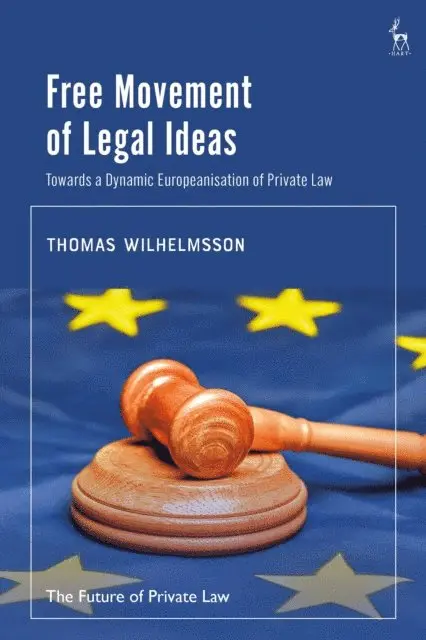
Free Movement of Legal Ideas
Towards a Dynamic Europeanisation of Private Law
Av Thomas Wilhelmsson, Marija Bartl m. fl.
Inbunden, 2024
1237 kr
Lägg i varukorg
This seminal book develops a new perspective on the debate concerning the Europeanisation of private law. The theory is both realistic, building on existing experience, and normative as it focuses on the future. It outlines ‘good’ Europeanisation in which legal sources can be used across borders; …
Free Movement of Legal Ideas
Towards a Dynamic Europeanisation of Private Law
E-bok, 2024
645 kr
Lägg i varukorg
This seminal book develops a new perspective on the debate concerning the Europeanisation of private law. The theory is both realistic, building on existing experience, and normative as it focuses on the future. It outlines ''good'' Europeanisation in which legal sources can be used across borders; …
Free Movement of Legal Ideas
Towards a Dynamic Europeanisation of Private Law
E-bok, 2024
645 kr
Lägg i varukorg
This seminal book develops a new perspective on the debate concerning the Europeanisation of private law. The theory is both realistic, building on existing experience, and normative as it focuses on the future. It outlines ''good'' Europeanisation in which legal sources can be used across borders; …
Free Movement of Legal Ideas
Towards a Dynamic Europeanisation of Private Law
Av Thomas Wilhelmsson, Marija Bartl
Häftad, 2026
589 kr
Lägg i varukorg
This seminal book develops a new perspective on the debate concerning the Europeanisation of private law. The theory is both realistic, building on existing experience, and normative as it focuses on the future. It outlines ‘good’ Europeanisation in which legal sources can be used across borders; …
Future of the Person
Av Marija Bartl, Hans-W. Micklitz m. fl.
Inbunden, 2025
1432 kr
Lägg i varukorg
This book rigorously debates the notion of the person, a fundamental concept which underpins national private law orders worldwide. In the 20th century, the unity of the person came under pressure – firstly through the rise of labour law and then secondly (post-World War II) through consumer law. …
Future of the Person
Av Hans-W. Micklitz, Giuseppe Vettori
E-bok, 2025
1577 kr
Lägg i varukorg
This book rigorously debates the notion of the person, a fundamental concept which underpins national private law orders worldwide. In the 20th century, the unity of the person came under pressure – firstly through the rise of labour law and then secondly (post-World War II) through consumer law. …
Future of the Person
Av Hans-W. Micklitz, Giuseppe Vettori
E-bok, 2025
1577 kr
Lägg i varukorg
This book rigorously debates the notion of the person, a fundamental concept which underpins national private law orders worldwide. In the 20th century, the unity of the person came under pressure – firstly through the rise of labour law and then secondly (post-World War II) through consumer law. …
Future of the Person
Av Hans-W. Micklitz, Giuseppe Vettori
Häftad, 2026
719 kr
Lägg i varukorg
This book rigorously debates the notion of the person, a fundamental concept which underpins national private law orders worldwide. In the 20th century, the unity of the person came under pressure – firstly through the rise of labour law and then secondly (post-World War II) through consumer law. …
Connecting Value Chains
Rethinking Consumers in Global Production
Inbunden, 2027
1162 kr
Kommande
This open access book explores the relationship between consumer law and global value chains (GVCs). Conceptually rigorous, it analyses EU approaches to regulation and to consumer policy oriented to safety, sustainability and market regulation. In so doing, it throws the disconnect between GVCs and …
Rethinking Consumers in Global Production
Connecting Value Chains
Häftad, 2028
584 kr
Kommande
This open access book explores the relationship between consumer law and global value chains (GVCs). Conceptually rigorous, it analyses EU approaches to regulation and to consumer policy oriented to safety, sustainability and market regulation. In so doing, it throws the disconnect between GVCs and …