
Human Rights: Contemporary Issues and Perspectives - Böcker
Visar alla böcker i serien Human Rights: Contemporary Issues and Perspectives. Handla med fri frakt och snabb leverans.
5 produkter
5 produkter
1 159 kr
Skickas
In an age where technology continuously reshapes our world, the concept of mass surveillance has emerged as a critical and often contentious issue. This book explores the multifaceted nature of surveillance, delving into its implications for privacy, legal frameworks, and human rights. Each chapter is crafted to provide a comprehensive understanding of different aspects of mass surveillance, from its basic definitions to its intersection with emerging technologies. The authors begin by examining the foundational concepts of mass surveillance—its meaning, definitions, and scope. This sets the stage for a deeper exploration into how governments across jurisdictions implement and regulate these practices. The discussion then turns to India, analyzing the country’s legal framework governing mass surveillance and how it grapples with the challenges posed by modern surveillance technologies such as drones. As the authors navigate the intricate relationship between surveillance and individual privacy, the book scrutinizes the constitutional and judicial approaches to the right to privacy in India. The authors further investigate the evolving discourse on human rights, tracing its development from natural law to contemporary challenges in the 21st century. The interface between surveillance and human rights is explored, highlighting the balance between security and personal freedoms. Additionally, the authors delve into the role of IoT and cloud computing in mass data collection, emphasizing how these technologies complicate the surveillance landscape. Finally, the authors look ahead, considering potential pathways for addressing the challenges and ethical dilemmas posed by mass surveillance. This book aims to provide readers with a nuanced perspective on the delicate interplay between technology, law, and human rights, offering insights and reflections on the future of surveillance in our increasingly connected world. Whether you are a scholar, practitioner, or an informed citizen, this book seeks to enrich your understanding of one of the most pressing issues of our time.
1 794 kr
Skickas
The genocide currently occurring in Gaza conjures parallels to the atrocities witnessed during the Holocaust in Germany and following the dropping of the atomic bomb on Hiroshima. The events at Pearl Harbor were implicitly supported by both the American and British governments, just as the destruction of many countries, including Palestine, continues to be today. The voiceless Palestinians children endure humiliation at the hands of unjust verdicts issued by Israeli authorities, akin to the experiences faced by innocent Jews during World War II. The consequences of September 11th and the various coups orchestrated through American foreign diplomacy further exemplify the United States’ involvement in the oppression of other nations, including through the proxy war between Ukraine and Russia. Unlike previous wars, the international crimes committed in Gaza are portrayed by Western governments as acts of self-defence being committed against resisting factions, a narrative designed to shift responsibility onto others and distract from Western governments’ mission to exert control over the entire Middle East. Western governments have monopolized international laws as tools to address their own transgressions, while also evading accountability from institutions such as the International Criminal Court in The Hague. Israeli authorities justify that their military forces constitute "the Most Moral Army in the World", thereby enabling them to commit atrocities with the complicity of Western governments. Consequently, the massacre faced by children in Gaza disproportionately affects individuals who are utterly defenceless and reliant on parental protection. Western authoritarian leaders, regardless of their decorative democratic political tags, certainly have international criminal responsibility for the Holocaust of children.
1 651 kr
Skickas
Justice can be described as a construct that often conceals falsehoods, or at times, serves merely as a façade for such falsehoods. Regardless of how justice may be defined, it is evident that it does not emanate from the intentions of virtuous individuals; rather, it is shaped by the artistry of those who are dishonest. This observation aptly reflects the current state of international criminal justice. It would not be an exaggeration to assert that the definition of international justice has been historically manipulated, dictated, and promoted by those who have held positions of power while engaging in egregious international crimes. Consequently, the concepts of injustice and the massacre of innocent civilians cannot be relegated to mere footnotes in the evolution of international relations among various civilisations; instead, they reveal the brutality inherent in our more powerful natures. Regrettably, the existing system of international criminal justice suffers from a significant distortion of truth and an overwhelming infusion of deception—perpetrated through coercive means within the discussions held at the United Nations Security Council. Thus, we find ourselves governed by a "law" founded on lies, which must be adhered to by all individuals regardless of their varying inclinations. It is imperative to engage with this discourse and remain cognisant of one's own nature.
2 574 kr
Skickas
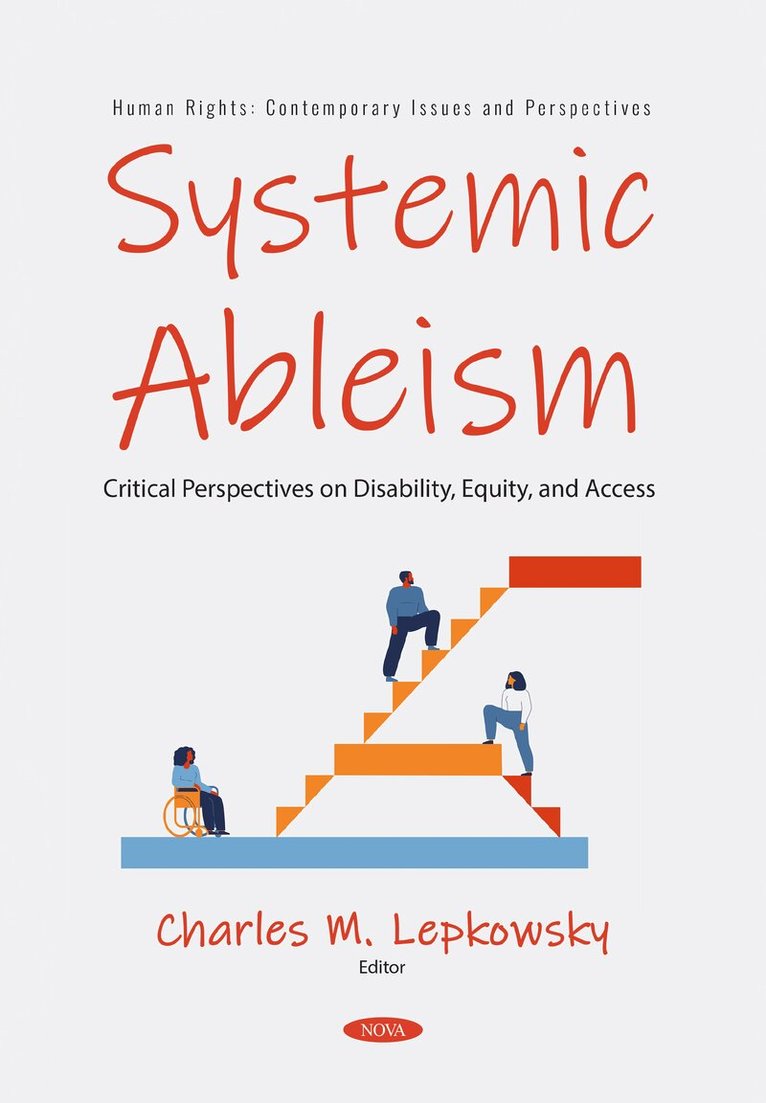
Ableism is an emerging area of interest and concern spanning numerous populations. Systemic Ableism: Critical Perspectives on Disability, Equity, and Access offers a rare, comprehensive view of ableism from multiple perspectives. The concept of ableism is defined and applied in a variety of contexts. These include developmental disabilities, autism spectrum disorders, physical disabilities, invisible disabilities (like TBI), HIV, serious mental illness, pathological demand avoidance (PDA), multiple sclerosis, aging, and systemic ableism in access to healthcare, higher education, employment and information technology. The book’s chapters describe overlaps between these contexts, and their intersections with race, gender, aging, and gender identity. The book’s diverse panel of authors includes academic content experts, early career and seasoned clinical healthcare professionals from a variety of backgrounds, many of whom have directly experienced ableism in the areas described above. Future directions for research, conceptualization, assessment, and treatment are explored. This book is a powerful resource for informing and raising awareness in the community, with special systemic application to higher education programs and healthcare settings.
687 kr
Kommande
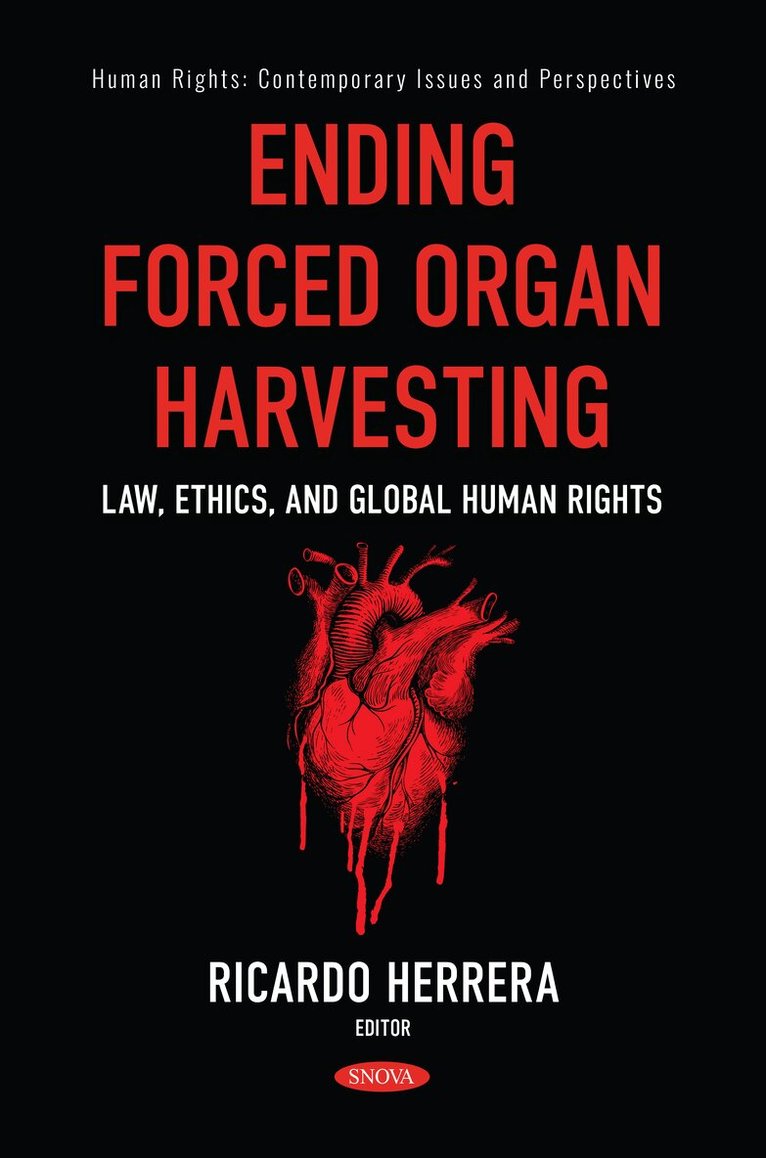
This book examines one of the most disturbing and under addressed crimes of our time—the transnational practice of forced organ harvesting. It brings together key U.S. and international documents that illuminate the scope, mechanisms, and human rights implications of organ trafficking and organ removal. This book places the issue of forced organ harvesting within wider discussions of human dignity, bioethics, and global justice. It explores the evolution of U.S. legislative responses, including the Stop Forced Organ Harvesting Act of 2023, and analyzes how international law and multilateral cooperation can address crimes that blur the boundaries between human trafficking and medical exploitation.