Inclusive Education: Cross Cultural Perspectives – serie
Visar alla böcker i serien Inclusive Education: Cross Cultural Perspectives. Handla med fri frakt och snabb leverans.
12 produkter
12 produkter
Inbunden, Engelska, 2003
1 056 kr
Skickas inom 10-15 vardagar
This is an extremely important book containing a wealth of ideas and insights and raising important questions for discussion and further exploration. In a lucid and cogently argued analysis, the author both challenges dominant ideas and interp- tations and provides some alternative innovatory perspectives. These include, the making and meaning of policy; the varied and complex ways in which inclusion and exclusion can be understood; the nature and function of categorisation, labelling and discursive practices within official discourse and procedures and the position and relationship between space, place and identities in relation to the experience of marginalized people including disabled children and young people. Drawing on concepts and insights from social and cultural geography Armstrong is able to seriously examine and discuss daily activities within institutional and social settings in England and France from several different angles. In sensitive, thoughtful and imaginative ways the micro-politics of social settings and encounters are explored through a process of deconstruction and reconstruction. Subtle, overt and contradictory features of interactions are carefully identified and critically discussed. This covers how meanings, decisions and outcomes of such encounters are developed, challenged and changed. Both in relation to discussions of the history of special education and her cri- cal self-reflections on the research process, the author challenges homogeneous conceptions and sanitized accounts of what, she argues, is an essentially messy process. It is the unevenness, discontinuities and contradictions of social conditions and relations that are depicted in insightful and disturbing ways.
Del 1 - Inclusive Education: Cross Cultural Perspectives
Spaced Out: Policy, Difference and the Challenge of Inclusive Education
Häftad, Engelska, 2003
1 056 kr
Skickas inom 10-15 vardagar
This is an extremely important book containing a wealth of ideas and insights and raising important questions for discussion and further exploration. In a lucid and cogently argued analysis, the author both challenges dominant ideas and interp- tations and provides some alternative innovatory perspectives. These include, the making and meaning of policy; the varied and complex ways in which inclusion and exclusion can be understood; the nature and function of categorisation, labelling and discursive practices within official discourse and procedures and the position and relationship between space, place and identities in relation to the experience of marginalized people including disabled children and young people. Drawing on concepts and insights from social and cultural geography Armstrong is able to seriously examine and discuss daily activities within institutional and social settings in England and France from several different angles. In sensitive, thoughtful and imaginative ways the micro-politics of social settings and encounters are explored through a process of deconstruction and reconstruction. Subtle, overt and contradictory features of interactions are carefully identified and critically discussed. This covers how meanings, decisions and outcomes of such encounters are developed, challenged and changed. Both in relation to discussions of the history of special education and her cri- cal self-reflections on the research process, the author challenges homogeneous conceptions and sanitized accounts of what, she argues, is an essentially messy process. It is the unevenness, discontinuities and contradictions of social conditions and relations that are depicted in insightful and disturbing ways.
Inbunden, Engelska, 2003
1 580 kr
Skickas inom 10-15 vardagar
The question of inclusive education is one which many societies are attempting to address. It is a fundamentally serious and complex issue raising challenges that cover conceptual, organizational, pedagogical, curricular and socio-economic concerns and questions. In this edited collection of papers the reader is confronted with these challenges through, on the one hand, a critical informative analysis of some of the key existing ideas and, on the other, a series of alternative insights and questions requiring further exploration and debate. Adding to the overall qu- ity of the book is the much needed cross-cultural dimension in terms of insights, knowledge, understanding and difficult questions. This is an important book in which new research and interpretations are reported on and discussed. Overall, the papers provide a serious critique of such factors as: the limitations of existing definitions of inclusive education; the narrowness of the focus within which inclusive issues are too often presented; the negative impacts of marketisation, performativity and the standards agenda on the realisation of inclusive values and practice and the constraints of significant socio-economic inequalities and disadvantages within and between communities and schools. These raise serious questions concerning the extent to which schools can make a positive difference in the lives of many pupils.
Del 2 - Inclusive Education: Cross Cultural Perspectives
Inclusion, Participation and Democracy: What is the Purpose?
Häftad, Engelska, 2003
1 790 kr
Skickas inom 10-15 vardagar
The question of inclusive education is one which many societies are attempting to address. It is a fundamentally serious and complex issue raising challenges that cover conceptual, organizational, pedagogical, curricular and socio-economic concerns and questions. In this edited collection of papers the reader is confronted with these challenges through, on the one hand, a critical informative analysis of some of the key existing ideas and, on the other, a series of alternative insights and questions requiring further exploration and debate. Adding to the overall qu- ity of the book is the much needed cross-cultural dimension in terms of insights, knowledge, understanding and difficult questions. This is an important book in which new research and interpretations are reported on and discussed. Overall, the papers provide a serious critique of such factors as: the limitations of existing definitions of inclusive education; the narrowness of the focus within which inclusive issues are too often presented; the negative impacts of marketisation, performativity and the standards agenda on the realisation of inclusive values and practice and the constraints of significant socio-economic inequalities and disadvantages within and between communities and schools. These raise serious questions concerning the extent to which schools can make a positive difference in the lives of many pupils.
Inbunden, Engelska, 2006
1 056 kr
Skickas inom 10-15 vardagar
Looking across national contexts and drawing on ethnographic studies of schools in the UK and Australia, the book explores the implications of the contemporary education policy context and processes and practices inside schools for students as learners and for educational inequalities. The book uses tools offered by post-structural theory to read ethnographic data and show how the discourses that circulate inside schools at once mobilise and elide gender, sexuality, social class, ability, disability, race, ethnicity, religious and cultural belongings at the same time as they open up and close down 'who' students can be as learners. In demonstrating these processes the book offers new insights into how these 'truths' about students and learners are created and how they come to be bound so tightly to the educational inclusions, privileges and successes that some students enjoy and the exclusions, disadvantages and 'failures' that other students face.
Del 4 - Inclusive Education: Cross Cultural Perspectives
Policy, Experience and Change: Cross-Cultural Reflections on Inclusive Education
Inbunden, Engelska, 2007
1 056 kr
Skickas inom 10-15 vardagar
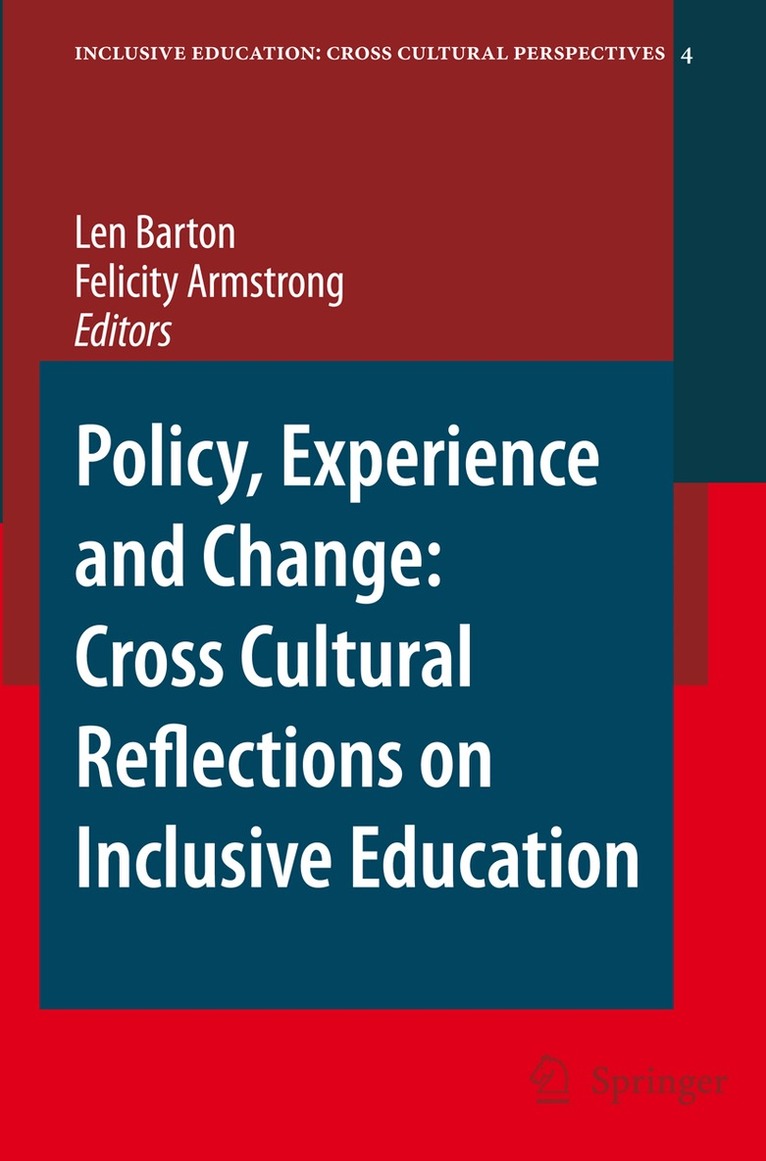
One of the qualities of this book is the authors’engagement with personal experience. This is part of the contextualising of issues within particular cultural, historical and social contexts. I shall begin the Foreword in the same spirit by recounting an experience that is still a foundation for analysing and developing my own understanding. This h- pened some twenty-five years ago. I was going with Vic Finkelstein, a disabled a- demic and activist, to a seminar, on a hot summer’s day, making our way across the Open University campus in Milton Keynes. The seminar was entitled ‘The Problems of Integration’. Making conversation with Vic I suggested that the seminar sounded int- esting. His response was immediate and direct: no it was not interesting – the problems for disabled people were the problems of segregation, not the problems of integration. As he did often for me, Vic turned understanding on its head and his seemingly simple observation carried ever-increasing ripples of critical questioning. Reading of international developments and of the specifics of education policy, provision and practice across the widely differing circumstances found in different nation states, from the majority as well as the minority world, challenges, deepens and confirms understanding. There are, not surprisingly, considerable diversities and c- monalities, and recurring themes that speak to both – and fire critical questioning. The complexities pretty quickly give food for thought and ring bells of caution. The first for me is the lack of digestion – the impossibility of comprehensive knowledge.
Del 3 - Inclusive Education: Cross Cultural Perspectives
Impossible Bodies, Impossible Selves: Exclusions and Student Subjectivities
Häftad, Engelska, 2006
1 056 kr
Skickas inom 10-15 vardagar
Looking across national contexts and drawing on ethnographic studies of schools in the UK and Australia, the book explores the implications of the contemporary education policy context and processes and practices inside schools for students as learners and for educational inequalities. The book uses tools offered by post-structural theory to read ethnographic data and show how the discourses that circulate inside schools at once mobilise and elide gender, sexuality, social class, ability, disability, race, ethnicity, religious and cultural belongings at the same time as they open up and close down 'who' students can be as learners. In demonstrating these processes the book offers new insights into how these 'truths' about students and learners are created and how they come to be bound so tightly to the educational inclusions, privileges and successes that some students enjoy and the exclusions, disadvantages and 'failures' that other students face.
Inbunden, Engelska, 2007
1 685 kr
Skickas inom 10-15 vardagar
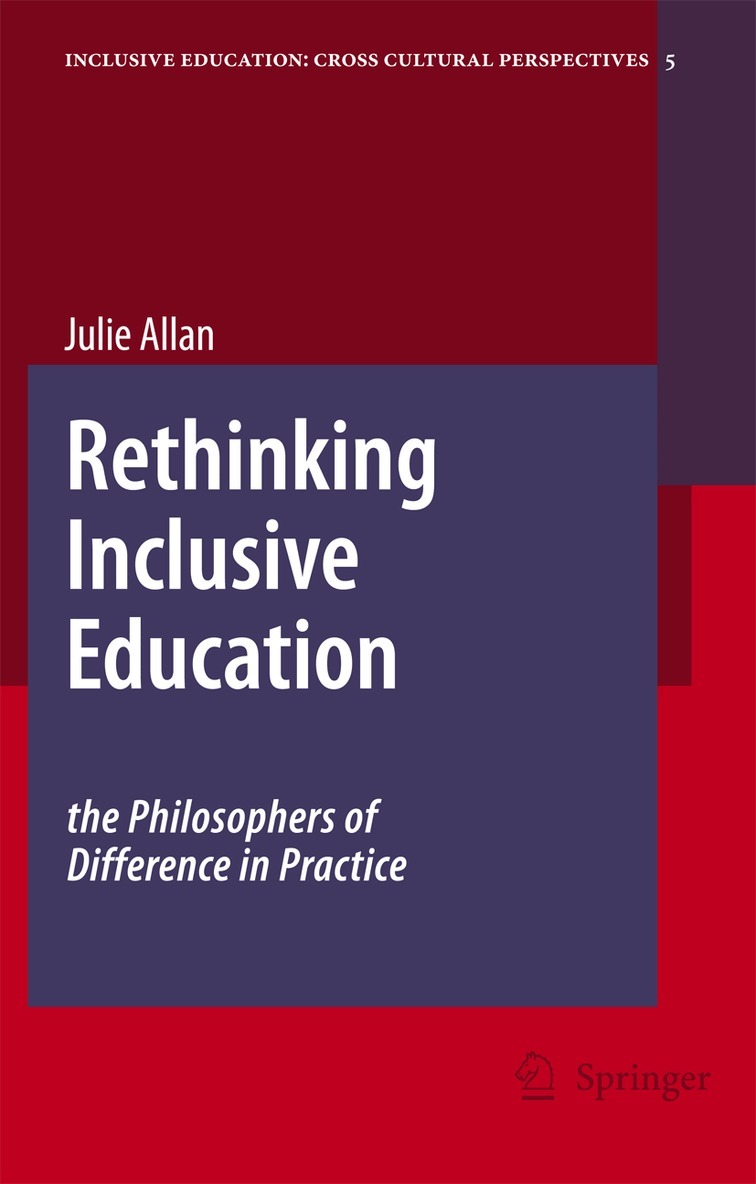
One of the important responsibilities that advocates of inclusion need to continually practise is that of self-criticism. This includes examining and re-examining the assumptions informing our perspectives, the concepts that we use including ‘inclusive education’ and our intentions, especially in relation to the question of change. We need to beware of the danger of unexamined orthodoxies, the possibilities of ado- ing inclusive language with little, if any, changes in our thinking and practice and a sterile and insensitive position with regard to the pursuit of new or alternative ideas. In this very important book, Allan powerfully reminds us of the necessity and centrality of these concerns and provides a direct, perceptive and thoughtful, exami- tion and critique of the varied barriers to the task of how to make inclusion happen. Allan challenges the reader to step back and re-examine the rationale for inclusion through an alternative mindset. She challenges the varied attacks upon inclusion including those in the education business to stop using economic (it costs too much) and pedagogical (it is bad for the other children in the class and traumatic for the disabled children) and social (just too much for the teacher’s workload) reasons for closing the door and doing the right thing, and those who argue that inclusion was an experiment that did not work.
Inbunden, Engelska, 2007
1 056 kr
Skickas inom 10-15 vardagar
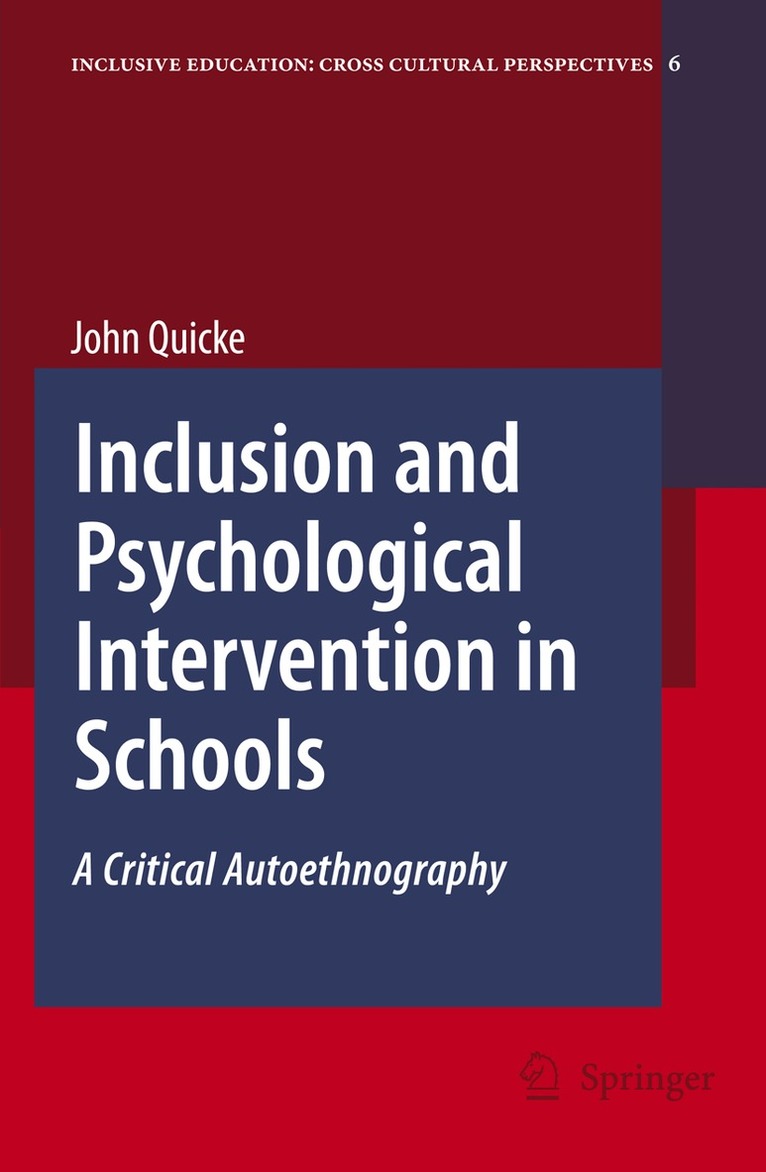
Within the field of inclusive education, a growing body of literature has contributed to a developing knowledge and understanding of conceptual, empirical, philosophical issues and ideas. However, there is still an urgent need for more detailed accounts of how the struggle for change takes place or ‘gets done’ in specific contexts involving particular people. This important book seeks to meet some of these needs by providing stories from the working life of an educational psychologist in England, and his interventions in schools in attempting to contribute to meeting the diverse needs of a range of pupils. In painstaking, sensitive and reflective ways, Quicke offers us some moving insights, detailed observations, challenging questions, which combine to pow- fully establish a picture of the complex, social and cultural contexts called schools, in which the struggle for inclusive thinking, values and relations are to be realized. The author describes himself as a ‘reflective practitioner’, whose work is not id- logically neutral, but informed by a deep commitment and belief in the well-being of all children. He calls his approach ‘autoethnographic’ in order to emphasize the se- reflective nature of the activity. Thus, the stories involve insights into the ambiguity, self-doubt, contradictions, dilemmas and real messiness of his position and expe- ences within his work context.
Häftad, Engelska, 2008
1 056 kr
Skickas inom 10-15 vardagar
One of the qualities of this book is the authors’engagement with personal experience. This is part of the contextualising of issues within particular cultural, historical and social contexts. I shall begin the Foreword in the same spirit by recounting an experience that is still a foundation for analysing and developing my own understanding. This h- pened some twenty-five years ago. I was going with Vic Finkelstein, a disabled a- demic and activist, to a seminar, on a hot summer’s day, making our way across the Open University campus in Milton Keynes. The seminar was entitled ‘The Problems of Integration’. Making conversation with Vic I suggested that the seminar sounded int- esting. His response was immediate and direct: no it was not interesting – the problems for disabled people were the problems of segregation, not the problems of integration. As he did often for me, Vic turned understanding on its head and his seemingly simple observation carried ever-increasing ripples of critical questioning. Reading of international developments and of the specifics of education policy, provision and practice across the widely differing circumstances found in different nation states, from the majority as well as the minority world, challenges, deepens and confirms understanding. There are, not surprisingly, considerable diversities and c- monalities, and recurring themes that speak to both – and fire critical questioning. The complexities pretty quickly give food for thought and ring bells of caution. The first for me is the lack of digestion – the impossibility of comprehensive knowledge.
Häftad, Engelska, 2008
1 056 kr
Skickas inom 10-15 vardagar
Within the field of inclusive education, a growing body of literature has contributed to a developing knowledge and understanding of conceptual, empirical, philosophical issues and ideas. However, there is still an urgent need for more detailed accounts of how the struggle for change takes place or ‘gets done’ in specific contexts involving particular people. This important book seeks to meet some of these needs by providing stories from the working life of an educational psychologist in England, and his interventions in schools in attempting to contribute to meeting the diverse needs of a range of pupils. In painstaking, sensitive and reflective ways, Quicke offers us some moving insights, detailed observations, challenging questions, which combine to pow- fully establish a picture of the complex, social and cultural contexts called schools, in which the struggle for inclusive thinking, values and relations are to be realized. The author describes himself as a ‘reflective practitioner’, whose work is not id- logically neutral, but informed by a deep commitment and belief in the well-being of all children. He calls his approach ‘autoethnographic’ in order to emphasize the se- reflective nature of the activity. Thus, the stories involve insights into the ambiguity, self-doubt, contradictions, dilemmas and real messiness of his position and expe- ences within his work context.
Häftad, Engelska, 2010
1 350 kr
Skickas inom 5-8 vardagar
One of the important responsibilities that advocates of inclusion need to continually practise is that of self-criticism. This includes examining and re-examining the assumptions informing our perspectives, the concepts that we use including ‘inclusive education’ and our intentions, especially in relation to the question of change. We need to beware of the danger of unexamined orthodoxies, the possibilities of ado- ing inclusive language with little, if any, changes in our thinking and practice and a sterile and insensitive position with regard to the pursuit of new or alternative ideas. In this very important book, Allan powerfully reminds us of the necessity and centrality of these concerns and provides a direct, perceptive and thoughtful, exami- tion and critique of the varied barriers to the task of how to make inclusion happen. Allan challenges the reader to step back and re-examine the rationale for inclusion through an alternative mindset. She challenges the varied attacks upon inclusion including those in the education business to stop using economic (it costs too much) and pedagogical (it is bad for the other children in the class and traumatic for the disabled children) and social (just too much for the teacher’s workload) reasons for closing the door and doing the right thing, and those who argue that inclusion was an experiment that did not work.