Konferenz zur Schönheit und Lebensfähigkeit der Stadt – serie
Visar alla böcker i serien Konferenz zur Schönheit und Lebensfähigkeit der Stadt. Handla med fri frakt och snabb leverans.
5 produkter
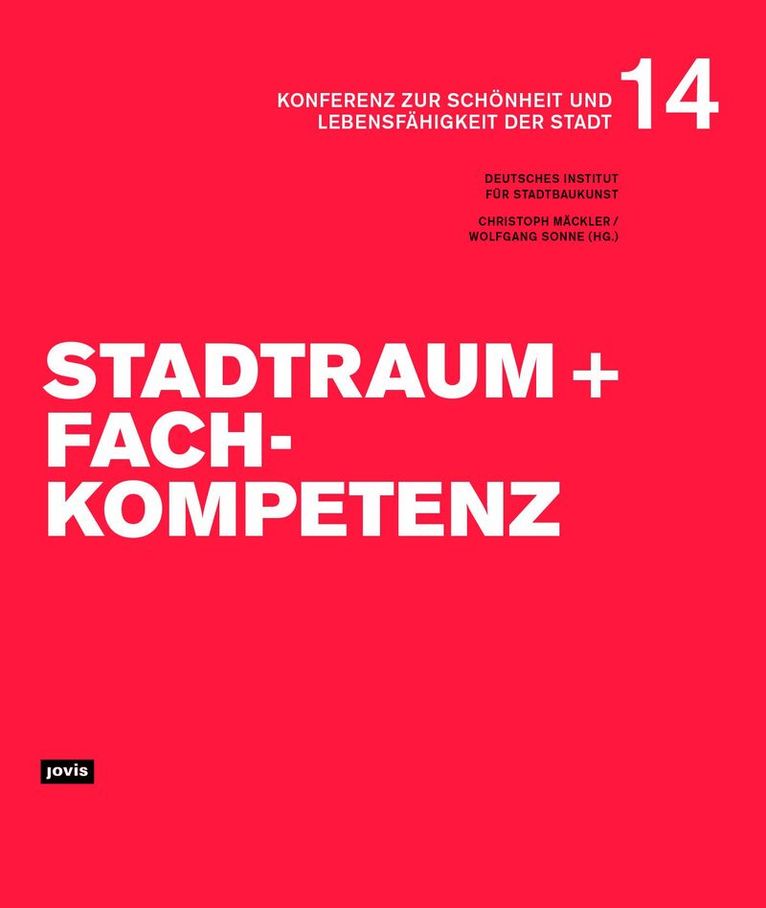
Stadtraum und Fachkompetenz
Av Christoph Mäckler, Wolfgang Sonne m. fl.
Häftad, 2025
467 kr
Kommande
Given current sustainability requirements, the quality of the built city—its buildings and public spaces—takes on a particular importance. Yet many municipalities complain about a shortage of experts who are capable of effectively designing cities, urban districts, and urban spaces. Building on the …
städtische Hof
Konferenz zur Schönheit und Lebensfähigkeit der Stadt Bd. 15
Av Christoph Mäckler, Wolfgang Sonne m. fl.
Häftad, 2026
437 kr
Lägg i varukorg
The urban courtyard and its far-reaching significance for the development of neighborhoods was the topic of the 15th Konferenz zur Schönheit und Lebenfähigkeit der Stadt (Conference on the Beauty and Viability of the City). The division of the city into public and private spaces is a fundamental …
Innenstadtleben
Konferenz zur Schönheit und Lebensfähigkeit der Stadt 11
Av Christoph Mäckler, Wolfgang Sonne m. fl.
Häftad, 2022
484 kr
Tillfälligt slut
The beauty of public spaces is a key element in changing the future role of city centers from retail to the provision of a space for enjoyment and relaxation. Streets and squares with building facades that augment the city’s image will become the deciding factor in how appealing it is to visitors. …
Die grüne Stadt
Av Christoph Mäckler, Wolfgang Sonne m. fl.
Häftad, 2023
480 kr
Tillfälligt slut
The Deutsches Institut für Stadtbaukunst argues that small, dense cities offer the best conditions for long-term functioning as eco-friendly green cities. In order to plan the necessary sustainable revegetation of urban parks, streets, and courtyards, we must first answer the overarching question …
Die Stadtstraße
Konferenz zur Schönheit und Lebensfähigkeit der Stadt 13
Av Christoph Mäckler, Wolfgang Sonne m. fl.
Häftad, 2024
499 kr
Tillfälligt slut
City streets form the backbone of public spaces. In addition to serve mobility, they provide opportunities for shopping, entertainment, strolling, and much more. They are urban spaces shaped and characterized by the facades of buildings. In the face of today’s climatic requirements, how can we …