Last of the Hand Tattoo Artists – serie
Visar alla böcker i serien Last of the Hand Tattoo Artists. Handla med fri frakt och snabb leverans.
3 produkter
3 produkter
388 kr
Skickas inom 7-10 vardagar
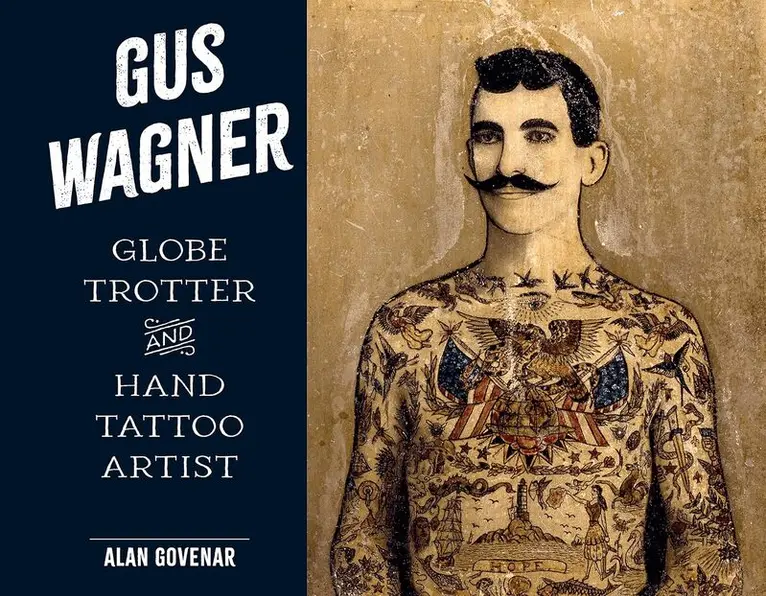
A visual history of the life of Augustus “Gus” Wagner and his work as a hand tattoo artist, exploring a relatively unknown area of American art history from the 1890s to the 1930s. In 1897, Gus Wagner embarked on a four-year career as a merchant seaman. While traveling the world, he discovered the art of tattooing, learning from tribesmen in Java and Borneo who showed him how to use traditional handmade tools. By 1901, Gus reportedly had 264 tattoos of his own (and over 800 by 1908), allowing him to promote himself as “the most artistically marked-up man in America.” Back home, Gus embarked on a 40-year career as a traveling tattooist, tattooed man, and circus performer. He largely eschewed the new electric tattooing machines that transformed the art form after 1890, and remained faithful to his handheld instruments. Along with other wandering artists, Gus carried tattooing inland from coastal ports, making it part of the culture of small-town America in the 20th century. Highlights of this book include: • More than 100 examples of Gus Wagner’s tattoo flash as well as photos of his life and work, including his handheld tattooing tools • Excerpts from interviews with Gus, telling his story in his own words • Selected passages from three of Herman Melville’s novels—Typee, White Jacket, and Moby Dick, to illuminate the context of the oral history of Gus Wagner (Melville was an astute observer of hand tattoo artists and their clientele) The tattoo flash in this book is a testimony to the richness of Gus Wagner’s image vocabulary, his life, and his artistic influences. This is the first in a series of three books exploring "the Last of the Hand Tattoo Artists." The next two books focus on Gus's wife, Maud, and their daughter, Lovetta, renowned hand tattoo artists in their own right.
381 kr
Skickas inom 3-6 vardagar
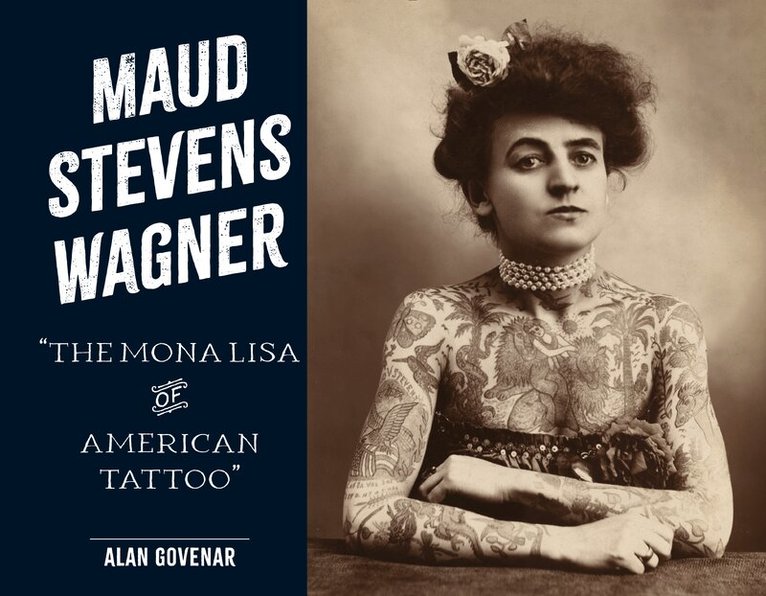
The true story of Maud Wagner—contortionist, aerial artist, carnival performer and barker, wife, and mother—who defied Victorian-era conventions to blaze her own trail. Maud Stevens Wagner, the "Mona Lisa of American tattoo," was an ardent individualist who left home at a young age to pursue a career of her own making. An acrobat, she exuded an athletic strength as an aerial artist and contortionist. In the early 20th century, she was a thoroughly modern woman who asserted her independence and her own identity. Together with her husband, Gus (known as the “most artistically marked-up man in America"), Maud balanced parenting and work, traveling around the country as the Wagner’s Traveling Museum, exhibiting themselves and making tattoos in circus and carnival sideshows, dime museums, and pop-up shops. At the height of their careers, Maud and Gus established the Wagner Amusement Company and expanded their work to become promoters of street fairs, carnivals, and expositions. This book is the second of three in the series Last of the Hand Tattoo Artists, detailing the lives of Gus Wagner, Maud Wagner, and their daughter, Lotteva. Author Alan Govenar brings you Maud’s story with • an oral history from Maud’s daughter Lotteva Wagner Davis;• archival photos of Maud, Gus, and Maud's tattoos;• clippings and photographs from Gus Wagner’s scrapbooks;• the Wagners' tattoo flash from Gus Wagner's notebooks; and• newspaper articles and obituaries detailing Maud’s life. As the author eloquently puts it, “In one sense, Gus and Maud challenged all expectations, but in another, they embodied and celebrated the can-do spirit intrinsic to American life.”
337 kr
Skickas
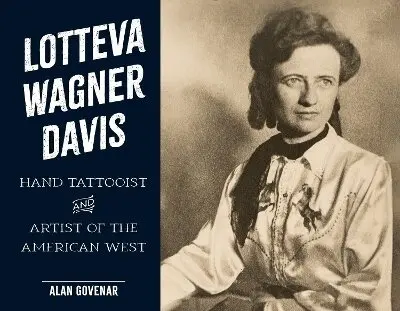
The true story of a strong, successful, and independent woman tattooist and artist through her own words and art; the third book in a series about the Wagner tattooist family. Lotteva Wagner Davis was an American original—a tattooist and western artist in the early to mid-20th century. Following in the footsteps of her parents, Gus and Maud Wagner—famous tattoo artists and carnival performers—Lotteva was raised in the carnival and started tattooing in 1919, when she was just nine years old. Like her father, she used only hand tools, eschewing electric tattoo machines. She was one of few tattooists to have completely bare skin; her mother forbade her father to tattoo her, relenting only after his death, but Lotteva didn’t want to be tattooed by anyone but her father. This is the third book in the series on the Wagner family, Last of the Hand Tattoo Artists, and is based on interviews with Lotteva and her cousin, Patricia Hook. It includes tattoo flash by Lotteva and her father, Gus, comparing their artistic styles and showing the evolution of hand tattoos from one generation to the next. Lotteva was also a prolific artist, focusing on western US and carnival themes. She also restored carousel horses and painted signs for carousels, carnivals, and other businesses. According to her cousin, Lotteva was “a person with one foot grounded in the ordinary world and the other in this crazy carnival world. Most people would never dare to do the stuff she did.”