Artificial Intelligence, Law and Society – serie
Visar alla böcker i serien Artificial Intelligence, Law and Society. Handla med fri frakt och snabb leverans.
2 produkter
2 produkter
Inbunden, Engelska, 2025
2 133 kr
Skickas inom 10-15 vardagar
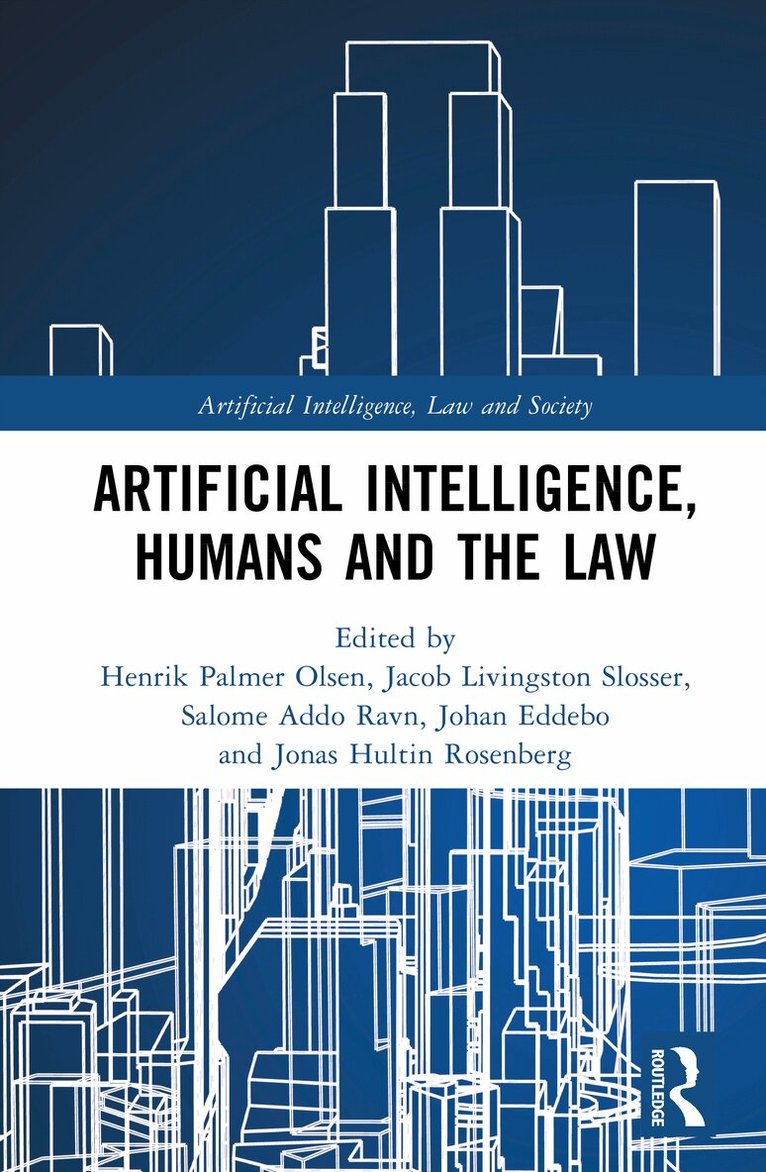
This book takes up the contentious issue of artificial intelligence (AI), and more specifically the evolving nature of AI-mindedness, as a legal entity in society. With the increasing potential of AI suggested by the recent surge in creative and administrative tools and large language models, there is a growing concern about the ethical and legal implications of incorporating AI into society. As these systems become even more powerful and their ability to mimic human output grows, the question of whether and how to attribute mental states to AI, even in its most nascent form, has become a pressing concern. It is, for example, unclear what kind of mind AI might be capable of and therefore what the proper legal analogy might be for how we attribute reasoning capability, intent, responsibility, liability, agency, and so on, to it. This book contributes to this new and important area by bringing together front-line research from diverse fields on the topic of understanding ‘AI-mindedness’, and how it – and our relationship to it – might be regulated. Through a collection of chapters, written by experts from law, public administration, tort, psychoanalysis, philosophy, linguistics, computer science, and political theory, this volume offers an insightful examination of current research, theoretical frameworks, and practical applications that are shaping the AI–human relationship. This book will be of considerable interest to scholars and researchers working in legal theory, socio-legal studies, law and technology, and science and technology studies.
Inbunden, Engelska, 2026
2 066 kr
Kommande
Through the theoretical lens of law and science and technology studies (STS), this book investigates the ‘ethification’ of the EU regulatory framework on AI.Discourses on ethics have been proliferating in recent policy, legislative and industry-led AI regulatory initiatives in the European Union (EU). In parallel, Artificial Intelligence (AI) ethics has become institutionalized at different levels. Focusing on three EU-based case studies – research ethics committees, advisory expert groups and standardization bodies – this book critically evaluates the legitimacy of AI ethics, through the ‘good governance’ principles of accountability, transparency, and participation. Despite the EU’s aspiration to promote a distinctive ethical approach centred on trustworthiness and human-centric AI, the book shows how ethical considerations often assume a technocratic form, lacking the robust checks and balances and democratic credentials typical of traditional forms of technology regulation. In response, the book argues for a recalibration—a deflation or re-politicization—of the role of ethics in the governance of AI.This book will appeal to scholars, EU officials, civil society actors and private-sector practitioners, working at the interface of law, ethics and technology, and especially those with interests in the regulation of AI.