Music Theory Translation Series - Böcker
Visar alla böcker i serien Music Theory Translation Series. Handla med fri frakt och snabb leverans.
3 produkter
3 produkter
913 kr
Skickas inom 5-8 vardagar
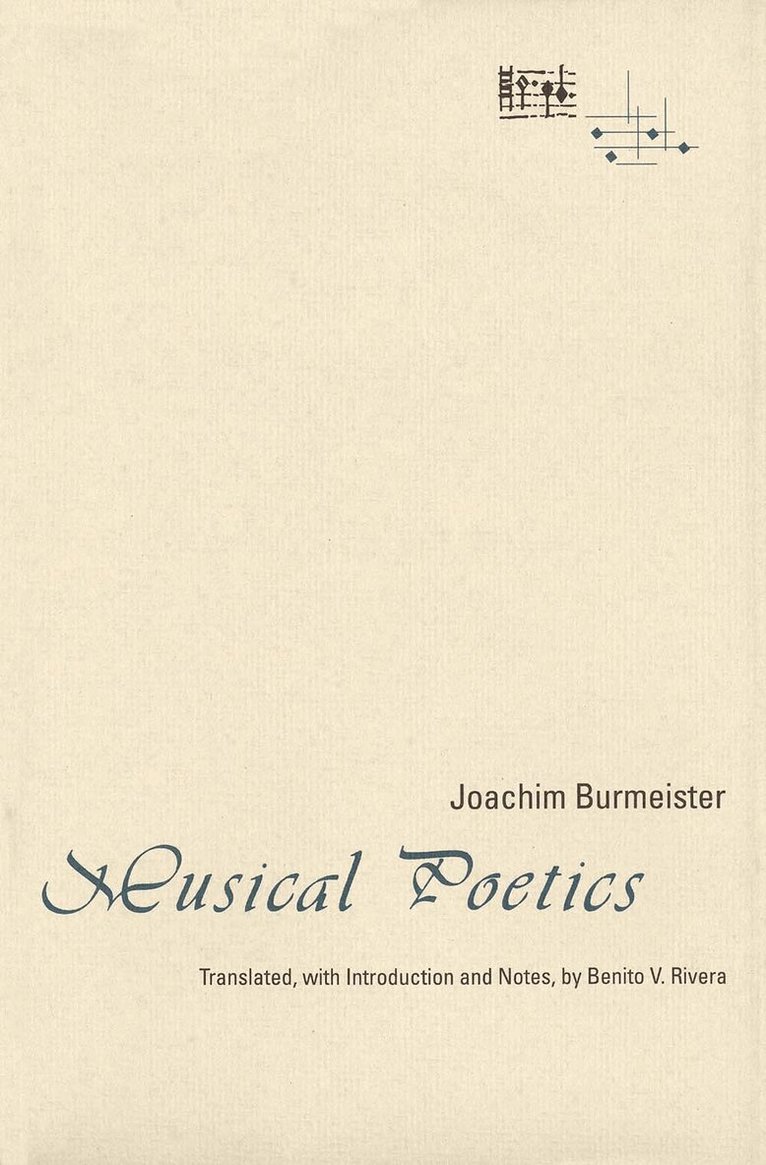
Joachim Burmeister's early seventeenth-century treatise on the making of music is generally acknowledged to be central to the understanding of Baroque musical practice: it was the first systematically to explore the connection between rhetoric and music that became a cornerstone of Baroque musical thought. But until now neither a reliable modern edition nor a full translation of this seminal work has existed. This much-needed edition by Benito V. Rivera contains a critical transcription of the Latin text and an annotated translation on facing pages.In a lengthy introduction to the book, Rivera reviews Burmeister's two earlier treatises on musical composition, analyzes Musical Poetics as a whole, and places it within its historical context. An appendix to the edition reproduces the passages of music cited by Burmeister, greatly facilitating the interpretation of Burmeister's explanations of the rhetorical figures. The book will be of interest to music historians and theorists as well as to scholars of rhetoric.
1 128 kr
Skickas inom 5-8 vardagar
Vincenzo Galilei, the father of the astronomer Galileo, was a guiding light of the Florentine Camerata. His Dialogue on Ancient and Modern Music, published in 1581 or 1582 and now translated into English for the first time, was among the most influential music treatises of his era.Galilei is best known for his rejection of modern polyphonic music in favor of Greek monophonic song. The treatise sheds new light on his importance, both as a musician who advocated a new philosophy of music history and theory based on an objective search for the truth, and as an experimental scientist who was one of the founders of modern acoustics.
769 kr
Skickas inom 5-8 vardagar
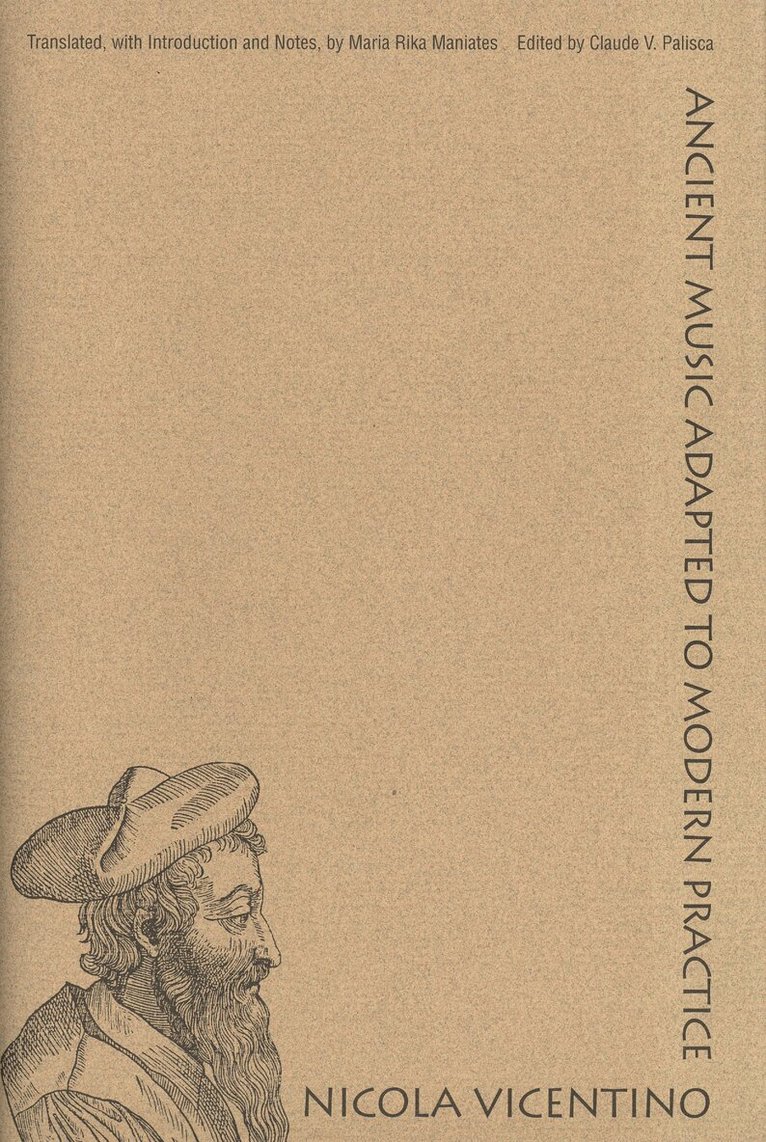
First published in Rome in 1555, Nicola Vicentino's treatise was one of the most influential music theory texts of the sixteenth century. This translation by Maria Rika Maniates is the first English-language edition of Vicentino's important work.Unlike most early theorists, Vicentino did not simply summarize the practice of his time. His aim was to change how composers wrote and how musicians thought about music.His best-known contribution is the adaptation of the ancient Greek chromatic and enharmonic genera to modern polyphonic practice. But he also expressed the avant garde's position on the relation between music and the subject matter and feelings of a secular or sacred text. He challenged the view that part-writing had always to conform to the rules of counterpoint, asserting that license was permissible in order to express the feelings of a verbal text. In this he anticipated the manifestos of Vincenzo Galilei and Claudio Monteverdi. Maniates' introduction discusses Vicentino's life and work, the sources of his ideas in earlier theoretical literature, and the contemporary humanists from whom he may have learned..