Next Generation Science Standards - Böcker
Visar alla böcker i serien Next Generation Science Standards. Handla med fri frakt och snabb leverans.
5 produkter
5 produkter
646 kr
Skickas
Next Generation Science Standards identifies the science all K-12 students should know. These new standards are based on the National Research Council's A Framework for K-12 Science Education. The National Research Council, the National Science Teachers Association, the American Association for the Advancement of Science, and Achieve have partnered to create standards through a collaborative state-led process. The standards are rich in content and practice and arranged in a coherent manner across disciplines and grades to provide all students an internationally benchmarked science education. The print version of Next Generation Science Standards complements the nextgenscience.org website and: * Provides an authoritative offline reference to the standards when creating lesson plans * Arranged by grade level and by core discipline, making information quick and easy to find * Printed in full color with a lay-flat spiral binding * Allows for bookmarking, highlighting, and annotating
472 kr
Tillfälligt slut
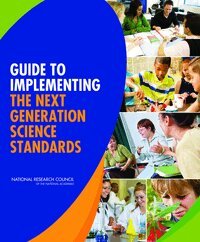
A Framework for K-12 Science Education and Next Generation Science Standards (NGSS) describe a new vision for science learning and teaching that is catalyzing improvements in science classrooms across the United States. Achieving this new vision will require time, resources, and ongoing commitment from state, district, and school leaders, as well as classroom teachers. Successful implementation of the NGSS will ensure that all K-12 students have high-quality opportunities to learn science. Guide to Implementing the Next Generation Science Standards provides guidance to district and school leaders and teachers charged with developing a plan and implementing the NGSS as they change their curriculum, instruction, professional learning, policies, and assessment to align with the new standards. For each of these elements, this report lays out recommendations for action around key issues and cautions about potential pitfalls. Coordinating changes in these aspects of the education system is challenging.As a foundation for that process, Guide to Implementing the Next Generation Science Standards identifies some overarching principles that should guide the planning and implementation process. The new standards present a vision of science and engineering learning designed to bring these subjects alive for all students, emphasizing the satisfaction of pursuing compelling questions and the joy of discovery and invention. Achieving this vision in all science classrooms will be a major undertaking and will require changes to many aspects of science education. Guide to Implementing the Next Generation Science Standards will be a valuable resource for states, districts, and schools charged with planning and implementing changes, to help them achieve the goal of teaching science for the 21st century.
Literacy for Science
Exploring the Intersection of the Next Generation Science Standards and Common Core for ELA Standards: A Workshop Summary
Häftad, Engelska, 2014
459 kr
Tillfälligt slut
The recent movement in K-12 education toward common standards in key subjects represents an unprecedented opportunity for improving learning outcomes for all students. These standards initiatives - the Common Core State Standards for English Language Arts and Mathematics (CCSS) and the Next Generation Science Standards (NGSS) - are informed by research on learning and teaching and a decade of standards-based education reform. While the standards have been developed separately in English/Language Arts and Science, there are areas where the standards intersect directly. One such area of intersection occurs between the "Literacy in Science" portions of the Common Core State Standards for English/Language Arts and the practices in the NGSS (originally outlined in the NRC's A Framework for K-12 Science Education), particularly the practice of "Obtaining, evaluating and communicating information". Because the CCSS literacy in science standards predated the NGSS, developers of the NGSS worked directly with the CCSS team to identify the connections between the two sets of standards.However, questions about how the two sets of standards can complement each other and can be used in concert to improve students' reading and writing, as well as listening and speaking, in science to learn science continue to exist. Literacy for Science is the summary of a workshop convened by the National Research Council Board on Science Education in December 2013 to address the need to coordinate the literacy for science aspect of CCSS and the practices in NGSS. The workshop featured presentations about the complementary roles of English/language arts teachers and science teachers as well as the unique challenges and approaches for different grade levels. Literacy for Science articulates the knowledge and skills teachers need to support students in developing competence in reading and communicating in science. This report considers design options for curricula and courses that provide aligned support for students to develop competencies in reading and communicating, and addresses the role of district and school administrators in guiding implementation of science and ELA to help ensure alignment.Literacy for Science will be a useful point of reference for anyone interested in the opportunities and challenges of overlapping science and literacy standards to improve the learning experience.
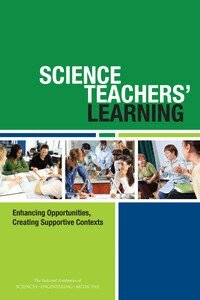
Science Teachers' Learning
Enhancing Opportunities, Creating Supportive Contexts
Häftad, Engelska, 2015
627 kr
Tillfälligt slut
Currently, many states are adopting the Next Generation Science Standards (NGSS) or are revising their own state standards in ways that reflect the NGSS. For students and schools, the implementation of any science standards rests with teachers. For those teachers, an evolving understanding about how best to teach science represents a significant transition in the way science is currently taught in most classrooms and it will require most science teachers to change how they teach. That change will require learning opportunities for teachers that reinforce and expand their knowledge of the major ideas and concepts in science, their familiarity with a range of instructional strategies, and the skills to implement those strategies in the classroom. Providing these kinds of learning opportunities in turn will require profound changes to current approaches to supporting teachers' learning across their careers, from their initial training to continuing professional development.A teacher's capability to improve students' scientific understanding is heavily influenced by the school and district in which they work, the community in which the school is located, and the larger professional communities to which they belong. Science Teachers' Learning provides guidance for schools and districts on how best to support teachers' learning and how to implement successful programs for professional development. This report makes actionable recommendations for science teachers' learning that take a broad view of what is known about science education, how and when teachers learn, and education policies that directly and indirectly shape what teachers are able to learn and teach. The challenge of developing the expertise teachers need to implement the NGSS presents an opportunity to rethink professional learning for science teachers. Science Teachers' Learning will be a valuable resource for classrooms, departments, schools, districts, and professional organizations as they move to new ways to teach science.
Seeing Students Learn Science
Integrating Assessment and Instruction in the Classroom
Häftad, Engelska, 2017
402 kr
Tillfälligt slut
Science educators in the United States are adapting to a new vision of how students learn science. Children are natural explorers and their observations and intuitions about the world around them are the foundation for science learning. Unfortunately, the way science has been taught in the United States has not always taken advantage of those attributes. Some students who successfully complete their Ka "12 science classes have not really had the chance to a /doa science for themselves in ways that harness their natural curiosity and understanding of the world around them. The introduction of the Next Generation Science Standards led many states, schools, and districts to change curricula, instruction, and professional development to align with the standards. Therefore existing assessmentsa "whatever their purposea "cannot be used to measure the full range of activities and interactions happening in science classrooms that have adapted to these ideas because they were not designed to do so. Seeing Students Learn Science is meant to help educators improve their understanding of how students learn science and guide the adaptation of their instruction and approach to assessment.It includes examples of innovative assessment formats, ways to embed assessments in engaging classroom activities, and ideas for interpreting and using novel kinds of assessment information. It provides ideas and questions educators can use to reflect on what they can adapt right away and what they can work toward more gradually.