Oxford International Relations in South Asia – serie
Visar alla böcker i serien Oxford International Relations in South Asia. Handla med fri frakt och snabb leverans.
3 produkter
3 produkter
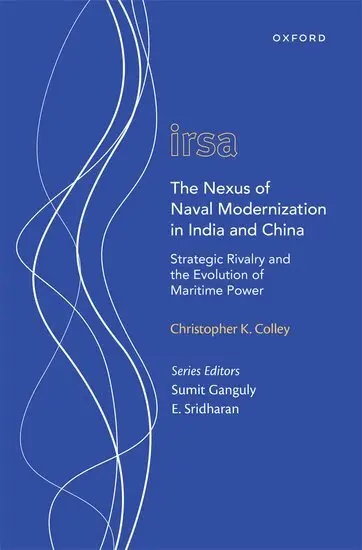
The Nexus of Naval Modernization in India and China
Strategic Rivalry and the Evolution of Maritime Power
Inbunden, Engelska, 2023
1 078 kr
Skickas inom 7-10 vardagar
Naval modernization is an extremely expensive, time-consuming, and a relativelyrare phenomenon. Scholars have proposed various arguments to explain thisprocess ranging from bureaucratic politics, to nationalism, and to the securitydilemma. The Nexus of Naval Modernization in India and China demonstratesthat from 1990 until 2020, the primary driver of naval modernization resultedfrom a strategic rivalry. Key to strategic rivalries is perceived threat perceptionsthat cause decision makers to prepare for worst-case scenarios when tryingto decipher their enemy's behaviour. When a state believes it is threatened bya rival's naval power it is likely to pursue its own form of naval modernization forself-protection. Importantly, rivalries do not exist in a vacuum and are frequentlylinked. This project will reveal how the interconnected nature of rivalries canalso cause naval modernization. Through a close examination of scholarly works,government documents, and in-depth focused interviews with experts based inIndia, China, Australia, and the U.S. Colley argues that while strategic rivalry isnot the only driver of naval modernization, it is the most compelling explanation.Other arguments are frequently embedded within the strategic rivalry modeland thus are best seen as only partial drivers. This study contributes to the rivalryresearch program as well as the policy and security studies literatures.
509 kr
Skickas inom 5-8 vardagar
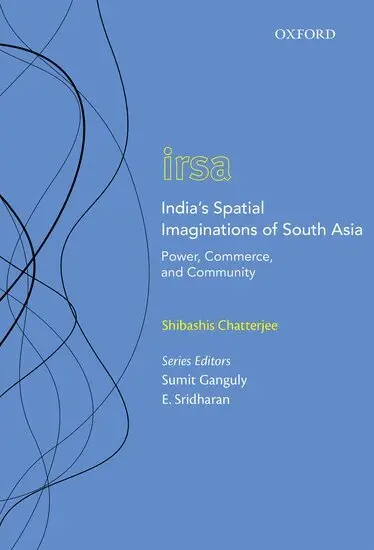
By mapping India's spatial imaginations underlying Indian foreign policy toward South Asia, Shibashis Chatterjee argues that India's understanding of its neighbourhood is informed by a politics of realism as South Asia remains a 'space' defined in terms of power and sovereign territoriality in contrast to alternative imaginations based on the market or community. This understanding is one of India's ruling elites consisting of politicians, cutting across party lines, key bureaucrats, army chiefs, and influential policy intellectuals. While alternative imagination/s of South Asia is indeed ideationally possible, the politics necessary to make this happen is virtually nonexistent. While India's relations with neighbours have varied with regimes over time, these have moved between fixed points of references, constituted by its imagination of South Asia as a space of power and territorial control. The book tells a story of India's spatial imaginations of its neighbourhood and reveals how the differentiated cartography of territorial nationalism still looms large on our shared ontology of social space.
770 kr
Skickas inom 3-6 vardagar
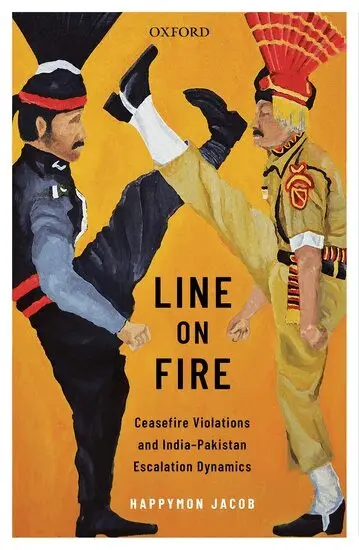
India-Pakistan border in Jammu and Kashmir has witnessed repeated ceasefire violations over the past decade. Indeed, with the new low in the relations between India and Pakistan, ceasefire violations have gone up exponentially. These have the potential to not only begin a crisis but also escalate an ongoing crisis. To make things worse, in the event of major violations, political leadership on either side often engage in high-pitched rhetoric some of which even have nuclear undertones. Using fresh empirical data and oral history evidence, this book explains the causes of ceasefire violations on the Jammu and Kashmir border, and establishes a relationship between ceasefire violations and crisis escalation between India and Pakistan. In doing so, the book further nuances the existing arguments about the escalatory dynamics between the two South Asian nuclear rivals. Furthermore, the book explains ceasefire violations using the concept of 'autonomous military factors'.