Palgrave Studies in Latin American Heterodox Economics – serie
Visar alla böcker i serien Palgrave Studies in Latin American Heterodox Economics. Handla med fri frakt och snabb leverans.
5 produkter
5 produkter
Inbunden, Engelska, 2015
1 115 kr
Skickas inom 10-15 vardagar
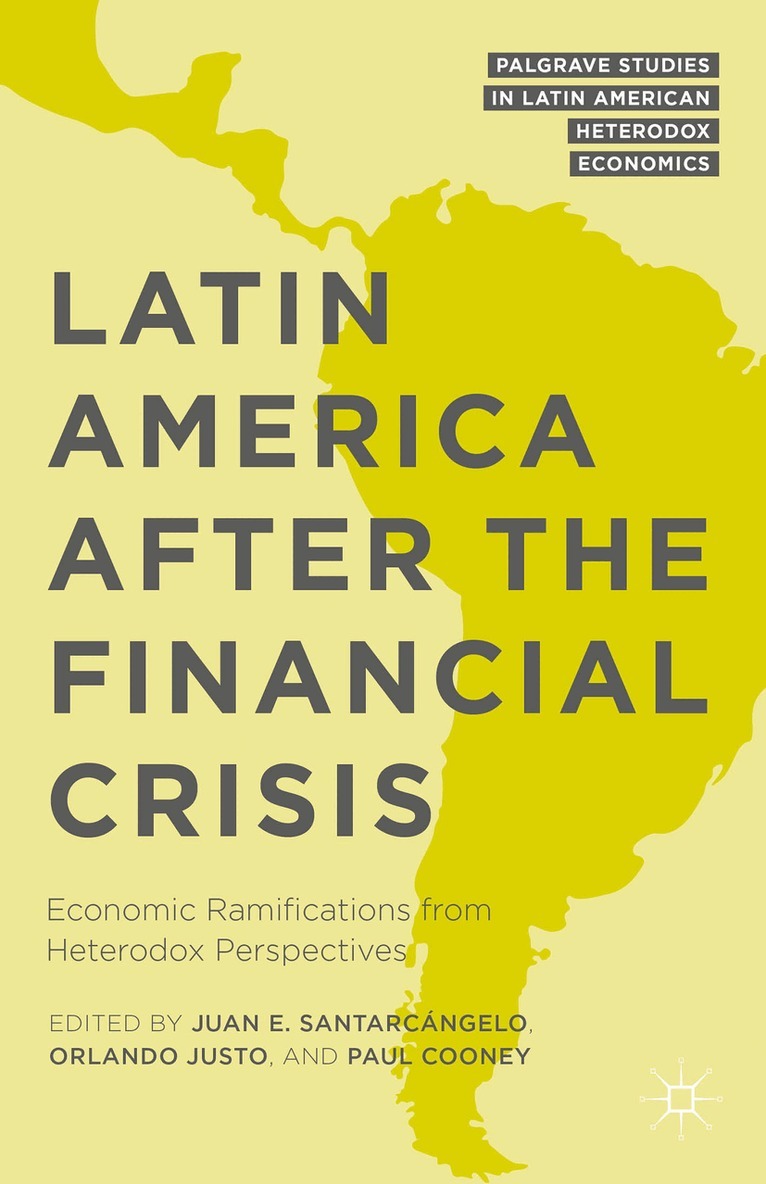
Latin America was one of the regions least affected by the global financial crisis of 2008. During this time of widespread economic downfall, Latin America continued to achieve an annual growth rate of around 5%. Latin America after the Financial Crisis explains how the global financial crisis affected the region and why it was not as severe as other crises in the past. The collection covers data from Argentina, Brazil, Chile, Colombia, Cuba, Mexico, and Venezuela, and demystifies the impact of the crisis on the accumulation path of the region without losing sight of each country's particularities. Each country is analyzed by leading specialized and heterodox researchers who have vast experience in the field and who use an array of heterodox perspectives, from Keynesian to Kaleckian and Marxian to Sraffian.
Inbunden, Engelska, 2019
949 kr
Skickas inom 10-15 vardagar
Using a heterodox perspective, this book discusses the real possibilities of Argentina, Brazil and Mexico ever achieving economic development through industrialization. Through their discussion of the three most industrialized countries of Latin America, the contributors compare trajectories and critically analyze the transformations, challenges and development prospects of the sector at the beginning of the 21st Century. Focusing on the historical evolution of each country’s industrial sector, as well as their productivity, structural transformation, and degree of external dependence and international integration, this book will appeal to those researching the political economy, economic history, industrial organization and economic development in Latin America.
Inbunden, Engelska, 2020
1 558 kr
Skickas inom 10-15 vardagar
This edited volume studies the relationship between big business and the Latin American dictatorial regimes during the Cold War. The first section provides a general background about the contemporary history of business corporations and dictatorships in the twentieth century at the international level. The second section comprises chapters that analyze five national cases (Argentina, Brazil, Chile, Uruguay and Peru), as well as a comparative analysis of the banking sector in the Southern Cone (Argentina, Brazil, Chile, and Uruguay). The third section presents six case studies of large companies in Argentina, Brazil, Chile, Colombia and Central America. This book is crucial reading because it provides the first comprehensive analysis of a key yet understudied topic in Cold War history in Latin America.
Häftad, Engelska, 2021
1 558 kr
Skickas inom 10-15 vardagar
This edited volume studies the relationship between big business and the Latin American dictatorial regimes during the Cold War. The first section provides a general background about the contemporary history of business corporations and dictatorships in the twentieth century at the international level. The second section comprises chapters that analyze five national cases (Argentina, Brazil, Chile, Uruguay and Peru), as well as a comparative analysis of the banking sector in the Southern Cone (Argentina, Brazil, Chile, and Uruguay). The third section presents six case studies of large companies in Argentina, Brazil, Chile, Colombia and Central America. This book is crucial reading because it provides the first comprehensive analysis of a key yet understudied topic in Cold War history in Latin America.
Inbunden, Engelska, 2026
437 kr
Skickas inom 10-15 vardagar
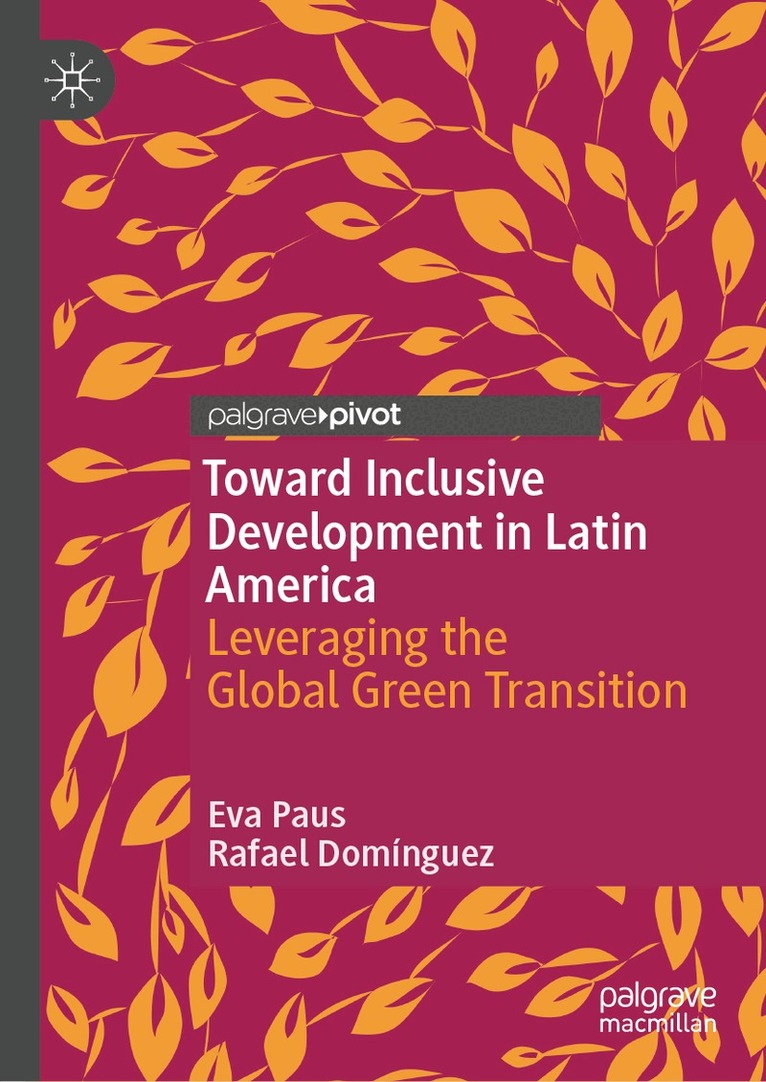
"A major contribution to the analysis of how to fulfill the triple dimensions of sustainable development: economic growth, social development, and environmental sustainability."—José Antonio Ocampo, Professor at Columbia University, former Minister of Finance of Colombia, former UN Under-Secretary-General for Economic and Social Affairs, and former Executive Secretary of the Economic Commission for Latin America and the CaribbeanThe global green transition presents a unique opportunity for resource-rich Latin American nations to leverage natural assets to reduce problematic structural barriers while expanding social inclusion and strengthening responses to climate change.This book examines why coordinated and proactive development strategies—aligned with emerging global sustainability imperatives—are essential for achieving these goals. It outlines the contours of an inclusive green development strategy, placing a green developmental state at the center and emphasizing the role of broadly defined industrial policies. Drawing on heterodox economics and international political economy, Eva Paus and Rafael Domínguez analyze how Latin American governments can respond to current economic and geopolitical pressures.Systemic change is possible if states adopt environmental-developmental roles, pursue active non-alignment, and engage in more coordinated foreign policy efforts. Readers will gain insight into the political and economic conditions that shape the feasibility of inclusive green development. The resulting book breaks down the strategic choices available to governments seeking to integrate sustainability with long-term economic transformation and inclusion. It offers a grounded perspective on how policy direction, institutional capacity, and international positioning can be used to navigate the challenges of our times.