Praeger Studies on Ethnic and National Identities in Politics – serie
Visar alla böcker i serien Praeger Studies on Ethnic and National Identities in Politics. Handla med fri frakt och snabb leverans.
2 produkter
2 produkter
E-bok
PDF, Engelska, 2001421 kr
Läs direkt efter köp
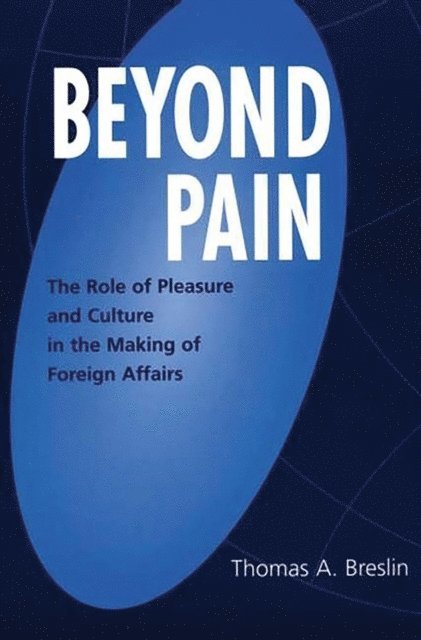
Breslin demonstrates that, for two millennia, states in East Asia, Europe, and America have successfully used pleasure to protect themselves and advance their interests, at a small fraction of the cost of militarized policies. Indeed, the Chinese demonstrated that pleasure-based policies primed a stream of highly profitable foreign trade and bolstered the state. Pleasure was feared because it was effective as both an offensive and defensive strategy. The colleens of Ireland and the bibis of India showed how inexorably effective pleasure could be in confounding militarily stronger invaders. In contrast, resorting to violence and pain generally undermined aggressive states.Cultural factors have shaped the choice of pleasures used. Food-centered China has used food, as well as sex and tourism, as tools in its foreign relations. Rome used wine; Byzantium, precious metals, banquets, and public spectacles; Venice, sex, money, and art; England, money and education. America has used sex, money, education, music, and tourism. Breslin's provocative text is based on a wide reading of secondary sources and some primary sources as well as a quarter century of teaching the history of foreign relations.
E-bok
PDF, Engelska, 2001949 kr
Läs direkt efter köp
James and Goetze bring together contributors of varied backgrounds, ranging from evolutionary theorists to game theorists to analysts of specific ethnic conflict. Their work represents a coherent attempt at evaluating the usefulness of evolutionary theories for explaining ethnic phenomena and demonstrates how these theories can be applied in attempts to elucidate real-world behaviors.This study found that kinship theory that posits evolved dispositions to form cooperative bonds with family, ethnic groups and other social groups may go a long way in accounting for the formation of ethnic groups. Also, ingroup-outgroup theory may contribute to understanding how group conflict commences. Likewise, the description of evolved mechanisms for discerning threat, for building reputations, and for recognizing individuals, groups, and states as possible cooperators and long-term allies may facilitate explanation of the outbreak and avoidance of group conflicts. This also may explain the design of conscious strategies for conflict prevention and resolution. Nonetheless, several contributors take a more critical stance and offer ample reason why building these explanations may prove elusive or at least troublesome given the complex character of human societies. This work is a provocative resource for scholars, students, and other researchers involved with ethnicity and ethnic conflict, international relations, social psychology, and social anthropology.