Publications in Medieval Studies – serie
Visar alla böcker i serien Publications in Medieval Studies. Handla med fri frakt och snabb leverans.
17 produkter
17 produkter
Inbunden, Engelska, 1991
1 871 kr
Skickas inom 10-15 vardagar
The central theme in any history of texts and books must be that of change and renewal: Parchment that is written on, in one set of circumstances in late antiquity, may in the Early Middle Ages be scraped clean and written on again, leaving evidence of a civilization in which blank parchment is more valuable than ancient literature. A manuscript can be regarded as an archeological artifact, but unlike pieces of pottery or chips of flint, a manuscript has a voice.The 12 essays gathered here vary in subject from the transmission of ancient authors to the invention of the subject index and range in time from the Gregorian reform of the eleventh century to the Protestant reformation of the early sixteenth century. Diverse in subject and period, these essays are unified by the questions they pose and the methodology they employ in seeking answers. A common thread is the desire to discover what information the manuscripts can yield about the society that created them: how the great concordance to the Bible was compiled, how book production at the medieval university was organized, how a vernacular poet carried his songs.Each surviving manuscript exists not only by the decision of the original maker but as a result of subsequent owners, who made notes, entered corrections, added an index composed a continuation. Changing times brought new uses for old texts changes that are reflected, like personal and cultural fingerprints, in glosses, marginalia, even the chain marks showing how the book was kept in the medieval library.
Häftad, Engelska, 1991
598 kr
Skickas inom 10-15 vardagar
The central theme in any history of texts and books must be that of change and renewal: Parchment that is written on, in one set of circumstances in late antiquity, may in the Early Middle Ages be scraped clean and written on again, leaving evidence of a civilization in which blank parchment is more valuable than ancient literature. A manuscript can be regarded as an archeological artifact, but unlike pieces of pottery or chips of flint, a manuscript has a voice.The 12 essays gathered here vary in subject from the transmission of ancient authors to the invention of the subject index and range in time from the Gregorian reform of the eleventh century to the Protestant reformation of the early sixteenth century. Diverse in subject and period, these essays are unified by the questions they pose and the methodology they employ in seeking answers. A common thread is the desire to discover what information the manuscripts can yield about the society that created them: how the great concordance to the Bible was compiled, how book production at the medieval university was organized, how a vernacular poet carried his songs.Each surviving manuscript exists not only by the decision of the original maker but as a result of subsequent owners, who made notes, entered corrections, added an index composed a continuation. Changing times brought new uses for old texts changes that are reflected, like personal and cultural fingerprints, in glosses, marginalia, even the chain marks showing how the book was kept in the medieval library.
Inbunden, Engelska, 1986
1 627 kr
Skickas inom 10-15 vardagar
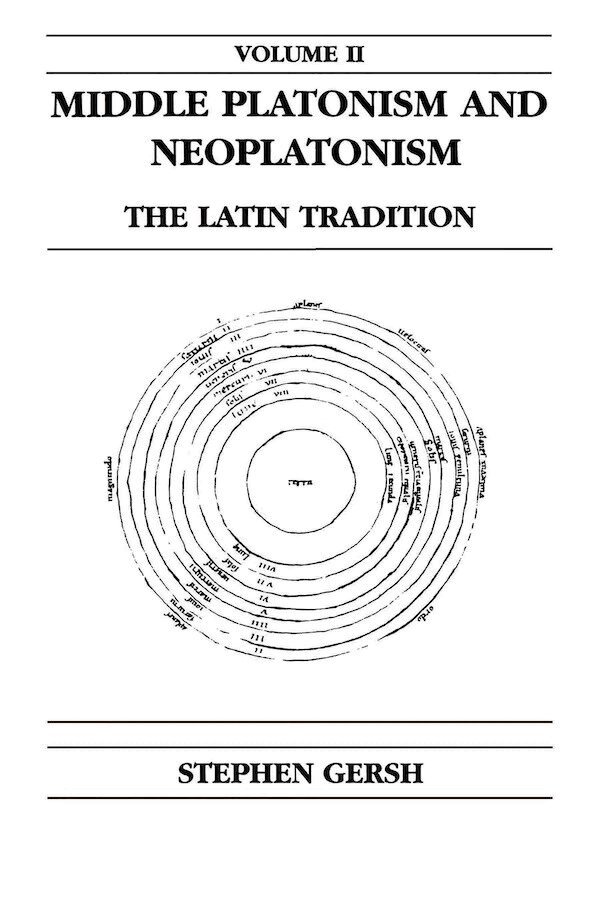
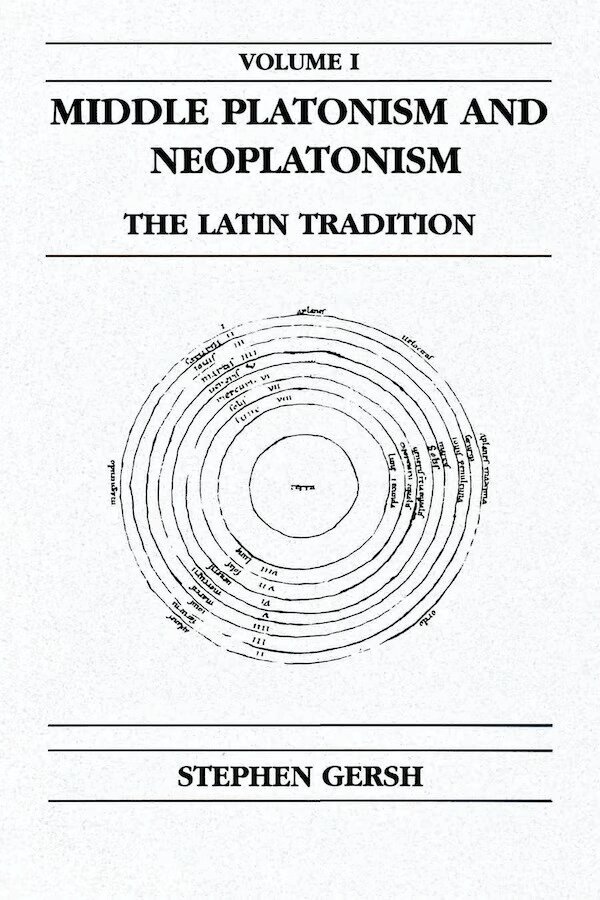
It is generally agreed that those types of philosophy that are loosely called "Platonic" and "Neoplatonic" played a crucial role in the history of European culture during the centuries between antiquity and the Middle Ages. However, until now no scholar has attempted to describe the evolution of these forms of thought in a single comprehensive academic study. Middle Platonism and Neoplatonism is the first full-scale study to bridge the gap between ancient and medieval thought.Stephen Gersh's two-volume survey of Platonic influences upon the Middle Ages focuses on questions that are basic to scholars of medieval philosophy, history, and literature: What was the influence of Plato's philosophy during the Middle Ages? Is it correct to consider earlier medieval philosophy as Platonic? How do Platonism and Neoplatonism differ? What do Platonic and Neoplatonic modes of thought have to do with Plato?Most medieval philosophers developed their doctrines without access to the greatest intellectual works of the Greeks. Instead, they elaborated their philosophies in relation to the Latin philosophical literature that spanned the classical period to the end of antiquity. Thus, Gersh develops his study by examining the important channels of transmission that existed for medieval philosophers.Following an introduction that outlines particular methodological perspectives relative to the discussion, the history is divided into three main sections. In total, the study surveys an impressive range of authors never previously considered in a single work, with many of the translations previously available only as Greek and Latin texts: I.1 Middle Platonism: The Platonists and the Stoics (Cicero, Seneca); I.2 Middle Platonism: The Platonists and the Doxographers (Gellius, Apuleius, the Hermetic "Asclepius," Ambrose, Censorinus, Augustine); II Neoplatonism (Calcidius, Macrobius, Martianus Capella, Boethius, Marius Victorinus, Firmicus Maternus, Favonius Eulogius, Servius, Fulgentius, Priscianus Lydus, Priscianrs Grammaticus)The concluding chapter illustrates the Platonic influence upon certain medieval authors up to the early twelfth century, and it establishes guidelines for further study. Middle Platonism and Neoplatonism contains an extensive bibliography and a complete index of Latin texts.
Häftad, Engelska, 1994
628 kr
Skickas inom 10-15 vardagar
"It is generally agreed that those types of philosophy that are loosely called 'Platonic' and 'Neoplatonic' played a crucial role in the history of European culture during the centuries between antiquity and the Renaissance. However, until now no scholar has attempted to describe the evolution of these forms of thought in a single comprehensive academic study." So writes Stephen Gersh in the preface to Middle Platonism and Neoplatonism: The Latin Tradition.Stephen Gersh's two-volume survey of Platonic influences upon the Middle Ages focuses on questions that are basic to scholars of medieval philosophy, history, and literature: What was the influence of Plato's philosophy during the Middle Ages? Is it correct to consider earlier medieval philosophy as Platonic? How do Platonism and Neoplatonism differ? What do Platonic and Neoplatonic modes of thought have to do with Plato?Most medieval philosophers developed their doctrines without access to the greatest intellectual works of the Greeks. Instead, they elaborated their philosophies in relation to the Latin philosophical literature that spanned the classical period to the end of antiquity. Thus, Gersh develops his study by examining the important channels of transmission that existed for medieval philosophers.Following an introduction that outlines particular methodological perspectives relative to the discussion, the history is divided into three main sections. In total, the study surveys an impressive range of authors never previously considered in a single work, with many of the translations previously available only as Greek and Latin texts: I.1 Middle Platonism: The Platonists and the Stoics (Cicero, Seneca); I.2 Middle Platonism: The Platonists and the Doxographers (Gellius, Apuleius, the Hermetic "Asclepius," Ambrose, Censorinus, Augustine); II Neoplatonism (Calcidius, Macrobius, Martianus Capella, Boethius, Marius Victorinus, Firmicus Maternus, Favonius Eulogius, Servius, Fulgentius, Priscianus Lydus, Priscianrs Grammaticus).The concluding chapter illustrates the Platonic influence upon certain medieval authors up to the early twelfth century, and it establishes guidelines for further study. Middle Platonism and Neoplatonism contains an extensive bibliography and a complete index of Latin texts.
Häftad, Engelska, 1994
777 kr
Skickas inom 10-15 vardagar
It is generally agreed that those types of philosophy that are loosely called "Platonic" and "Neoplatonic" played a crucial role in the history of European culture during the centuries between antiquity and the Middle Ages. However, until now no scholar has attempted to describe the evolution of these forms of thought in a single comprehensive academic study. Middle Platonism and Neoplatonism is the first full-scale study to bridge the gap between ancient and medieval thought.Stephen Gersh's two-volume survey of Platonic influences upon the Middle Ages focuses on questions that are basic to scholars of medieval philosophy, history, and literature: What was the influence of Plato's philosophy during the Middle Ages? Is it correct to consider earlier medieval philosophy as Platonic? How do Platonism and Neoplatonism differ? What do Platonic and Neoplatonic modes of thought have to do with Plato?Most medieval philosophers developed their doctrines without access to the greatest intellectual works of the Greeks. Instead, they elaborated their philosophies in relation to the Latin philosophical literature that spanned the classical period to the end of antiquity. Thus, Gersh develops his study by examining the important channels of transmission that existed for medieval philosophers.Following an introduction that outlines particular methodological perspectives relative to the discussion, the history is divided into three main sections. In total, the study surveys an impressive range of authors never previously considered in a single work, with many of the translations previously available only as Greek and Latin texts: I.1 Middle Platonism: The Platonists and the Stoics (Cicero, Seneca); I.2 Middle Platonism: The Platonists and the Doxographers (Gellius, Apuleius, the Hermetic "Asclepius," Ambrose, Censorinus, Augustine); II Neoplatonism (Calcidius, Macrobius, Martianus Capella, Boethius, Marius Victorinus, Firmicus Maternus, Favonius Eulogius, Servius, Fulgentius, Priscianus Lydus, Priscianrs Grammaticus)The concluding chapter illustrates the Platonic influence upon certain medieval authors up to the early twelfth century, and it establishes guidelines for further study. Middle Platonism and Neoplatonism contains an extensive bibliography and a complete index of Latin texts.
Häftad, Engelska, 1989
863 kr
Skickas inom 11-20 vardagar
William Ockham is probably the most notorious and most widely misunderstood philosopher of the later Middle Ages. Accused by John Lutterell, the former chancellor of Oxford University, of teaching heretical doctrines, Ockham was summoned to Avignon by Pope John XXII and eventually lived under the protection of Louis of Bavaria. Yet, with Aquinas and Scotus, he remains among the three greatest philosophers of the period.This landmark book, split into two volumes, offers a clear and concise account of Ockham's philosophical positions (his ontology, logic, epistemology, and natural philosophy), along with the arguments for them. It then shows how Ockham's theological disagreements with his most eminent predecessors are a logical consequence of underlying philosophical differences. According to Marilyn McCord Adams, Ockham emerges as a Franciscan Aristotelian, much more philosophically and religiously conservative than commonly supposed. Adams challenges the notions that Ockham's nominalism and ontological reductions lead to subjectivism in metaphysics, his epistemology to skepticism, his theory of causality to Humean constant conjunction or to occasionalism. Likewise, Adams rejects the notion that Ockham's philosophical doctrines lead to heretical views in theology, or that his insistence on divine freedom leads to arbitrariness and caprice in ethics. Although her primary focus is on Ockham, McAdams compares and contrasts his positions with those of Aquinas, Scotus, Henry of Ghent, among others. William Ockham constitutes an excellent initiation for philosophers into the problems and theoretical framework of the late thirteenth and early fourteenth centuries.
Inbunden, Engelska, 2002
493 kr
Skickas inom 10-15 vardagar
Water and the Word focuses on a genre of literature written for the education of the Carolingian clergy: Carolingian baptismal instructions. This literature has never been brought together and studied collectively in the context of the books in which it circulated. As a corpus, read in comparison to one another, the baptismal tracts tell how baptism was celebrated and interpreted across Carolingian Europe. At the same time, in their manuscript context, they are an important new source of information regarding the nature and the success of the Carolingian Reform to educate the clergy.This comprehensive study has three major objectives. One is to describe the codices in which the baptismal instructions are found, in order to show what other kinds of material the baptismal tracts were associated with and to show where, how, and by whom these codices were intended to be used. Another is to bring together the baptismal texts and study them systematically. Finally, a third objective is to interpret the Carolingian Reform in light of the baptismal instructions and the manuscripts in which they were copied.Volume 1 of this two-volume set is devoted to analysis and interpretation of the material in volume 2. It is divided into three parts. The first part is concerned with the manuscript context of the baptismal instructions. In the second, the baptismal expositions themselves are analyzed. Part 3 of volume 1 offers some conclusions about the Carolingian Reform. Volume 2 contains the Latin text of sixty-six manuscripts, as well as descriptions, introductions, and a topical survey of the contents of these manuscripts. In its broadest context this study is about the Christianization of Europe—not the superficial conversion of conquered peoples, but the slow replacement of one mindset with another that came about through the education of the people under the care of pastors.
Inbunden, Engelska, 2002
817 kr
Skickas inom 10-15 vardagar
Water and the Word focuses on a genre of literature written for the education of the Carolingian clergy: Carolingian baptismal instructions. This literature has never been brought together and studied collectively in the context of the books in which it circulated. As a corpus, read in comparison to one another, the baptismal tracts tell how baptism was celebrated and interpreted across Carolingian Europe. At the same time, in their manuscript context, they are an important new source of information regarding the nature and the success of the Carolingian Reform to educate the clergy.This comprehensive study has three major objectives. One is to describe the codices in which the baptismal instructions are found, in order to show what other kinds of material the baptismal tracts were associated with and to show where, how, and by whom these codices were intended to be used. Another is to bring together the baptismal texts and study them systematically. Finally, a third objective is to interpret the Carolingian Reform in light of the baptismal instructions and the manuscripts in which they were copied.Volume I of this two-volume set is devoted to analysis and interpretation of the material in volume II. It is divided into three parts. The first part is concerned with the manuscript context of the baptismal instructions. In the second, the baptismal expositions themselves are analyzed. Part 3 of volume I offers some conclusions about the Carolingian Reform. Volume II contains the Latin text of sixty-six manuscripts, as well as descriptions, introductions, and a topical survey of the contents of these manuscripts. In its broadest context this study is about the Christianization of Europe—not the superficial conversion of conquered peoples, but the slow replacement of one mindset with another that came about through the education of the people under the care of pastors.
Inbunden, Engelska, 2001
1 250 kr
Skickas inom 10-15 vardagar
The Liber de causis (De causis et processu universitatis a prima causa), a monotheistic reworking of Proclus' Elements of Theology, was translated from Arabic into Latin in the twelfth century, with an attribution to Aristotle. Considering this Neoplatonic text a product of Aristotle's school and even the completion of Aristotle's Metaphysics, Albert the Great concluded his series of Aristotelian paraphrases by commenting on it.To do so was to invite controversy, since accidents of translation had made many readers think that the Liber de causis taught that God made only the first creature, which in turn created the diverse multitude of lesser things. Thus, Albert's contemporaries in the Christian West took the text to uphold the supposedly Aristotelian doctrine that from the One only one thing can emanate—a doctrine they rejected, believing as they did that God freely determined the number and kinds of creatures. Albert, however, defended the philosophers against the theologians of his day, denying that the thesis "from the One only one proceeds" removed God's causality from the diversity and multiplicity of our world. This Albert did by appealing to a greater theologian, Pseudo-Dionysius the Areopagite, and equating the being that is the subject of metaphysics with the procession of Being from God's intellect, a procession Dionysius described in On the Divine Names.Creation as Emanation examines Albert's reading of the Liber de causis with an eye toward two questions: First, how does Albert view the relation between faith and reason, so that he can identify creation from nothing with emanation from God? And second, how does he understand Platonism and Aristotelianism, so that he can avoid the misreadings of his fellow theologians by finding in a late-fifth-century Neoplatonist the key to Aristotle's meaning?
Inbunden, Engelska, 2004
1 119 kr
Skickas inom 10-15 vardagar
In his examination of the bishopric of Orvieto from 1100 to 1250, David Foote reveals how three defining developments of the High Middle Ages—the feudal revolution, ecclesiastical reform, and state building—played out in a typical medieval Italian commune. He challenges scholarship that overemphasizes the secular nature of Italian city-states by showing the extent to which developments in ecclesiastical institutions provided a model for the formation of civic institutions and defined a commune's political and religious culture.Following the collapse of Carolingian authority in the tenth century, Italy experienced a period of political chaos. Rural lords, unrestrained by central authority, fought to dominate the countryside. Bishoprics, by virtue of their temporal and spiritual authority over dioceses, emerged in the midst of this disorder as the most effective institutions for rebuilding political authority at the local level. The Orvietan bishopric formed the center of an urban coalition attempting to conquer and pacify their contado, or surrounding countryside. Orvieto's bishopric assisted the early city-state in administering its territory by developing innovative methods of written administration and record keeping.As the center of a wide range of religious interests, the bishopric was often caught between competing political and religious actors who leveraged their interests through ecclesiastical institutions and resources. This interaction had a profound effect on the city's political and religious culture. As Orvietans struggled to define the norms that would govern their society, they had to adapt their quest for political power and autonomy to their religious values.David Foote's deeply researched new book illuminates the process of state building in its early stages and the formation of political and religious culture in Europe during the High Middle Ages.
Häftad, Engelska, 2004
271 kr
Skickas inom 10-15 vardagar
In his examination of the bishopric of Orvieto from 1100 to 1250, David Foote reveals how three defining developments of the High Middle Ages—the feudal revolution, ecclesiastical reform, and state building—played out in a typical medieval Italian commune. He challenges scholarship that overemphasizes the secular nature of Italian city-states by showing the extent to which developments in ecclesiastical institutions provided a model for the formation of civic institutions and defined a commune's political and religious culture.Following the collapse of Carolingian authority in the tenth century, Italy experienced a period of political chaos. Rural lords, unrestrained by central authority, fought to dominate the countryside. Bishoprics, by virtue of their temporal and spiritual authority over dioceses, emerged in the midst of this disorder as the most effective institutions for rebuilding political authority at the local level. The Orvietan bishopric formed the center of an urban coalition attempting to conquer and pacify their contado, or surrounding countryside. Orvieto's bishopric assisted the early city-state in administering its territory by developing innovative methods of written administration and record keeping.As the center of a wide range of religious interests, the bishopric was often caught between competing political and religious actors who leveraged their interests through ecclesiastical institutions and resources. This interaction had a profound effect on the city's political and religious culture. As Orvietans struggled to define the norms that would govern their society, they had to adapt their quest for political power and autonomy to their religious values.David Foote's deeply researched new book illuminates the process of state building in its early stages and the formation of political and religious culture in Europe during the High Middle Ages.
Häftad, Engelska, 2005
494 kr
Skickas inom 10-15 vardagar
In this substantial work Walter Goffart treats the four writers who provide the principal narrative sources for our early knowledge of the Ostrogoths, Franks, Anglo-Saxons, and Lombards: Jordanes, Gregory of Tours, Bede, and Paul the Deacon. The University of Notre Dame Press is pleased to make this book available for the first time in paperback. Winner of the Medieval Academy of America's Haskins Medal for 1991, The Narrators of Barbarian History treats the four writers who are the main early sources for our knowledge of the Ostrogoths, Franks, Anglo-Saxons, and Lombards. In his preface to this paperback edition, Goffart examines the questions his work has evoked since its original publication in 1988 and enlarges the bibliography to account for recent scholarship.
Inbunden, Engelska, 2003
1 087 kr
Skickas inom 10-15 vardagar
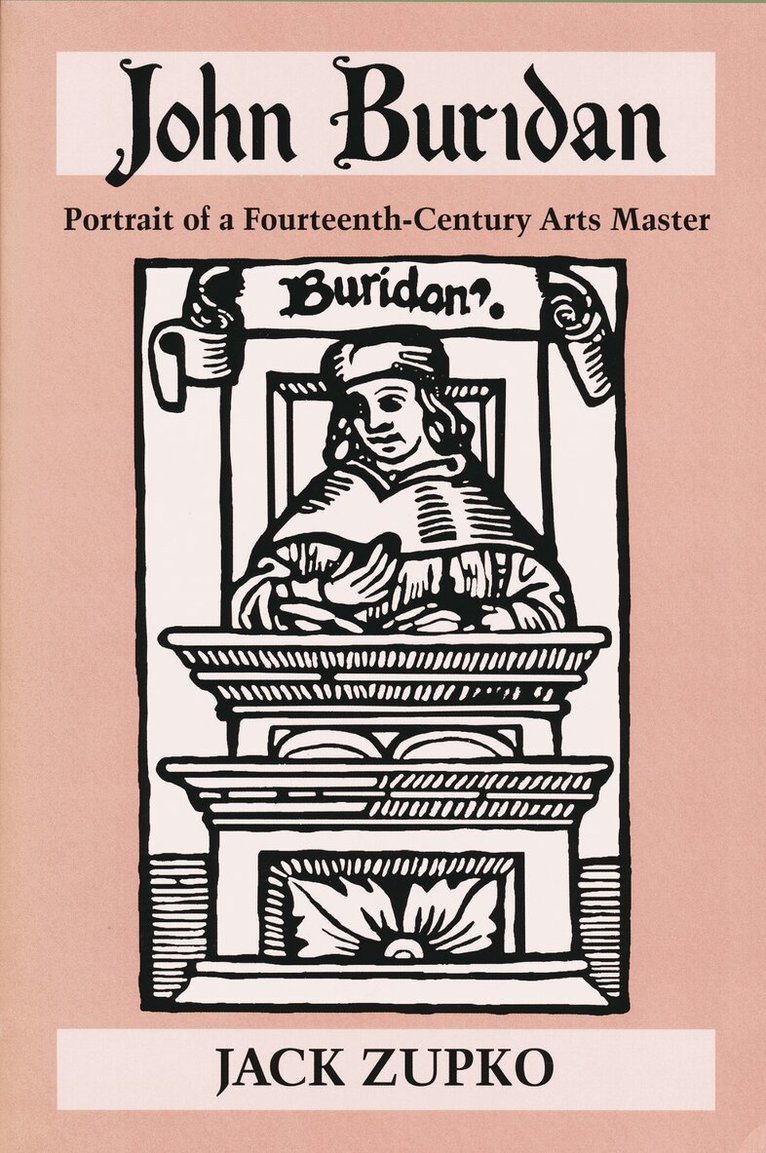
John Buridan (ca. 1300–1361) was the most famous philosophy teacher of his time, and probably the most influential. In this important new book, Jack Zupko offers the first systematic exposition of Buridan's thought to appear in any language. Zupko uses Buridan's own conception of the order and practice of philosophy to depict the most salient features of his thought, beginning with his views on the nature of language and logic and then illustrating their application to a series of topics in metaphysics, natural philosophy, and ethics.Part 1 of John Buridan considers the picture of language and logic developed in Buridan's Summulae de dialectica. Buridan systematically overhauled the logic he first learned and later taught at the University of Paris, redeeming the older tradition of Aristotelian logic in terms, propositions, and arguments. This made possible newer and more powerful forms of philosophical discourse. The second part of this volume provides a reading of Buridan's philosophy, showing how this discourse shaped his treatment of speculative questions such as the relation between soul and body, the nature of knowledge, the proper subject of psychology, the function of the virtues, and the freedom of the will.This groundbreaking book is sure to become the standard work on John Buridan.
Häftad, Engelska, 2003
480 kr
Skickas inom 10-15 vardagar
John Buridan (ca. 1300–1361) was the most famous philosophy teacher of his time, and probably the most influential. In this important new book, Jack Zupko offers the first systematic exposition of Buridan's thought to appear in any language. Zupko uses Buridan's own conception of the order and practice of philosophy to depict the most salient features of his thought, beginning with his views on the nature of language and logic and then illustrating their application to a series of topics in metaphysics, natural philosophy, and ethics.Part 1 of John Buridan considers the picture of language and logic developed in Buridan's Summulae de dialectica. Buridan systematically overhauled the logic he first learned and later taught at the University of Paris, redeeming the older tradition of Aristotelian logic in terms, propositions, and arguments. This made possible newer and more powerful forms of philosophical discourse. The second part of this volume provides a reading of Buridan's philosophy, showing how this discourse shaped his treatment of speculative questions such as the relation between soul and body, the nature of knowledge, the proper subject of psychology, the function of the virtues, and the freedom of the will.This groundbreaking book is sure to become the standard work on John Buridan.
Inbunden, Engelska, 2005
1 400 kr
Skickas inom 10-15 vardagar
In this substantial work Walter Goffart treats the four writers who provide the principal narrative sources for our early knowledge of the Ostrogoths, Franks, Anglo-Saxons, and Lombards: Jordanes, Gregory of Tours, Bede, and Paul the Deacon. The University of Notre Dame Press is pleased to make this book available for the first time in paperback. Winner of the Medieval Academy of America's Haskins Medal for 1991, The Narrators of Barbarian History treats the four writers who are the main early sources for our knowledge of the Ostrogoths, Franks, Anglo-Saxons, and Lombards. In his preface to this paperback edition, Goffart examines the questions his work has evoked since its original publication in 1988 and enlarges the bibliography to account for recent scholarship.
Häftad, Engelska, 2001
490 kr
Skickas inom 10-15 vardagar
The Liber de causis (De causis et processu universitatis a prima causa), a monotheistic reworking of Proclus' Elements of Theology, was translated from Arabic into Latin in the twelfth century, with an attribution to Aristotle. Considering this Neoplatonic text a product of Aristotle's school and even the completion of Aristotle's Metaphysics, Albert the Great concluded his series of Aristotelian paraphrases by commenting on it.To do so was to invite controversy, since accidents of translation had made many readers think that the Liber de causis taught that God made only the first creature, which in turn created the diverse multitude of lesser things. Thus, Albert's contemporaries in the Christian West took the text to uphold the supposedly Aristotelian doctrine that from the One only one thing can emanate—a doctrine they rejected, believing as they did that God freely determined the number and kinds of creatures. Albert, however, defended the philosophers against the theologians of his day, denying that the thesis "from the One only one proceeds" removed God's causality from the diversity and multiplicity of our world. This Albert did by appealing to a greater theologian, Pseudo-Dionysius the Areopagite, and equating the being that is the subject of metaphysics with the procession of Being from God's intellect, a procession Dionysius described in On the Divine Names.Creation as Emanation examines Albert's reading of the Liber de causis with an eye toward two questions: First, how does Albert view the relation between faith and reason, so that he can identify creation from nothing with emanation from God? And second, how does he understand Platonism and Aristotelianism, so that he can avoid the misreadings of his fellow theologians by finding in a late-fifth-century Neoplatonist the key to Aristotle's meaning?
Inbunden, Engelska, 1986
1 359 kr
Skickas inom 10-15 vardagar
"It is generally agreed that those types of philosophy that are loosely called 'Platonic' and 'Neoplatonic' played a crucial role in the history of European culture during the centuries between antiquity and the Renaissance. However, until now no scholar has attempted to describe the evolution of these forms of thought in a single comprehensive academic study." So writes Stephen Gersh in the preface to Middle Platonism and Neoplatonism: The Latin Tradition.Stephen Gersh's two-volume survey of Platonic influences upon the Middle Ages focuses on questions that are basic to scholars of medieval philosophy, history, and literature: What was the influence of Plato's philosophy during the Middle Ages? Is it correct to consider earlier medieval philosophy as Platonic? How do Platonism and Neoplatonism differ? What do Platonic and Neoplatonic modes of thought have to do with Plato?Most medieval philosophers developed their doctrines without access to the greatest intellectual works of the Greeks. Instead, they elaborated their philosophies in relation to the Latin philosophical literature that spanned the classical period to the end of antiquity. Thus, Gersh develops his study by examining the important channels of transmission that existed for medieval philosophers.Following an introduction that outlines particular methodological perspectives relative to the discussion, the history is divided into three main sections. In total, the study surveys an impressive range of authors never previously considered in a single work, with many of the translations previously available only as Greek and Latin texts: I.1 Middle Platonism: The Platonists and the Stoics (Cicero, Seneca); I.2 Middle Platonism: The Platonists and the Doxographers (Gellius, Apuleius, the Hermetic "Asclepius," Ambrose, Censorinus, Augustine); II Neoplatonism (Calcidius, Macrobius, Martianus Capella, Boethius, Marius Victorinus, Firmicus Maternus, Favonius Eulogius, Servius, Fulgentius, Priscianus Lydus, Priscianrs Grammaticus).The concluding chapter illustrates the Platonic influence upon certain medieval authors up to the early twelfth century, and it establishes guidelines for further study. Middle Platonism and Neoplatonism contains an extensive bibliography and a complete index of Latin texts.