Mary A. Rouse - Böcker
Visar alla böcker från författaren Mary A. Rouse. Handla med fri frakt och snabb leverans.
7 produkter
7 produkter
1 853 kr
Skickas inom 10-15 vardagar
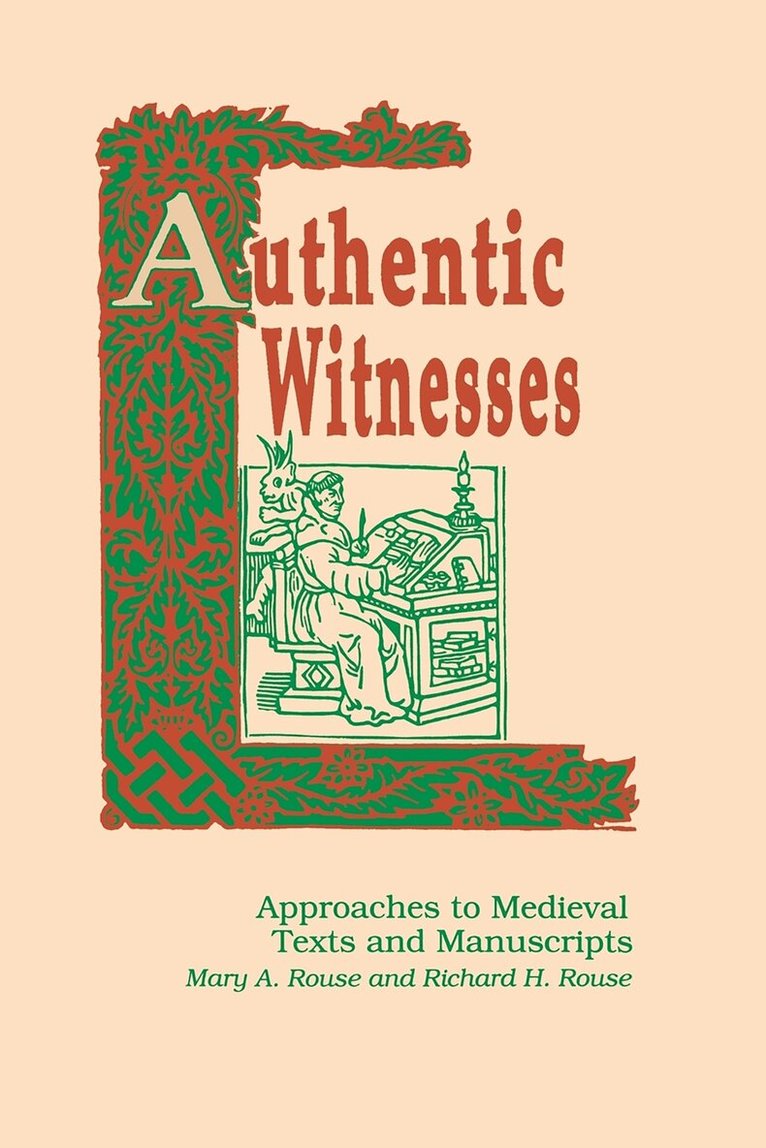
The central theme in any history of texts and books must be that of change and renewal: Parchment that is written on, in one set of circumstances in late antiquity, may in the Early Middle Ages be scraped clean and written on again, leaving evidence of a civilization in which blank parchment is more valuable than ancient literature. A manuscript can be regarded as an archeological artifact, but unlike pieces of pottery or chips of flint, a manuscript has a voice.The 12 essays gathered here vary in subject from the transmission of ancient authors to the invention of the subject index and range in time from the Gregorian reform of the eleventh century to the Protestant reformation of the early sixteenth century. Diverse in subject and period, these essays are unified by the questions they pose and the methodology they employ in seeking answers. A common thread is the desire to discover what information the manuscripts can yield about the society that created them: how the great concordance to the Bible was compiled, how book production at the medieval university was organized, how a vernacular poet carried his songs.Each surviving manuscript exists not only by the decision of the original maker but as a result of subsequent owners, who made notes, entered corrections, added an index composed a continuation. Changing times brought new uses for old texts changes that are reflected, like personal and cultural fingerprints, in glosses, marginalia, even the chain marks showing how the book was kept in the medieval library.
592 kr
Skickas inom 10-15 vardagar
The central theme in any history of texts and books must be that of change and renewal: Parchment that is written on, in one set of circumstances in late antiquity, may in the Early Middle Ages be scraped clean and written on again, leaving evidence of a civilization in which blank parchment is more valuable than ancient literature. A manuscript can be regarded as an archeological artifact, but unlike pieces of pottery or chips of flint, a manuscript has a voice.The 12 essays gathered here vary in subject from the transmission of ancient authors to the invention of the subject index and range in time from the Gregorian reform of the eleventh century to the Protestant reformation of the early sixteenth century. Diverse in subject and period, these essays are unified by the questions they pose and the methodology they employ in seeking answers. A common thread is the desire to discover what information the manuscripts can yield about the society that created them: how the great concordance to the Bible was compiled, how book production at the medieval university was organized, how a vernacular poet carried his songs.Each surviving manuscript exists not only by the decision of the original maker but as a result of subsequent owners, who made notes, entered corrections, added an index composed a continuation. Changing times brought new uses for old texts changes that are reflected, like personal and cultural fingerprints, in glosses, marginalia, even the chain marks showing how the book was kept in the medieval library.
884 kr
Skickas inom 10-15 vardagar
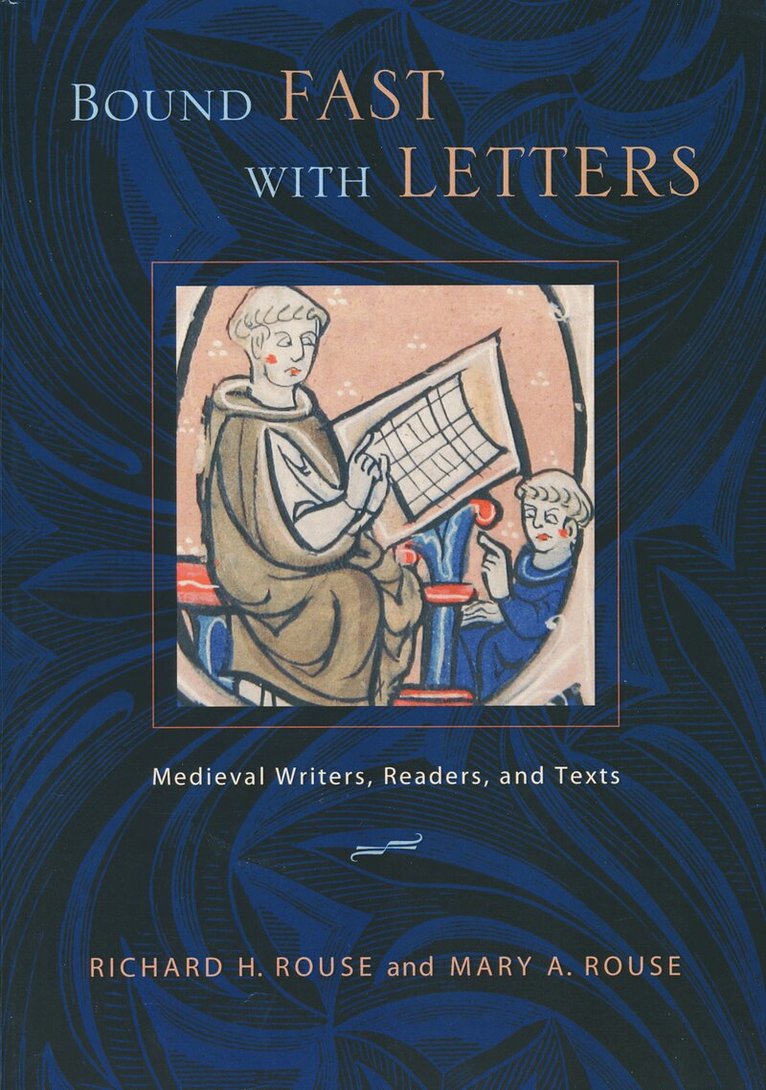
Bound Fast with Letters brings together in one volume many of the significant contributions that Richard H. Rouse and Mary A. Rouse have made over the past forty years to the study of medieval manuscripts through the prism of textual transmission and manuscript production. The eighteen essays collected here address medieval authors, craftsmen, book producers, and patrons of manuscripts from different epochs in the Middle Ages, extending from late antiquity to the early Renaissance, and ranging from North Africa to northern England. Their investigations reveal valuable information about the history of texts and their transmission, and their careful scrutiny of texts and of the physical manuscripts that convey them illuminate the societies that created, read, and preserved these objects.The book begins in Part I with articles on writers from the patristic era through the twelfth century who experimented with, and mastered, various physical forms of presenting ideas in writing. Part II contains essays on patronage and patrons, including Richard de Fournival, Jean de Brienne, Watriquet de Couvin, Pope Clement V, the Counts of Saint-Pol, and Christine de Pizan. Part III, on manuscript producers, discusses the questions, for whom? and by whom? were manuscripts made. The four essays in this section each reflect on a different part of the process of book-making. Throughout, Bound Fast with Letters focuses on the close ties between the physical remains of literate culture—from the wax tablets of the patristic era to the vernacular literature of the wealthy laity of the late Middle Ages—and their social and economic context.
1 853 kr
Skickas inom 10-15 vardagar
Bound Fast with Letters brings together in one volume many of the significant contributions that Richard H. Rouse and Mary A. Rouse have made over the past forty years to the study of medieval manuscripts through the prism of textual transmission and manuscript production. The eighteen essays collected here address medieval authors, craftsmen, book producers, and patrons of manuscripts from different epochs in the Middle Ages, extending from late antiquity to the early Renaissance, and ranging from North Africa to northern England. Their investigations reveal valuable information about the history of texts and their transmission, and their careful scrutiny of texts and of the physical manuscripts that convey them illuminate the societies that created, read, and preserved these objects.The book begins in Part I with articles on writers from the patristic era through the twelfth century who experimented with, and mastered, various physical forms of presenting ideas in writing. Part II contains essays on patronage and patrons, including Richard de Fournival, Jean de Brienne, Watriquet de Couvin, Pope Clement V, the Counts of Saint-Pol, and Christine de Pizan. Part III, on manuscript producers, discusses the questions, for whom? and by whom? were manuscripts made. The four essays in this section each reflect on a different part of the process of book-making. Throughout, Bound Fast with Letters focuses on the close ties between the physical remains of literate culture—from the wax tablets of the patristic era to the vernacular literature of the wealthy laity of the late Middle Ages—and their social and economic context.
Cartolai, Illuminators, and Printers in Fifteenth-century Italy
The Evidence of The Ripoli Press
Inbunden, Engelska, 2022
364 kr
Skickas inom 5-8 vardagar
Cartolai, Illuminators, and Printers in Fifteenth-century Italy
The Evidence of The Ripoli Press
Häftad, Engelska, 2022
210 kr
Skickas inom 5-8 vardagar
2 127 kr
Skickas inom 5-8 vardagar