Routledge Focus on Management and Society - Böcker
Visar alla böcker i serien Routledge Focus on Management and Society. Handla med fri frakt och snabb leverans.
19 produkter
19 produkter
754 kr
Skickas inom 10-15 vardagar
Recent decades have witnessed an explosion in supply chain complexity. Very few firms have succeeded in building excellent supply chains and employing supply chain management (SCM) as a competitive advantage. For the ones which have developed enhanced supply chain design and process capabilities, their performance has far exceeded their competitors'. While for the vast majority of firms, SCM still remains a means of reducing costs and improving efficiency, for the excellent ones, SCM has turned into a source for value creation. What factors drive firms towards supply chain excellence? How can real differentiation be created through supply chains? Excellence in Supply Chain Management examines the characteristics and features of firms that excel in SCM.
618 kr
Skickas inom 10-15 vardagar
Recent decades have witnessed an explosion in supply chain complexity. Very few firms have succeeded in building excellent supply chains and employing supply chain management (SCM) as a competitive advantage. For the ones which have developed enhanced supply chain design and process capabilities, their performance has far exceeded their competitors'. While for the vast majority of firms, SCM still remains a means of reducing costs and improving efficiency, for the excellent ones, SCM has turned into a source for value creation. What factors drive firms towards supply chain excellence? How can real differentiation be created through supply chains? Excellence in Supply Chain Management examines the characteristics and features of firms that excel in SCM.
673 kr
Skickas inom 10-15 vardagar
The book explores contemporary selfie-taking practices; digital experiences of love, romance and infidelity; sexting rituals; self-tracking habits; strategies used by the Internet famous; and the power of hashtag campaigns and memes in espousing a cause. Rejecting binary narratives on digital cultures, it showcases the fascinating ways in which we use our digital devices, social media platforms, and apps by drawing upon academic research, everyday observations and a determination to challenge assumptions and hasty generalizations. It also engages with emerging narratives on online authenticity, privacy, digital detox, and the digital divides prevalent both in India and abroad.
336 kr
Skickas inom 10-15 vardagar
The book explores contemporary selfie-taking practices; digital experiences of love, romance and infidelity; sexting rituals; self-tracking habits; strategies used by the Internet famous; and the power of hashtag campaigns and memes in espousing a cause. Rejecting binary narratives on digital cultures, it showcases the fascinating ways in which we use our digital devices, social media platforms, and apps by drawing upon academic research, everyday observations and a determination to challenge assumptions and hasty generalizations. It also engages with emerging narratives on online authenticity, privacy, digital detox, and the digital divides prevalent both in India and abroad.
777 kr
Skickas inom 10-15 vardagar
While examining the intersections and engagements between sociology and management education in historical and contemporary terms, this slim volume outlines the agenda of a promising prospective engagement between the two. It specifically foregrounds the Indian experience without being indifferent to the global context that has shaped the unprecedented rise of business schools. Employing a perspective from the Global South, it contextualises the dominance of the US model of management curriculum and disciplinary practices in relation to wider geopolitics of knowledge production. Parenthetically, it presents a critical assessment of Indian scholarly contributions to the field of management studies. This book should be of interest to management educators, administrators, and sociologists besides the students and researchers in the broad area of organisation studies.
301 kr
Skickas inom 10-15 vardagar
While examining the intersections and engagements between sociology and management education in historical and contemporary terms, this slim volume outlines the agenda of a promising prospective engagement between the two. It specifically foregrounds the Indian experience without being indifferent to the global context that has shaped the unprecedented rise of business schools. Employing a perspective from the Global South, it contextualises the dominance of the US model of management curriculum and disciplinary practices in relation to wider geopolitics of knowledge production. Parenthetically, it presents a critical assessment of Indian scholarly contributions to the field of management studies. This book should be of interest to management educators, administrators, and sociologists besides the students and researchers in the broad area of organisation studies.
707 kr
Skickas inom 10-15 vardagar
Law of one price continues to be a central tenet of Financial Economics. This book is devoted towards examining law of one price in the context of dually-listed shares of Indian companies. Put simply, this book delves on the relationship between the prices of domestic shares issued by Indian companies and the prices of foreign shares issued by the same companies. It also examines the evolving uncertainty in relationships between such dually-listed shares issued by Indian companies. It draws upon the insights that we garnered over the years while working on technical papers in this area. The book, thus, undertakes concerted efforts to present facts in a manner that sensitise and meaningfully inform readers of the prevalent breadth and depth of dual-listing (cross-listing) landscape globally and more so, locally (India).
287 kr
Skickas inom 10-15 vardagar
Law of one price continues to be a central tenet of Financial Economics. This book is devoted towards examining law of one price in the context of dually-listed shares of Indian companies. Put simply, this book delves on the relationship between the prices of domestic shares issued by Indian companies and the prices of foreign shares issued by the same companies. It also examines the evolving uncertainty in relationships between such dually-listed shares issued by Indian companies. It draws upon the insights that we garnered over the years while working on technical papers in this area. The book, thus, undertakes concerted efforts to present facts in a manner that sensitise and meaningfully inform readers of the prevalent breadth and depth of dual-listing (cross-listing) landscape globally and more so, locally (India).
713 kr
Skickas inom 10-15 vardagar
It is now widely recognised that rising inequality of income and wealth on the one hand and a slowdown in the rate of economic growth on the other are two of the most important challenges faced today by the global economy as well as by most of the developing economies. This book starts by explaining how these two issues are interrelated. There is no dearth of books on the role that the economic policies of the government can play in meeting these twin challenges. The role of business managers in the private sector of the economy, however, is a relatively neglected area. This book seeks to close this gap in the literature. The central message of the book is that, contrary to popular belief, it is in the interests of private business itself that business managers take into account the effects that their decisions have on the economy as a whole. It is shown that a failure to do so would hurt their own economic prospects in both the short run and the long. Emphasis is given on the importance of an appropriate orientation of managerial decisions and on the role of investors (i.e. the suppliers of capital) in inducing managers to take socially optimal decisions. The book is addressed as much to business managers and students in management courses as to the general reader. Therefore, no prior knowledge of advanced economic theory is presumed. All arguments are built from first principles.
356 kr
Kommande
It is now widely recognised that rising inequality of income and wealth on the one hand and a slowdown in the rate of economic growth on the other are two of the most important challenges faced today by the global economy as well as by most of the developing economies. This book starts by explaining how these two issues are interrelated. There is no dearth of books on the role that the economic policies of the government can play in meeting these twin challenges. The role of business managers in the private sector of the economy, however, is a relatively neglected area. This book seeks to close this gap in the literature. The central message of the book is that, contrary to popular belief, it is in the interests of private business itself that business managers take into account the effects that their decisions have on the economy as a whole. It is shown that a failure to do so would hurt their own economic prospects in both the short run and the long. Emphasis is given on the importance of an appropriate orientation of managerial decisions and on the role of investors (i.e. the suppliers of capital) in inducing managers to take socially optimal decisions. The book is addressed as much to business managers and students in management courses as to the general reader. Therefore, no prior knowledge of advanced economic theory is presumed. All arguments are built from first principles.
727 kr
Skickas inom 10-15 vardagar
India has a long-standing cultural and societal affinity with gold and gold jewellery. Gold metaphorically represents the sacredness, purity and immortality that bind religious beliefs and culture together. Accumulation of gold is associated with material and non-material cultures where the perceptions, attitudes and experiences of the members engaged in production and consumption are bound into a complex relationship. The idea of the book initially originated from the course of research work. It was found that India has the largest unorganised jewellery industry, in terms of manufacturing and consumption unit. Jewellery fabrication in India is not just a profession for the jewellers, but it has been a family tradition extending across generations. Gold jewellery makers (sunars/swarnakars) are the spine of the jewellery industry. They acquired the skill of making jewellery from the experienced and learned gold smithery (karigars), either from their ancestors who were engaged in this business or from the craftsmen-cum-petty traders. The co-relations of castes, religion, culture, economy and class are intertwined with each other in such a way that made the gold jewellery industry sustainable. Surprisingly, there is an absence of literature on understanding the structural and functional aspects of the gold jewellery industry in India.This book explores the roles of sunars/swarnakars (goldsmith or jewellery makers), consumers, trade and the policies that bring a change in the gold jewellery industry in India and India’s position in the global market scenario. By focusing on their way of life, the book brings unique insights into the social and economic experience of the unorganised gold jewellery sector and the role of consumers in production.
333 kr
Skickas inom 10-15 vardagar
India has a long-standing cultural and societal affinity with gold and gold jewellery. Gold metaphorically represents the sacredness, purity and immortality that bind religious beliefs and culture together. Accumulation of gold is associated with material and non-material cultures where the perceptions, attitudes and experiences of the members engaged in production and consumption are bound into a complex relationship. The idea of the book initially originated from the course of research work. It was found that India has the largest unorganised jewellery industry, in terms of manufacturing and consumption unit. Jewellery fabrication in India is not just a profession for the jewellers, but it has been a family tradition extending across generations. Gold jewellery makers (sunars/swarnakars) are the spine of the jewellery industry. They acquired the skill of making jewellery from the experienced and learned gold smithery (karigars), either from their ancestors who were engaged in this business or from the craftsmen-cum-petty traders. The co-relations of castes, religion, culture, economy and class are intertwined with each other in such a way that made the gold jewellery industry sustainable. Surprisingly, there is an absence of literature on understanding the structural and functional aspects of the gold jewellery industry in India.This book explores the roles of sunars/swarnakars (goldsmith or jewellery makers), consumers, trade and the policies that bring a change in the gold jewellery industry in India and India’s position in the global market scenario. By focusing on their way of life, the book brings unique insights into the social and economic experience of the unorganised gold jewellery sector and the role of consumers in production.
292 kr
Skickas inom 10-15 vardagar
The book elaborates the basic principles of Auction Theory in a non-technical language so as to make them easily accessible to even those not trained in the discipline. Auctions as allocation mechanisms have been in use across the world since antiquity and are still employed in different countries for purchase and sales of a wide range of objects, both by governments and by private agents. Auction has gained popularity over other allocation mechanisms since the rules of auctions are very precise, involve much less subjective judgements compared to other alternative allocation mechanisms and lead to a more efficient process of discovering the true willingness of the buyers to pay. Moreover, the principles of Auction Theory are used in other contexts, for example in designing contests, or in controlling emission levels through allocation of permits and licenses.
279 kr
Skickas inom 10-15 vardagar
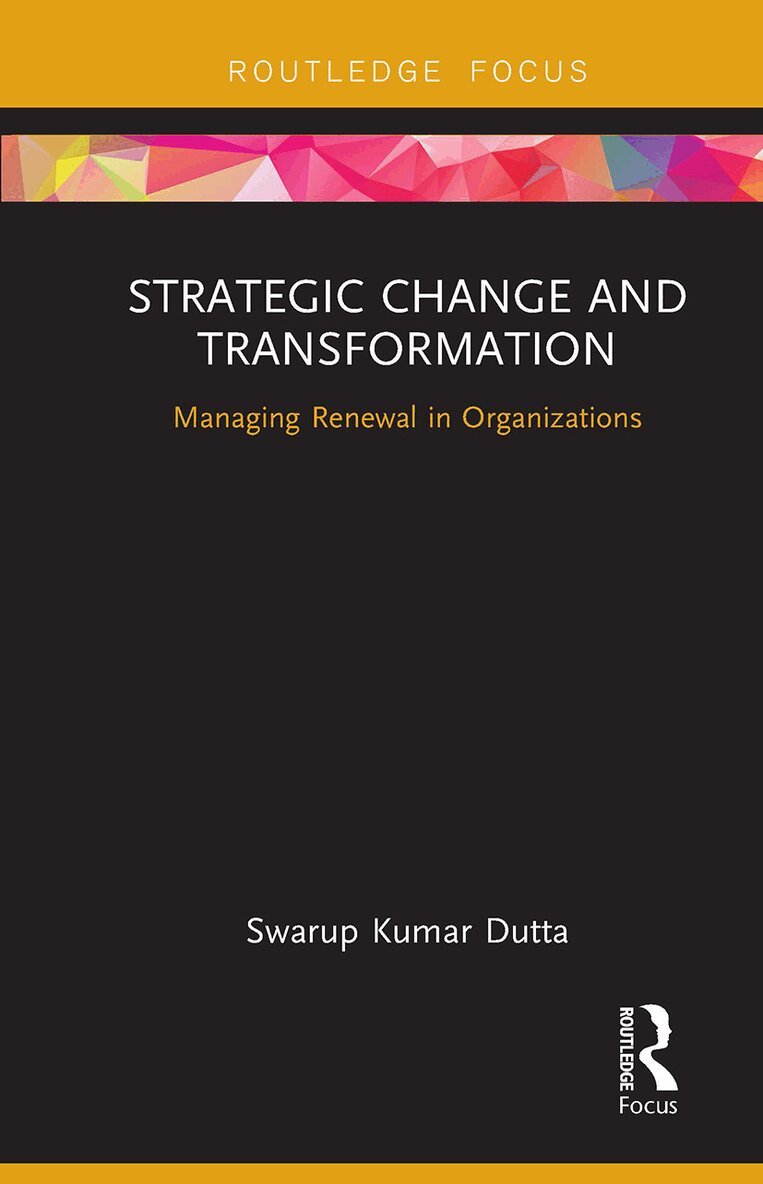
Strategic change and transformation are words used very commonly in business parlance but rarely defined. Besides, change and transformations are often used interchangeably. Thus the correct perspective of viewing change and transformations is missing from management literature. How is change different from transformation? Do all changes lead to renewal? What are the characteristics of strategic changes?This re-addresses some of our current assumptions and understanding of change and transformation when viewed through both academic and business lenses. It is a balanced and well-rounded perspective on how strategic change and transformation can be brought about successfully in organizations specifically with the perspective from an emerging economy like India.
301 kr
Skickas inom 10-15 vardagar
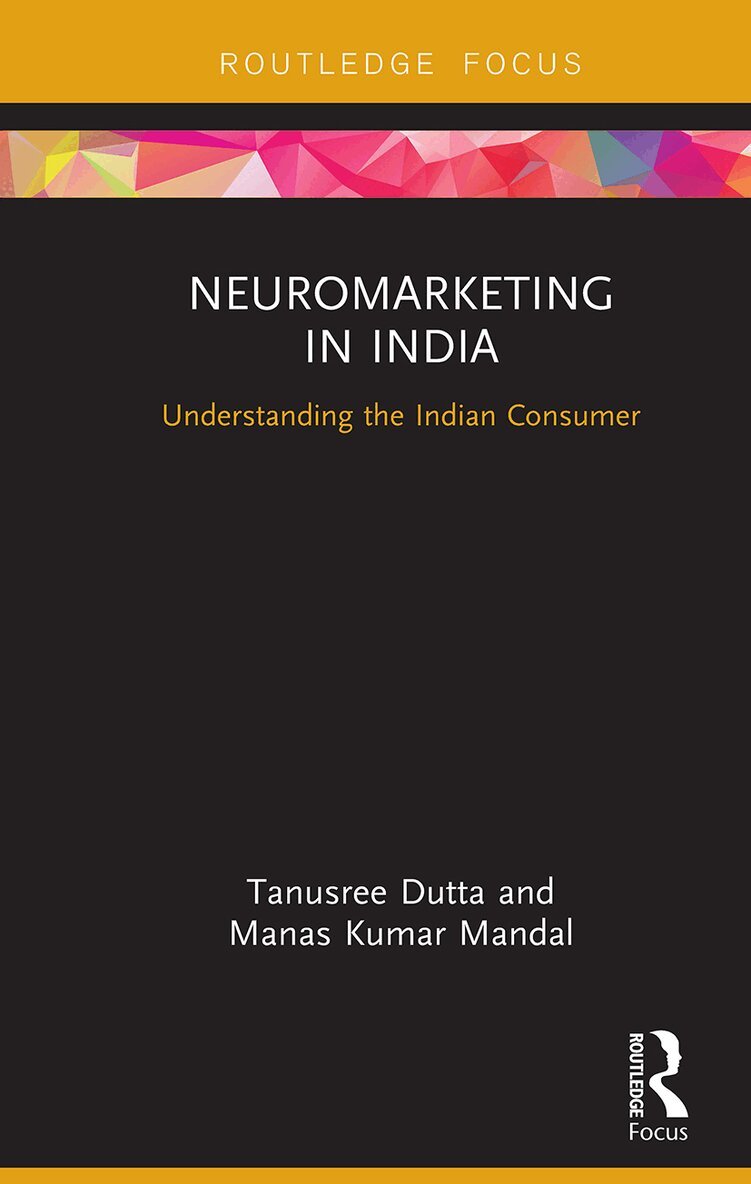
How to understand human behaviour has been a very intriguing question to medicine, computer science, economics, psychology and finance. Each discipline has been trying to study and predict human behaviour through surveys, laboratory-based experiments, questionnaires, interviews, statistics, focus groups; the list is endless. The lack of precision in the existing techniques to predict human behaviour has motivated researchers to move beyond the traditional and search for new and improved techniques. Neuroscience has stepped in to fill this gap. It is based on the assumption that human behaviour is a complex process which has a neural basis and the locus of this process is the higher centre of the brain. Both conscious and unconscious processing of stimulus in the brain is responsible for generating behaviour. So if we could develop a deeper understanding of how the brain functions to generate behaviour, we would be more confident in our understanding and prediction of consumer behaviour. The use of neuroscientific techniques, like functional Magnetic Resonance Imaging (fMRI), Electroencephalography (EEG), Evoked Response Potential (ERP), and sensors to measure changes in one's physiological state, to understand the mind of the consumer has just begun, and professionals in the field see a huge opportunity for neuromarketing in India. In the domain of neuromarketing, one important question relates to the distinction between Indian and other global consumers of commercial products. Are we different from consumers across the globe? The answer is probably ‘yes’. This is documented by the fact that we find a distinct change in the marketing strategy of companies; the methods to influence Indian consumers are different from those adopted in other countries. This gives rise to the question: what makes us different? The next logical question that arises, assuming that we are different or similar, is can we quantify it? Answering why, what and how we are different marks the beginning of the book, followed by issues related to the ethicality of using such techniques to promote marketing, risk analysis in case of failure and future directions in neuromarketing.The book intends to address each of these issues so that a comprehensive reading in the subject matter would help academicians to decipher consumer behaviour and build theory for possible principles of application in the market.
768 kr
Skickas inom 10-15 vardagar
The majority of economists today are opposed to allowing governments a significant role in economic affairs. In particular, demand management and redistributive policies are frowned upon, and supply-side policies (that concentrate on enhancing the profitability of business operations) are advocated as the only legitimate channels of government action. The possibility of ‘government failure’ in the economic sphere is endlessly emphasised.The book argues that this view is only partially correct, at best. To make development inclusive and sustainable over the long run, the state must step in as an active enabler and regulator of private initiative. In a good society, the public–private relationship should be complementary, not adversarial. The enabler–regulator duty of the government cannot be effectively discharged with only supply-side and monetary instruments. Well-designed, effectively implemented fiscal action is indispensable for promoting social welfare with its twin aspects of efficiency and distributive justice.Within a short compass, the strengths and limitations of tax expenditure policies in managing the economy are discussed in non-technical language, keeping the ‘government failure vs market failure’ debate as a focal point.
754 kr
Skickas inom 10-15 vardagar
The book elaborates the basic principles of Auction Theory in a non-technical language so as to make them easily accessible to even those not trained in the discipline. Auctions as allocation mechanisms have been in use across the world since antiquity and are still employed in different countries for purchase and sales of a wide range of objects, both by governments and by private agents. Auction has gained popularity over other allocation mechanisms since the rules of auctions are very precise, involve much less subjective judgements compared to other alternative allocation mechanisms and lead to a more efficient process of discovering the true willingness of the buyers to pay. Moreover, the principles of Auction Theory are used in other contexts, for example in designing contests, or in controlling emission levels through allocation of permits and licenses.
847 kr
Skickas inom 10-15 vardagar
How to understand human behaviour has been a very intriguing question to medicine, computer science, economics, psychology and finance. Each discipline has been trying to study and predict human behaviour through surveys, laboratory-based experiments, questionnaires, interviews, statistics, focus groups; the list is endless. The lack of precision in the existing techniques to predict human behaviour has motivated researchers to move beyond the traditional and search for new and improved techniques. Neuroscience has stepped in to fill this gap. It is based on the assumption that human behaviour is a complex process which has a neural basis and the locus of this process is the higher centre of the brain. Both conscious and unconscious processing of stimulus in the brain is responsible for generating behaviour. So if we could develop a deeper understanding of how the brain functions to generate behaviour, we would be more confident in our understanding and prediction of consumer behaviour. The use of neuroscientific techniques, like functional Magnetic Resonance Imaging (fMRI), Electroencephalography (EEG), Evoked Response Potential (ERP), and sensors to measure changes in one's physiological state, to understand the mind of the consumer has just begun, and professionals in the field see a huge opportunity for neuromarketing in India. In the domain of neuromarketing, one important question relates to the distinction between Indian and other global consumers of commercial products. Are we different from consumers across the globe? The answer is probably ‘yes’. This is documented by the fact that we find a distinct change in the marketing strategy of companies; the methods to influence Indian consumers are different from those adopted in other countries. This gives rise to the question: what makes us different? The next logical question that arises, assuming that we are different or similar, is can we quantify it? Answering why, what and how we are different marks the beginning of the book, followed by issues related to the ethicality of using such techniques to promote marketing, risk analysis in case of failure and future directions in neuromarketing.The book intends to address each of these issues so that a comprehensive reading in the subject matter would help academicians to decipher consumer behaviour and build theory for possible principles of application in the market.
822 kr
Skickas inom 10-15 vardagar
Strategic change and transformation are words used very commonly in business parlance but rarely defined. Besides, change and transformations are often used interchangeably. Thus the correct perspective of viewing change and transformations is missing from management literature. How is change different from transformation? Do all changes lead to renewal? What are the characteristics of strategic changes?This re-addresses some of our current assumptions and understanding of change and transformation when viewed through both academic and business lenses. It is a balanced and well-rounded perspective on how strategic change and transformation can be brought about successfully in organizations specifically with the perspective from an emerging economy like India.