Routledge Icarus - Böcker
Visar alla böcker i serien Routledge Icarus. Handla med fri frakt och snabb leverans.
11 produkter
11 produkter
1 349 kr
Skickas inom 7-10 vardagar
Theatre and Boxing focuses on a problem which is of paramount importance for any theatre practitioner and researcher: the actor’s believable body. This problem has been taken up by Stanislavski, Meyerhold, Artaud, Brecht, Decroux, Copeau, Grotowski, and many others. It is an essential hurdle for all who practice the theatrical craft or want to study it theoretically. This hurdle can be considered one of the foundations of theatre science and of the relationship between technique, politics and ethics.This book tells the story of a revolution in the work of the actor in the early- and mid-20th century, a period in which the focus of theatrical interest shifted from the emotions to the body. The actor’s body became a tool for purveying a dynamic set of actions which often transformed the very actor himself. This new centrality of the body also drew attention to those places in which the body is central: the gym, the boxing ring and the circus with its trapezes and tightropes became, together with the stage, laboratories for the theatre. Thus, in addition to the reformers of the theatre the pages of this book are filled with boxers, acrobats, gymnasts and wrestlers, pursuers of an utopia: the "actor who flies".
289 kr
Tillfälligt slut
Theatre and Boxing focuses on a problem which is of paramount importance for any theatre practitioner and researcher: the actor’s believable body. This problem has been taken up by Stanislavski, Meyerhold, Artaud, Brecht, Decroux, Copeau, Grotowski, and many others. It is an essential hurdle for all who practice the theatrical craft or want to study it theoretically. This hurdle can be considered one of the foundations of theatre science and of the relationship between technique, politics and ethics.This book tells the story of a revolution in the work of the actor in the early- and mid-20th century, a period in which the focus of theatrical interest shifted from the emotions to the body. The actor’s body became a tool for purveying a dynamic set of actions which often transformed the very actor himself. This new centrality of the body also drew attention to those places in which the body is central: the gym, the boxing ring and the circus with its trapezes and tightropes became, together with the stage, laboratories for the theatre. Thus, in addition to the reformers of the theatre the pages of this book are filled with boxers, acrobats, gymnasts and wrestlers, pursuers of an utopia: the "actor who flies".
333 kr
Tillfälligt slut
A collection of texts by Eugenio Barba reconstructing the history of his relationships with the Asian classical theatres. Interweaving stories of journeys, meetings, anecdotes, reflections and technical descriptions, the author exposes the phases and changes in a passion that covers the fifty years of his professional trajectory. Little known or unpublished texts are included together with widely diffused articles which have become classics. The result is a book which examines in detail an important chapter of the dialogue between East and West in the theatre culture of the twentieth century.
535 kr
Skickas inom 10-15 vardagar
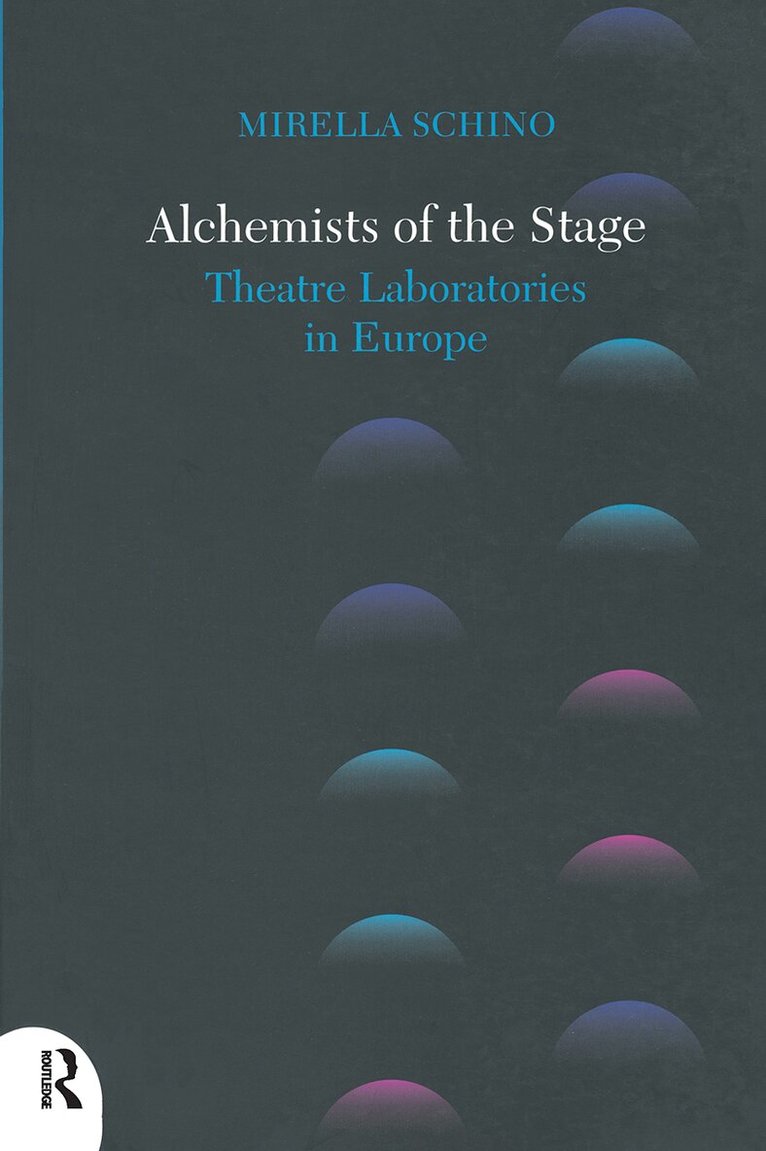
What is a theatre laboratory? Why a theatre laboratory? This book tries to answer these questions focusing on the experiences and theories, the visions and the techniques, the differences and similarities of European theatre laboratories in the twentieth century. It studies in depth the Studios of Stanislavski and Meyerhold, the school of Decroux, the Teatr Laboratorium of Jerzy Grotowski and Ludwik Flaszen, as well as Eugenio Barba’s Odin Teatret.Theatre laboratories embody a theatre practice which defies the demands and fashions of the times, the usual ways of production and the sensible functions which stage art enjoys in our society. It is a theatre which refuses to be only art and whose radical research forges new conditions with a view to changing both the actor and the spectator. This research transforms theatrical craft into a laboratory which has been compared to the laboratory of the alchemists, who worked not on material but on substance. The alchemists of the stage did not operate only on forms and styles, but mainly on the living matter of the theatre: the actor, seen not just as an artist but above all as a representative of a new human being.Laboratory theatres have rarely been at the centre of the news. Yet their underground activity has influenced theatre history. Without them, the same idea of theatre, as it has been shaped in the course of the twentieth century, would have been different. In this book Mirella Schino recounts, as in a novel, the vicissitudes of a group of practitioners and scholars who try to uncover the technical, political and spiritual perspectives behind the word laboratory when applied to the theatre.
Eurasian Theatre
Drama and Performance Between East and West from Classical Antiquity to the Present
Inbunden, Engelska, 2013
2 162 kr
Skickas inom 10-15 vardagar
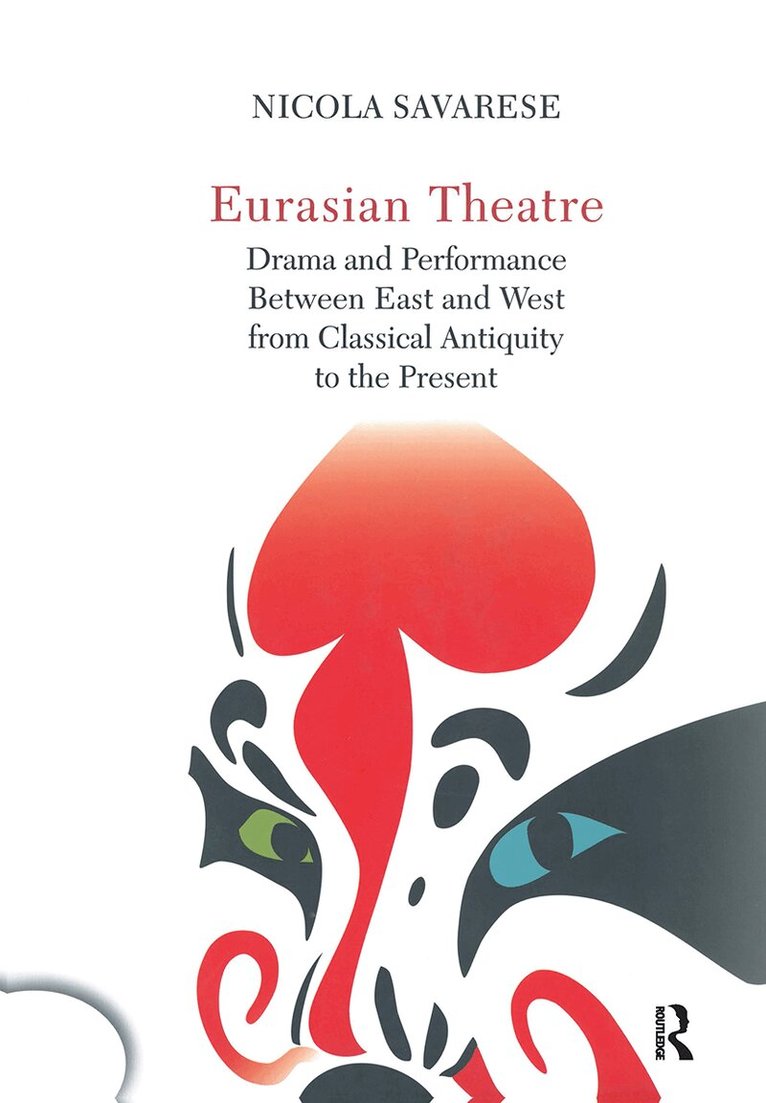
The distances that separate East from West – the two extremes of the Eurasian continent – are enormous. Yet, since ancient times, the people of Europe and Asia have tried to overcome this remoteness through a network of trade routes known as the Silk Road. The great migrations, the continuous military conquests and the paths relentlessly opened up by merchants have been at the origin of ideological, technical and artistic exchanges, resulting in a fusion of cultures. Among the ceaseless travellers on the routes of the Silk Road, along with soldiers, merchants, messengers, and pilgrims, we find those who earned their living as jugglers, acrobats, musicians, actors and dancers. They were people who brought with them, rooted in their bodies, their own techniques and histories. Through these performers, the ‘fabulous and mysterious Orient’ has exerted an ongoing influence on the art of the theatre in Europe and America. In the same way, especially in modern times, actors and dancers from India, China, Japan, and other Asian countries have drawn inspiration from Western dramatic genres for a renewal of their ancient traditions. A long history of travelling actors moving between East and West has slowly taken shape, and lies at the foundation of our contemporary, professional performative arts. This updated and revised edition of Drama and Performance Between East and West (first published in 1992), traces this history from classical antiquity to the present. The book constitutes the first complete in-depth historiographic inquiry into the subject.
574 kr
Skickas inom 7-10 vardagar
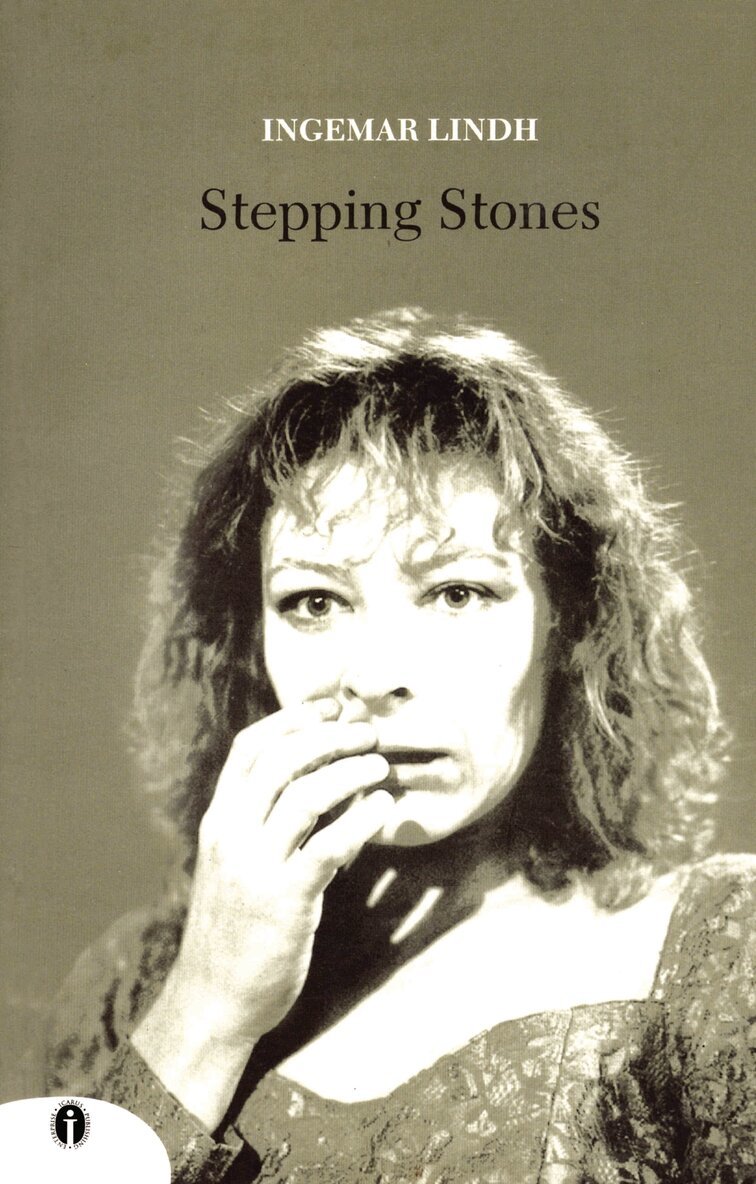
Stepping Stones is the book of a practitioner. It documents the work of a laboratory-based practice that investigated the principles of collective improvisation as a performance practice. Though the dynamics and mechanisms of collective work and improvisation have been amply researched in training and composition contexts, not so can be said in the context of performance. Ingemar Lindh’s research, which announces a resistance to choreography, fixed scores, and directorial montage, has significant implications for the practice and theory of performance in a post-dramatic age. Stepping Stones is, to quote Lindh himself, ‘a book not written but spoken’ in the sense that it is a collection of transcripts and writings by and about Lindh. The first two chapters are based on a transcript of a workshop held in Porsgrunn (Norway) in 1981. In these chapters Lindh’s unique work on performer process (including the adaptation of isometric training for actors) is expounded in the context of his views on theatre. Chapter 3 is made up of two letters to a friend, the first detailing Lindh’s artistic biography and the second commenting on the knowledge acquired in the process. Chapter 4 is an interview with Lindh by Paolo Martini with a focus on the ethics of his aesthetics. Chapter 5 is a chronology by Magdalena Pietruska of the Institute för Scenkonst’s twenty-five years of operation under the direction of Lindh. Photographs by Maurizio Buscarino and Stefano Lanzardo provide visual documentation of the history and research of Lindh’s Institutet för Scenkonst. The book also contains an introductory chapter by Frank Camilleri which places Lindh’s work within a historical context as well as features a glossary of terms, names, and performances. Stepping Stones was first published in Italy in 1998. A Swedish edition appeared in 2003.
Eurasian Theatre
Drama and Performance Between East and West from Classical Antiquity to the Present
Häftad, Engelska, 2024
578 kr
Skickas inom 10-15 vardagar
The distances that separate East from West – the two extremes of the Eurasian continent – are enormous. Yet, since ancient times, the people of Europe and Asia have tried to overcome this remoteness through a network of trade routes known as the Silk Road. The great migrations, the continuous military conquests and the paths relentlessly opened up by merchants have been at the origin of ideological, technical and artistic exchanges, resulting in a fusion of cultures. Among the ceaseless travellers on the routes of the Silk Road, along with soldiers, merchants, messengers, and pilgrims, we find those who earned their living as jugglers, acrobats, musicians, actors and dancers. They were people who brought with them, rooted in their bodies, their own techniques and histories. Through these performers, the ‘fabulous and mysterious Orient’ has exerted an ongoing influence on the art of the theatre in Europe and America. In the same way, especially in modern times, actors and dancers from India, China, Japan, and other Asian countries have drawn inspiration from Western dramatic genres for a renewal of their ancient traditions. A long history of travelling actors moving between East and West has slowly taken shape, and lies at the foundation of our contemporary, professional performative arts. This updated and revised edition of Drama and Performance Between East and West (first published in 1992), traces this history from classical antiquity to the present. The book constitutes the first complete in-depth historiographic inquiry into the subject.
2 232 kr
Skickas inom 10-15 vardagar
What is a theatre laboratory? Why a theatre laboratory? This book tries to answer these questions focusing on the experiences and theories, the visions and the techniques, the differences and similarities of European theatre laboratories in the twentieth century. It studies in depth the Studios of Stanislavski and Meyerhold, the school of Decroux, the Teatr Laboratorium of Jerzy Grotowski and Ludwik Flaszen, as well as Eugenio Barba‘s Odin Teatret. Theatre laboratories embody a theatre practice which defies the demands and fashions of the times, the usual ways of production and the sensible functions which stage art enjoys in our society. It is a theatre which refuses to be only art and whose radical research forges new conditions with a view to changing both the actor and the spectator. This research transforms theatrical craft into a laboratory which has been compared to the laboratory of the alchemists, who worked not on material but on substance. The alchemists of the stage did not operate only on forms and styles, but mainly on the living matter of the theatre: the actor, seen not just as an artist but above all as a representative of a new human being. Laboratory theatres have rarely been at the centre of the news. Yet their underground activity has influenced theatre history. Without them, the same idea of theatre, as it has been shaped in the course of the twentieth century, would have been different. In this book Mirella Schino recounts, as in a novel, the vicissitudes of a group of practitioners and scholars who try to uncover the technical, political and spiritual perspectives behind the word laboratory when applied to the theatre.
563 kr
Skickas inom 10-15 vardagar
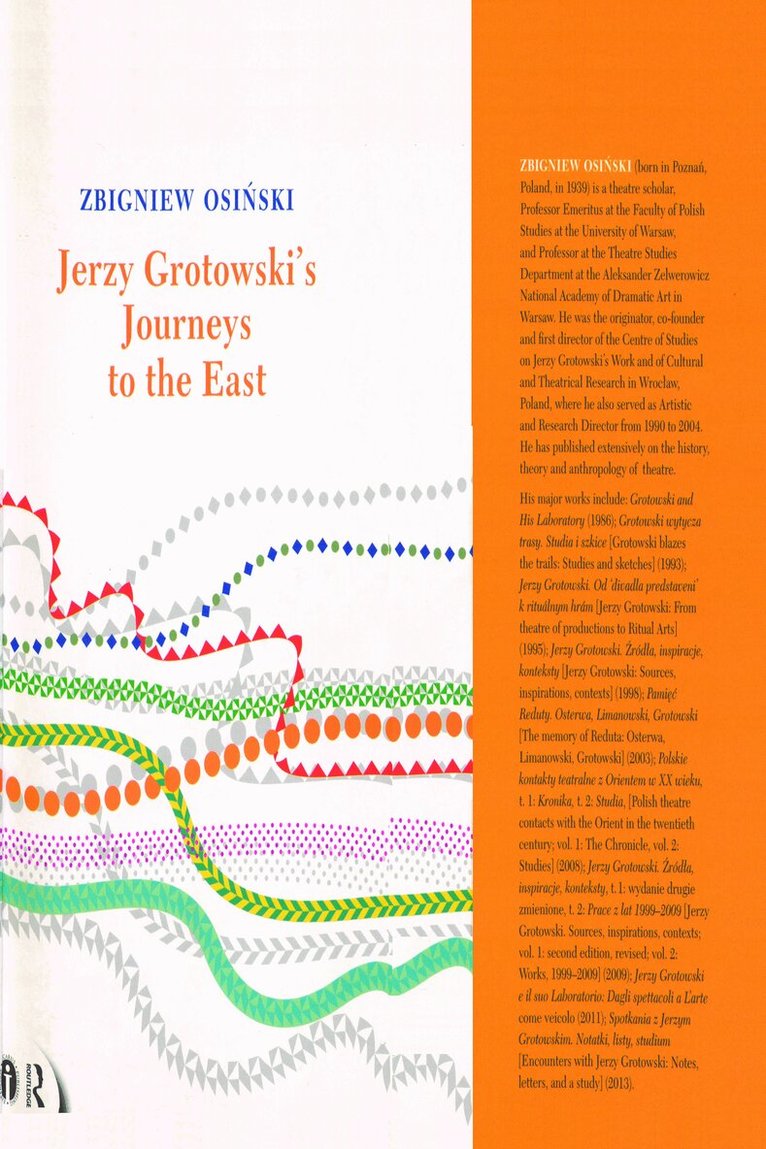
Jerzy Grotowski’s Journeys to the East is an unusual collection of facts, quotations, and commentaries documenting the real and metaphorical journeys of the Polish theatre director and ‘teacher of performers’ into a geographical and cultural dimension which we used to and still call the Orient. Grotowski’s contacts and meetings with the East are placed here in the context of his biography. Painstakingly researched by Grotowski’s main biographer Zbigniew Osiński, this book is necessary reading for those interested in Grotowski’s deep relationship with the East and in the inspiration he drew from its various cultures. The book will appeal to all readers who feel a need to have a glimpse of the East from the perspective of one of the main theatre reformers in the twentieth century.
985 kr
Tillfälligt slut
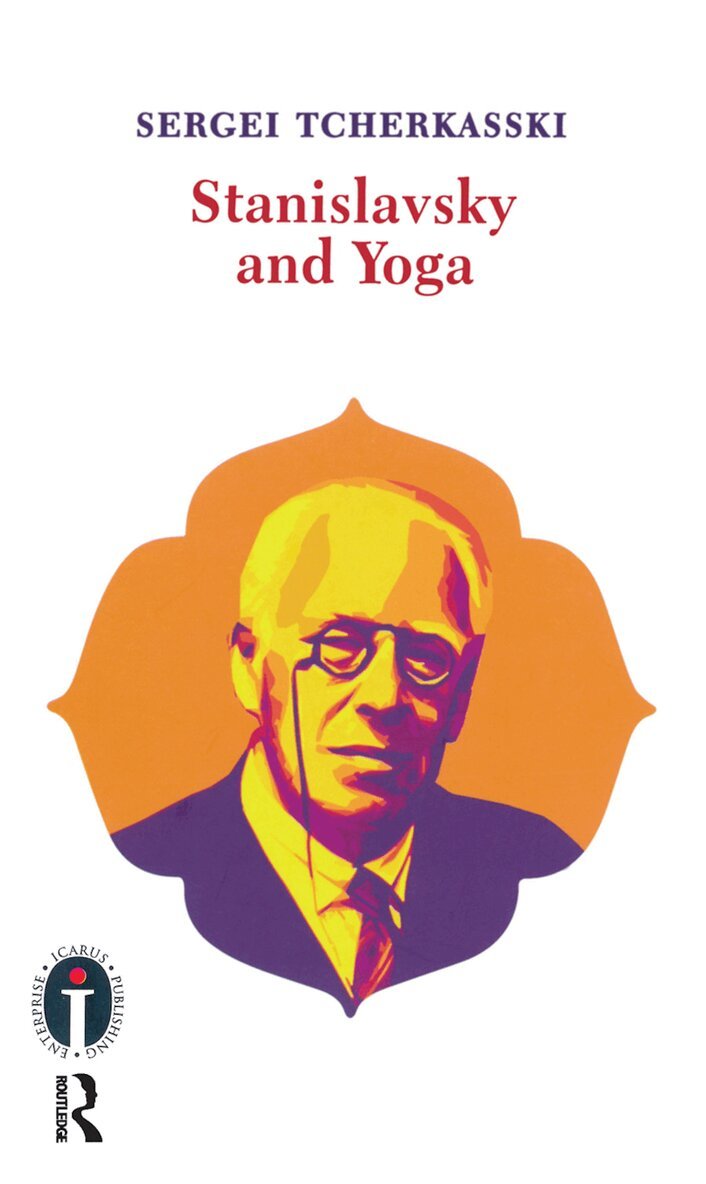
This book deals with one of the most important sources of the Stanislavsky System - Yoga, its practice and philosophy. Sergei Tcherkasski carefully collects records on Yoga in Stanislavsky's writings from different periods and discusses hidden references which are not explained by Stanislavsky himself due to the censorship in his day. Vivid examples of Yoga based training from the rehearsal practice of the Moscow Art Theatre and many of Stanislavsky's studios (the First Studio in 1910s, the Second Studio and Opera Studio of the Bolshoi Theatre in 1920s, Opera-Dramatic Studio in 1930s) are provided.The focus of Tcherkasski's research consists of a comparative reading of the Stanislavsky System and Yogi Ramacharaka's books, which were a main source for Stanislavsky. Accordingly, Tcherkasski analyzes elements of the System based on Yoga principles. Among them are:relaxation of muscles (muscular release), communication and prana, emission of rays and reception of rays, beaming of aura, sending of prana, attention, visualizations (mental images).Special attention is paid to the idea of the superconscious in Yoga, and in Ramacharaka's and Stanislavsky's theories.Tcherkasski's wide-ranging analysis has resulted in new and intriguing discoveries about the Russian master. Furthermore, he reveals the extent to which Stanislavsky anticipated modern discoveries in neurobiology and cognitive science.In this book Tcherkasski acts as a researcher, historian, theatre director, and experienced acting teacher. He argues that some forty per cent of basic exercises in any Stanislavsky based actor training program of today are rooted in Yoga. Actors, teachers, and students will find it interesting to discover that they are following in the footsteps of Yoga in their everyday Stanislavsky based training and rehearsals.
369 kr
Skickas inom 10-15 vardagar
This book deals with one of the most important sources of the Stanislavsky System - Yoga, its practice and philosophy. Sergei Tcherkasski carefully collects records on Yoga in Stanislavsky's writings from different periods and discusses hidden references which are not explained by Stanislavsky himself due to the censorship in his day. Vivid examples of Yoga based training from the rehearsal practice of the Moscow Art Theatre and many of Stanislavsky's studios (the First Studio in 1910s, the Second Studio and Opera Studio of the Bolshoi Theatre in 1920s, Opera-Dramatic Studio in 1930s) are provided.The focus of Tcherkasski's research consists of a comparative reading of the Stanislavsky System and Yogi Ramacharaka's books, which were a main source for Stanislavsky. Accordingly, Tcherkasski analyzes elements of the System based on Yoga principles. Among them are:relaxation of muscles (muscular release), communication and prana, emission of rays and reception of rays, beaming of aura, sending of prana, attention, visualizations (mental images).Special attention is paid to the idea of the superconscious in Yoga, and in Ramacharaka's and Stanislavsky's theories.Tcherkasski's wide-ranging analysis has resulted in new and intriguing discoveries about the Russian master. Furthermore, he reveals the extent to which Stanislavsky anticipated modern discoveries in neurobiology and cognitive science.In this book Tcherkasski acts as a researcher, historian, theatre director, and experienced acting teacher. He argues that some forty per cent of basic exercises in any Stanislavsky based actor training program of today are rooted in Yoga. Actors, teachers, and students will find it interesting to discover that they are following in the footsteps of Yoga in their everyday Stanislavsky based training and rehearsals.