Routledge Studies in Crime and Economics – Serie
Visar alla böcker i serien Routledge Studies in Crime and Economics. Handla med fri frakt och snabb leverans.
8 produkter
8 produkter
2 181 kr
Skickas inom 10-15 vardagar
With debates surrounding the decriminalisation of certain illegal drugs raging in many countries around the world, this new book is a timely and sober reflection on one of the biggest social problems facing the world at large. Of interest not only to economists, but also to criminologists and those involved in policy-making, The Economics of Illegal Drugs is an accessible, comprehensive and international review of the topic and the usefulness of applying microeconomic analysis to drug production and distribution.
2 181 kr
Skickas inom 10-15 vardagar
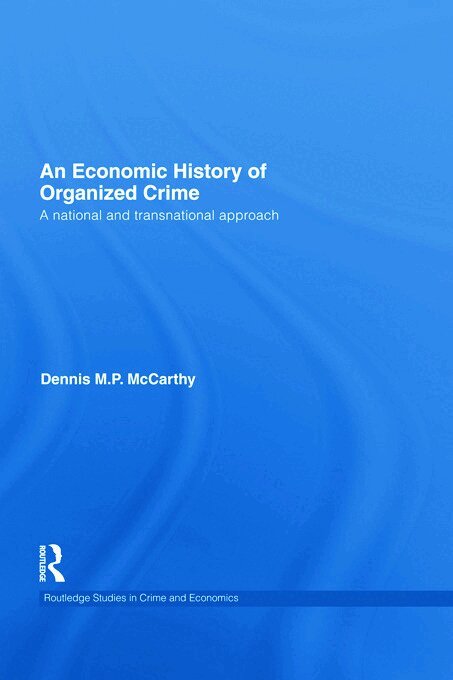
This book is a comparative study of organized crime groups from five different parts of the world: Europe; North America; Central America/South America/Caribbean basin; Africa; and Asia/Western Pacific. Each part contains two case studies and a shorter essay, a vignette. From Europe the case studies focus on the Italian mafias and the Russian mafia; the vignette, on the Albanian mafia. From North America the case studies highlight the US Mafia and the Mexican drug cartels; the vignette, organized crime in Canada. From Central America/South America/Caribbean basin the case studies concentrate on the Colombian drug cartels and gangs of the Caribbean; the vignette, on organized crime in Cuba. From Africa the case studies examine resource wars and Somali piracy; the vignette, relations among international drugs trafficking, organized crime, and terrorism in North and West Africa. And from Asia/Western Pacific the case studies spotlight the Chinese Triads and Japanese Yakuza; the vignette, relations among international drugs trafficking, organized crime, and terrorism in Afghanistan.Written in non-specialist language, An Economic History of Organized Crime provides an original overview of a crucial problem of our times: the growing scourge of global organized crime. This book can be read with profit by the general public, but it also has value for academic specialists and professionals in law enforcement.
809 kr
Skickas inom 10-15 vardagar
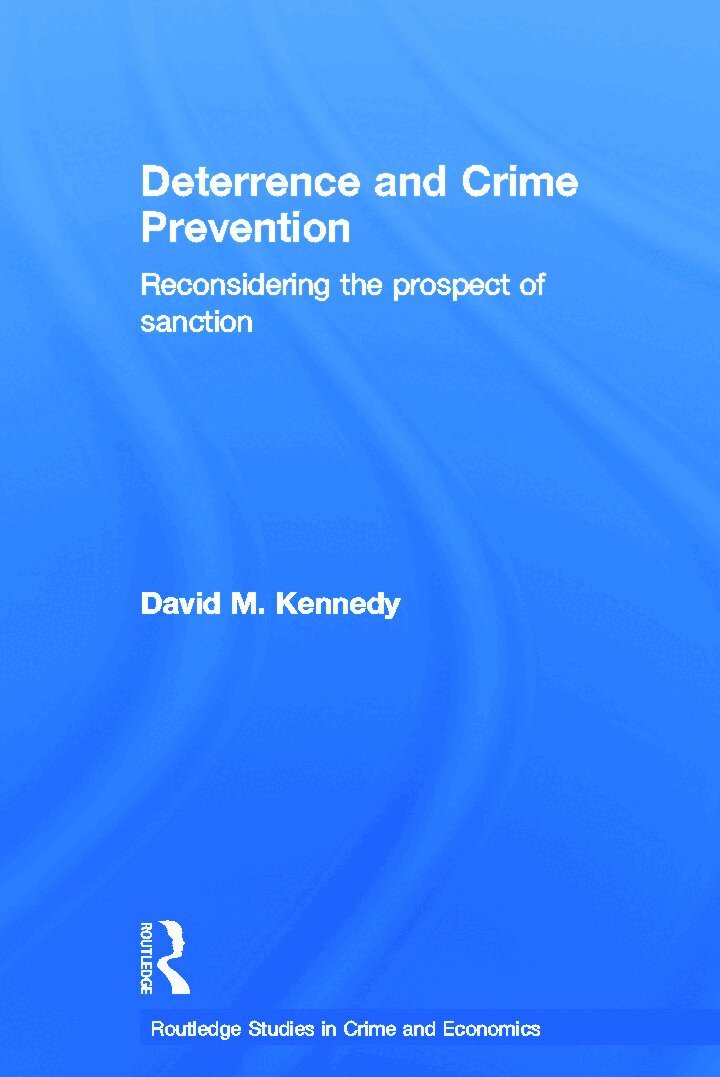
Deterrence is at the heart of the preventive aspiration of criminal justice. Deterrence, whether through preventive patrol by police officers or stiff prison sentences for violent offenders, is the principal mechanism through which the central feature of criminal justice, the exercise of state authority, works – it is hoped -- to diminish offending and enhance public safety. And however well we think deterrence works, it clearly often does not work nearly as well as we would like – and often at very great cost.Drawing on a wide range of scholarly literatures and real-world experience, Kennedy argues that we should reframe the ways in which we think about and produce deterrence. He argues that many of the ways in which we seek to deter crime in fact facilitate offending; that simple steps such as providing clear information to offenders could transform deterrence; that communities may be far more effective than legal authorities in deterring crime; that apparently minor sanctions can deter more effectively than draconian ones; that groups, rather than individual offenders, should often be the focus of deterrence; that existing legal tools can be used in unusual but greatly more effective ways; that even serious offenders can be reached through deliberate moral engagement; and that authorities, communities, and offenders – no matter how divided – share and can occupy hidden common ground. The result is a sophisticated but ultimately common-sense and profoundly hopeful case that we can and should use new deterrence strategies to address some of our most important crime problems. Drawing on and expanding on the lessons of groundbreaking real-world work like Boston’s Operation Ceasefire – credited with the "Boston Miracle" of the 1990s – "Deterrence and Crime Prevention" is required reading for scholars, law enforcement practitioners, and all with an interest in public safety and the health of communities.
2 006 kr
Skickas inom 10-15 vardagar
Financial institutions, as gateways to the financial system, to economic power and possibilities, are one of the major vehicles for money laundering and therefore also represent an important means to prevent this type of crime. The compliance officer symbolises a part of this private investment in anti money laundering (AML) and as a bank employee is responsible for the implementation of governmental objectives, trapped between crime fighting objectives and commercial goals. The duality of the involvement of private partners in the AML complex and the vastness of the system serves as a background for a new book looking at the functioning, values and perceptions of actors within this system.With thorough analysis of original empirical date, Verhage provides a rich and illustrative insight in the world of compliance officers and the sometimes paradoxical AML system that they have to work within.
904 kr
Skickas inom 10-15 vardagar
This book is a comparative study of organized crime groups from five different parts of the world: Europe; North America; Central America/South America/Caribbean basin; Africa; and Asia/Western Pacific. Each part contains two case studies and a shorter essay, a vignette. From Europe the case studies focus on the Italian mafias and the Russian mafia; the vignette, on the Albanian mafia. From North America the case studies highlight the US Mafia and the Mexican drug cartels; the vignette, organized crime in Canada. From Central America/South America/Caribbean basin the case studies concentrate on the Colombian drug cartels and gangs of the Caribbean; the vignette, on organized crime in Cuba. From Africa the case studies examine resource wars and Somali piracy; the vignette, relations among international drugs trafficking, organized crime, and terrorism in North and West Africa. And from Asia/Western Pacific the case studies spotlight the Chinese Triads and Japanese Yakuza; the vignette, relations among international drugs trafficking, organized crime, and terrorism in Afghanistan.Written in non-specialist language, An Economic History of Organized Crime provides an original overview of a crucial problem of our times: the growing scourge of global organized crime. This book can be read with profit by the general public, but it also has value for academic specialists and professionals in law enforcement.
809 kr
Skickas inom 10-15 vardagar
With debates surrounding the decriminalisation of certain illegal drugs raging in many countries around the world, this new book is a timely and sober reflection on one of the biggest social problems facing the world at large. Of interest not only to economists, but also to criminologists and those involved in policy-making, The Economics of Illegal Drugs is an accessible, comprehensive and international review of the topic and the usefulness of applying microeconomic analysis to drug production and distribution.
2 521 kr
Skickas inom 10-15 vardagar
Deterrence is at the heart of the preventive aspiration of criminal justice. Deterrence, whether through preventive patrol by police officers or stiff prison sentences for violent offenders, is the principal mechanism through which the central feature of criminal justice, the exercise of state authority, works – it is hoped -- to diminish offending and enhance public safety. And however well we think deterrence works, it clearly often does not work nearly as well as we would like – and often at very great cost.Drawing on a wide range of scholarly literatures and real-world experience, Kennedy argues that we should reframe the ways in which we think about and produce deterrence. He argues that many of the ways in which we seek to deter crime in fact facilitate offending; that simple steps such as providing clear information to offenders could transform deterrence; that communities may be far more effective than legal authorities in deterring crime; that apparently minor sanctions can deter more effectively than draconian ones; that groups, rather than individual offenders, should often be the focus of deterrence; that existing legal tools can be used in unusual but greatly more effective ways; that even serious offenders can be reached through deliberate moral engagement; and that authorities, communities, and offenders – no matter how divided – share and can occupy hidden common ground. The result is a sophisticated but ultimately common-sense and profoundly hopeful case that we can and should use new deterrence strategies to address some of our most important crime problems. Drawing on and expanding on the lessons of groundbreaking real-world work like Boston’s Operation Ceasefire – credited with the "Boston Miracle" of the 1990s – "Deterrence and Crime Prevention" is required reading for scholars, law enforcement practitioners, and all with an interest in public safety and the health of communities.
744 kr
Skickas inom 10-15 vardagar
Financial institutions, as gateways to the financial system, to economic power and possibilities, are one of the major vehicles for money laundering and therefore also represent an important means to prevent this type of crime. The compliance officer symbolises a part of this private investment in anti money laundering (AML) and as a bank employee is responsible for the implementation of governmental objectives, trapped between crime fighting objectives and commercial goals. The duality of the involvement of private partners in the AML complex and the vastness of the system serves as a background for a new book looking at the functioning, values and perceptions of actors within this system.With thorough analysis of original empirical date, Verhage provides a rich and illustrative insight in the world of compliance officers and the sometimes paradoxical AML system that they have to work within.