SAGE Series on Business Ethics - Böcker
Visar alla böcker i serien SAGE Series on Business Ethics. Handla med fri frakt och snabb leverans.
7 produkter
7 produkter
Del 4 - SAGE Series on Business Ethics
Ethical Dimensions of International Management
Häftad, Engelska, 1996
2 373 kr
Skickas inom 3-6 vardagar
Examining the relationship of national-cultural differences to ethical behavior, Ethical Dimensions of International Management helps the reader begin to understand the subtleties and nuances of ethical practices across nations. This innovative work uses short vignettes to illustrate each of its points while comparing and analyzing the primary influences on ethical behavior such as parenting, education, law, organizational cultures, and human resources management. Special features of the book include an extensive review and summary of relevant research literature, exhaustive coverage of a variety of different nationalities and cultures, and a direct comparison between Japan and the United States. Each chapter begins with several short cases and ends with helpful discussion questions. The book concludes with an analysis of the degree to which ethical systems of different nations may converge or diverge in coming years. Students and professionals in organizational studies, ethics, and international management will appreciate the unique viewpoint Ethical Dimensions of International Management presents. The pedagogical aids within the volume will spark discussion and debate.
1 790 kr
Skickas inom 3-6 vardagar
This is a well-written and well-organized treatment of a very important topic. I enjoyed reading it and gained some new insights and ideas. The explanations are clear and detailed and the examples are very helpful. The Ethics of Information Management is unique with its total focus on information and privacy. This is a critical area and this book makes a fine contribution. --Ernest A. Kallman, Research Fellow, Center for Business Ethics, Bentley College "At this stage in the information age, at this point in our understanding of issues and our understanding of the relation between ethics and information, any book that raises our awareness and sense of responsibility is worth publishing. Ethics of Information Management definitely does that." --Martha L. Hale, School of Library and Information Management, Emporia State University "This book breaks new ground in innovatively introducing the issues involved in information ethics to a business school curriculum. Cases are used throughout to identify the issues with numerous references back to each case to identify ways of reasoning, situations in which policies and procedures can help, and situations in which laws and professional codes are useful or not. There are many nuggets of information and ways of looking at situations that will assist readers in identifying the issues and stakeholders, assessing alternatives and their ramifications, and making informed, ethical decisions throughout their careers." --Sue Conger, Management Information Sciences, Southern Methodist University The authors to the second volume in the Sage Series in Business Ethics provide ways of thinking about information and the new responsibilities engendered by its acquisition, processing, storing, dissemination, and use. The Ethics of Information Management provides a set of concepts, methods, arguments, and illustrations designed to sharpen the reader's ethical focus. Organized into three sections, the first part of the book provides motivation and conceptual background for the volume as a whole. Part II focuses on fundamental concepts about ethics, including a description of the process of ethical thinking and a range of theories and principles that can be used in ethical situations. In the final chapters, the concepts of information, and the need for ethics and ethical thinking, are applied to the various levels of the social system to which they pertain: individual and professional, organizational and societal, or systemic. Intended primarily for those who are, or will soon become, information professionals, The Ethics of Information will also be of interest to others concerned about what those who handle information do and how it affects them.
3 959 kr
Skickas inom 3-6 vardagar
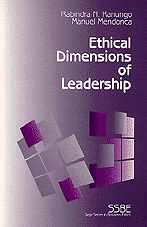
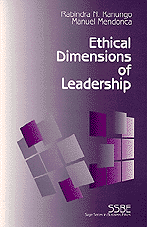
This book's practical orientation, in addition to the conceptual framework, offers practitioners and consultants strategies for effective leadership - such as empowerment - together with how leaders prepare for ethical leadership. It will be of valuable to enhance leadership courses in business schools or executive development programmes. --Financial Express "This volume is a timely, interesting, and courageous call for attention to moral standards that cross organizational and cultural boundaries, making it a worthwhile purchase for comprehensive general and academic management collections." --Choice The beliefs and values, the vision, and, above all, the actions of the leader of an organization set the ethical tone and standards for the organization. It is this fundamentally crucial role of the leader that is the basis of this book. Ethical Dimensions of Leadership proposes that one's understanding of leadership is severely incomplete, if not deformed, if one does not also consider the ethics or morality of leadership. The book examines the various modal orientations of leadership and demonstrates that true, effective leadership is that in which the leader's behavior and exercises of leadership processes are consistent with ethical and moral values. The book argues for an end to the traditional separation of personal and public morality. It also argues that the ethics of leadership is consistent with the spirituality of the different religious traditions. The practical orientation, in addition to the conceptual framework, offers practitioners and consultants strategies for effective leadership--such as empowerment--together with suggestions of how leaders can prepare for ethical leadership. Ethical Dimensions of Leadership will serve the needs of business education programs, business consultants, and researchers. The exhaustive and integrated conceptual treatment of the leadership phenomenon, consistent with ethical and moral values, will greatly enhance leadership courses in business schools or executive development programs. It is also of interest to students in business ethics, organization behavior, and managerial skills development. The inclusion of the cultural contingencies in leadership, in the context of non-Western socioculture environments, extends its suitability and usefulness for courses in international business and international management.
2 643 kr
Skickas inom 3-6 vardagar
This book's practical orientation, in addition to the conceptual framework, offers practitioners and consultants strategies for effective leadership - such as empowerment - together with how leaders prepare for ethical leadership. It will be of valuable to enhance leadership courses in business schools or executive development programmes. --Financial Express "This volume is a timely, interesting, and courageous call for attention to moral standards that cross organizational and cultural boundaries, making it a worthwhile purchase for comprehensive general and academic management collections." --Choice The beliefs and values, the vision, and, above all, the actions of the leader of an organization set the ethical tone and standards for the organization. It is this fundamentally crucial role of the leader that is the basis of this book. Ethical Dimensions of Leadership proposes that one's understanding of leadership is severely incomplete, if not deformed, if one does not also consider the ethics or morality of leadership. The book examines the various modal orientations of leadership and demonstrates that true, effective leadership is that in which the leader's behavior and exercises of leadership processes are consistent with ethical and moral values. The book argues for an end to the traditional separation of personal and public morality. It also argues that the ethics of leadership is consistent with the spirituality of the different religious traditions. The practical orientation, in addition to the conceptual framework, offers practitioners and consultants strategies for effective leadership--such as empowerment--together with suggestions of how leaders can prepare for ethical leadership. Ethical Dimensions of Leadership will serve the needs of business education programs, business consultants, and researchers. The exhaustive and integrated conceptual treatment of the leadership phenomenon, consistent with ethical and moral values, will greatly enhance leadership courses in business schools or executive development programs. It is also of interest to students in business ethics, organization behavior, and managerial skills development. The inclusion of the cultural contingencies in leadership, in the context of non-Western socioculture environments, extends its suitability and usefulness for courses in international business and international management.
3 267 kr
Skickas inom 3-6 vardagar
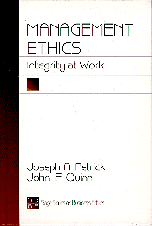
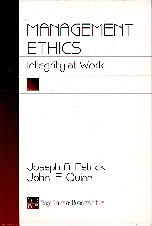
Management Ethics: Integrity at Work redefines what it means for a manager to function with integrity in the private and public sectorsùdomestically and globally. It integrates the latest theoretical work in both descriptive and normative ethics, and incorporates legal, communication, quality, and organizational theories into a conceptual framework that improves managerial judgment in the handling of moral complexity at work. The authors use their organizational ethics consulting and academic research experience to provide practical assessment and decision-making tools that convert ethics theories into sound action steps. The book examines three key dimensions of management integrityùjudgment, process, and developmental dimensionsùand applies them to individual chapters devoted to the subprocesses of ethical planning, organizing, leading, and controlling. The authors focus their theories and tools on 28 ethics minicases related to each management function in seven allied management application clusters: accounting, auditing management; finance, investment management; marketing, advertising management; business management, business law, human resource management; technology, quality operations, organizational behavior management; public, nonprofit, health care management; and international, environmental, public policy management. Management Ethics: Integrity at Work builds management integrity by linking and enhancing both ethics and management competence in responsible planning, organizing, leading, and controlling for use by professionals and students in the private and public sectorsùdomestically and globally.
2 373 kr
Skickas inom 3-6 vardagar
Management Ethics: Integrity at Work redefines what it means for a manager to function with integrity in the private and public sectorsùdomestically and globally. It integrates the latest theoretical work in both descriptive and normative ethics, and incorporates legal, communication, quality, and organizational theories into a conceptual framework that improves managerial judgment in the handling of moral complexity at work. The authors use their organizational ethics consulting and academic research experience to provide practical assessment and decision-making tools that convert ethics theories into sound action steps. The book examines three key dimensions of management integrityùjudgment, process, and developmental dimensionsùand applies them to individual chapters devoted to the subprocesses of ethical planning, organizing, leading, and controlling. The authors focus their theories and tools on 28 ethics minicases related to each management function in seven allied management application clusters: accounting, auditing management; finance, investment management; marketing, advertising management; business management, business law, human resource management; technology, quality operations, organizational behavior management; public, nonprofit, health care management; and international, environmental, public policy management. Management Ethics: Integrity at Work builds management integrity by linking and enhancing both ethics and management competence in responsible planning, organizing, leading, and controlling for use by professionals and students in the private and public sectorsùdomestically and globally.
2 780 kr
Skickas inom 3-6 vardagar
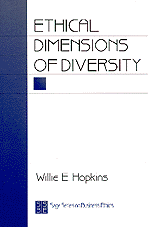
This is a fascinating and mind-stretching discussion. Very original analysis of the ethics-diversity relationship and process model . . . . The authorÆs examples of the changes in one organization over a 10-year period are striking . . . . Makes a distinct contribution . . . . Allows the reader to go beyond the current models and keep the focus on organizational culture and management practices. --Patricia Arredondo, Founder and Director, Empowerment Workshops, Inc., Boston, Massachusetts Will increased diversity in the workplace lead to greater deviation from corporate ethical standards? Can the codes of ethics in U.S. corporations effectively govern employee ethical standards? Few, if any, of the current books on ethics in the American workplace consider the ethical concerns in an environment characterized by diversity. Ethical Dimensions of Diversity takes an in-depth look at the relationship between the many kinds of diversityùincluding cultural, racial, ethnic, and a variety of othersùand the ways they affect decision making within organizations. Author Willie E. Hopkins provides a theoretical overview, and also identifies points of potential conflict and subsequent effects on individual/organizational ethical paradigms, as well as suggesting possible ways of reconciling these conflicts. Ethical Dimensions of Diversity gives students and professionals the analytical skills and sensitivity necessary for dealing with the difficult combination of ethics and diversity, while also providing the practical application that business ethicists, and human resource professionals need.