AFIP Atlas of Tumor Pathology, Series 4, – serie
Visar alla böcker i serien AFIP Atlas of Tumor Pathology, Series 4,. Handla med fri frakt och snabb leverans.
13 produkter
13 produkter
2 460 kr
Skickas
This volume builds upon the work of its predecessor by liberally illustrating the spectrum of each tumour and disease described, whilst providing many new illustrations. Morphometry, flow cytometry, immunohistochemistry, gene rearrangement studies, and other molecular biologic methodologies are exciting new areas that are being developed into diagnostic procedures in the pathology laboratory. Where these methodologies are applicable to salivary gland disease, they are included. Histomorphologic evaluation, however, remains the principal and most useful method for diagnosis of salivary gland tumors and is the emphasis of this edition. A differential diagnosis is included in the discussion of most tumours, and the cytopathologic features of those tumours most commonly encountered in the cytopathology laboratory are discussed.
1 473 kr
Skickas inom 7-10 vardagar
Since the publication of the third edition in 1997, the World Health Organization (WHO) has printed two major volumes concerning tumours of the thymus, and the authors of this volume collaborated on these books. In the last 10 years, little progress has been made in the study of tumours of the thymus, although a few new subtypes have been reported.The most significant change was the subtyping by the WHO of tumours of the thymus that do not cause constitutional changes. The present volume has adopted the WHO system of classification. For pathologists who are not as familiar with the WHO system, the authors clearly explain and illustrate both the morphologic and histogenetic classification systems that are its bases. Due to the changes in nomenclature, the chapter on thymic epithelial tumors has been considerably revised, although the main diagnostic terms are presented along with the previous conventional morphologic and histogenetic terms. Newly-recognised tumour entities, new cytologic and genetic findings, and recent references have been added, and the tables have been revised to reflect new data on survival, staging, and classification.This volume will be an authoritative reference on mediastinal tumours for years to come.
1 981 kr
Skickas inom 11-20 vardagar
In surgical pathology practice, distinguishing malignant from benign melanocytic lesions represents one of the major problem areas. Failure to diagnose a malignant melanoma can have catastrophic results, but separating melanomas from their simulants is often difficult, and over-diagnosis of melanoma is also inappropriate.This edition presents a comprehensive account of benign and malignant melanocytic lesions. The benign lesions encompass the major simulants of melanoma. In addition, some of them, such as dysplastic nevi, have significance as markers of individuals at increased risk for the development of melanoma. It has become ever more apparent, especially with the recent advent of molecular classification, that melanoma is not one disease, and that prognosis in melanoma can vary considerably from lesions that present minimal risk, to dangerous malignancies at opposite ends of a spectrum.The details of therapy for these lesions are very different and are determined for the most part by their diagnostic and prognostic features as judged by microscopy. This edition explains in detail the use of attributes for microstaging and for prediction of prognosis in melanoma, including discussion of the latest AJCC staging system. More importantly, however, it provides a richly-illustrated roadmap for diagnosis of the entire spectrum of melanocytic tumours. Discussion of the lesions is firmly grounded in their clinical significance, with detailed descriptions of clinical features often accompanied by clinical images.Lesions in general are illustrated in multiple microscopic images ranging from scanning magnification to high power. Cytologic as well as architectural features are clearly delineated. Pathophysiology, epidemiology, and molecular attributes are also discussed. This work will serve as a comprehensive text for learning on the part of trainees, and also as an invaluable diagnostic reference for more experienced diagnosticians in daily practice.
1 039 kr
Skickas inom 7-10 vardagar
The authors of this new fourth edition recognise that nomenclature for cysts and neoplasms of the jaws is dynamic, as demonstrated by the evolving schemes based on previously unrecognised microscopic, clinical, radiographic, and therapeutic features. This edition is not an attempt to promote one nomenclature scheme versus another, but simply to present the best information available for each lesion discussed using the most current World Health Organization classification system.While this edition continues in the American Registry of Pathology tradition of providing the most current diagnostic information available for the practising pathologist, in some cases surgeons will consult with pathologists regarding therapeutic management, hence information about peer-reviewed treatment protocols for many tumours and cysts is included in each section.This edition promises to be a quality resource for pathologists, surgeons, and dentists alike for many years.
1 582 kr
Skickas inom 7-10 vardagar
The authors of this volume have put emphasis on diagnosis, so the presentation is generally concise, yet more comprehensive on key points. In addition, they emphasise diagnostically-important information on immunohistochemistry and molecular genetics, and include additional details when biologically significant. Site-specific soft tissue entities covered in the other atlases are often excluded due to space constraints.The text is aimed as a practical diagnostic aid for pathologists, cytopathologists and pathology trainees, but the authors hope that their clinical colleagues and others may also find it as a useful source of information on soft tissue tumours and tumour-like lesions.
1 799 kr
Skickas inom 7-10 vardagar
In the years since the publication of the third edition, awareness of the remarkable morphologic diversity of thyroid carcinoma has notably expanded, and great advances have been made in unravelling the molecular genetic features of thyroid and parathyroid tumours. There has also been an increased interest in the use of the fine-needle aspiration technique for the diagnosis and management of thyroid tumours, and in the role of the pathologist in the operative handling of the hyperfunctioning parathyroid gland.This volume documents the most significant advances that have taken place since the previous edition, emphasising those with a practical application at the clinical level. The format remains similar to that of the previous versions, but the two thyroid and parathyroid editions have been merged into one, and most of the black and white images and photomicrographs have been replaced with colour.The authors include a number of the most recent references, but have not ignored the classic works in the field, many of which have descriptions, illustrations, and insights that cannot be bettered.This edition fulfils the original goal of this series, which is that of helping the pathologist diagnose and anticipate the behavior of the tumours and tumour-like lesions included in this publication.
2 340 kr
Skickas inom 11-20 vardagar
Evolution in the field of diagnostic hematopathology has been remarkable. The World Health Organization (WHO) classification scheme for hematologic neoplasms has achieved widespread endorsement and acceptance in clinical practice. This volume integrates proposed WHO 2016 recommendations and highlights areas in which further classification revisions may occur, or areas in which criteria are controversial. In addition, the immunophenotypic and molecular genetic tests of greatest value in diagnoses, risk assessment, and disease monitoring are highlighted in the text. The substantial focus on molecular genetic findings for each neoplasm parallels the ever-expanding role of genetics in disease classification and risk assessment.Key problem areas and differential diagnostic considerations are also included for each neoplastic disease category. Although primary blood and bone marrow neoplasms are the focus of this text, metastatic neoplasms in bone marrow are also covered.This atlas will provide readers with comprehensive information necessary for the clinical assessment of bone marrow neoplasms for years to come.
2 709 kr
Skickas inom 7-10 vardagar
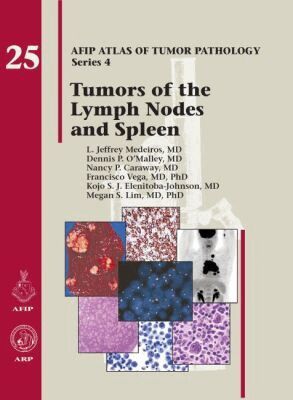
The understanding of diagnostic lymph node and spleen pathology has evolved at an impressive pace since 1995, when the third series AFIP atlas was published. Progress has been fuelled, in large part, by the application of a number of technologies to the study of hematopoietic neoplasms. The World Health Organization (WHO) classification scheme for hematologic neoplasms has captured much of this progress, and is generally accepted for clinical practice. The current volume, part of the fourth series of atlases, integrates the WHO classification, including the 2016 revision, and highlights areas in which the WHO classification is likely to evolve with time. In keeping with the goals and tradition of the atlases, this volume emphasizes morphological features of hematopoietic neoplasms, and includes a discussion of differential diagnoses for each disease category. In addition, the results of immunophenotypic and molecular genetic testing for each disease are highlighted, including findings generated by using high-throughput techniques that likely will be integrated into standard diagnostics in the near future. Overall, this atlas will provide readers with the comprehensive information necessary for the pathological and clinical assessment of lymph node and splenic lesions.
2 166 kr
Skickas inom 7-10 vardagar
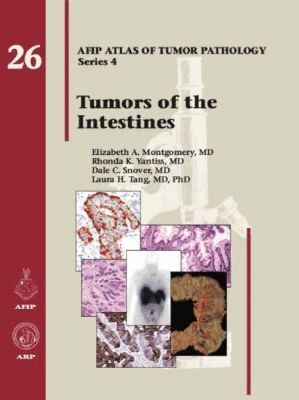
There have been many advances in the pathology of intestinal tumours since the publication of the Third Series Intestines Fascicle in 2003, but many of the foundations of intestinal tumour diagnosis remain tried and true. Tubular adenomas are still tubular adenomas, but better understanding of serrated polyps has been a key advance in the years since the publication of the Third Series volume. Additionally, developments in molecular biology of colorectal carcinoma have allowed for targeted therapy and refinements to our evaluation of Lynch syndrome, which was termed hereditary nonpolyposis colorectal carcinoma (HNPCC) in the past.Our understanding of other polyposis syndromes has similarly blossomed in the past 15 years. Neuroendocrine tumours have been reclassified in the 2010 World Health Organization classification of gastrointestinal tumours. The molecular basis of gastrointestinal stromal tumours of the intestines has been a subject of great interest as well.In producing this update, this group of authors has enjoyed working together in gathering images and information to update this edition of the Intestines atlas. In doing so, we stand on the shoulders of giants before us, namely Drs. Robert H. Riddell, Robert E. Petras, Geraint T. Williams, and Leslie H. Sobin.While many areas of intestinal tumour pathology are without controversy, the classification and nomenclature for appendiceal tumours remain a subject of debate, including among ourselves. We have attempted to offer information on the various divergent viewpoints where they exist for this topic and others. Our efforts have been synergistic, and we hope that readers will enjoy the many interesting illustrations that we were able to amass.
2 288 kr
Skickas inom 7-10 vardagar
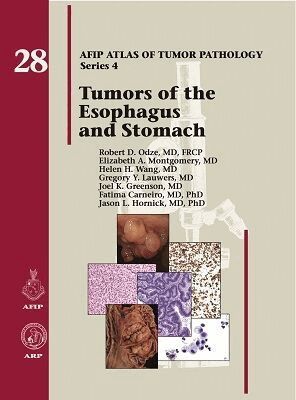
Since the publication of the previous edition of Tumors of the Esophagus and Stomach, great advances in many areas of tumor biology have led to a better understanding of the pathogenesis, pathology, and molecular biology of epithelial and stromal malignancies of the upper gastrointestinal tract. Many of these advances have led to specific improvements in diagnosis, prognosis, treatment, and thus, survival in patients affected by these tumors. This edition of the Fascicle was written to highlight these advances, and more specifically, to help pathologists diagnose diseases more accurately and understand how pathology contributes to clinical treatment in the new age of personalized and targeted therapy.Notable advances described in this publication include:1) expansion of our understanding of the pathologic features and molecular pathogenesis of carcinomas of the esophagus and stomach, most of which develop through a chronic inflammation-metaplasia-dysplasia-carcinoma sequence. Important refinements in the classification of neoplastic precursor lesions have been made since the last AFIP series, including the morphologic and endoscopic subtypes, and this has led to improvements in surgical treatment with a strong trend toward minimization in the form of endoscopic mucosal and submucosal dissections2) discovery of new diseases, such as gastric adenocarcinoma and proximal polyposis syndrome (GAPPS), a special variant of familial adenomatous polyposis, and significant advances in our knowledge regarding the molecular characterization of genetic polyposis syndromes3) great expansion in the molecular-pathology correlation, morphologic diversity, classification, and therapeutic options of gastrointestinal stromal tumors (GISTs)4) reclassification and refinement of prognostic factors related to neuroendocrine tumors5) improvements in the role of cytology in the diagnosis of tumors of the upper gastrointestinal tract.This book has been written with the pathologist in mind first by using tables that illustrate salient pathologic, molecular, and differential diagnostic features of key entities that are often difficult to distinguish from each other. Specific color photographs of classic tumors and morphologic variants often difficult to recognize are used throughout.
2 385 kr
Skickas inom 11-20 vardagar
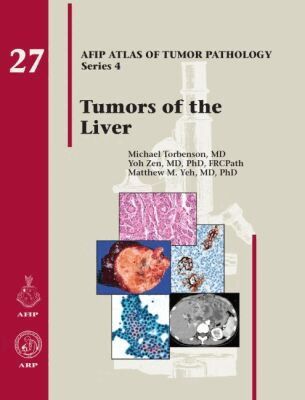
Numerous advances in our understanding of the pathology and molecular features of liver tumors have been made since the publication of the previous series, nearly two decades ago. Examples of recent advances include the identification of novel entities, including their precursor lesions, the discovery of key molecular changes, including the fusion transcript between the DNAJB1 gene and the PRKACA gene in fibrolamellar carcinoma, the use of glutamine synthetase in the diagnosis of focal nodular hyperplasia, and the subtyping of hepatocellular adenomas using molecular and immunohistochemical methods. Together with the more unified classification and terminology of intrahepatic bile duct tumors and their precursors, these advances call for updated information that is presented in this volume.
2 559 kr
Skickas inom 7-10 vardagar
Remarkable advances have occurred since the Series 3 Fascicle published in 1995 with paradigm shifts in every dimension of our understanding of lung tumors including clinical, radiologic, histopathologic, cytopathologic, immunohistochemical, molecular and therapeutic aspects. The molecular revolution leading to effective targeted therapies and breakthroughs in immunotherapy for lung cancer have led to novel approaches incorporating the concept of personalized medicine for patients who historically had little hope. These advances have strengthened the place of pathologists to play a central role in the multidisciplinary team that is now needed to properly diagnose and manage lung cancer patients.
2 699 kr
Skickas inom 11-20 vardagar
Since the publication of the Third Series Fascicle of the Uterine Corpus nearly thirty years ago, molecular discoveries have deepened our understanding of epithelial, mesenchymal, and mixed müllerian tumors of the uterus, fueling a new and still evolving classification of the different categories of uterine neoplasms. Enormous insights have been made to refine the classification of the different subtypes of endometrial carcinoma linked to important prognostic and therapeutic implications. At the same time, molecular findings have allowed for the discovery of familial syndromes associated with uterine corpus neoplasms, and identification of patients at increased risk for developing specific tumors, with the subsequent implementation of genetic counseling and appropriate treatment guidelines. Molecular underpinnings have also assisted in the development of new and potentially more predictive morphologic criteria for endometrial preneoplasia, namely the endometrial intraepithelial neoplasia (or EIN) system.In this Uterine Corpus Fascicle, there is an increased emphasis on the cytopathologic (intraoperative, exfoliative, or fine needle aspiration) and molecular features that are important in diagnosis and prognosis. What does not change from the three previous series, however, is the goal of providing the reader with thorough, concise, and up-to-date information on the nomenclature and classification; epidemiologic, clinical, and pathogenetic features; and, most importantly, guidance in the diagnosis of the tumors and tumorlike lesions of all major organ systems and body sites.Order the Tumors of the Uterine Corpus and Trophoblastic Diseases now to take advantage of these new discoveries and techniques for diagnosing and treating these types of tumors.