Special issue books from 'Accounting Education: an international journal' – serie
Visar alla böcker i serien Special issue books from 'Accounting Education: an international journal'. Handla med fri frakt och snabb leverans.
8 produkter
8 produkter
1 261 kr
Skickas inom 10-15 vardagar
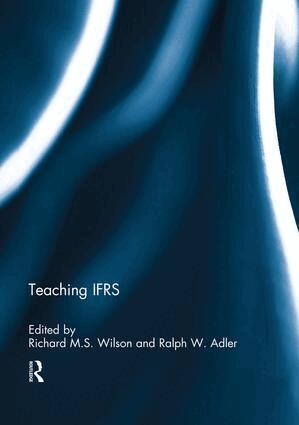
The increasing pace of global conformance towards the adoption of International Financial Reporting Standards (IFRS) highlights the need for accounting students as well as accounting practitioners to be conversant with IFRS. Teaching IFRS offers expert descriptions of, and insights into, the IFRS convergence process from a teaching and learning perspective. Hence this book is both timely and likely to have considerable impact in providing guidance for those who teach financial reporting around the world. The contents of the book come from authoritative sources and offer something distinctive to complement the existing textbooks which typically focus on the technical aspects of IFRS and their adoption. Drawing upon the experiences of those who have sought to introduce IFRS-related classroom innovations and the associated student outcomes achieved therefrom, the book offers suggestions about how to design and deliver courses dealing with IFRS and catalogues extensive listings of IFRS-related teaching resources to support those courses.This book was originally published as a special issue of Accounting Education: An international journal.
2 053 kr
Skickas inom 10-15 vardagar
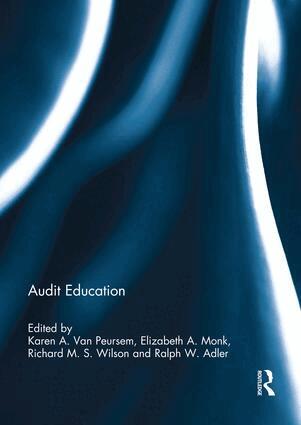
Audit professionals are valued members of society and are expected to be both skilled and ethical in their decision-making. The role of the auditor extends far beyond that of counting beans by demanding a social and political awareness, a technical knowledge, ethical principles and relationship skills. In addition, due to the team-oriented nature of the audit approach, auditors require strong team-building and interpersonal skills. This book offers expert descriptions of, and insights into, how such skills and responsibilities can be inculcated in tertiary education and professional training environments. Unlike other books which focus on auditing as a technical process, this volume examines auditing from a teaching and learning perspective. Expert contributors provide authoritative insights into an audit education which is embedded in accounting practice. The book’s descriptions of these insights into improving education for future audit professionals may allow the introduction of new and challenging fields of enquiry. Audit Education will be of great interest to educators in tertiary institutions, trainers in professional firms, and key individuals in accounting professional bodies seeking to ensure their members possess acceptable levels of attainment for admission and continued membership.This book was originally published as a special issue of Accounting Education: an international journal.
2 053 kr
Skickas inom 10-15 vardagar
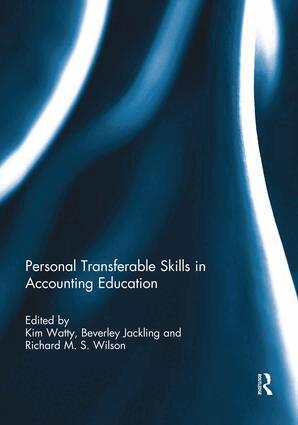
The development of generic skills (often referred to as ‘soft skills’) in accounting education has been a focus of discussion and debate for several decades. During this time employers and professional bodies have urged accounting educators to consider and develop curricula which provide for the development and assessment of these skills. In addition, there has been criticism of the quality of accounting graduates and their ability to operate effectively in a global economy. Embedding generic skills in the accounting curriculum has been acknowledged as an appropriate means of addressing the need to provide ‘knowledge professionals’ to meet the needs of a global business environment. Personal Transferable Skills in Accounting Education illustrates how generic skills are being embedded and evaluated in the accounting curriculum by academics from a range of perspectives. Each chapter provides an account of how the challenge of incorporating generic skills in the accounting curriculum within particular educational environments has been addressed. The challenges involved in generic skills development in higher education have not been limited to the accounting discipline. This book provides examples which potentially inform a wide range of discipline areas. Academics will benefit from reading the experiences of incorporating generic skills in the accounting curriculum from across the globe. This book was originally published as a themed issue of Accounting Education: an international journal.
2 053 kr
Skickas inom 10-15 vardagar
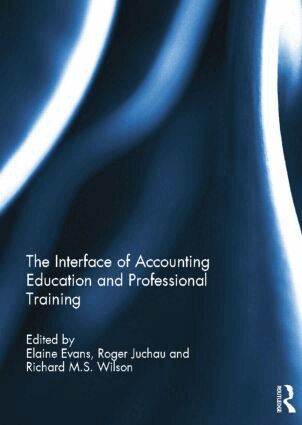
Over many decades the global development of professional accounting education programmes has been undertaken by higher education institutions, professional accounting bodies, and employers. These institutions have sometimes co-operated and sometimes been in conflict over the education and/or training of future accounting professionals. These ongoing problems of linkage and closure between academic accounting education and professional training have new currency because of pressures from students and employers to move accounting preparation onto a more efficient, economic and practical basis. The Interface of Accounting Education and Professional Training explores current elements of the interface between the academic education and professional training of accountants in Australia, New Zealand, South Africa and the UK. It argues for a reassessment of the considerations and requirements for developing professional accounting programs which can make a student: capable of being an accountant (the academy); ready to be an accountant (the workplace); and professional in being an accountant (the professional bodies). This book was originally published as a special issue of Accounting Education: An International Journal.
654 kr
Skickas inom 10-15 vardagar
Audit professionals are valued members of society and are expected to be both skilled and ethical in their decision-making. The role of the auditor extends far beyond that of counting beans by demanding a social and political awareness, a technical knowledge, ethical principles and relationship skills. In addition, due to the team-oriented nature of the audit approach, auditors require strong team-building and interpersonal skills. This book offers expert descriptions of, and insights into, how such skills and responsibilities can be inculcated in tertiary education and professional training environments. Unlike other books which focus on auditing as a technical process, this volume examines auditing from a teaching and learning perspective. Expert contributors provide authoritative insights into an audit education which is embedded in accounting practice. The book’s descriptions of these insights into improving education for future audit professionals may allow the introduction of new and challenging fields of enquiry. Audit Education will be of great interest to educators in tertiary institutions, trainers in professional firms, and key individuals in accounting professional bodies seeking to ensure their members possess acceptable levels of attainment for admission and continued membership.This book was originally published as a special issue of Accounting Education: an international journal.
429 kr
Skickas inom 10-15 vardagar
The increasing pace of global conformance towards the adoption of International Financial Reporting Standards (IFRS) highlights the need for accounting students as well as accounting practitioners to be conversant with IFRS. Teaching IFRS offers expert descriptions of, and insights into, the IFRS convergence process from a teaching and learning perspective. Hence this book is both timely and likely to have considerable impact in providing guidance for those who teach financial reporting around the world. The contents of the book come from authoritative sources and offer something distinctive to complement the existing textbooks which typically focus on the technical aspects of IFRS and their adoption. Drawing upon the experiences of those who have sought to introduce IFRS-related classroom innovations and the associated student outcomes achieved therefrom, the book offers suggestions about how to design and deliver courses dealing with IFRS and catalogues extensive listings of IFRS-related teaching resources to support those courses.This book was originally published as a special issue of Accounting Education: An international journal.
786 kr
Skickas inom 10-15 vardagar
The development of generic skills (often referred to as ‘soft skills’) in accounting education has been a focus of discussion and debate for several decades. During this time employers and professional bodies have urged accounting educators to consider and develop curricula which provide for the development and assessment of these skills. In addition, there has been criticism of the quality of accounting graduates and their ability to operate effectively in a global economy. Embedding generic skills in the accounting curriculum has been acknowledged as an appropriate means of addressing the need to provide ‘knowledge professionals’ to meet the needs of a global business environment. Personal Transferable Skills in Accounting Education illustrates how generic skills are being embedded and evaluated in the accounting curriculum by academics from a range of perspectives. Each chapter provides an account of how the challenge of incorporating generic skills in the accounting curriculum within particular educational environments has been addressed. The challenges involved in generic skills development in higher education have not been limited to the accounting discipline. This book provides examples which potentially inform a wide range of discipline areas. Academics will benefit from reading the experiences of incorporating generic skills in the accounting curriculum from across the globe. This book was originally published as a themed issue of Accounting Education: an international journal.
654 kr
Skickas inom 10-15 vardagar
Over many decades the global development of professional accounting education programmes has been undertaken by higher education institutions, professional accounting bodies, and employers. These institutions have sometimes co-operated and sometimes been in conflict over the education and/or training of future accounting professionals. These ongoing problems of linkage and closure between academic accounting education and professional training have new currency because of pressures from students and employers to move accounting preparation onto a more efficient, economic and practical basis. The Interface of Accounting Education and Professional Training explores current elements of the interface between the academic education and professional training of accountants in Australia, New Zealand, South Africa and the UK. It argues for a reassessment of the considerations and requirements for developing professional accounting programs which can make a student: capable of being an accountant (the academy); ready to be an accountant (the workplace); and professional in being an accountant (the professional bodies). This book was originally published as a special issue of Accounting Education: An International Journal.